
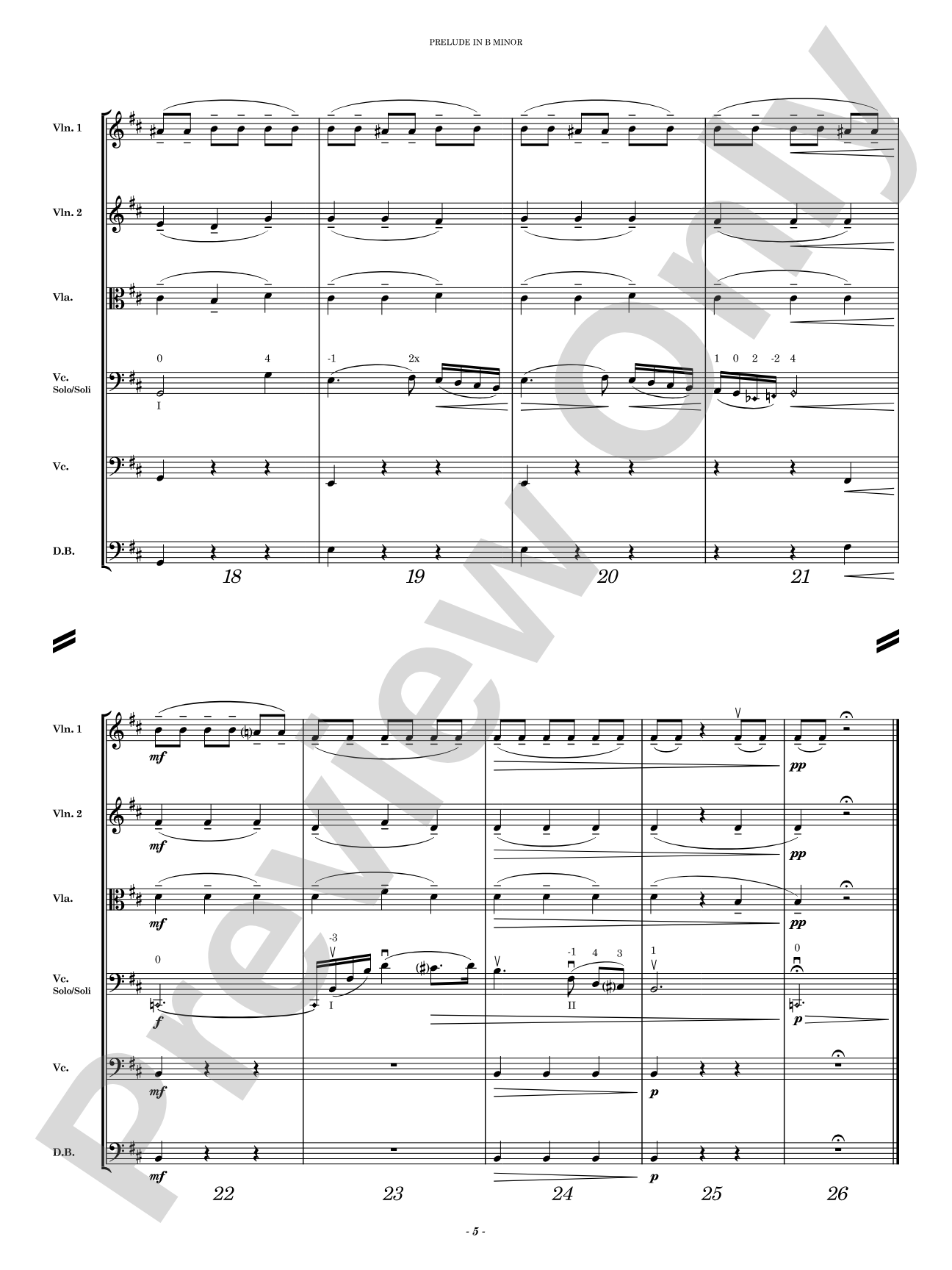

Prelude in B Minor: String Orchestra Conductor Score & Parts
(Solo Cello or Cello Section Feature)
Frédéric Chopin / trans. Ben Hawkins
Grade: 3
Item: 98-PK-0000062
$75.00
Pickup currently not available
Buy Extra Parts (Digital PDF Download)
| Product | Price | Quantity |
|---|---|---|
| Prelude in B Minor: Score | $8.00 | |
| Prelude in B Minor: 1st Violin | $3.00 | |
| Prelude in B Minor: 2nd Violin | $3.00 | |
| Prelude in B Minor: Viola | $3.00 | |
| Prelude in B Minor: Cello | $3.00 | |
| Prelude in B Minor: String Bass | $3.00 |
Parts Added to Cart!
Description
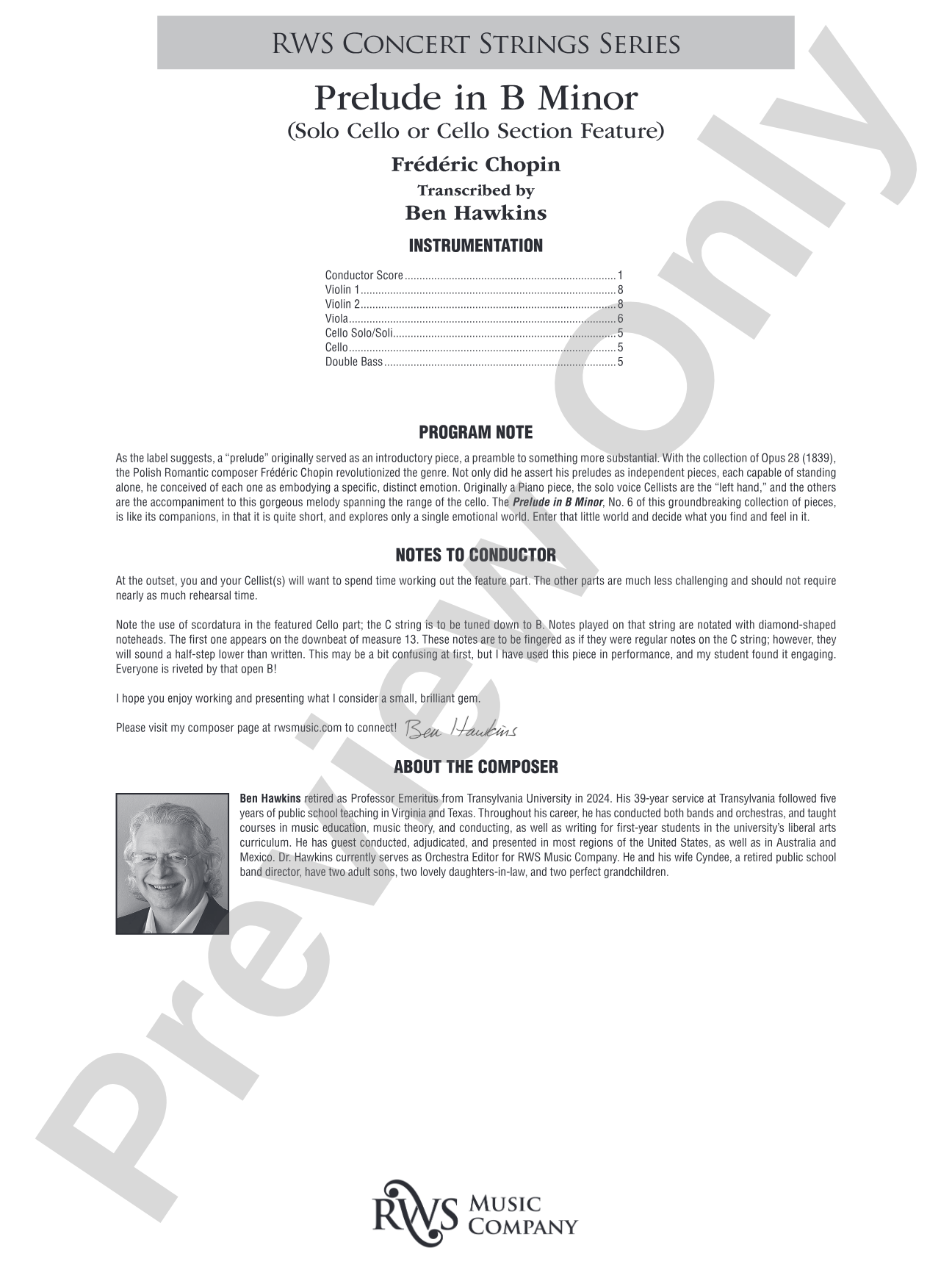
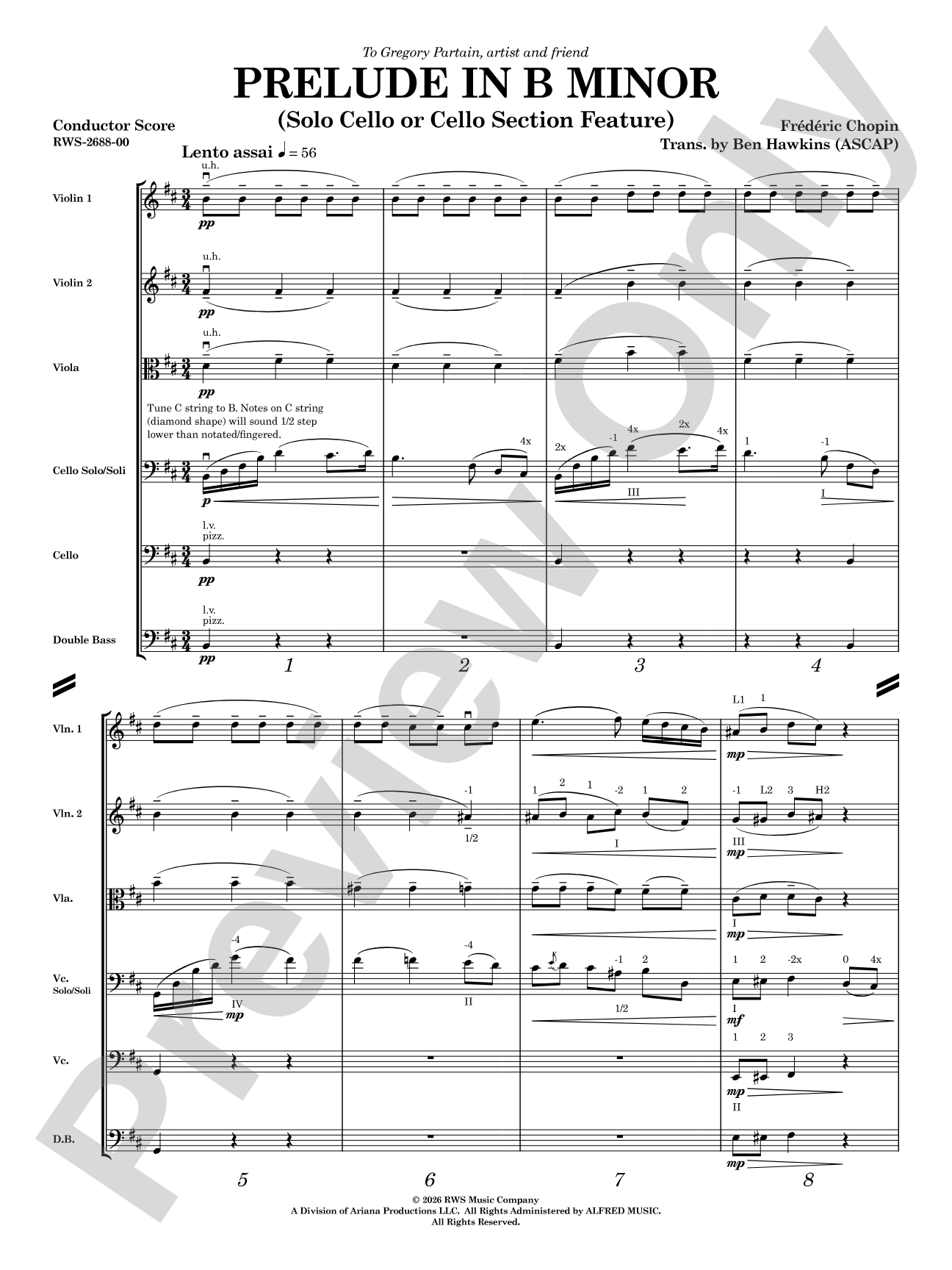
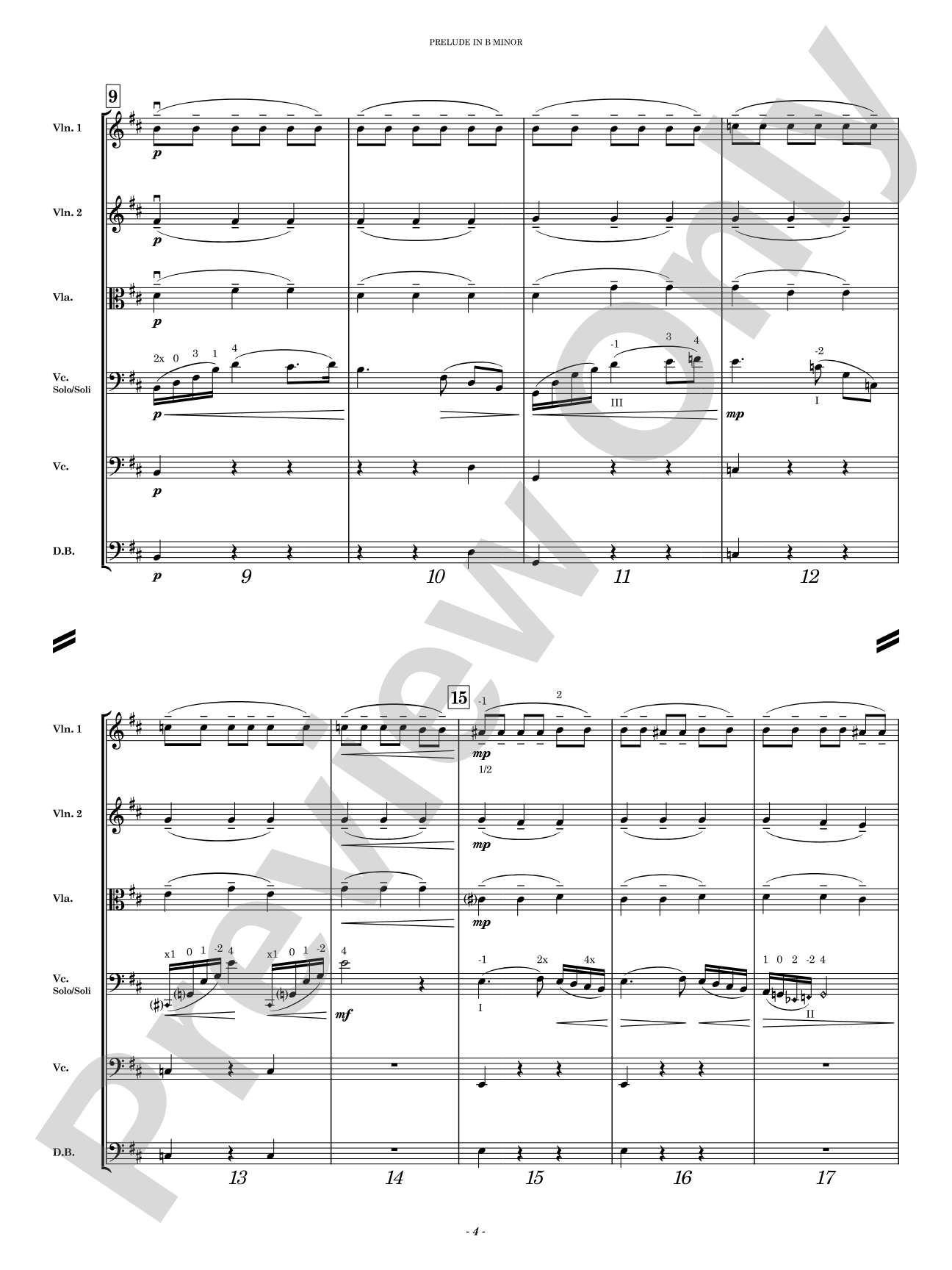
Do you have an outstanding cellist or a cello section ready for the spotlight? Prelude In B Minor showcases rich, noble sonorities through a C string retuned down to B, allowing the cello to resonate with remarkable depth and power. The final note will linger, vibrating in your audience's bones.


Discover MakeMusic Cloud: thousands of interactive titles your students can play along with today.
Sample Audio
1
Audio File
--:--
0:00
0:00
Sample Video
Additional Details
Series:
RWS - Concert Strings
Publisher:
RWS Music Company
SKU:
98-PK-0000062
More about this title
About the Composer: Frédéric Chopin
Frédéric Chopin (1810–1849) fundamentally changed how composers thought about the piano and, by extension, instrumental color and emotional intimacy in music. His Preludes, particularly Op. 28, stand among the most performed and studied works in classical music, each one a complete emotional world in miniature. Chopin's genius lay in his ability to extract profound expressive power from deceptively simple means, making his music endlessly rewarding for both advanced musicians and students working toward mastery.
Why we love this
This arrangement taps into something few Grade 3 pieces manage: genuine orchestral gravitas. Ben Hawkins has reimagined Chopin's introspective miniature for strings in a way that honors the original while demanding something different from your ensemble. The retuned cello C string creates a sonority that feels both strange and inevitable, turning a technical constraint into the piece's greatest asset.
What to expect
Intimate and reflective, yet weighted with nobility. The retuned cello transforms Chopin's hushed opening into something more resonant and earthen, creating an atmosphere of quiet dignity rather than fragility. By the final measure, you've moved from listening to a room full of strings into experiencing a single, profound exhale.
Who it's for
Ensembles with a strong cello section or a standout cellist ready to anchor a concert program. Advanced Grade 3 orchestras will find this piece sits perfectly in their wheelhouse, offering technical challenge without overwhelming the group.
How to get the most out of it
- Rehearse the open B string on cellos separately before full ensemble work. This unfamiliar tuning requires deliberate muscle memory; isolate passages where that resonance matters most.
- Balance the melodic line against sustained harmonies by having your cello principals practice with a lighter bow pressure during inner voices, saving weight for the exposed moments.
- Let the final sustained note breathe without rushing. The instruction about resonance lingering in the audience isn't poetic exaggeration; shape your release to maximize that afterimage.
- Shape phrases in four-bar or eight-bar units rather than note-to-note, allowing the Romantic contour to emerge clearly from what could otherwise feel static.
How to use it
This works beautifully as a concert opener, setting a reflective tone before you shift into more energetic repertoire. It also pairs well with other Romantic-era works or with contemporary pieces that explore orchestral color in unconventional ways. Consider it for a solo spotlight feature if your cello section deserves recognition.
Skills your students will build
- Ensemble balance and voicing in a sparse harmonic texture
- Playing with sustained tone quality across extended passages
- Navigating an altered tuning system and its fingering implications
- Shaping Romantic phrasing through breath and silence rather than rapid figuration
- Listening to and blending with resonance from unfamiliar string colors