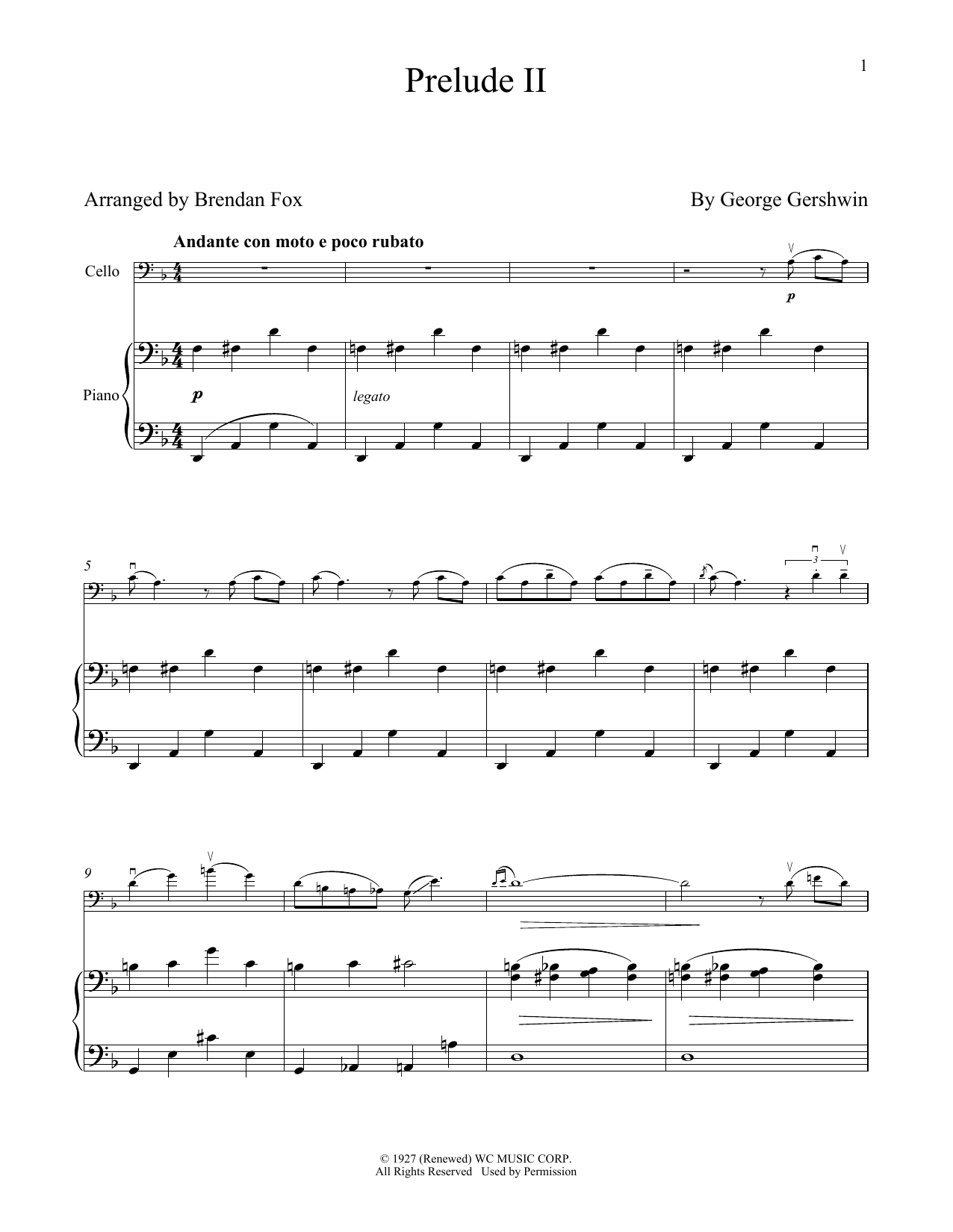
Prelude II (Andante Con Moto E Poco Rubato) Sheet Music Preview

Prelude II (Andante Con Moto E Poco Rubato): Cello and Piano

By George Gershwin / Arranged by Brendan Fox

Item: 35-DS00475674

Digital Download
$5.99
One moment…
Description

Discover MakeMusic Cloud: thousands of interactive titles your students can play along with today.

Sample Audio
No sample audio found.
Sample Video
Additional Details
Publisher: Hal Leonard
Page Count: 4
SKU: 35-DS00475674

More about this title

About the Composer: George Gershwin

George Gershwin (1898–1937) fundamentally changed American music by legitimizing jazz as a concert art form. He wrote for stage, screen, and symphony hall with equal facility, creating works that still define the sound of early twentieth century popular music. His technical mastery of harmony and orchestration, combined with his gift for memorable melody, made him one of the most influential composers of his era.

For music educators, Gershwin's output offers a rare opportunity to teach the sophisticated harmonic language of jazz standards alongside works written for serious concert performance. His compositions bridge classical training and vernacular American music in ways that resonate with students across skill levels and musical backgrounds.

Why we love this

Gershwin's Prelude II carries genuine introspection without becoming sentimental, striking a balance many contemporary pieces miss. The rubato marking invites cellist and pianist to shape the melody together, creating an intimate chamber music experience that rewards careful listening from an audience and deepens musicality for the performers.

What to expect

Andante con moto describes a gentle forward motion that never rushes. The poco rubato invites subtle flexibility, a conversational give and take between cello and piano that feels both composed and spontaneous. This is introspective Gershwin, closer to his concert works than his theater songs, with the harmonic sophistication that earned him respect from classical composers.

Who it's for

Intermediate to advanced cellists seeking material that combines classical musicianship with jazz sensibility. Chamber ensembles looking to program a substantial solo work that connects Gershwin's concert music to his popular legacy without requiring a full ensemble.

How to get the most out of it

  • Establish the tempo and harmonic foundation at the first rehearsal, then work backward to the rubato. Lock the vertical alignment before exploring expressive timing in the melodic line.
  • The piano's role here is active accompaniment, not mere support. The cellist should listen for the harmonic sophistication beneath the melody and allow that richness to inform phrasing choices.
  • Consider the registration of the cello line carefully. Explore how different parts of the instrument's range color the emotional arc across the four pages.
  • Record yourselves regularly. Gershwin's jazz idiom depends on groove and swing feel, which are easier to hear and refine when you step outside the moment.

How to use it

Place this as a thoughtful mid-concert interlude between larger ensemble works, or open a recital with it to establish an intimate tone. It works equally well as a solo feature or as part of a Gershwin retrospective that includes both jazz standards and concert pieces.

Skills your students will build

  • Interpreting jazz harmonic language and its relationship to classical harmony
  • Playing rubato with a partner while maintaining rhythmic integrity
  • Balancing expressiveness with technical precision in a composed melody
  • Listening actively to and responding to a pianist's harmonic and rhythmic choices

You May Also Like