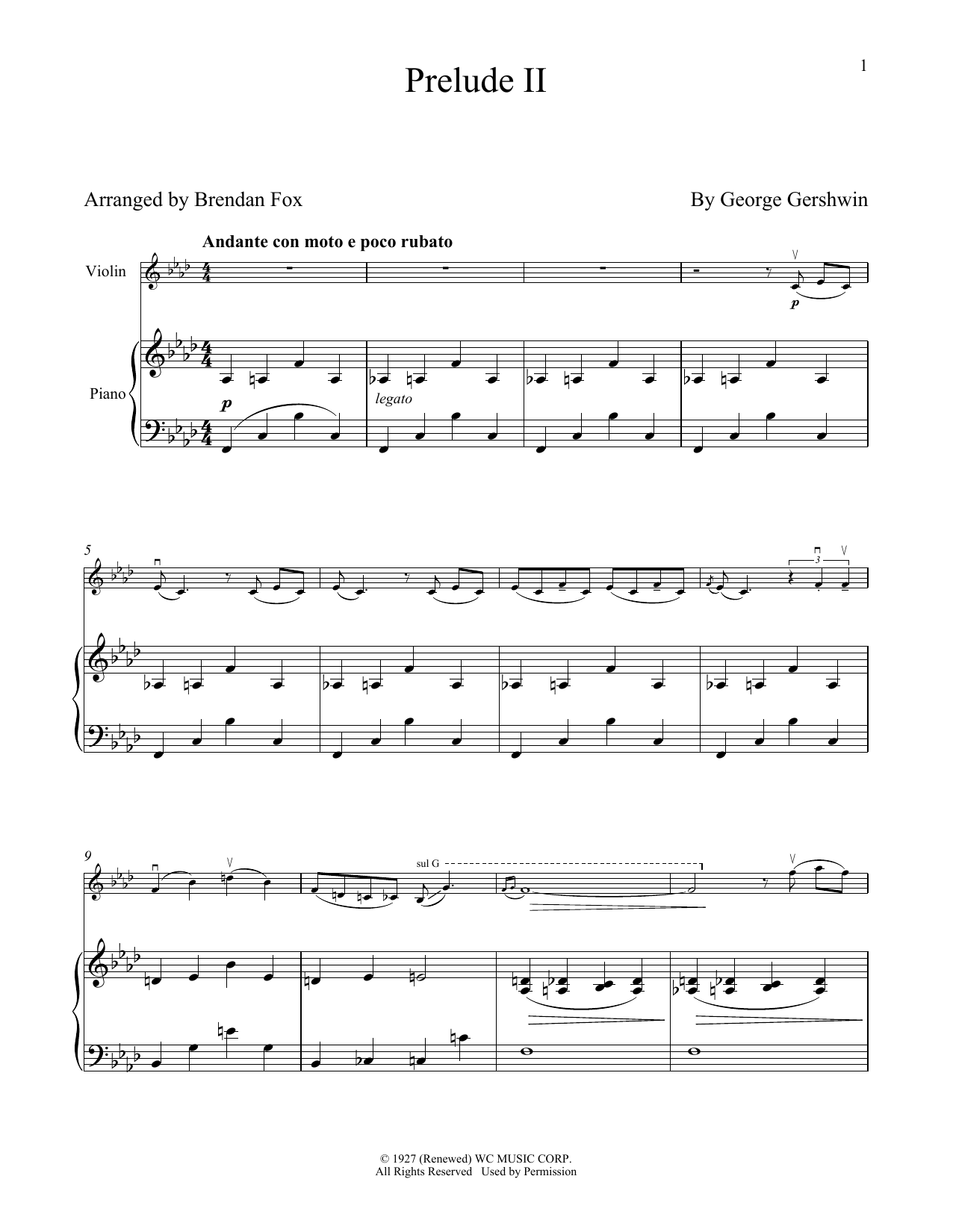
Prelude II (Andante Con Moto E Poco Rubato) Sheet Music Preview

Prelude II (Andante Con Moto E Poco Rubato): Violin and Piano

By George Gershwin / Arranged by Brendan Fox

Item: 35-DS00475669

Digital Download
$5.99
One moment…
Description

Discover MakeMusic Cloud: thousands of interactive titles your students can play along with today.

Sample Audio
No sample audio found.
Sample Video
Additional Details
Publisher: Hal Leonard
Page Count: 4
SKU: 35-DS00475669

More about this title

About the Composer: George Gershwin

George Gershwin (1898–1937) bridged classical and popular music in ways few composers have managed. His concert works drew directly from jazz idioms, blues harmonies, and the vernacular language of American musical theater, giving classical training a genuinely modern voice. For music educators, Gershwin's output offers students a chance to encounter serious compositional craft applied to rhythms and harmonies they recognize from contemporary music.

Gershwin's preludes for solo instruments remain foundational repertoire for advancing students. Written with both technical clarity and expressive depth, these works demand musicality beyond the notes on the page. They reward careful interpretation and reveal how a skilled composer thinks about phrasing, rubato, and the relationship between melody and harmony.

Why we love this

Gershwin's Prelude II sits in that rare space where technical demands and musical storytelling align perfectly. The rubato marking invites students to think like interpreters rather than note readers, and the arrangement preserves the harmonic sophistication of the original while letting the violin sing naturally. Violinists at the intermediate to early advanced level gain exposure to jazz harmonies and expressive flexibility without abandoning the classical technique they've already built.

What to expect

Introspective and lyrical, with an underlying restlessness that keeps the movement forward despite the Andante marking. The piece unfolds like a confident thought, moving through gentle harmonic shifts with the elegance of a ballad. There's melancholy here, but not heaviness; instead, a reflective quality that rewards a singing tone and generous phrasing.

Who it's for

Advanced intermediate to early advanced violinists ready to explore 20th century concert music with jazz roots. This arrangement works equally well for violins preparing solo repertoire or for pedagogically adventurous teachers building students' expressive range. The four page length keeps the work accessible while the harmonic language pushes thinking beyond diatonic comfort zones.

How to get the most out of it

  • Treat the rubato as structural rather than arbitrary; map where the pulse can breathe and where it must return to center, then practice those transitions until they feel intentional.
  • The piano part carries harmonic weight that shapes phrasing. Work with your accompanist early to establish where rubato happens together and where the violin takes the lead.
  • Listen for the blues undertones in Gershwin's harmonic choices. Lean slightly into bent articulations on longer notes if your interpretation supports it, but keep them musical.
  • Balance the Andante tempo marking against the "Con Moto" instruction. This is walking, not dawdling; find a pulse that feels alive even when you're pulling time.

How to use it

Program this as a solo feature in a recital or concert where you want to shift the acoustic and emotional landscape. Its compact form makes it ideal for a bridge between larger ensemble works or as part of a "20th Century Voices" segment that pairs it with other accessible modern pieces. The intimacy of the violin and piano scoring also makes it perfect for a chamber music or collaboration concert.

Skills your students will build

  • Expressive rubato and tempo flexibility in ensemble context
  • Interpretation of jazz harmonies and blue note inflection within classical technique
  • Phrasing across longer melodic arcs with minimal rests
  • Collaborative listening with piano accompanist
  • Stylistic balance between classical articulation and jazz sensibility

You May Also Like