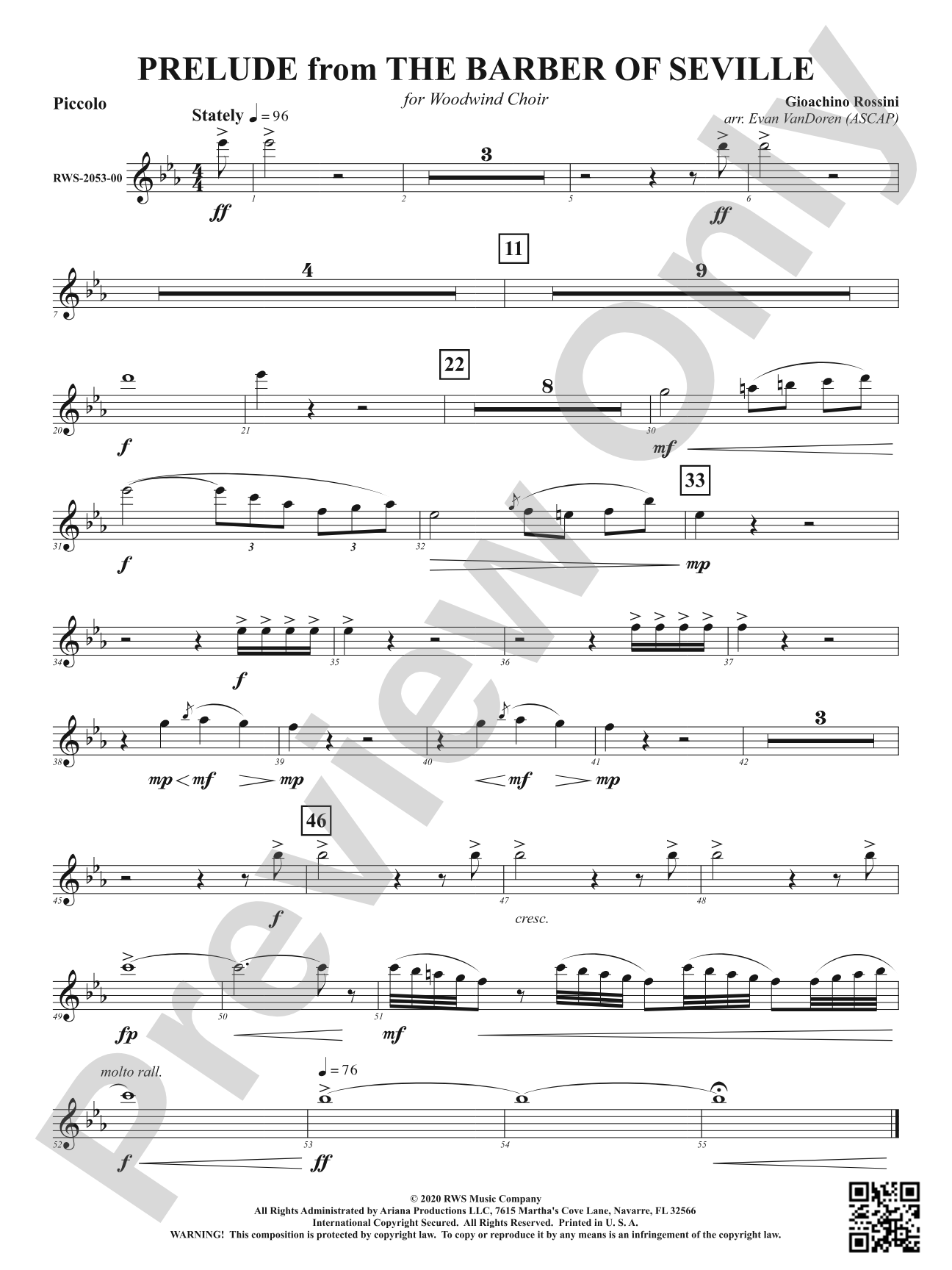
Prelude from <i>The Barber of Seville</i> - For Woodwind Choir: Piccolo Sheet Music Preview

Prelude from The Barber of Seville - For Woodwind Choir: Piccolo

For Woodwind Choir

By Gioachino Rossini / arr. Evan VanDoren

Grade: 4

Item: 98-PC-RWS2053_P1

Digital Download
$3.99
Description
Based on the Rossini opera and scored for woodwind ensemble, this is an excellent addition to your solo and ensemble library. Fun to play, accessible for high school players and with a recognizable melody, Evan VanDoren's beautiful and exciting arrangement for woodwinds brings new perspective to one of our world's most recognized musical scores.

Original Item#: RWS-2053-00

Prelude from The Barber of Seville - For Woodwind Choir: Piccolo isn't in MakeMusic Cloud just yet...but it could be. Let us know you'd like to see it, and you'll help shape what comes next. In the meantime, start a free trial and dive into thousands of interactive titles your students can play along with today.

Sample Audio
0:00
0:00
Sample Video
Additional Details
Series: RWS - Festival Ensemble
Publisher: RWS Music Company
SKU: 98-PC-RWS2053_P1

More about this title

About the Composer: Gioachino Rossini

Gioachino Rossini (1792-1868) was an Italian composer whose gift for melody and comic timing made him one of the most performed operatic voices of the 19th century. The Barber of Seville, his 1816 masterpiece, remains a cornerstone of the opera repertoire, known for its wit, charm, and instantly recognizable themes that have delighted audiences for generations.

Rossini's ability to craft singable, memorable lines translates beautifully into instrumental settings. His melodies are structured for clarity and accessibility, making arrangements of his work particularly rewarding for young ensemble players who can focus on musical expression rather than navigating complex harmonic terrain.

Why we love this

VanDoren's arrangement captures the sparkle and momentum of Rossini's original without overwhelming high school players. The recognizable melody ensures your ensemble sounds accomplished from the first rehearsal, while the accessible Grade 4 voicing keeps the focus on ensemble balance, intonation, and phrasing rather than technical scrambling.

What to expect

Buoyant and lighthearted, with the infectious energy of comic opera. The Barber of Seville's famous prelude bounces along with character and charm, inviting players into Rossini's witty, spirited world without demanding virtuosic display.

Who it's for

High school woodwind ensembles seeking an accessible, audience-friendly piece that builds confidence through immediate melodic recognition. This works equally well for chamber ensembles or as a supplementary piece alongside more challenging concert literature.

How to get the most out of it

  • Shape the opening with clarity and forward motion. Rossini's comedy lives in crisp articulation and rhythmic precision, so lock the attack together and let the melody sing above a light accompaniment.
  • Balance the melody generously. Whether it sits in the flutes, oboes, or clarinets, give it room to soar while keeping inner voices transparent and supportive.
  • Resist the urge to rush. The charm of this piece emerges when you allow space between phrases and let Rossini's natural comedic pacing breathe.
  • Use the full dynamic range. Even at Grade 4, this arrangement likely includes contrasts between sections. Commit fully to both the bright passages and any softer moments to showcase the arrangement's variety.

How to use it

Program this as a standalone concert opener to set an upbeat tone, or pair it with other classical opera or overture arrangements to create a thematic concert around operatic favorites. It also serves as an ideal contest piece for ensembles looking for something engaging and musically solid without the time commitment of learning entirely new repertoire.

Skills your students will build

  • Ensemble balance and blend in woodwind voicing
  • Stylistic articulation in classical and comic opera idioms
  • Phrasing and musical shaping in arranged orchestral material
  • Reading woodwind ensemble scores and parts

You May Also Like