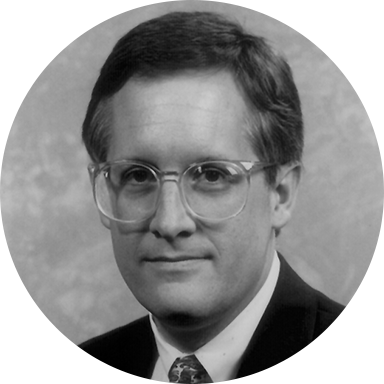
Benjamin Harlan directs the School of Church Music at Southwestern Baptist Theological Seminary in Fort Worth, Texas, where he shapes the next generation of church musicians. His compositions and arrangements appear across the catalogs of major publishers, and his work in choral, keyboard, and handbell writing has earned ASCAP recognition annually since 1990. He holds degrees from Baylor University (B.M. and M.M.) and a doctorate from SBTS, grounding his teaching in both scholarly depth and practical experience.
Harlan's career in church music leadership spans decades. He has served as Associate Professor of Church Music at New Orleans Baptist Theological Seminary and held minister of music positions at significant churches throughout Louisiana and Texas. His professional affiliations with the American Choral Directors Association and the Southern Baptist Church Music Conference reflect his commitment to the field. He lives in Fort Worth with his wife and three children.
Why we love this
Harlan brings the authority of a church music scholar to this Easter arrangement, balancing accessibility with musical substance. The pairing of prelude and processional creates a complete liturgical moment rather than a single piece, giving directors a cohesive package that serves both devotional depth and practical programming needs. His mastery of SATB writing ensures that each voice part sings idiomatically while supporting the emotional arc of the Easter season.
What to expect
A movement between preparation and celebration. The prelude draws listeners inward with harmonic richness, then transitions to the processional's forward-moving energy and structural clarity. Together they create a musical arc that mirrors the emotional journey of Easter observance.
Who it's for
Choirs seeking substantial Easter repertoire that works equally well for concert performance and worship integration. This arrangement suits ensembles with solid musicianship who can hold independent lines while serving the liturgical function of prelude and processional.
How to get the most out of it
Balance the harmonic density across all four parts; the arrangement's strength lies in how Harlan voices chords to create warmth without muddiness. Encourage singers to listen across sections rather than locking into their individual line.
Shape the processional with physical awareness. A piece marked for movement needs rhythmic clarity and forward momentum; avoid dragging through sustained notes and maintain confidence at directional changes.
Anchor the sopranos in their tessitura rather than pushing for volume. Harlan's upper voice writing sits comfortably in the staff, and projection comes from vowel placement and support, not strain.
How to use it
Open an Easter concert with the prelude to establish a reflective atmosphere before the processional introduces a processing element for the ensemble's entrance. Alternatively, use the prelude as a warm-up to a larger Easter service, then conclude with the processional as the choir exits. The 10-page score provides enough substance to anchor a spring concert while remaining focused enough not to overshadow other programming.
Skills your students will build
Sustaining independent SATB lines without doubling or blending into unison
Responding to liturgical text and its demands for reverence and processional dignity
Balancing harmonic blend across a full chord structure
Navigating harmonic changes that move beyond diatonic simplicity
Coordinating physical movement with musical phrasing
You May Also Like
Scan to Complete Your Purchase
Use your phone's camera to scan the code below
You'll log in on your phone and the order will be added to your account