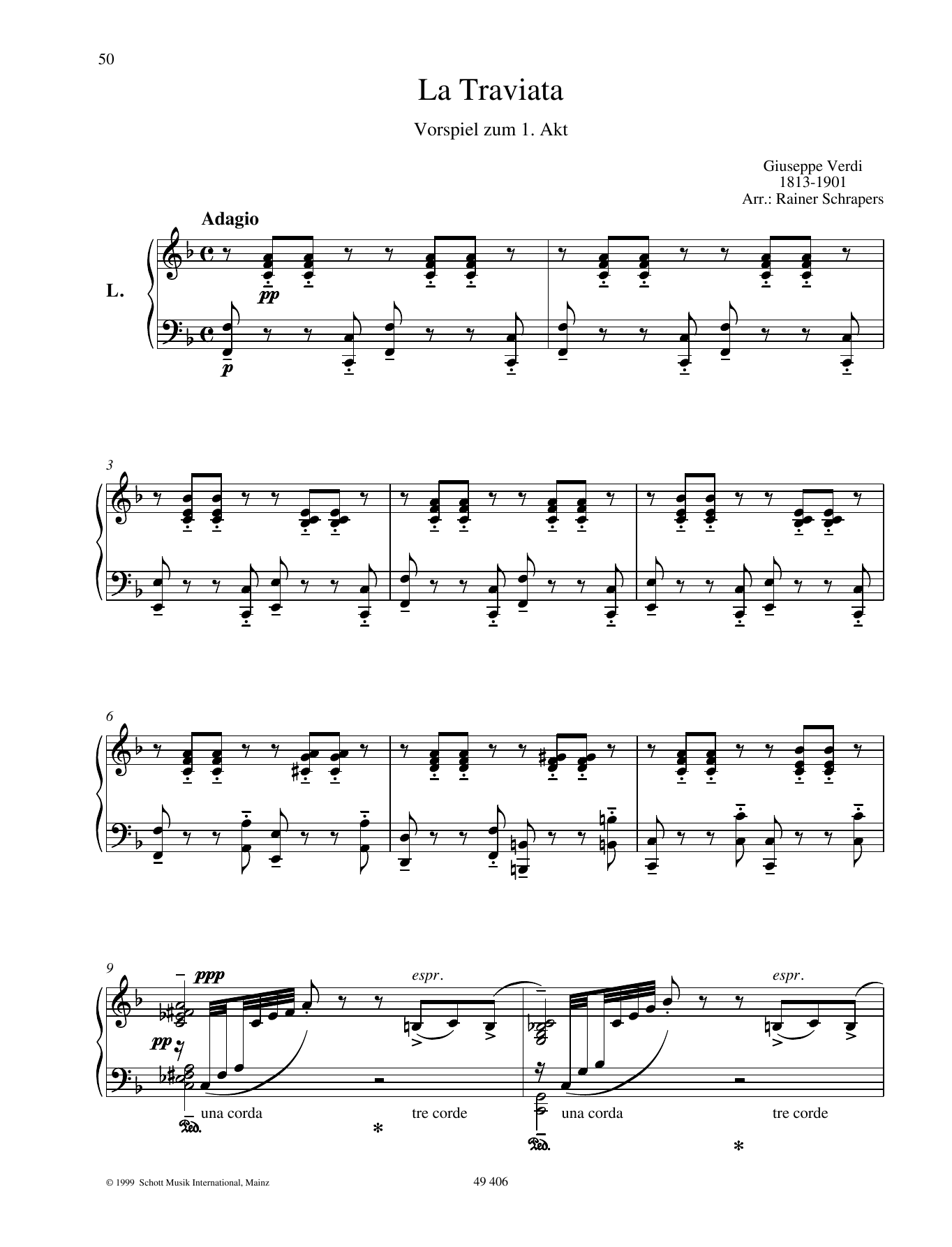
Giuseppe Verdi (1813-1901) stands as one of the most performed composers in the operatic canon, yet his influence extends far beyond the theater. His mastery of melody, harmonic color, and dramatic pacing shaped nearly two centuries of musical practice. For educators, Verdi's catalogue offers accessible entry points into Romantic musical thinking: his writing for voice and piano illuminates fundamental principles of phrase architecture, text setting, and emotional trajectory that students can immediately apply to their own interpretive work.
Verdi's later life saw him increasingly interested in pure instrumental forms. The Prélude from this period reflects his evolved compositional voice, where operatic sensibility meets abstract structural thinking. His gift for memorable, singable lines translates powerfully to piano writing, making works like this valuable for students developing their understanding of how lyrical content operates independent of words.