
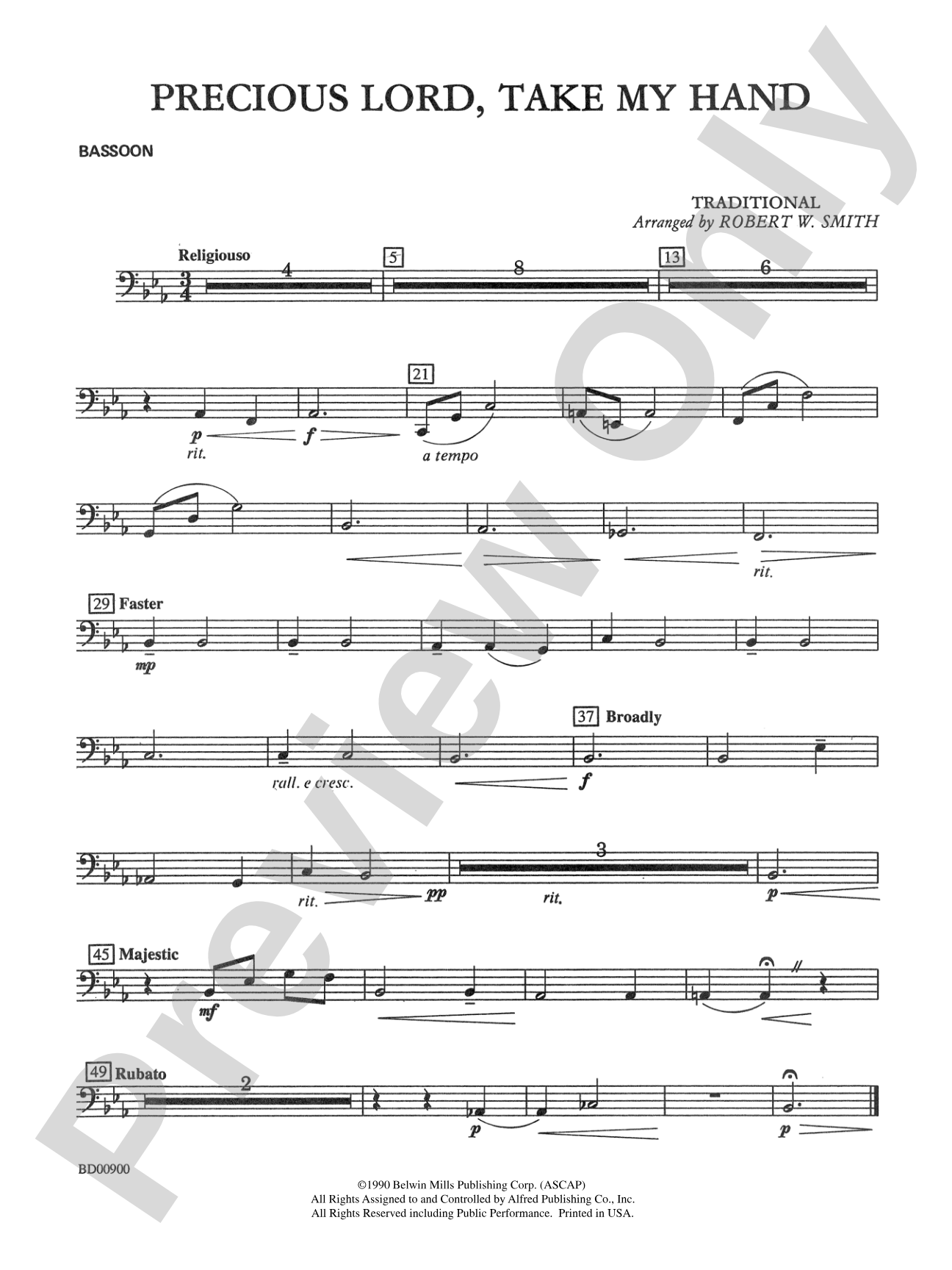

Precious Lord, Take My Hand: Bassoon
Flute Solo
Arr. Robert W. Smith
Grade: 3 (Medium Easy)
Item: 00-PC-0001978_B1
$5.99
Pickup currently not available
Description
Gorgeous sonorities flow throughout this beautiful musical adaptation. The melody is initially stated with a flute solo with woodwind and chime accompaniment. This adaptation of "Precious Lord Take My Hand" builds to a grandiose conclusion with the entire ensemble. Wonderfully moving! (2:36)


Don't just read it, hear it, play along with it, and watch your students grow with it. In MakeMusic Cloud, Precious Lord, Take My Hand: Bassoon comes alive with professional accompaniment, adjustable tempo, and built-in practice tools that turn solo practice into real progress.
Open in the Player
Jump straight in and assign it today.
Start Your Free Trial
Open this title and explore the full library in minutes.
Sample Audio
1
Audio File
--:--
0:00
0:00
Sample Video
No sample videos found.
Additional Details
Series:
Belwin Concert Band
Publisher:
Alfred Music
Page Count:
176
SKU:
00-PC-0001978_B1
More about this title
About the Arranger: Robert W. Smith

Robert W. Smith stands among the most published composers and arrangers in American concert band and orchestral music, with more than 400 works in active circulation. He holds degrees in music education from Troy State University and a master's degree from the University of Miami, and has built a career rooted in both composition and performance, conducting clinics and concert appearances across the United States, Canada, and internationally including Japan, Australia, Italy, Austria, and the United Kingdom.
Smith's catalog spans original symphonies, program music, and arrangements that have reached audiences through television broadcasts, ceremonial events, and major cultural institutions. His works for developing ensembles, particularly The Tempest and similar pieces, have become staples in band curricula. The breadth of his publishing output through Alfred Music reflects the accessibility and musical substance that define his writing.
Why we love this
Smith's arrangement honors the spiritual depth of this beloved hymn while crafting an accessible Grade 3 setting that works beautifully in concert programming. The strategic use of a flute solo with delicate accompaniment creates an intimate moment before the full ensemble swell, giving every section a clear role and rewarding both players and listeners with textural contrast.
What to expect
The piece opens with intimate grace, a single flute voice floating above delicate support, inviting quiet reverence. As the arrangement unfolds, warmth and confidence grow, building steadily until the full ensemble arrives with genuine grandeur, transforming the familiar melody into a communal statement of faith and hope.
Who it's for
This arrangement serves Grade 3 concert bands seeking meaningful repertoire with a sacred theme, from school programs looking to add depth to concert programming to community and adult bands wanting accessible yet emotionally substantive work. Directors will appreciate the manageable instrumentation and technical demands while maintaining musical integrity.
How to get the most out of it
- Bring out the flute solo melody in the opening section with warm, singing tone; the woodwind and chime accompaniment should remain subordinate and supportive throughout the introduction.
- Shape the dynamic build toward the final ensemble statement with intention, allowing gradual additions of voices and doublings to create a natural arc rather than sudden changes.
- Balance the full ensemble carefully at the grandiose conclusion so that the melody remains audible above the harmonic foundation; avoid letting lower voices overwhelm the line.
- Use breath control and phrasing to reflect the hymn's spiritual character, treating longer passages as singing phrases rather than mechanical rhythmic blocks.
How to use it
This works exceptionally well as a concert opener or as part of a themed program exploring spirituals and sacred music across cultures. The moderate length (2:36) and Grade 3 accessibility make it ideal for mid-year festivals or spring concerts alongside both original compositions and other arranged standards.
Skills your students will build
- Balancing solo melody against ensemble accompaniment
- Shaping dynamic growth across an extended phrase
- Phrasing hymn-based melody with sustained musicality
- Voicing thick ensemble textures with clarity and blend
- Reading and executing articulation and expression markings in concert context