
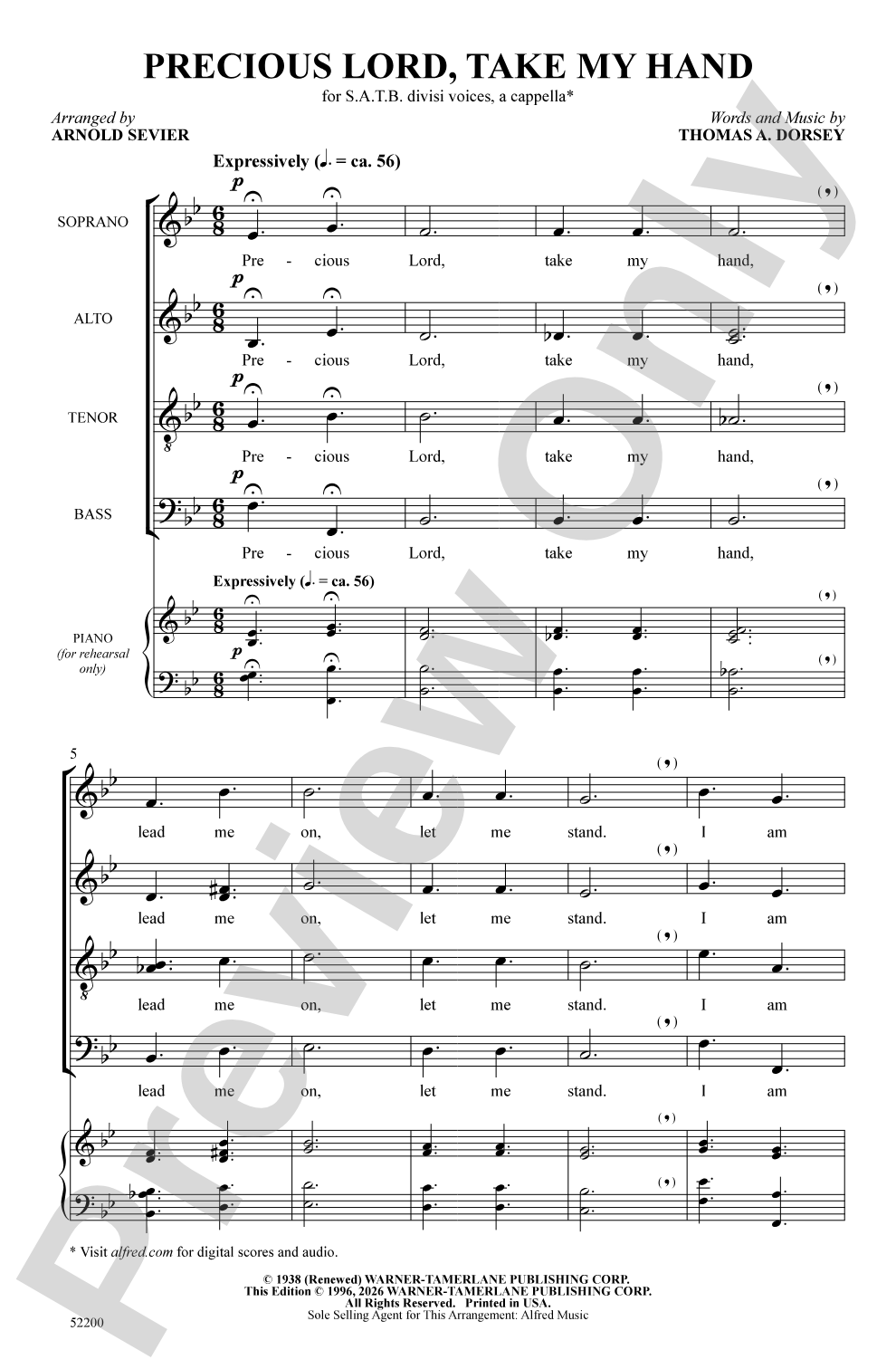
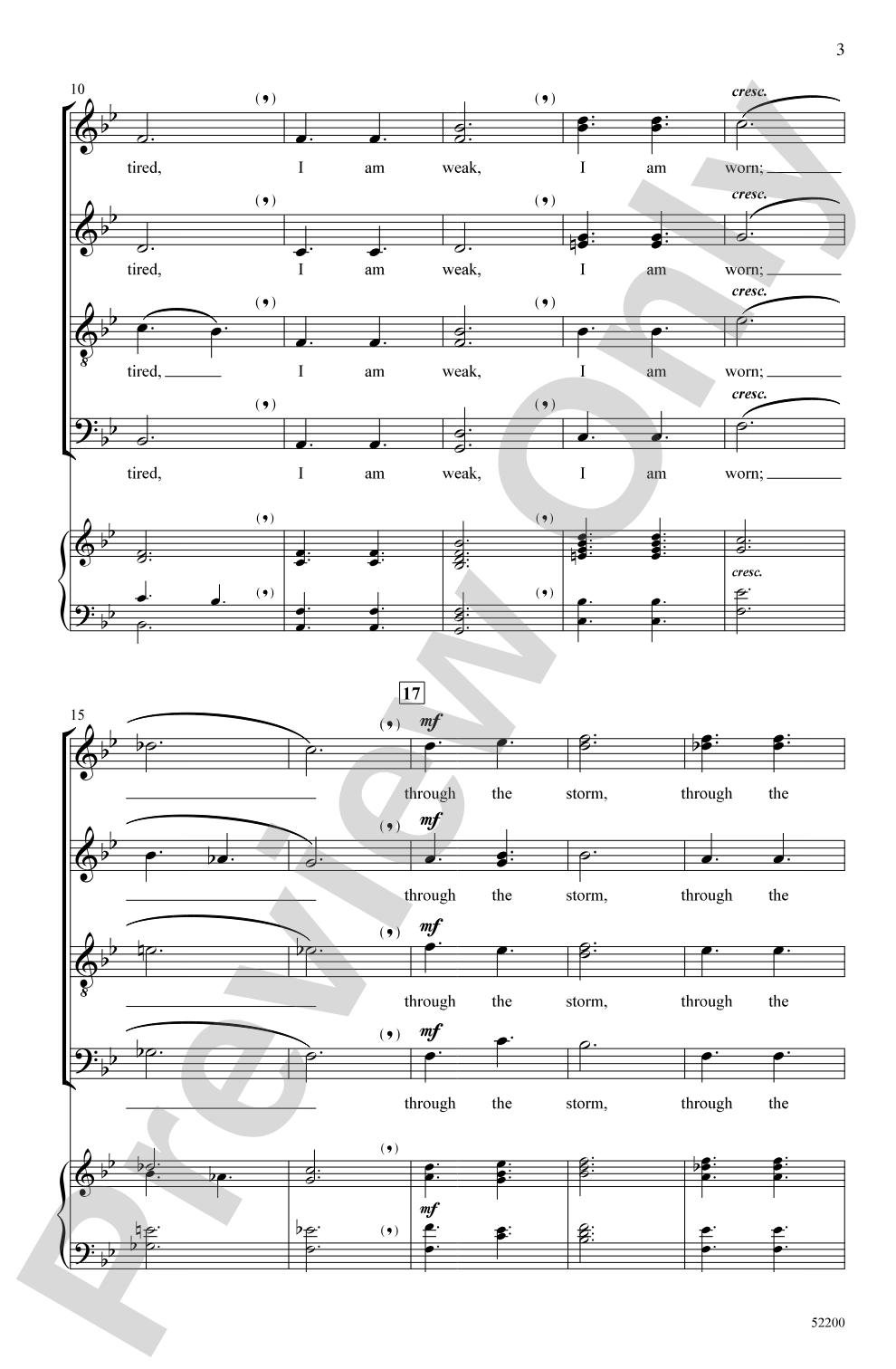

Precious Lord, Take My Hand: SATB a cappella Choral Octavo
Words and music by Thomas A. Dorsey / arr. Arnold Sevier
Item: 00-PO-0007826
$2.40
Minimum order quantity: 20 copies
Pickup currently not available
Related Items
Precious Lord, Take My Hand: SATB a cappella Choral Octavo |
$2.40
|
View |
Description
Experience the profound emotional depth of Thomas A. Dorsey's beloved hymn in a stunning a cappella setting. Arnold Sevier's arrangement elevates the traditional melody with a rich harmonic palette and nuanced dynamic shading. This beautifully engraved edition preserves a pillar of the choral repertoire for generations to come. Whether performed in a liturgical setting or on a concert stage, it's a powerful moment of reflection and vocal brilliance.


Discover MakeMusic Cloud: thousands of interactive titles your students can play along with today.
Sample Audio
1
Audio File
--:--
0:00
0:00
Sample Video
Additional Details
Series:
Lawson-Gould
Publisher:
Alfred Music
Page Count:
8
SKU:
00-PO-0007826
More about this title
About the Composer: Thomas A. Dorsey
Thomas A. Dorsey (1899, 1993) is widely regarded as the father of gospel music, a pianist and composer who fundamentally shaped American sacred music in the twentieth century. His work bridged the gap between blues, jazz, and traditional hymody, creating a new musical language that spoke directly to the spiritual experience of Black congregations. "Precious Lord, Take My Hand," written in 1932 during a period of profound personal grief, became one of the most recorded and performed gospel songs in history, recorded by everyone from Mahalia Jackson to Aretha Franklin.
Dorsey's compositions are essential to any choral program seeking to honor the depth and emotional authenticity of the gospel tradition. His melodies are singable and memorable, yet his harmonic thinking was sophisticated enough to challenge and inspire developing musicians. For educators, his work represents a crucial bridge between concert music and the lived spiritual traditions of their students.
Why we love this
Sevier's arrangement honors Dorsey's spiritual intention while giving singers real harmonic work to sink their teeth into. The a cappella texture demands vocal independence and blend, transforming what could be a straightforward hymn into a moment of genuine ensemble artistry. This is the kind of piece that reminds audiences why choral music matters.
What to expect
The music unfolds with quiet dignity and spiritual yearning. Sevier's harmonic language moves beyond the hymn's original simplicity, using color and movement to deepen the prayer-like quality of Dorsey's text. This is music for moments of collective reflection, where vulnerability and strength coexist.
Who it's for
This arrangement suits experienced SATB choirs with secure blend and four-part reading skills. Sacred music programs in churches, concert choirs, and festival participants will all find this piece rewarding, though it demands singers who can navigate chromatic harmony and sustain long phrases without instrumental reinforcement.
How to get the most out of it
- Establish a warm, unified vowel sound across all four parts before rehearsing the text. The harmonic richness relies on vocal homogeneity, especially in the sustained passages.
- Map the dynamic arc carefully with your singers. Sevier's "nuanced dynamic shading" requires deliberate planning so that phrase-level dynamics serve the emotional narrative rather than breaking the line.
- Balance soprano and alto lines when they carry the primary melody or counter-melody. Without instrumental support, these voices must project with intention while maintaining blended tone quality.
- Allow rehearsal time for the bass line to establish its harmonic foundation securely. Confident bass singing anchors the entire chord structure in an a cappella setting.
How to use it
Position this as a centerpiece on a sacred music program or as the emotional anchor of a concert built around African American spiritual traditions. Its 8 pages and moderate difficulty make it accessible for spring choral festivals, and it pairs naturally with spirituals or other Dorsey compositions.
Skills your students will build
- Reading and singing four-part chromatic harmony without instrumental accompaniment
- Sustaining long phrases while maintaining intonation and blend in a cappella texture
- Understanding the historical and cultural context of gospel hymnody in the American choral tradition
- Balancing individual vocal line clarity with ensemble harmonic cohesion