

Prayer of St. Gregory (Educational Edition): String Orchestra Conductor Score & Parts
Arranged by Robert Longfield
Grade: 3-4
Item: 35-PK00334891
$59.95
Pickup currently not available
Buy Extra Parts (Digital PDF Download)
Parts Added to Cart!
Description
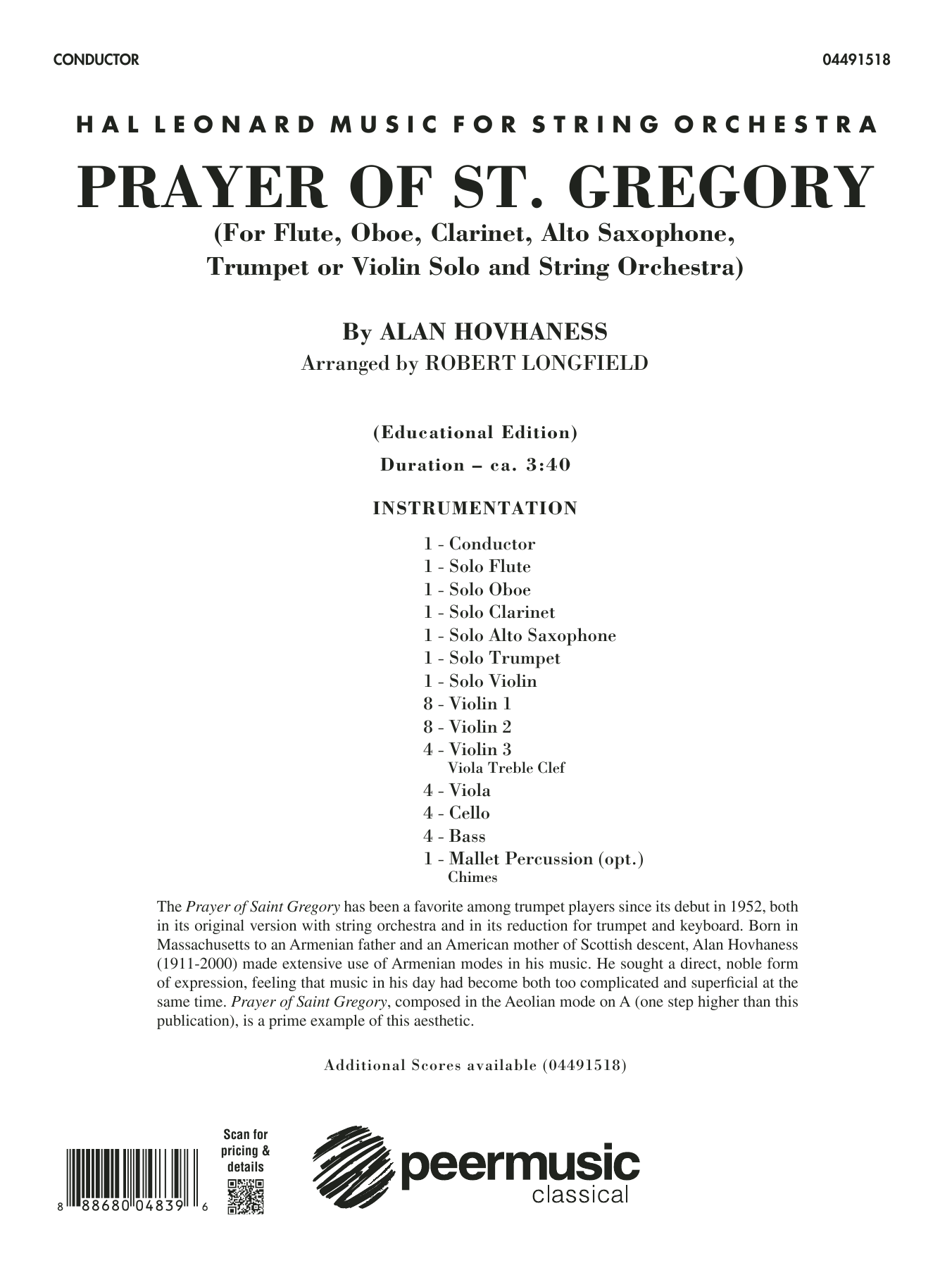
One of the most popular pieces from Alan Hovhaness, "Prayer of St. Gregory" is taken from the opera "Etchmiadzin" and is described as "a prayer in darkness." The original edition for trumpet and orchestra is adapted here for string orchestra with solo options for violin, flute, oboe, alto saxophone, and trumpet. Dur: 3:40


Prayer of St. Gregory (Educational Edition): String Orchestra Conductor Score & Parts isn't in MakeMusic Cloud just yet...but it could be. Let us know you'd like to see it, and you'll help shape what comes next. In the meantime, start a free trial and dive into thousands of interactive titles your students can play along with today.
Request This Title
Tell us you want it.
Start Your Free Trial
Explore everything that's ready to play right now.
Sample Audio
No sample audio found.
Sample Video
No sample videos found.
Additional Details
Publisher:
Hal Leonard
SKU:
35-PK00334891
More about this title
About the Arranger: Robert Longfield
Robert Longfield has built a reputation as a thoughtful arranger for educational ensembles, with a particular gift for making standard repertoire accessible to developing orchestras. His work respects the integrity of the original composition while writing idiomatically for the instruments at hand.
Why we love this
Longfield's arrangement opens up one of Hovhaness's most affecting works to string orchestras that might not have the resources or instrumentation for the original. The solo options create natural opportunities for featured players, and the arrangement preserves the piece's meditative quality while remaining playable at this level.
What to expect
A sustained meditation unfolding in stillness, with a single voice rising from quiet strings as if emerging from shadow. The piece carries an introspective weight without heaviness, asking listeners to sit with its simple, searching melody.
Who it's for
String orchestras at the intermediate level, particularly those seeking a substantial repertoire piece with spiritual depth that doesn't demand virtuosity. The optional solos make it equally valuable for chamber orchestras or for schools wanting to feature a strong string player.
How to get the most out of it
- Balance the solo line above the string texture by asking the soloist to shape phrases rather than push volume. The accompaniment should breathe with the melody, not under it.
- Establish a unified sense of rubato in early rehearsals so the piece doesn't feel metrically rigid. Record a tempo reference to stabilize ensemble security while maintaining interpretive flexibility.
- Consider which solo color suits your ensemble's strengths. The violin and flute versions will feel most transparent; trumpet brings dramatic weight to the arrangement.
How to use it
This pairs well with other string orchestra works on a concert devoted to contemplative or liturgical music. Its modest three-minute-forty duration fits effectively as an opening or interlude, giving your program breathing room without requiring substantial rehearsal time relative to its impact.
Skills your students will build
- Sustaining long tones with consistent tone quality and intonation
- Playing as an accompaniment texture that supports a solo line without overwhelming it
- Ensemble balance across multiple string parts
- Responding to a soloist's phrasing and tempo choices
- Creating character through dynamics and articulation rather than speed or technical display