
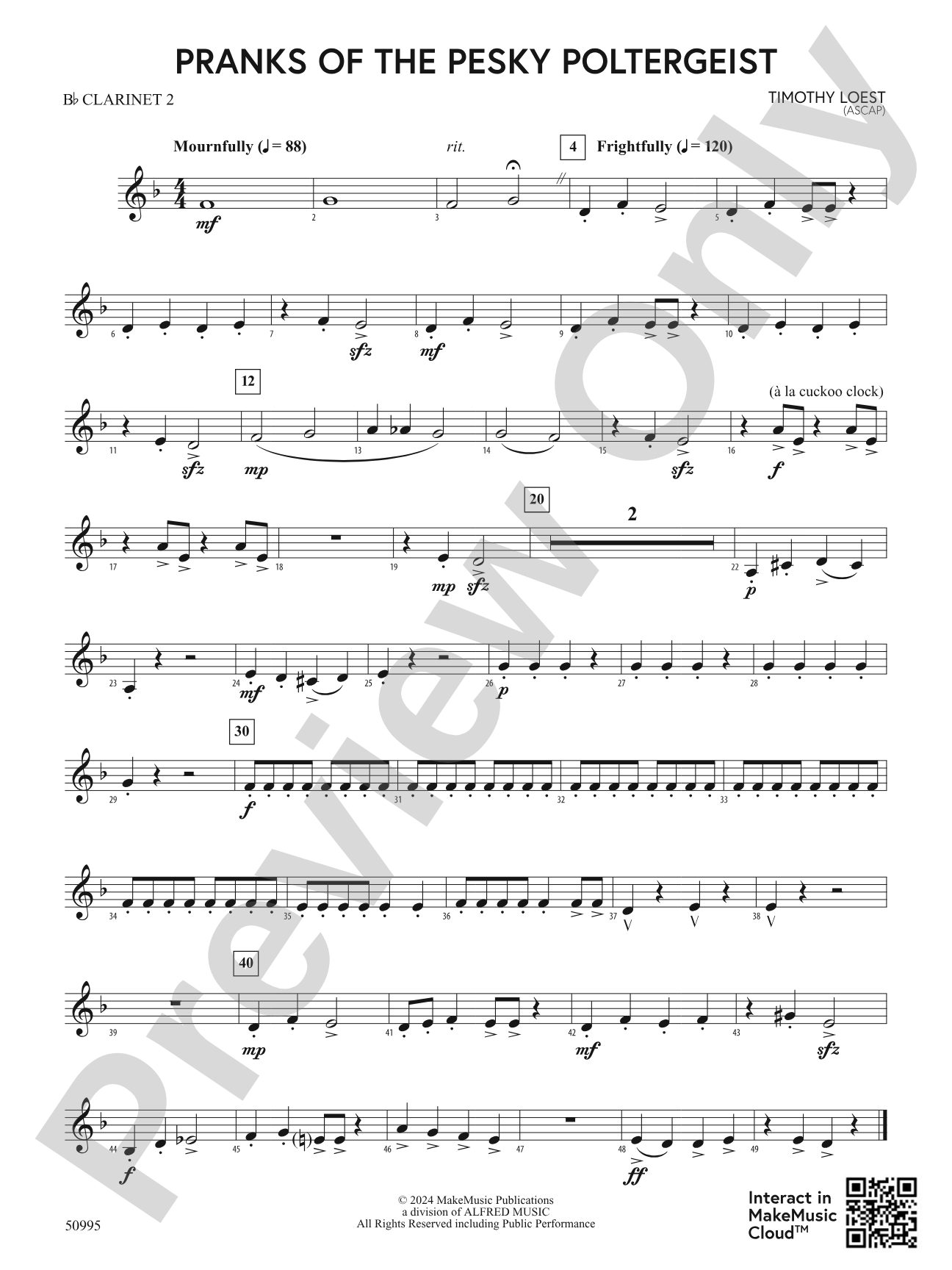

Pranks of the Pesky Poltergeist: 2nd B-flat Clarinet
By Timothy Loest
Grade: 1
Item: 00-PC-0019212_C2
$3.00
Pickup currently not available
Description
Experience the paranormal in this spine-tingling work by Timothy Loest that includes spooky sound effects, unexplained noises that interrupt frightful melodies, and even a hint of Mussorgsky's "Night on Bald Mountain". Pranks of the Pesky Poltergeist is destined to be the hit of your fall or spring concert. Simply suspenseful, yet delightfully dreadful! (1:45)


Don't just read it, hear it, play along with it, and watch your students grow with it. In MakeMusic Cloud, Pranks of the Pesky Poltergeist: 2nd B-flat Clarinet comes alive with professional accompaniment, adjustable tempo, and built-in practice tools that turn solo practice into real progress.
Open in the Player
Jump straight in and assign it today.
Start Your Free Trial
Open this title and explore the full library in minutes.
Sample Audio
1
Audio File
--:--
0:00
0:00
Sample Video
Additional Details
Series:
MakeMusic Developing Band
Publisher:
MakeMusic Publications
SKU:
00-PC-0019212_C2
More about this title
About the Composer: Timothy Loest

Timothy Loest has spent over thirty years in the instrumental music classroom, where his deep understanding of young musicians' needs directly shapes his compositions. His works are performed by student ensembles worldwide, and his pedagogical influence extends through his association with Measures of Success®: A Comprehensive Musicianship Band Method and several supplementary resources designed to build musicianship alongside repertoire. In 2017, one of his compositions reached over 5,000 spectators at Chicago's Millennium Park, and that same year he received the Illinois Grade School Music Association's Cloyd Myers Memorial Award for Excellence in Music Education.
Loest's output spans concert music, arrangements, and commissions for band at all levels. His compositions have been featured on network television, including The Tonight Show Starring Jimmy Fallon and Good Morning America. He founded Fanfare Music Press in 2022 to publish high-quality band literature and holds degrees from Illinois State University and Northwestern University. He remains active as a composer and conductor, regularly accepting commissions through his website.
Why we love this
Loest captures the playful chaos of Halloween in a way that delights audiences without requiring elaborate staging or student anxiety. The Grade 1 accessibility means your developing players can handle the melodic and rhythmic content while the sound effects and references create the concert-ready impact that makes directors' jobs easier. This is the kind of piece that guarantees laughter and applause from parents and students alike.
What to expect
Spooky yet charming, with sudden surprises that interrupt flowing melodies and keep both performers and listeners delightfully off-balance. The orchestration crackles with mischievous energy, and Loest's nod to Mussorgsky adds musical substance beneath the theatrical fun.
Who it's for
Grade 1 concert bands preparing repertoire that earns genuine applause at fall or spring concerts. Directors seeking music that challenges developing players musically while delivering the fun factor that keeps young musicians engaged in the rehearsal process.
How to get the most out of it
- Coordinate the timing of sound effects cues carefully during rehearsal; mark them visibly in the score and assign responsibility to a reliable student or section leader so the interruptions land with maximum comedic effect.
- Balance the spooky melodic material against the lighter moments by letting younger players lean into the dramatic moments without overshadowing the humor.
- Rehearse the Mussorgsky reference separately so students recognize the callback and understand the compositional wink; this builds their listening skills and investment in the performance.
- Use the recorded accompaniment to lock the ensemble's response to unexpected sound cues, especially when rhythmic disruption is part of the effect.
How to use it
Program this as a highlight of your fall concert to set the mood and earn immediate connection with your audience. Its 1:45 length makes it ideal as a brief palate-cleanser between heavier works, or position it as a closer that sends audiences home smiling and energized.
Skills your students will build
- Responding to and executing sudden rhythmic interruptions and entrances
- Listening to external cues and ensemble coordination with sound effects
- Balancing melody against unexpected textural contrasts
- Identifying and performing stylistic references within contemporary concert music
- Maintaining ensemble cohesion through shifts in dynamic and dramatic intent