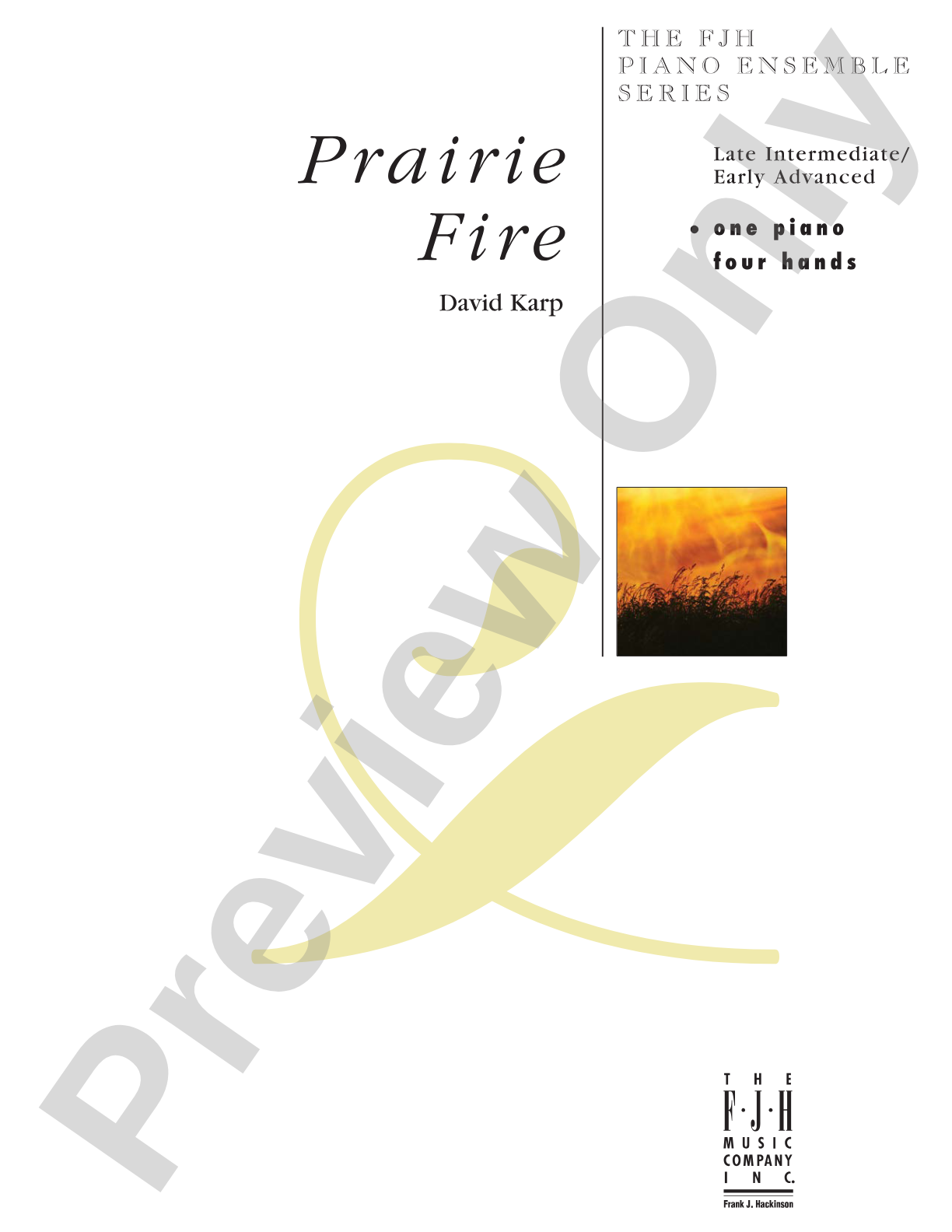
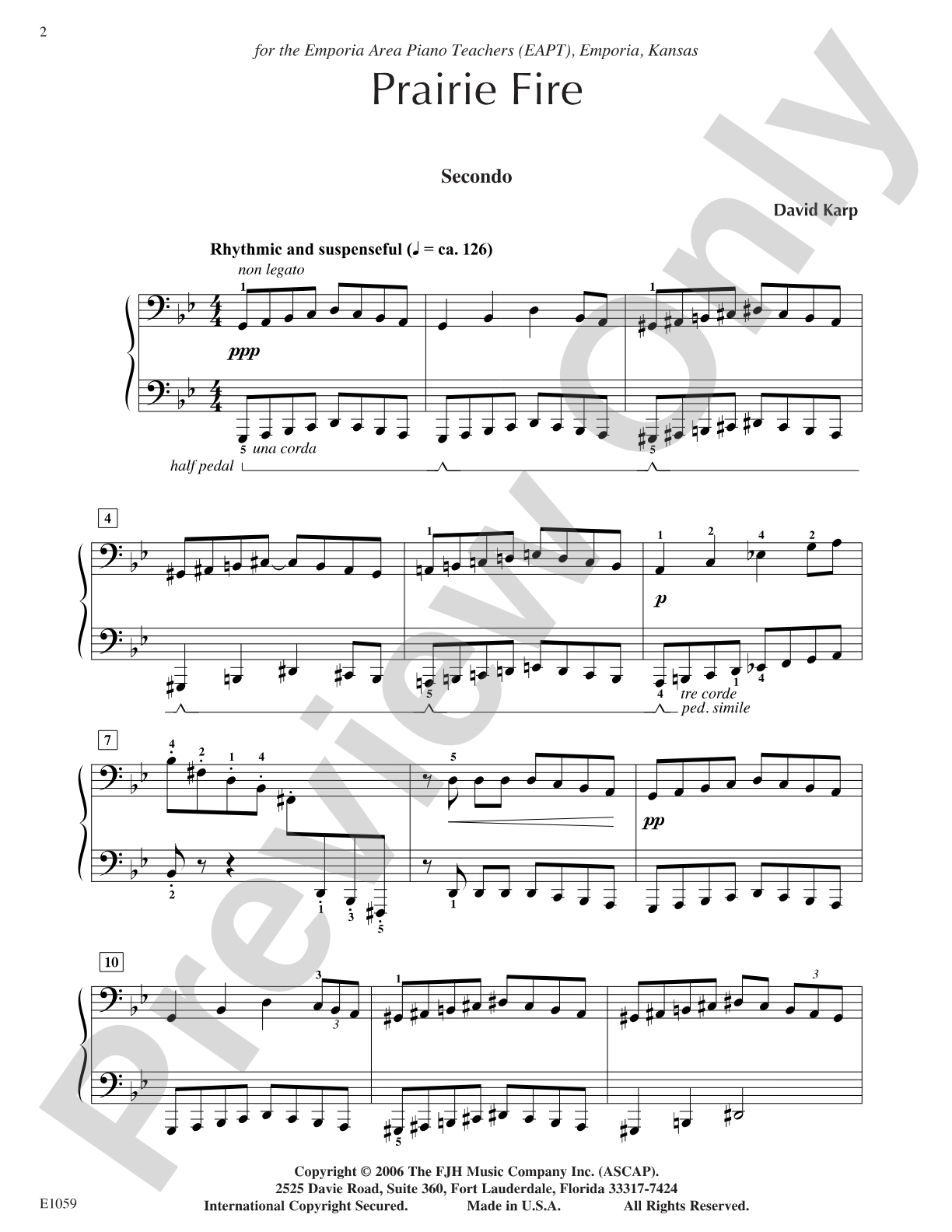
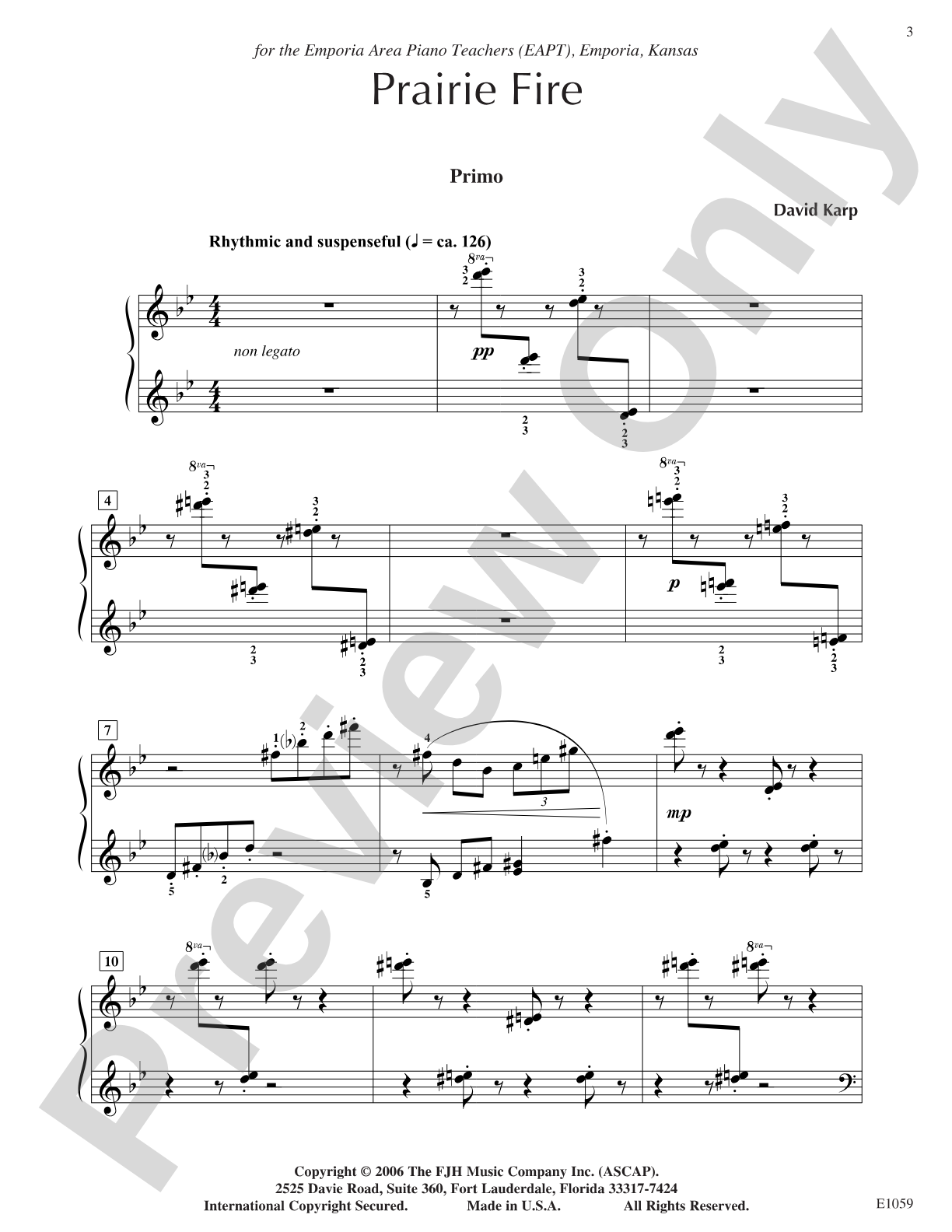
Labeled "Rhythmic and suspenseful," and written for the Emporia Area Piano Teachers of Emporia, Kansas, this duet will undoubtedly be a unique and challenging experience for any late intermediate/early advanced pianist. Both parts contain an equal amount of technical and musical demands, utilizing several eighth and sixteenth note passages, accidentals, and chromaticism.
Discover MakeMusic Cloud: thousands of interactive titles your students can play along with today.
Karp writes both parts with genuine equality, so neither pianist sits in a subordinate role. The rhythmic intensity and chromatic language keep students engaged with material that challenges their musicianship, not just their fingers.
What to expect
The piece builds momentum through restless rhythmic energy and chromatic twists that keep the ear off balance. It carries real drama without leaning on heavy romantic idioms, giving it a sharp, modern edge.
Who it's for
Late intermediate and early advanced pianists ready for music that demands equal technical work from both hands and both players. This works well for duet-focused students or for ensemble settings where two pianists can collaborate as genuine partners.
How to get the most out of it
Balance the sixteenth-note passages between both parts so the texture stays transparent rather than muddled; clarity matters more than speed.
Map out the accidentals together before rehearsal to avoid the instinct to 'correct' them during performance.
Let the suspenseful quality breathe by resisting the urge to rush through the eighth-note figures; rhythmic precision actually heightens tension.
How to use it
Feature this at a studio recital or ensemble concert where you want to showcase two accomplished pianists working together at the intermediate level. It pairs well with other contemporary duet writing and offers a substantial alternative to purely classical or romantic four-hand repertoire.
Skills your students will build
Reading and executing sixteenth-note patterns with rhythmic accuracy
Managing chromatic passages and accidentals
Ensemble listening and rhythmic coordination between two equal voices
Sustaining musical tension through texture and rhythmic momentum
You May Also Like
Scan to Complete Your Purchase
Use your phone's camera to scan the code below
You'll log in on your phone and the order will be added to your account