Prairie Dance: 2nd B-flat Clarinet Sheet Music Preview

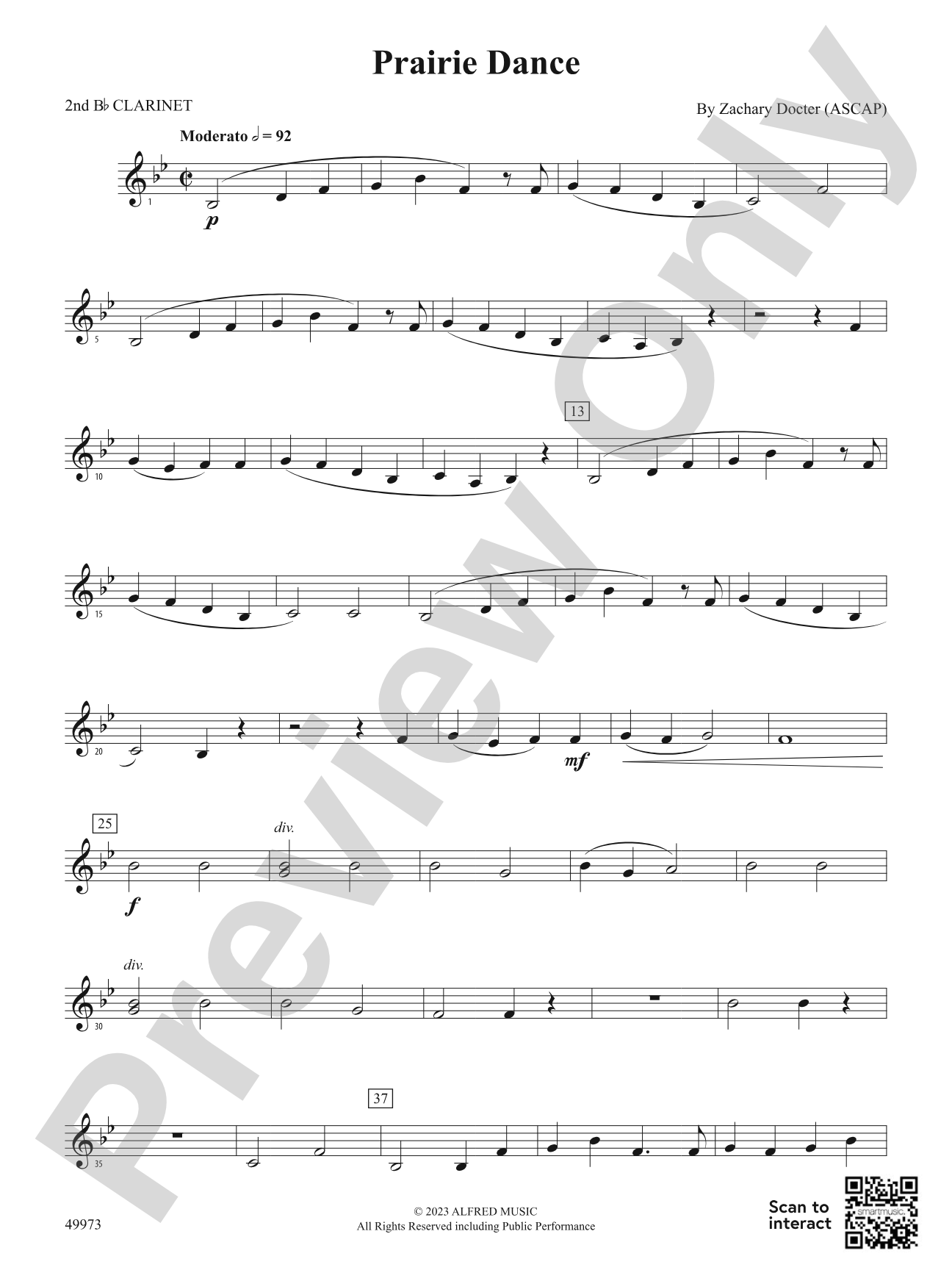
Prairie Dance: 2nd B-flat Clarinet

By Zachary Docter

Grade: 2

Item: 00-PC-0018968_C2

Digital Download
$3.00
Description
In Zach Docter's Prairie Dance, every instrument gets a chance to shine. A simple tune starts in the clarinets. As it's passed through the ensemble, it grows louder before culminating in a rhythmic Americana-esque hoedown that would make Copland proud. After this spirited climax, the tune winds down before ending quietly with the clarinets, precisely as it began. Every instrument group is featured in this piece. Transparency allows students to gain experience playing in thin textures, which may be a new experience at this grade level. (1:50)

Don't just read it, hear it, play along with it, and watch your students grow with it. In MakeMusic Cloud, Prairie Dance: 2nd B-flat Clarinet comes alive with professional accompaniment, adjustable tempo, and built-in practice tools that turn solo practice into real progress.

Sample Audio
0:00
0:00
Sample Video
Additional Details
Series: Young Symphonic
Publisher: Alfred Music
SKU: 00-PC-0018968_C2

More about this title

About the Composer: Zachary Docter

Zachary Docter

Zachary Docter composes primarily for educational brass and concert band ensembles. Based in Los Angeles, he earned a Master's degree in Music Composition from California State University Northridge and has had his work published by Alfred Music, C. Alan Publications, and other major houses.

Docter's writing for young ensembles balances accessibility with musical substance, creating pieces that give every section meaningful material while building student confidence and musicianship.

Why we love this

Docter writes with real transparency at Grade 2, trusting thin textures to carry the musical ideas rather than padding every moment with full harmony. The architecture is satisfying: a simple opening that gains momentum through orchestration alone, peaks in an energetic hoedown that channels American vernacular music, then circles back to quiet simplicity. That kind of formal clarity teaches students how melodies and scoring choices shape meaning.

What to expect

Prairie Dance evokes the unfolding energy of a gathering, beginning with a single voice calling across open space, swelling as more join in, then settling again into quietness. The Americana inflection suggests wide horizons and community celebration, grounded in straightforward melody and clear rhythm rather than harmonic sophistication.

Who it's for

Grade 2 concert bands seeking a rewarding piece with strong musical architecture and equal distribution of solos and featured sections. Any ensemble looking to program something with genuine Americana flavor without the technical demands of advanced repertoire will find this accessible and satisfying.

How to get the most out of it

  • Let the opening clarinet melody breathe without excessive vibrato; its simplicity is its strength, and students will hear how the tune transforms as it passes to other instruments.
  • In the crescendo sections, balance the new material against the tune itself so listeners follow the melody's journey through the ensemble.
  • Shape the Americana hoedown with rhythmic drive and character without letting it become rushed; Copland's pieces succeed through clear pulse, not speed.
  • Bring the final return to opening dynamics down gradually so the ending feels like a natural resolution rather than an abrupt retreat.

How to use it

Program this as an opener on a concert featuring lighter, accessible works, or pair it with other Americana-influenced pieces to create a thematic set. Its one minute fifty-second duration and uplifting character make it ideal for winter or spring concerts where you want audience energy without technical demands on rehearsal time.

Skills your students will build

  • Maintaining focus and intonation in thin, transparent textures
  • Passing a melody cleanly between instrument groups while tracking its development
  • Executing rhythmic precision in Americana-style syncopation and hoedown figures
  • Balancing solo and ensemble moments to support the overall form
  • Crescendo and diminuendo over longer musical spans

You May Also Like