
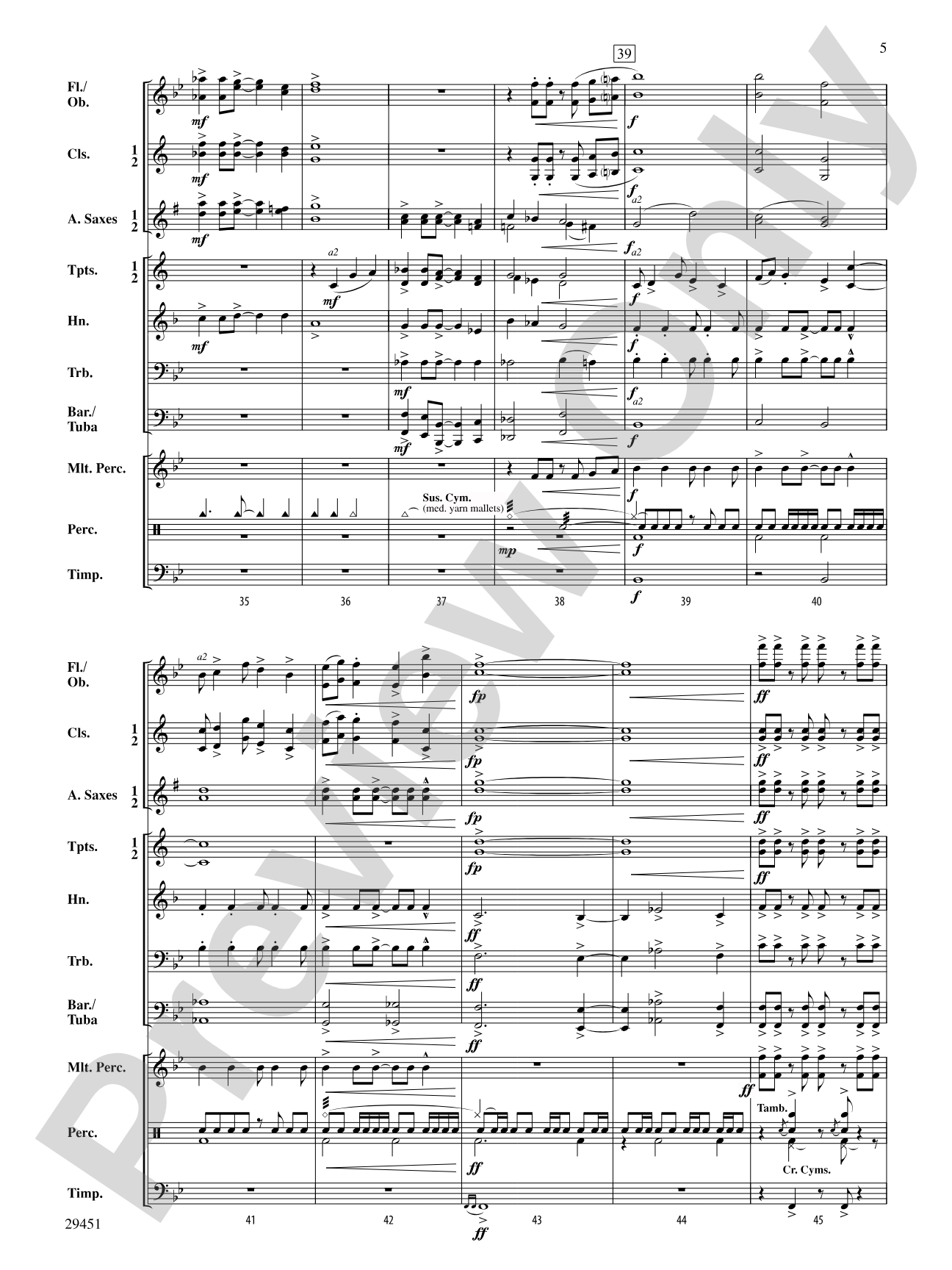
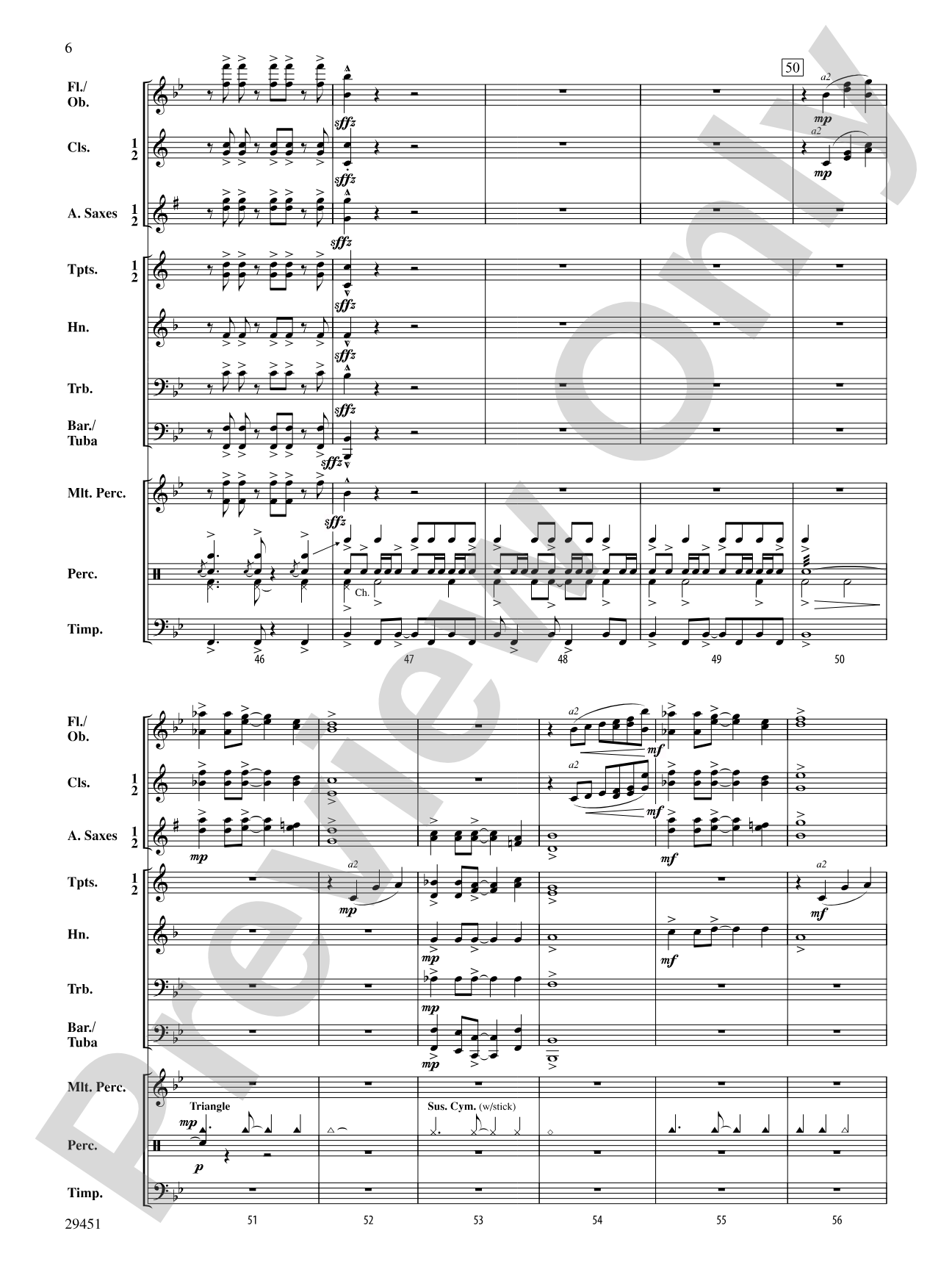
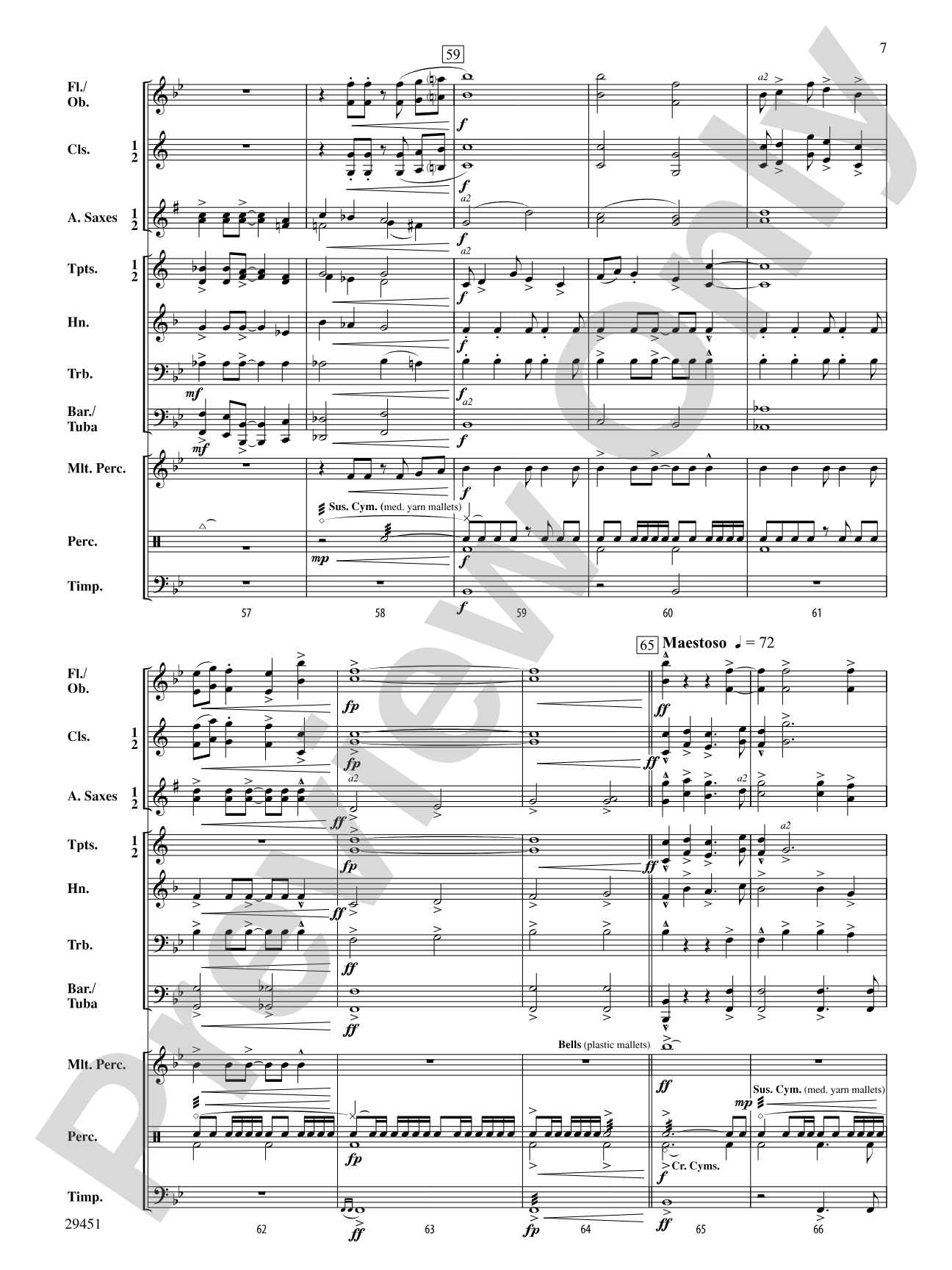
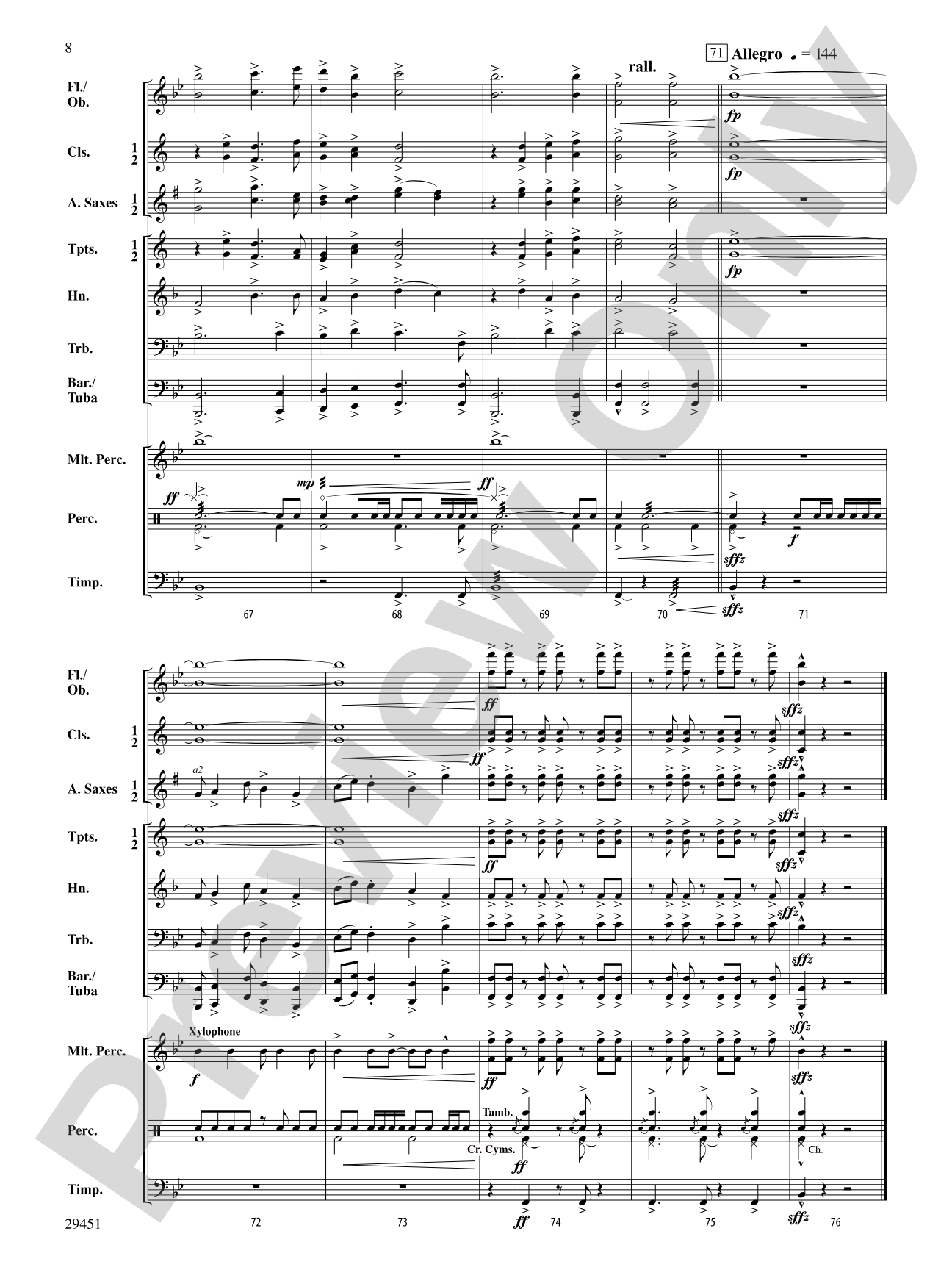

Praeludium and Dance: Concert Band Conductor Score & Parts
By Robert Sheldon
Grade: 1.5 (Easy)
Item: 00-PK-0001416

$49.00
Pickup currently not available
Buy Extra Parts (Digital PDF Download)
Parts Added to Cart!
Description
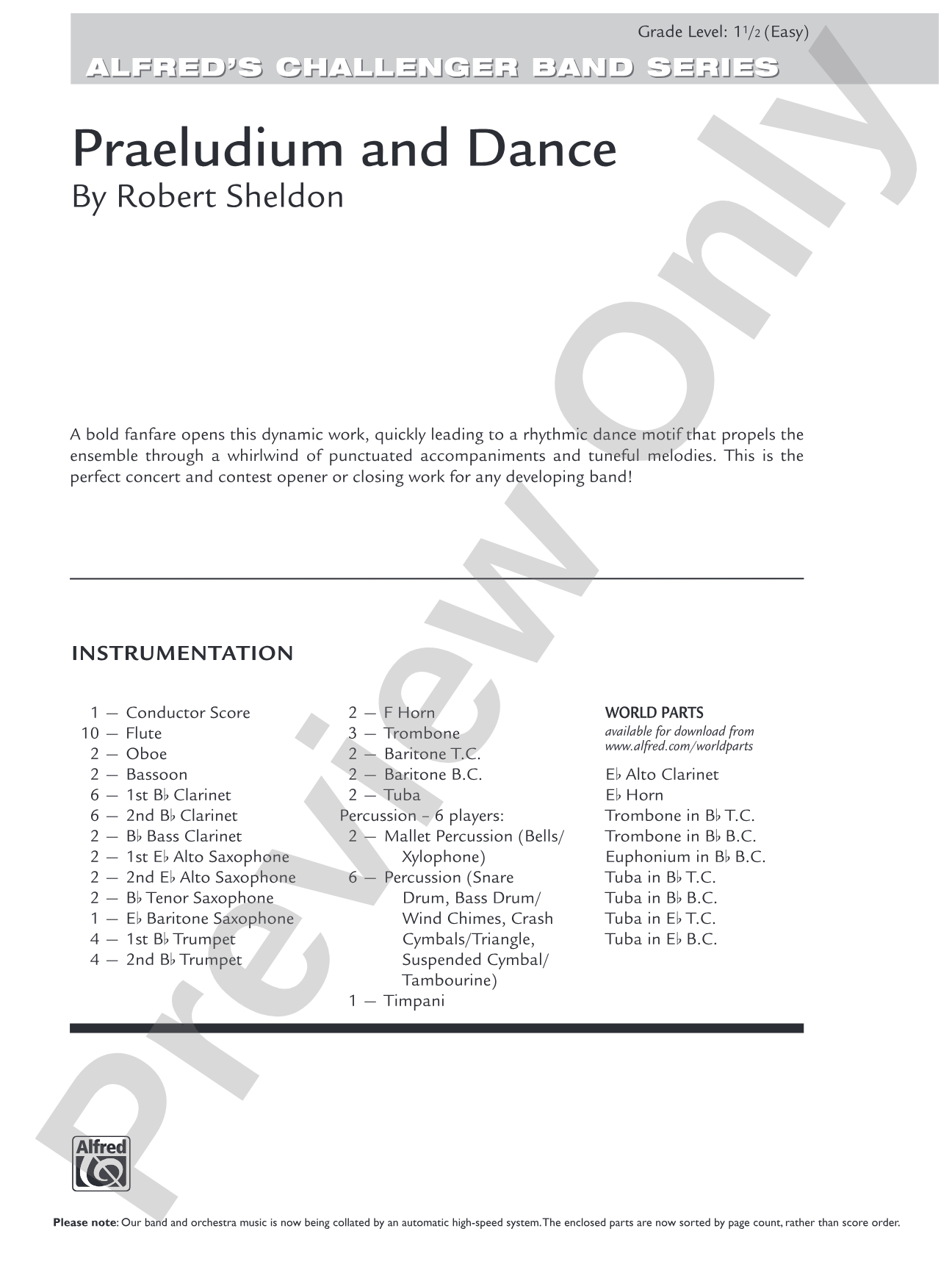
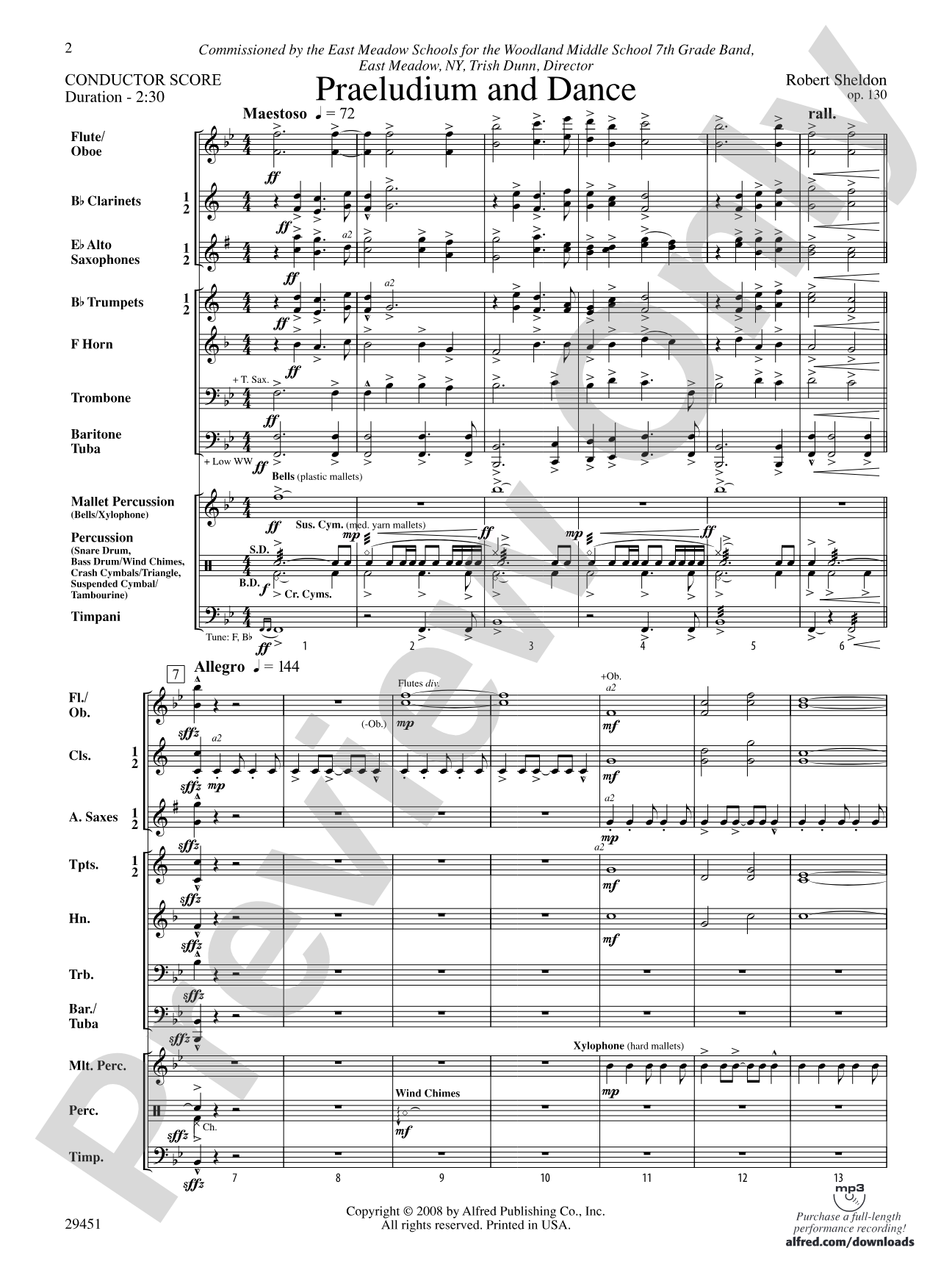
A bold fanfare opens this dynamic work, quickly leading to a rhythmic dance motif that propels the ensemble through a whirlwind of punctuated accompaniments and tuneful melodies. This is the perfect concert and contest opener or closing work for any developing band! (2:30) This title is available in MakeMusic Cloud.


Don't just read it, hear it, play along with it, and watch your students grow with it. In MakeMusic Cloud, Praeludium and Dance: Concert Band Conductor Score & Parts comes alive with professional accompaniment, adjustable tempo, and built-in practice tools that turn solo practice into real progress.
Open in the Player
Jump straight in and assign it today.
Start Your Free Trial
Open this title and explore the full library in minutes.
Sample Audio
1
Audio File
--:--
0:00
0:00
Sample Video
Additional Details
Series:
Challenger Band Series
Publisher:
Alfred Music
Page Count:
132
SKU:
00-PK-0001416
More about this title
About the Composer: Robert Sheldon

Robert Sheldon stands among today's most frequently performed composers for wind ensemble, with works that appear on international contest and concert programs year after year. His output is prolific, and his commissions steady, yet his writing never sacrifices clarity or musicality for the sake of productivity. Beyond the concert hall, Sheldon has shaped wind band pedagogy as lead author of Sound Innovations and earned recognition from the American School Band Director's Association, Phi Beta Mu, and ASCAP.
His work as a guest conductor for All-State and Regional Honor Bands, combined with his clinician schedule across the United States and internationally, keeps him deeply connected to what ensemble directors actually need. He has conducted his own compositions in some of America's most prestigious venues, Carnegie Hall, Boston Symphony Hall, Kennedy Center, and around the world from Japan to Australia. VanderCook College of Music recognized his contributions with an honorary doctorate in 2020.
Why we love this
Sheldon writes with the developing band in mind. This piece delivers immediate impact without demanding virtuosity, making it an ideal choice for opening or closing a concert when you need something that lands with presence and energy. The fanfare-and-dance structure feels complete and satisfying even at Grade 1.5, giving young musicians genuine concert material rather than a stepping stone.
What to expect
The work opens with brassy confidence before shifting into a propulsive, rhythmically infectious dance that keeps the ensemble engaged and the audience leaning forward. Punctuated accompaniments and tuneful melody lines weave together in a way that feels energetic without becoming chaotic, creating a genuine concert experience that players feel proud to perform.
Who it's for
Developing concert bands that need repertoire with real concert appeal. This Grade 1.5 work suits ensembles in their first or second year of organized concert band experience, from middle school beginner groups to community bands building their libraries. The piece requires no exceptional soloists and sits well for players still building fundamental ensemble skills.
How to get the most out of it
- Balance the opening fanfare so the brass statement cuts through without drowning the band. Young ensembles often play louder rather than stronger; coach the articulation and rhythmic precision instead.
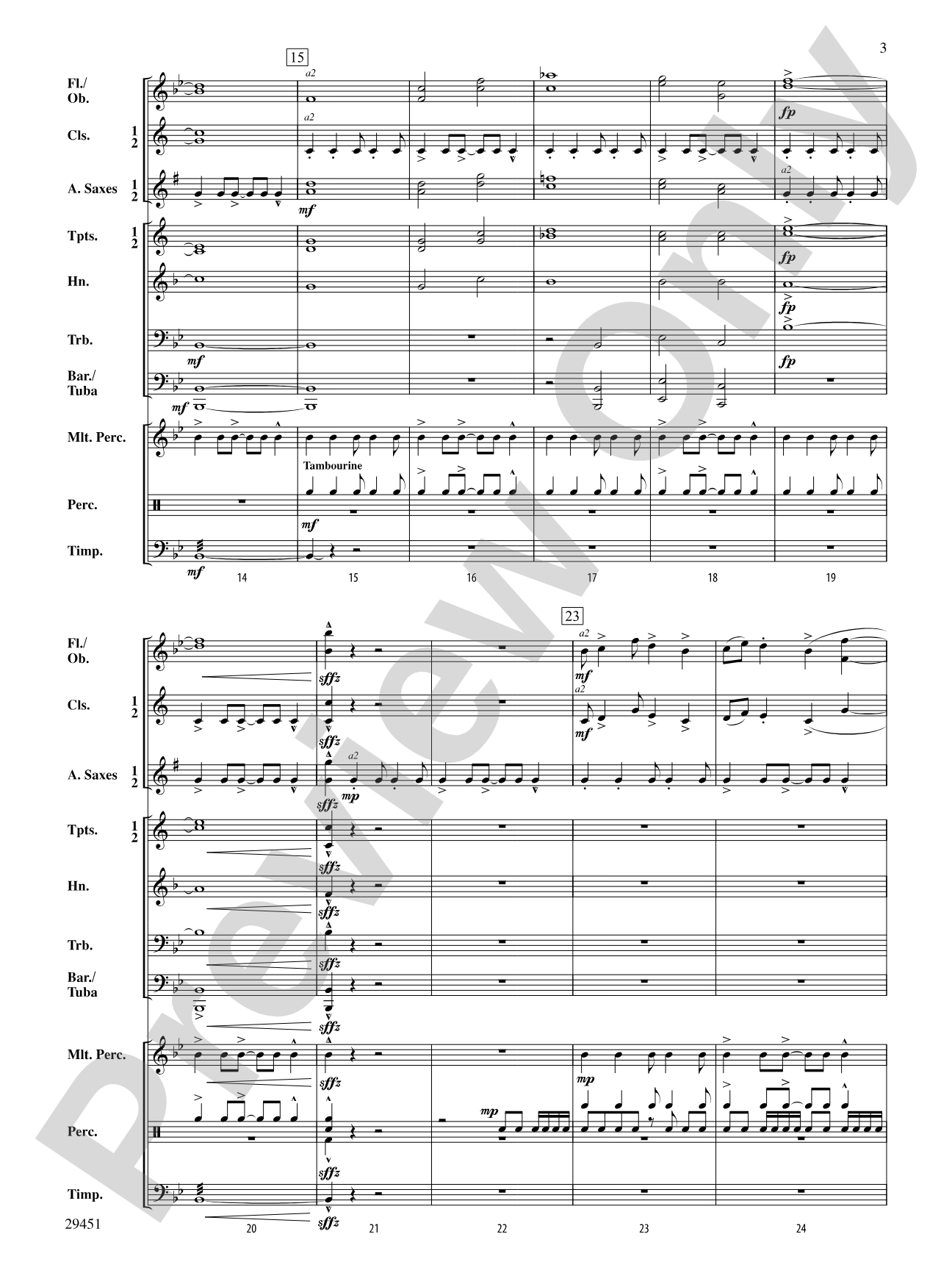
- Keep the dance section's rhythmic motifs crisp and light. This is where the piece gains momentum, so clarity in the accompaniment figures matters more than volume.
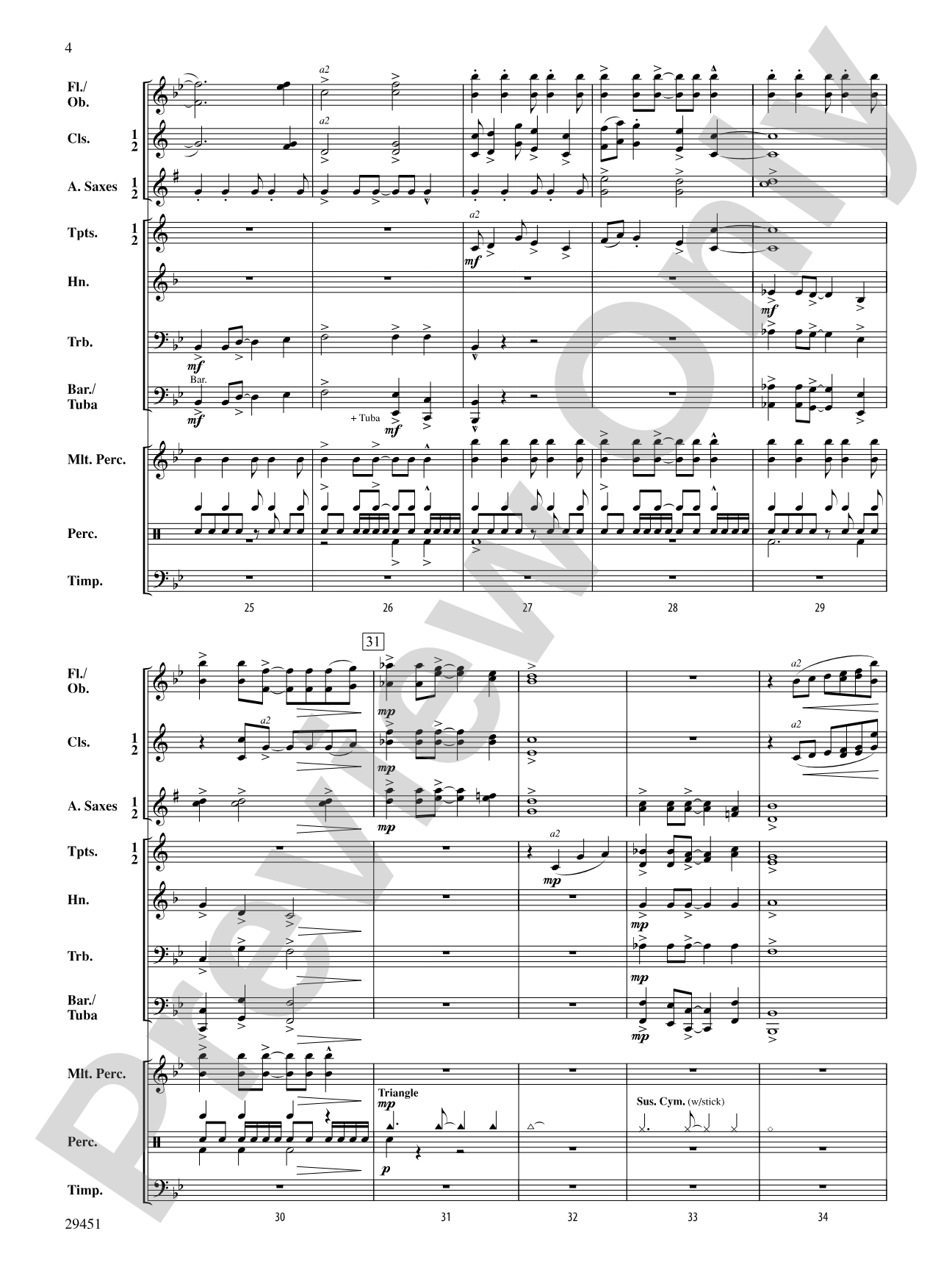
- Shape the tuneful melodic sections with a gentle swell; students will naturally want to hold back during melodic passages, so conductor gestures that encourage forward motion through the phrase prevent the piece from sagging.
- Let the piece breathe between the fanfare and dance sections. A brief pause after the bold opening lets the ensemble reset and the audience settle before the rhythmic energy begins.
How to use it
Place this at the top of a concert when you want to establish energy and confidence immediately, or save it for the closing number to send the audience out on a bright, rhythmic high note. It pairs well alongside other Sheldon Grade 1.5 works in a full concert program or stands alone as a contest selection where impact and musicianship matter equally.
Skills your students will build
- Precise rhythmic execution in punctuated accompaniment figures
- Balancing between melody and accompaniment textures
- Ensemble precision and control at energetic tempos
- Phrasing and shaping of melodic lines within a concert context
- Responding to clear conductor gesture through dynamic and rhythmic changes