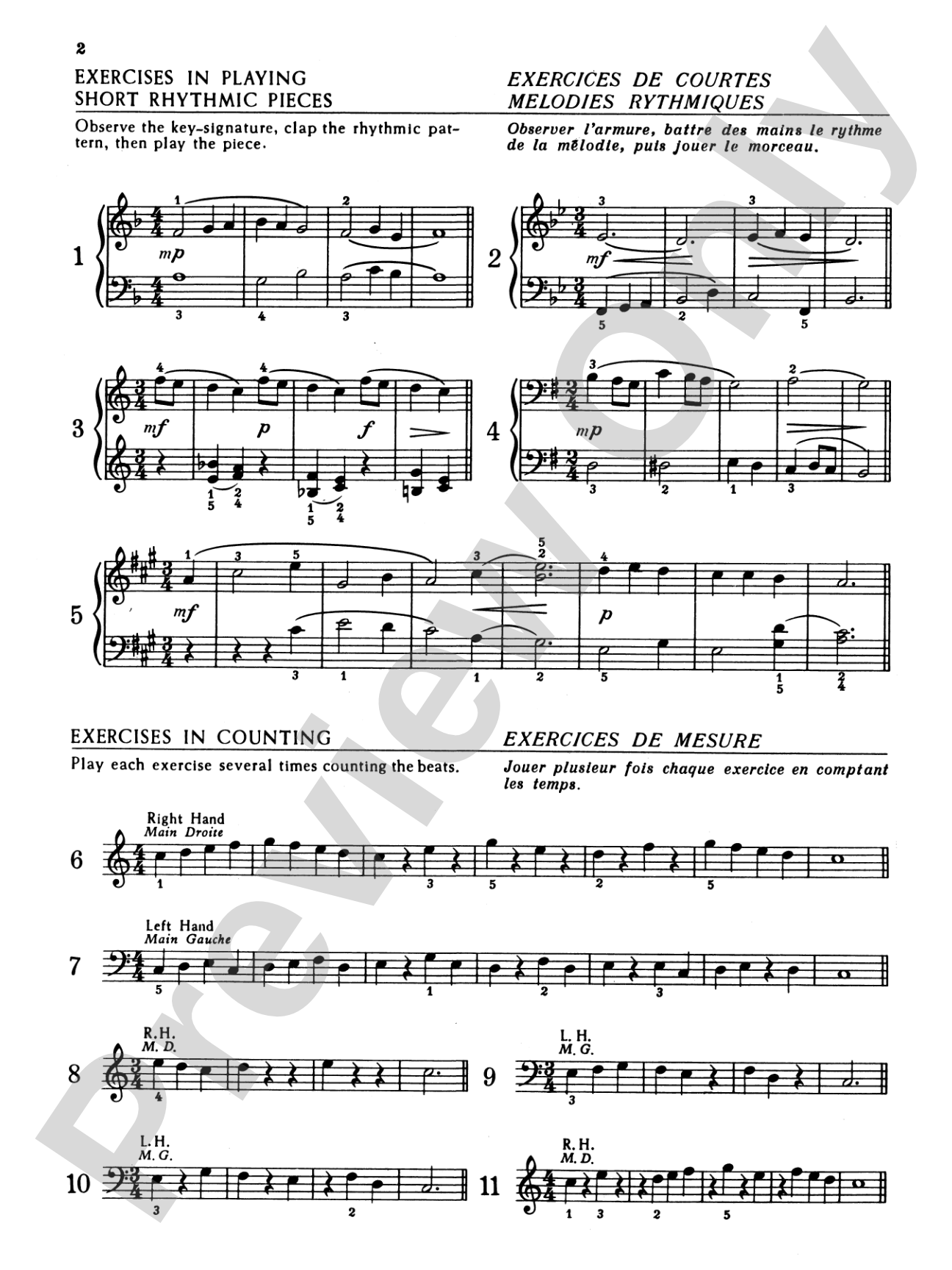
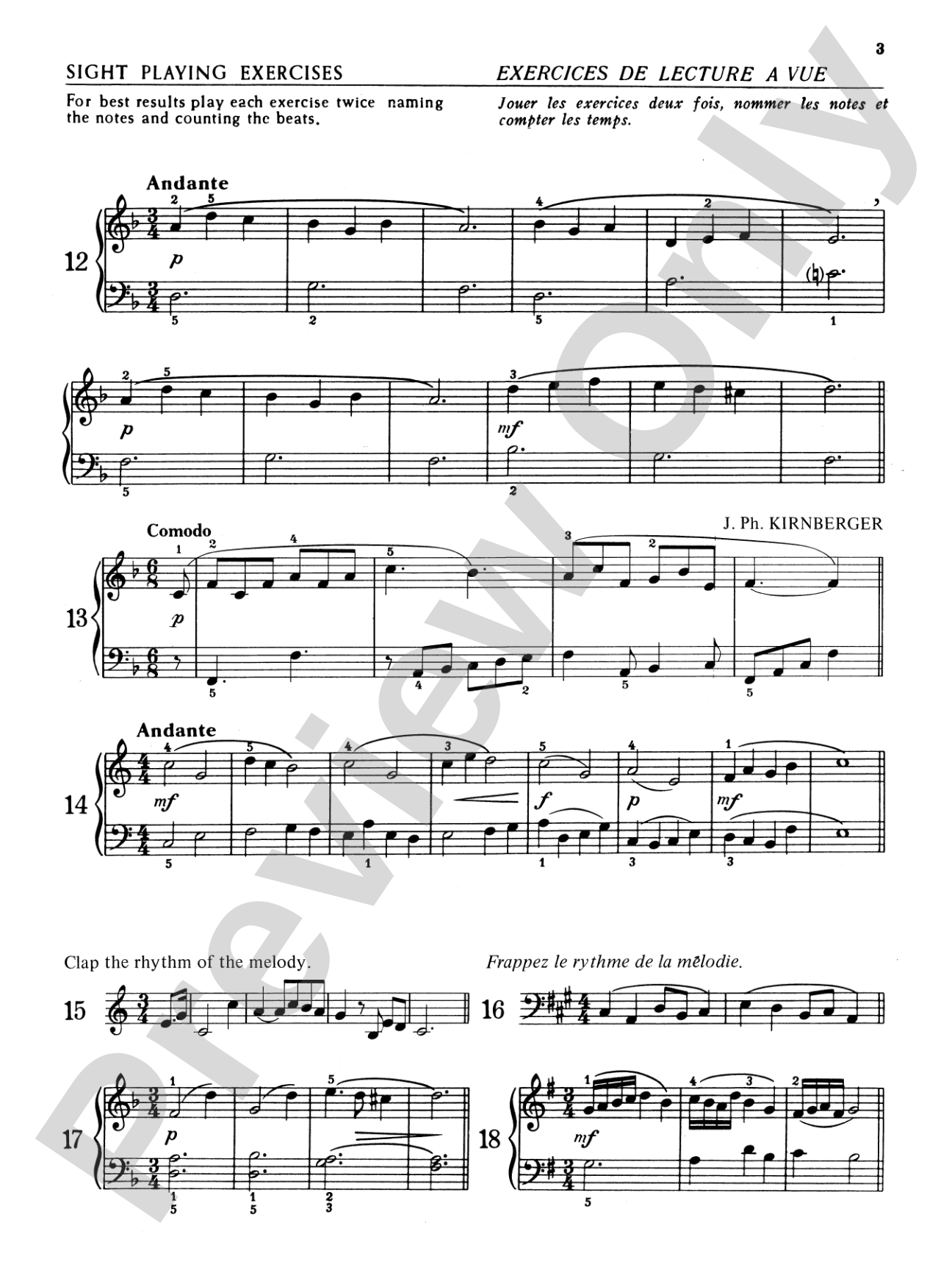
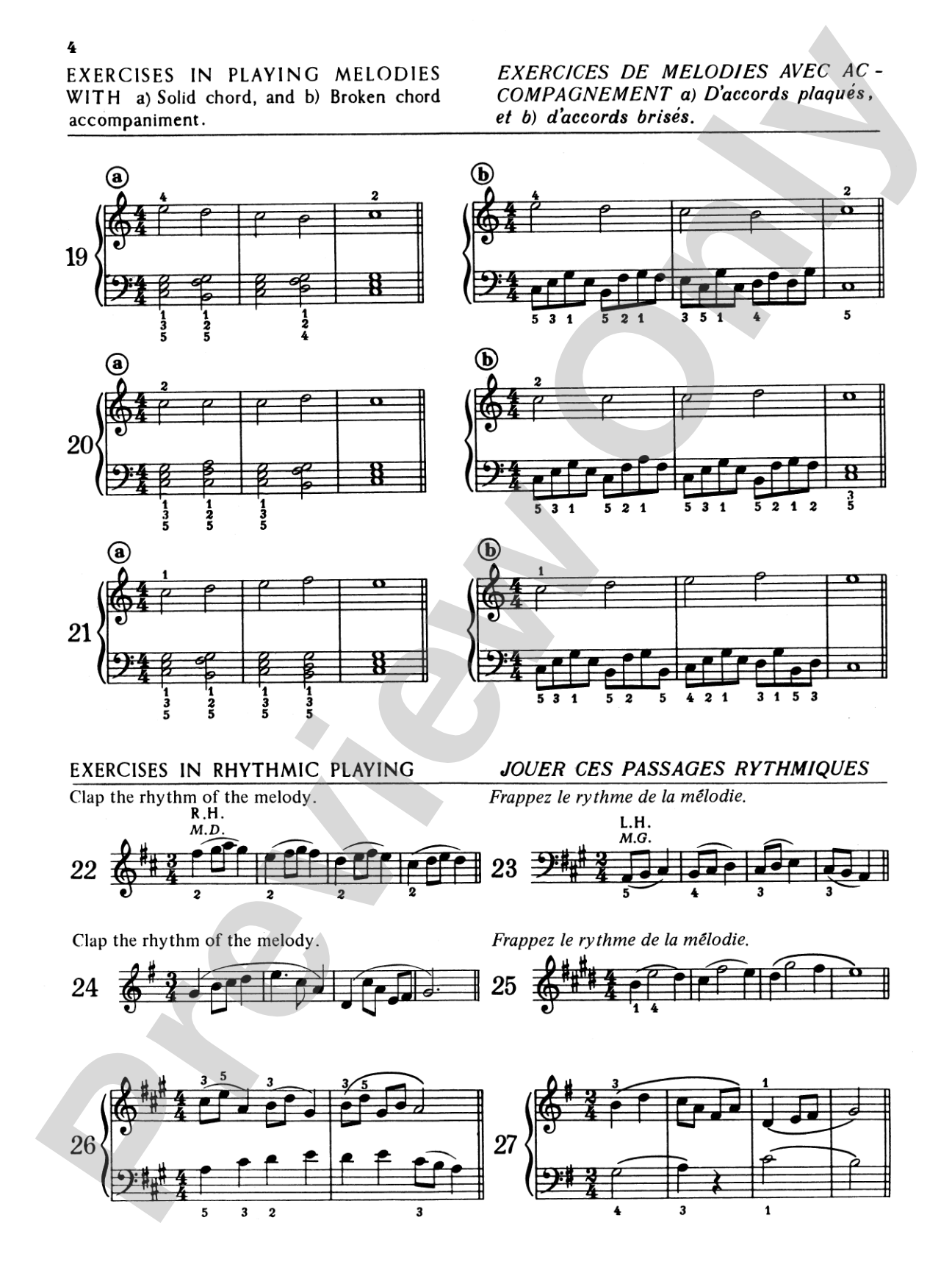
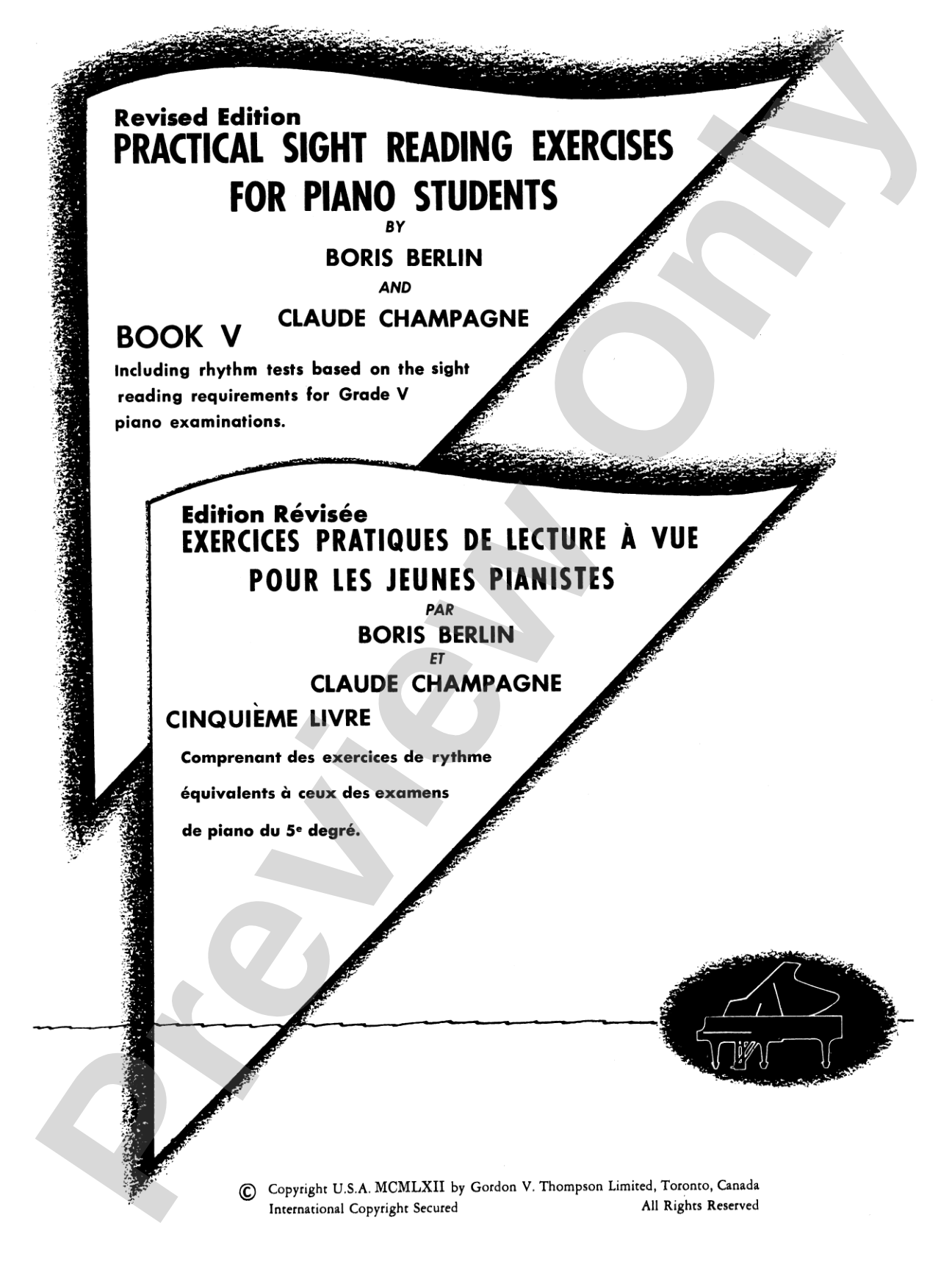
Practical Sight Reading Exercises for Piano Students, Book 5 Sheet Music Preview

Practical Sight Reading Exercises for Piano Students, Book 5: Piano

By Boris Berlin and Claude Champagne

Item: 00-PB-0002010

Digital Download
$6.95
Description
Progressively teaches the student to sight read through observation and study of phrase shape, melodic outline, harmonic structure and overall rhythmic feeling of the music.

Practical Sight Reading Exercises for Piano Students, Book 5: Piano isn't in MakeMusic Cloud just yet...but it could be. Let us know you'd like to see it, and you'll help shape what comes next. In the meantime, start a free trial and dive into thousands of interactive titles your students can play along with today.

Sample Audio
No sample audio found.
Sample Video
Additional Details
Publisher: Alfred Music
Page Count: 20
SKU: 00-PB-0002010

More about this title

Why we love this

Book 5 strips away the crutches that slow down sight readers. Rather than drilling isolated rhythmic or intervallic patterns, Berlin and Champagne ask students to recognize the architecture of music: how phrases breathe, how harmony suggests melodic direction, how rhythm serves the larger shape. Students who work through this book develop instincts that transfer immediately to unfamiliar repertoire.

What to expect

Working through these exercises feels like learning to read prose instead of decoding individual letters. The music never feels artificial or drill-like; instead, each piece invites you to notice how composers shape intention through phrase, harmony, and rhythmic gesture.

Who it's for

Pianists moving beyond elementary sight reading who are ready to develop genuine interpretive instincts alongside technical accuracy. This book serves intermediate students preparing for ensemble work, auditions, or the constant sight reading demands of advanced repertoire study.

How to get the most out of it

  • Study the harmonic structure before playing. Knowing whether you're in a I-IV-V progression or something more chromatic helps your eyes anticipate the next notes rather than chase them.
  • Read the melodic contour in silence first, tracing the line's shape with your finger to internalize the phrase boundaries before touching keys.
  • Count through the rhythmic feeling of each exercise as a unified pulse rather than isolated beats; this prevents the stop-and-start hesitation that derails sight reading fluency.

How to use it

Assign this systematically as core musicianship work rather than supplementary material. Pair it with the student's concurrent repertoire study so they can immediately apply what they're discovering here to the pieces they're learning by ear and careful analysis.

Skills your students will build

  • Recognizing phrase shape and structural landmarks before playing
  • Predicting melodic direction through harmonic context
  • Reading rhythmic patterns as parts of larger metric gestures
  • Coordinating hand independence while maintaining interpretive flow
  • Reducing reliance on trial-and-error in unfamiliar keys and time signatures

You May Also Like