
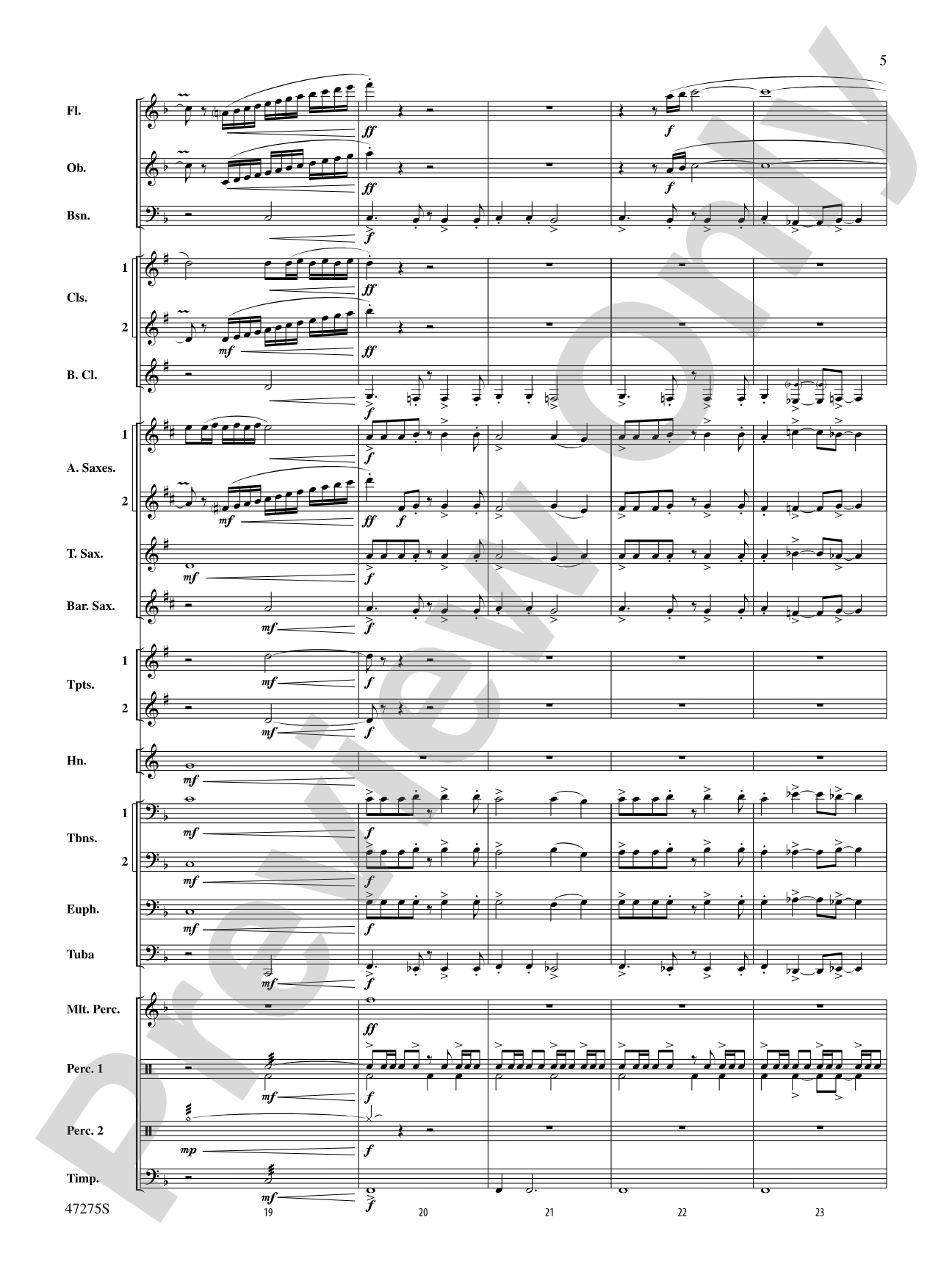
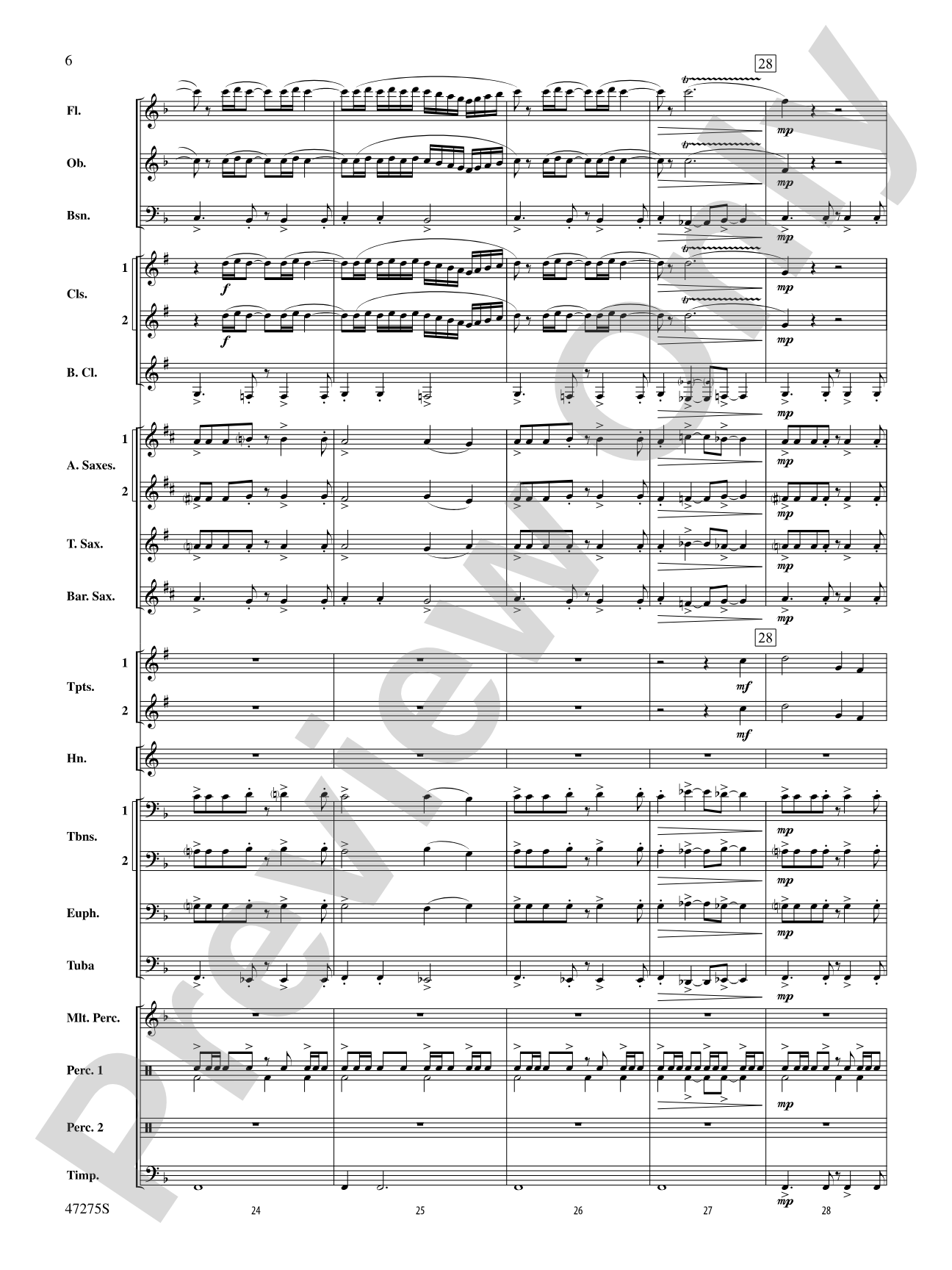
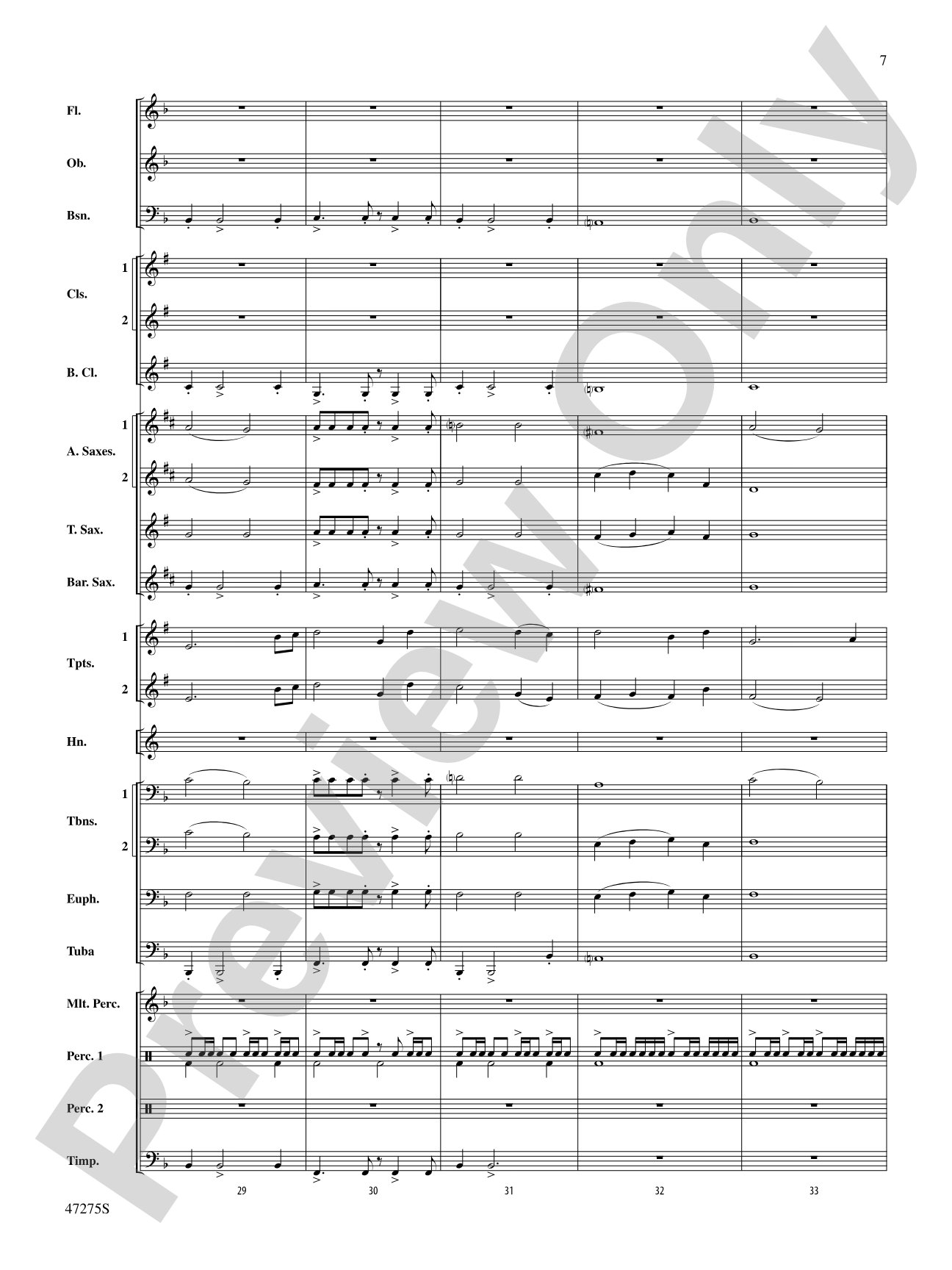
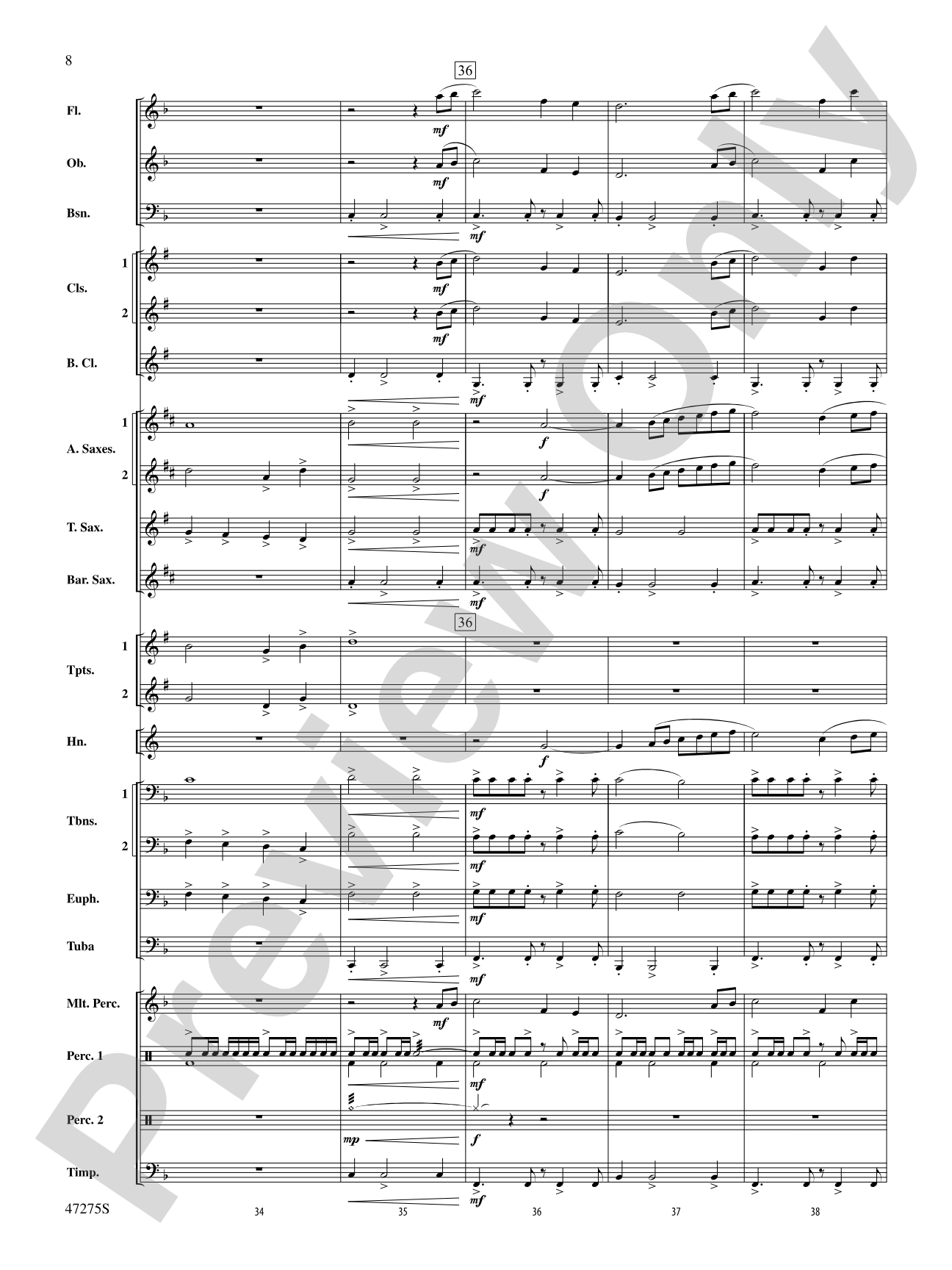
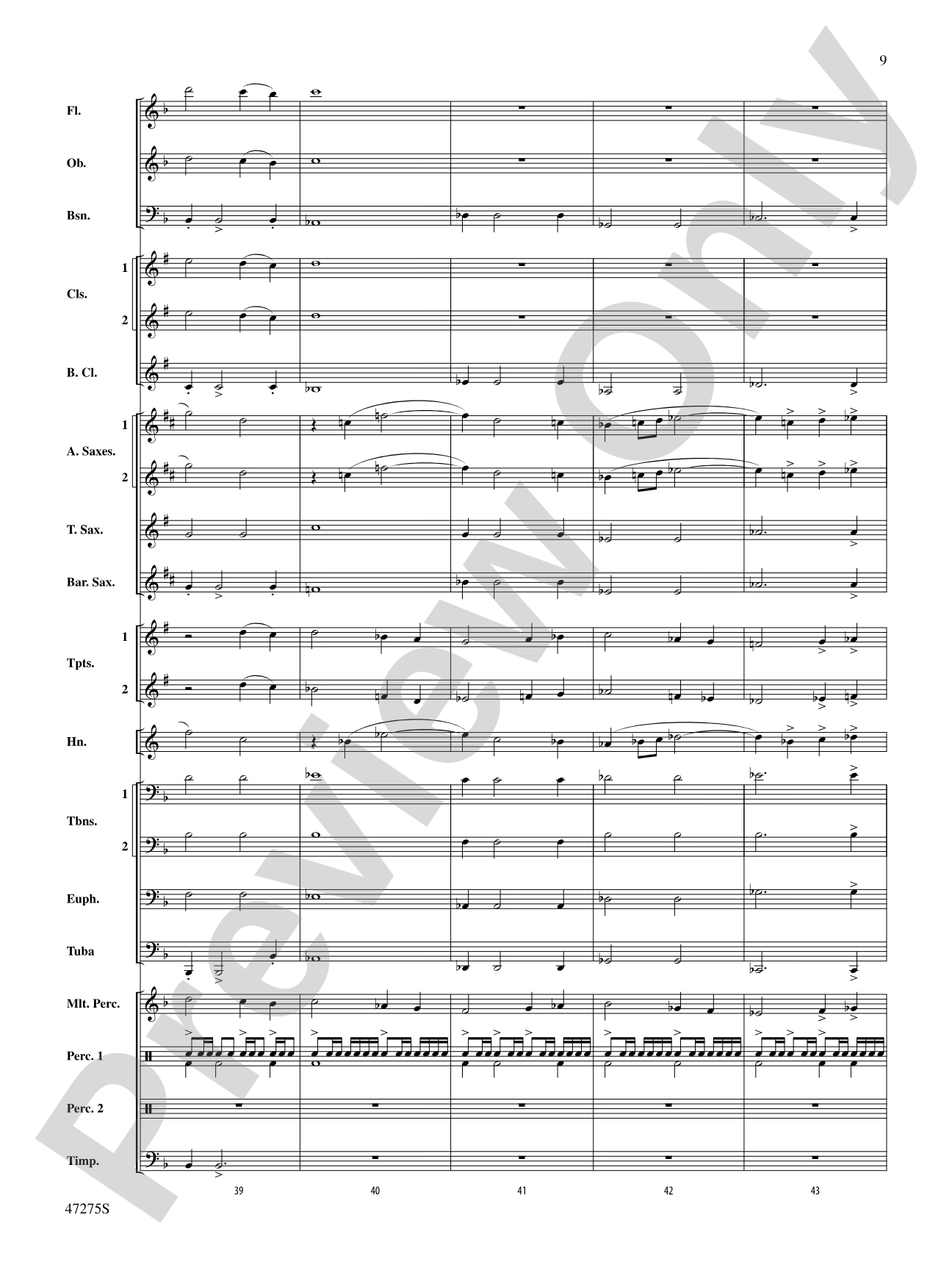
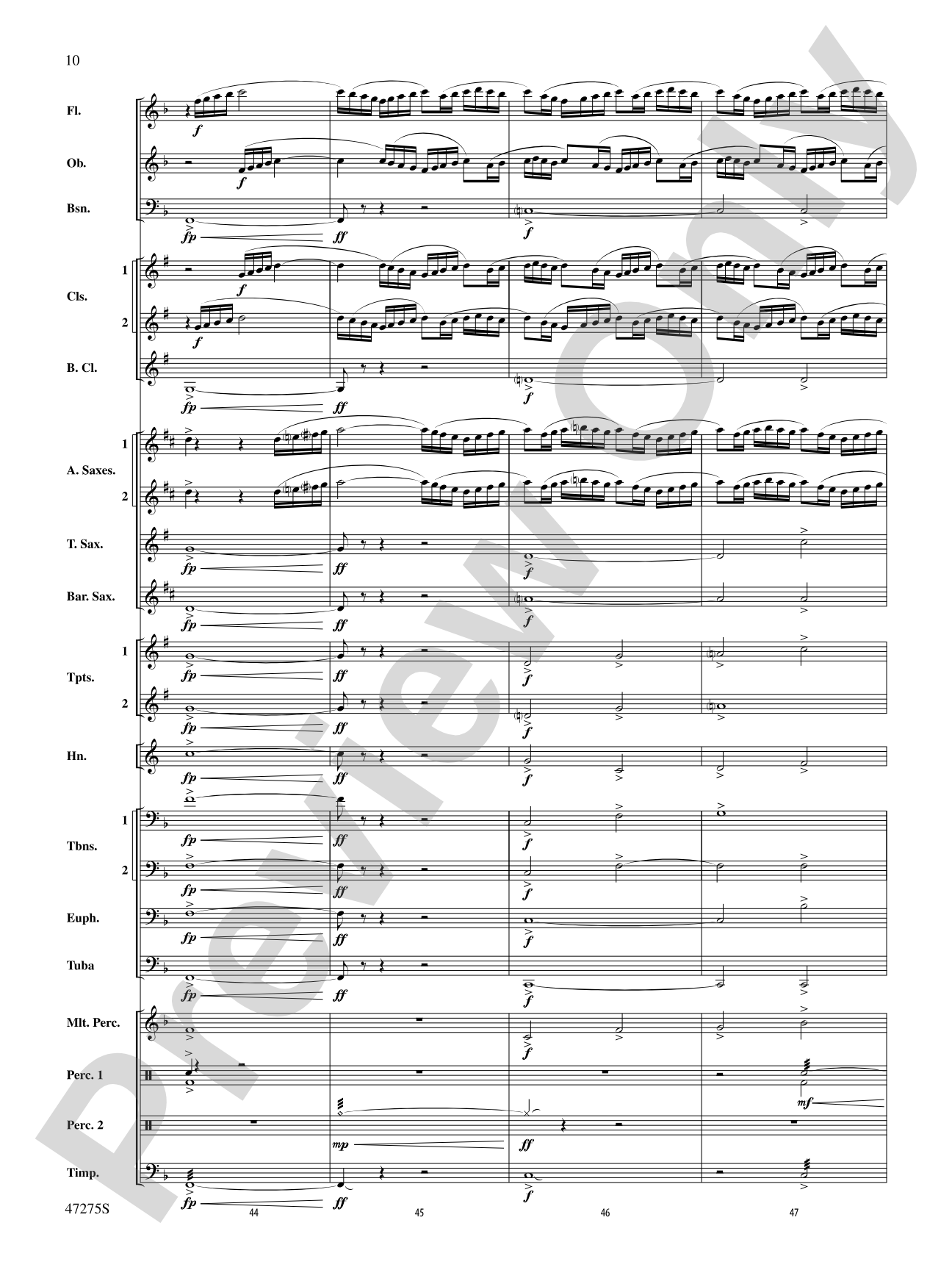
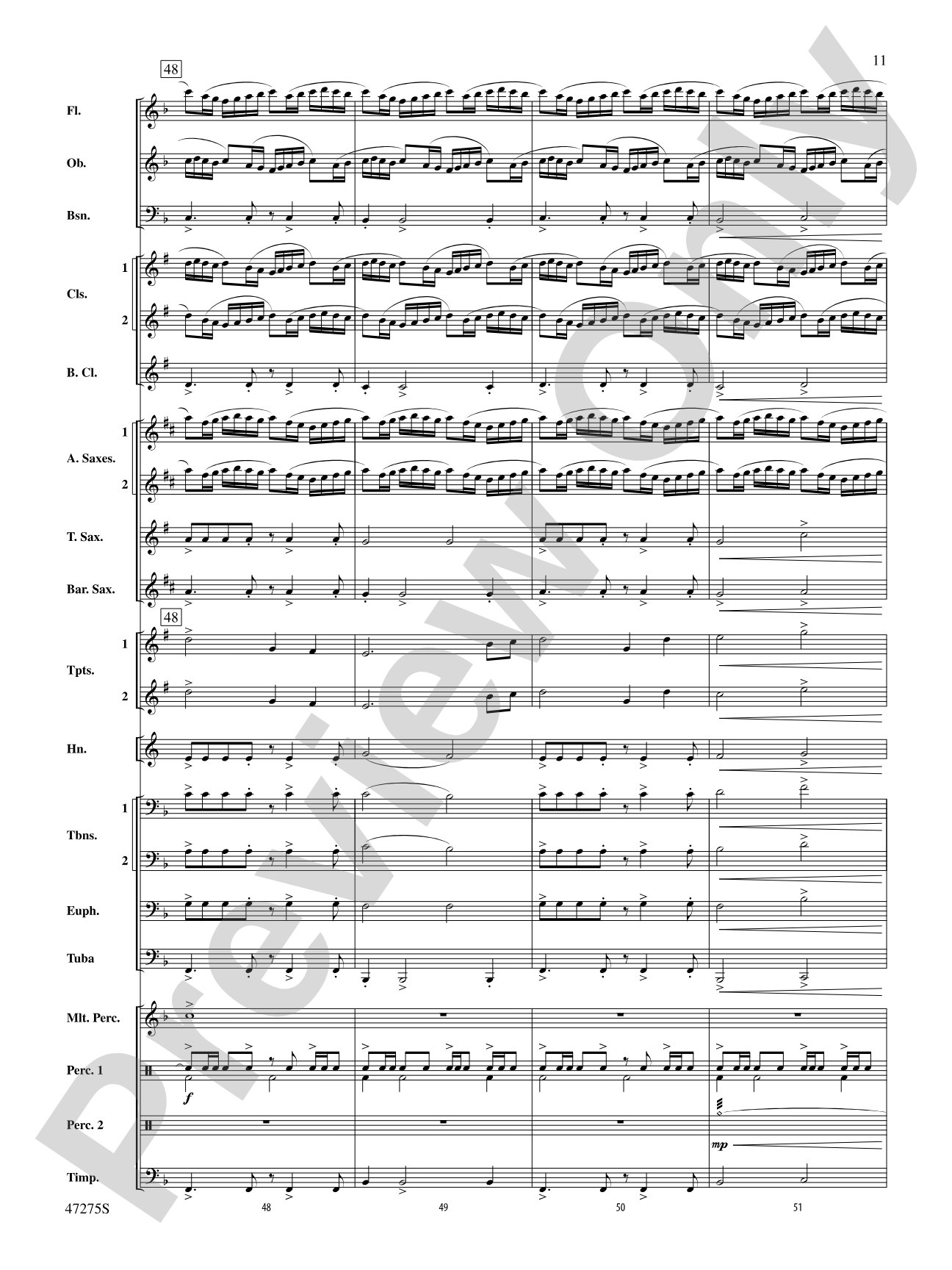
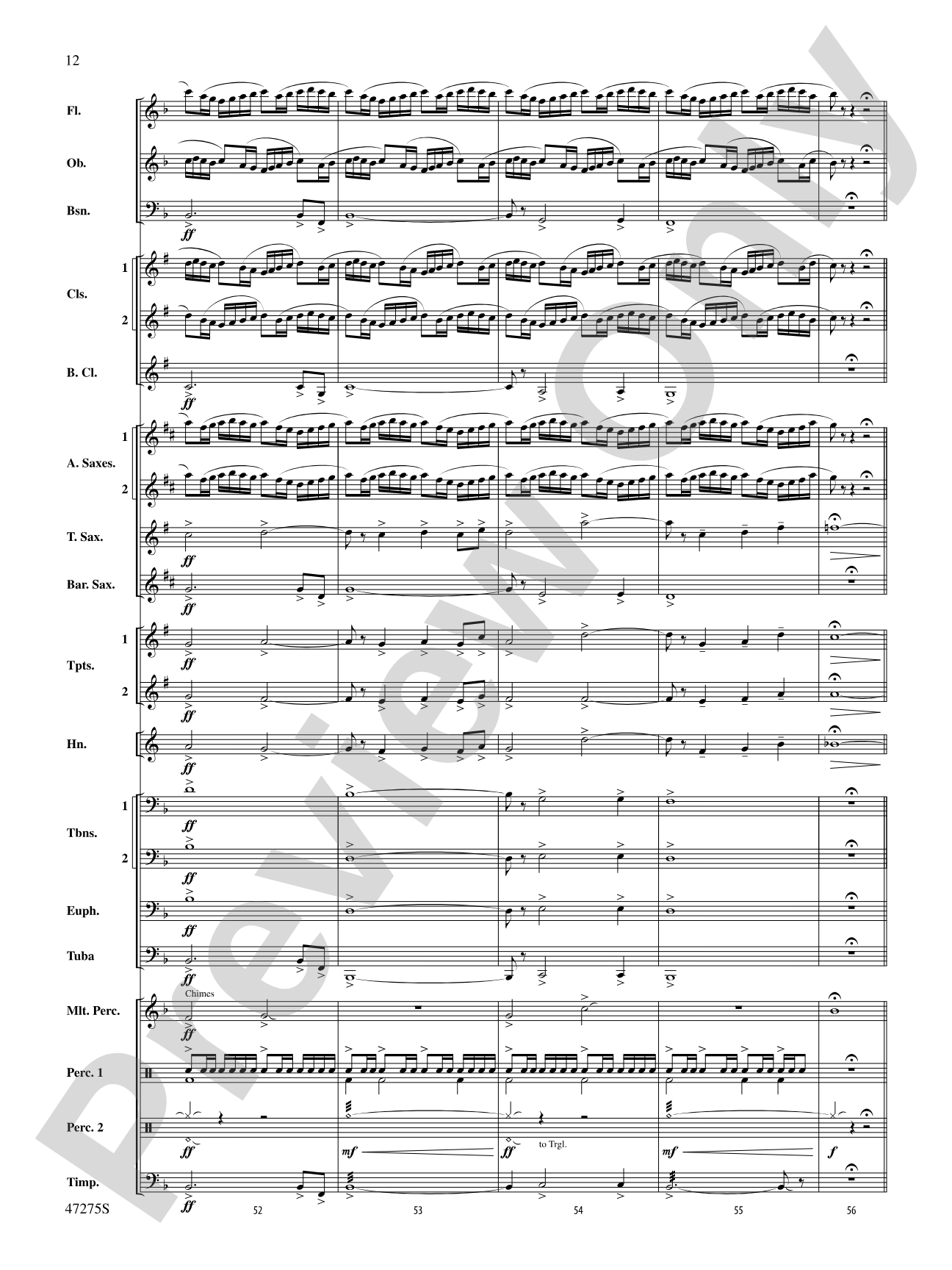
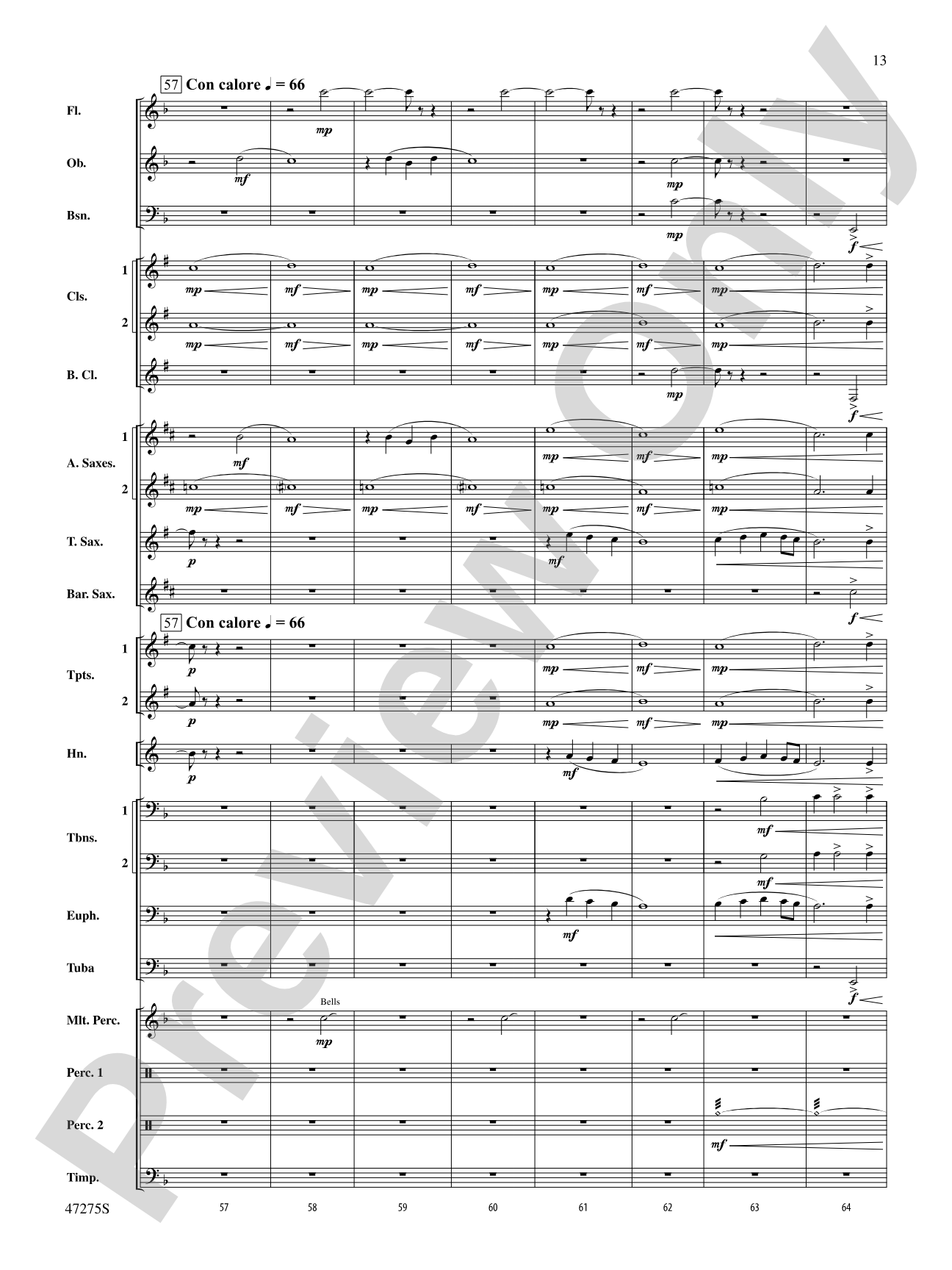
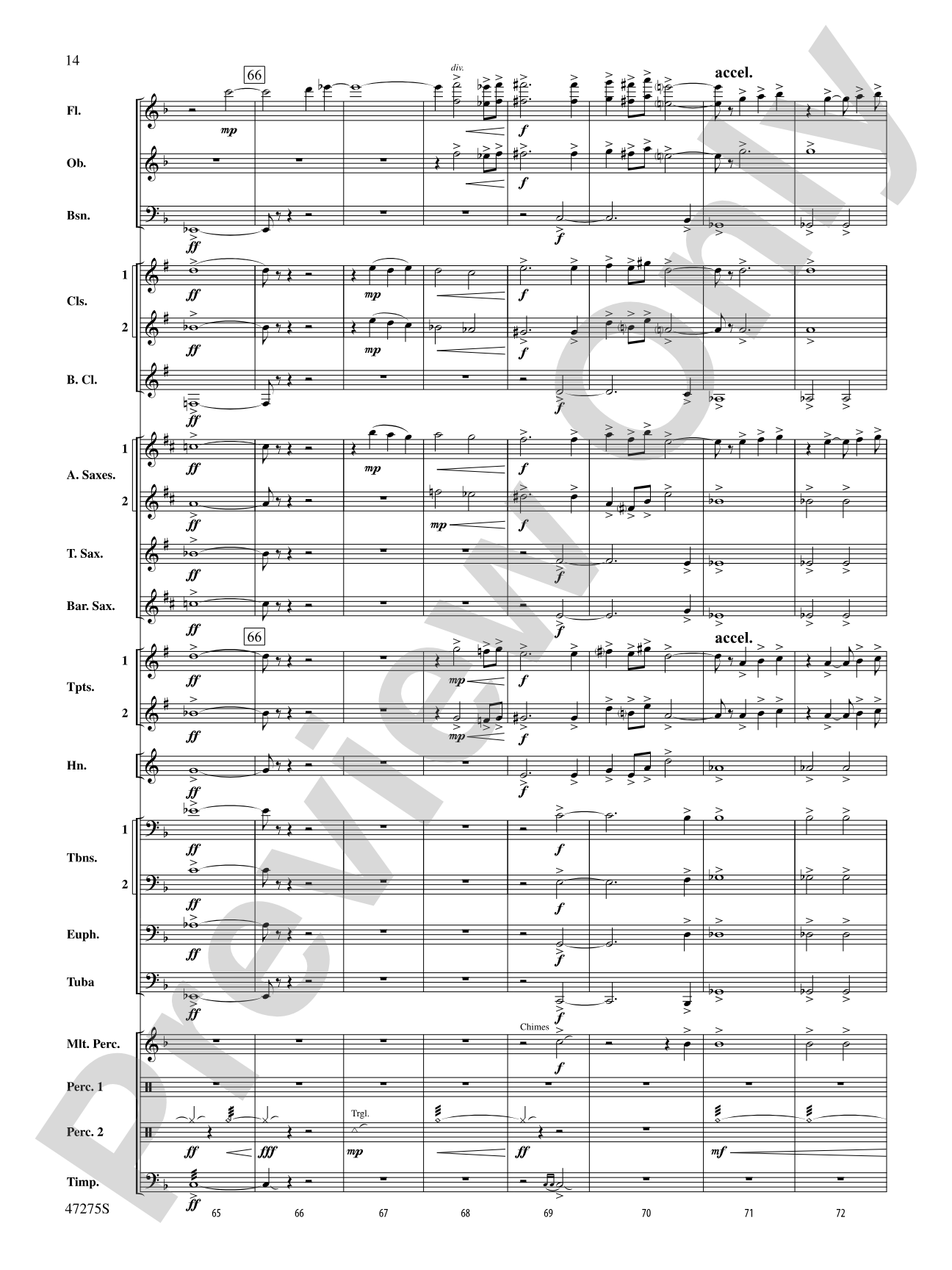
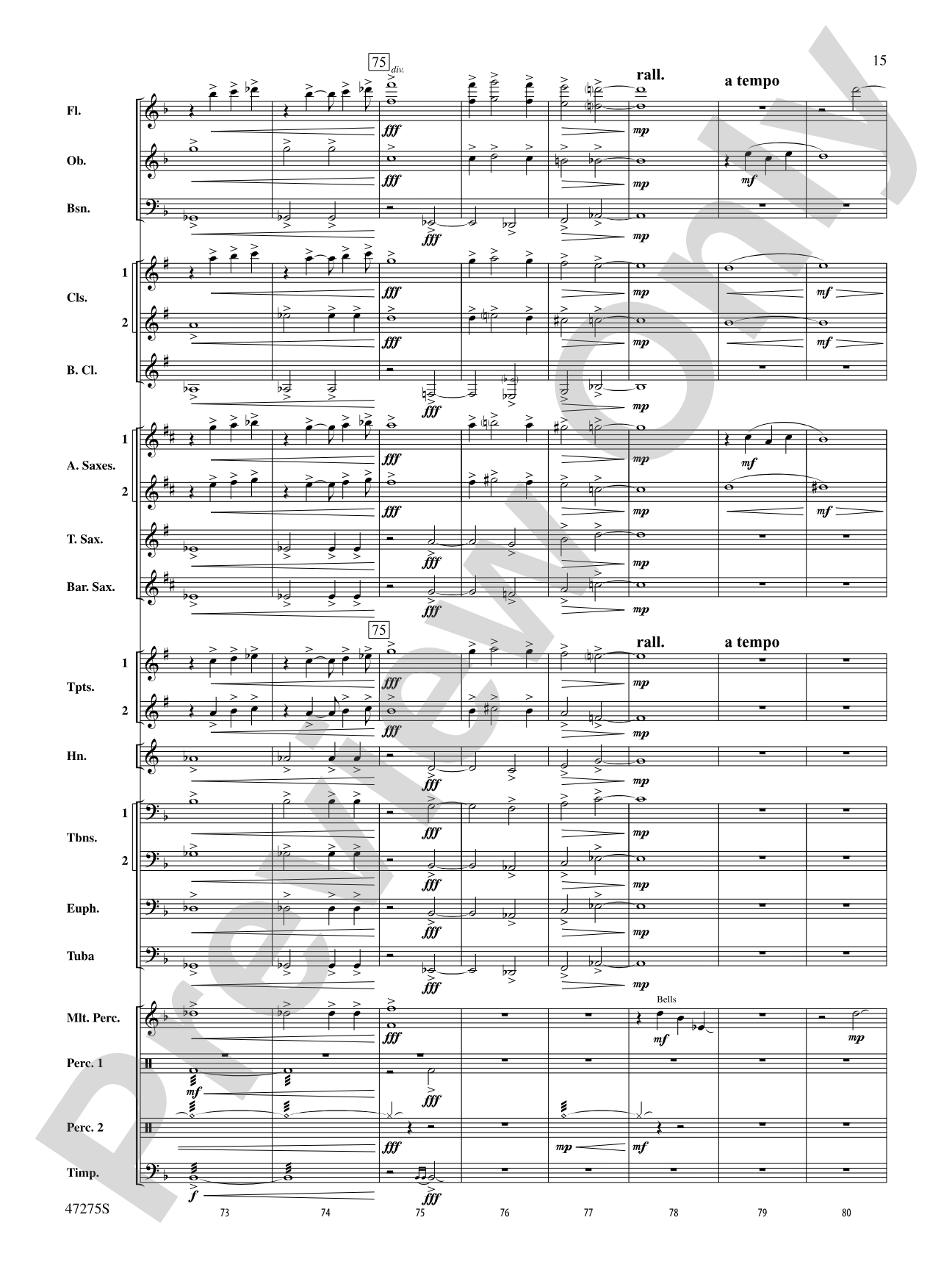
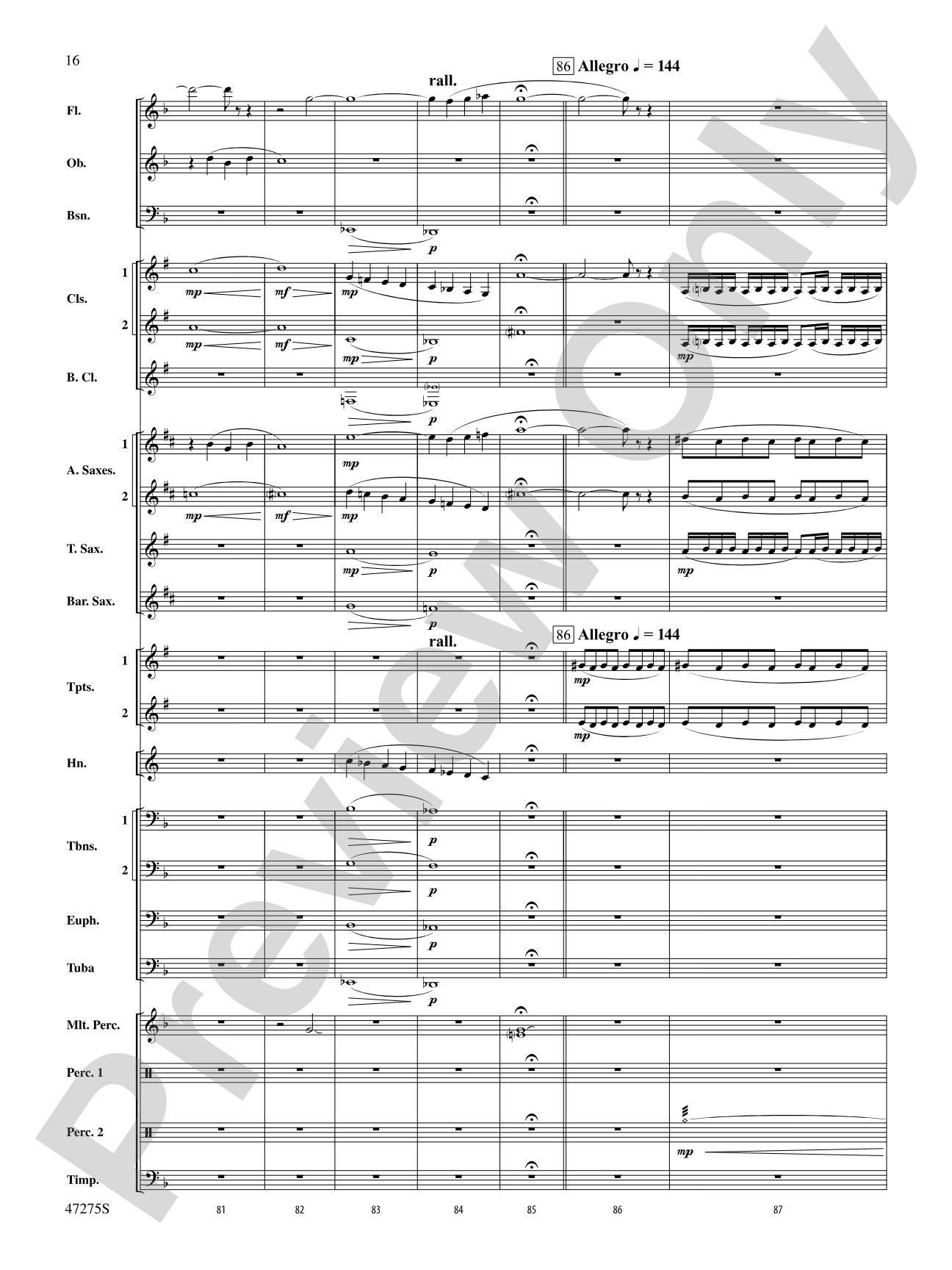
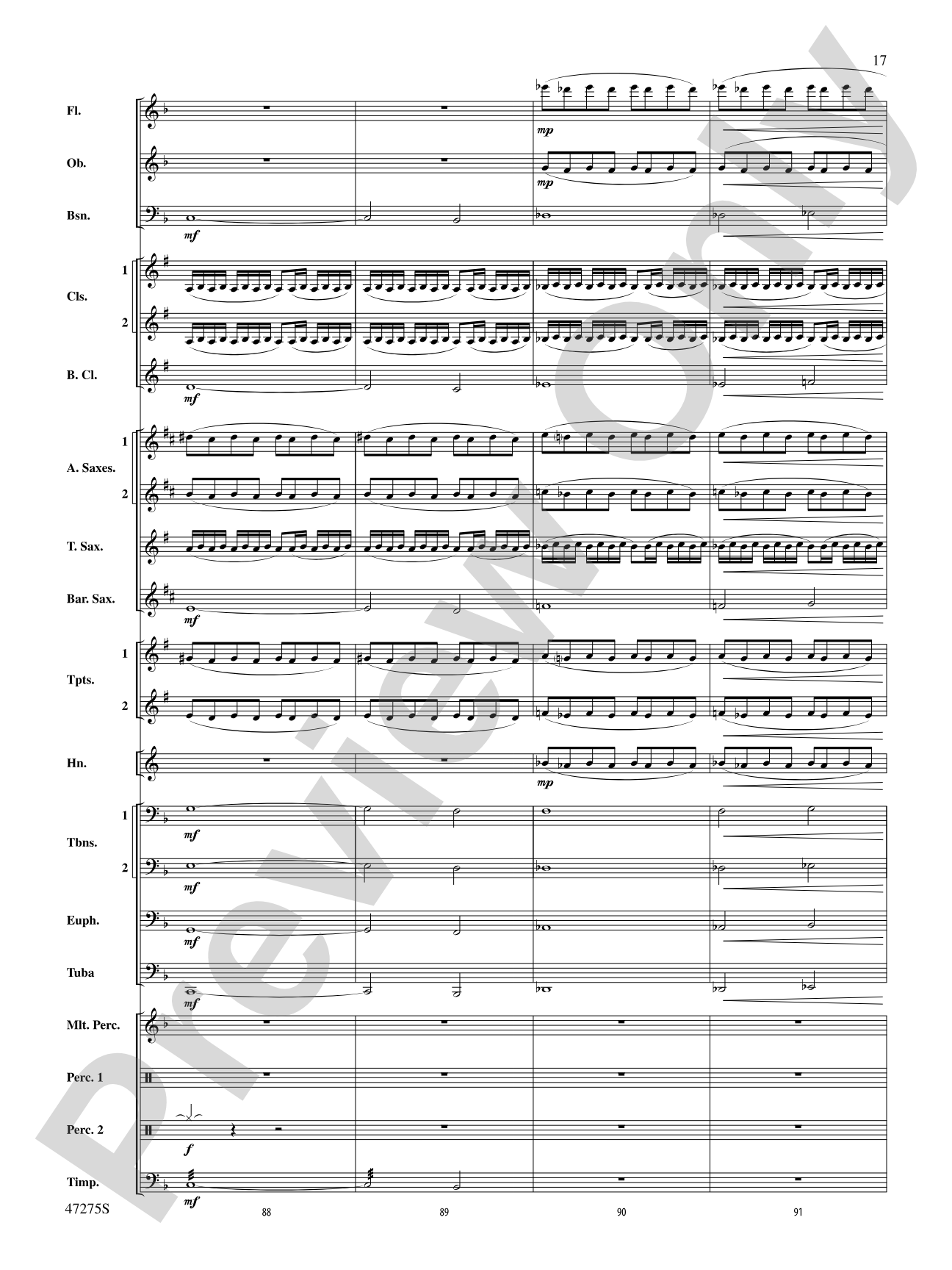
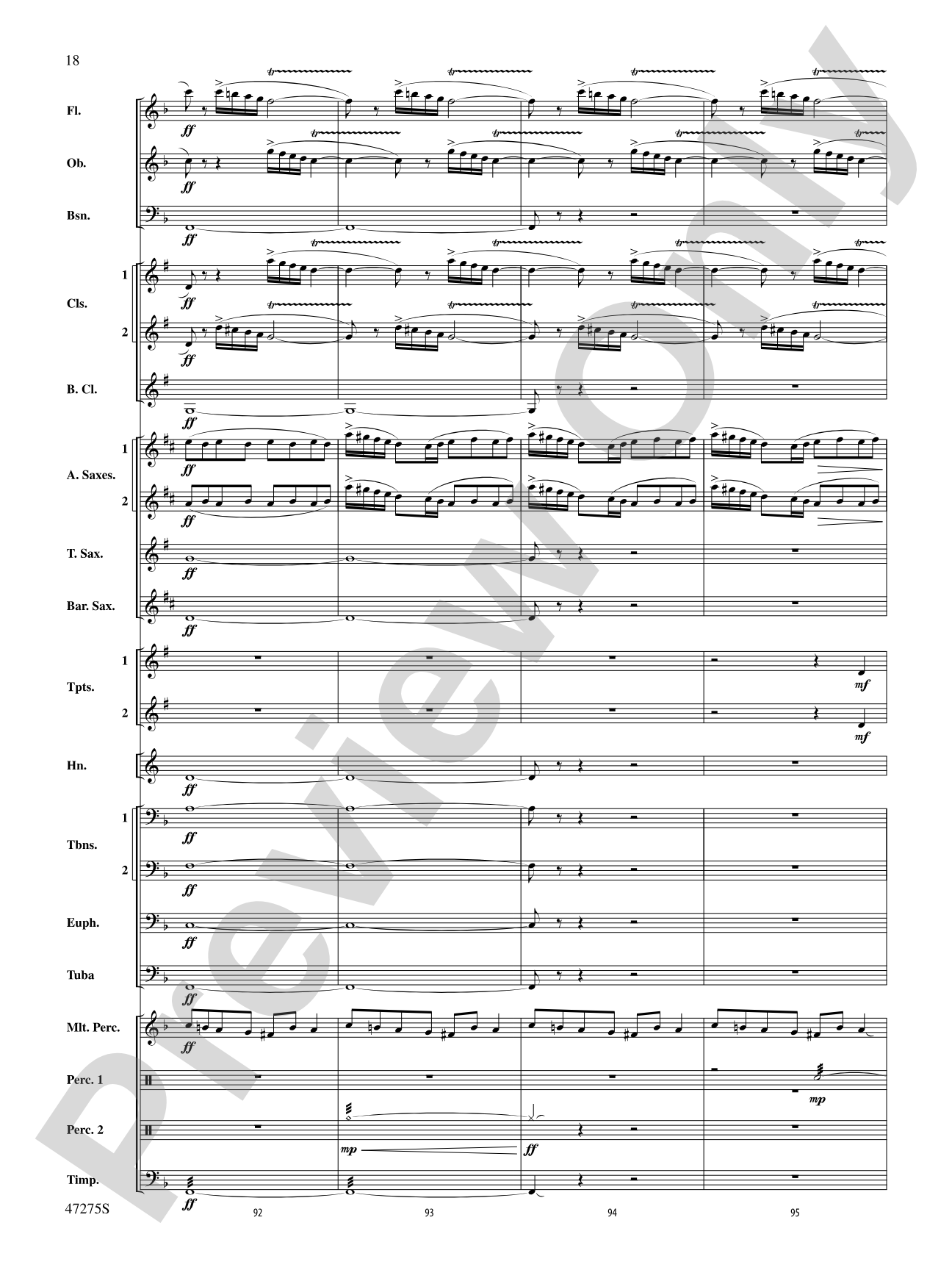
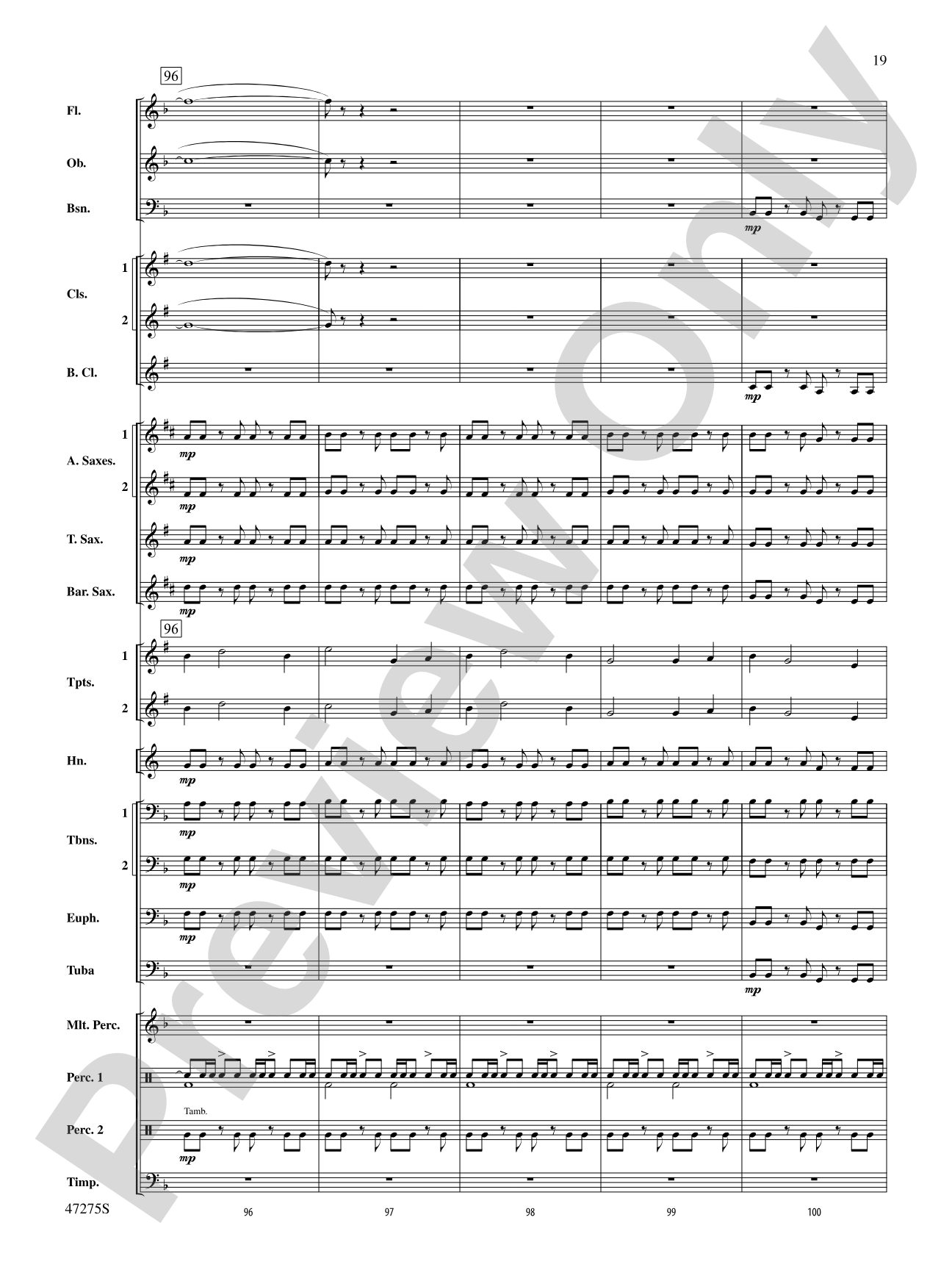
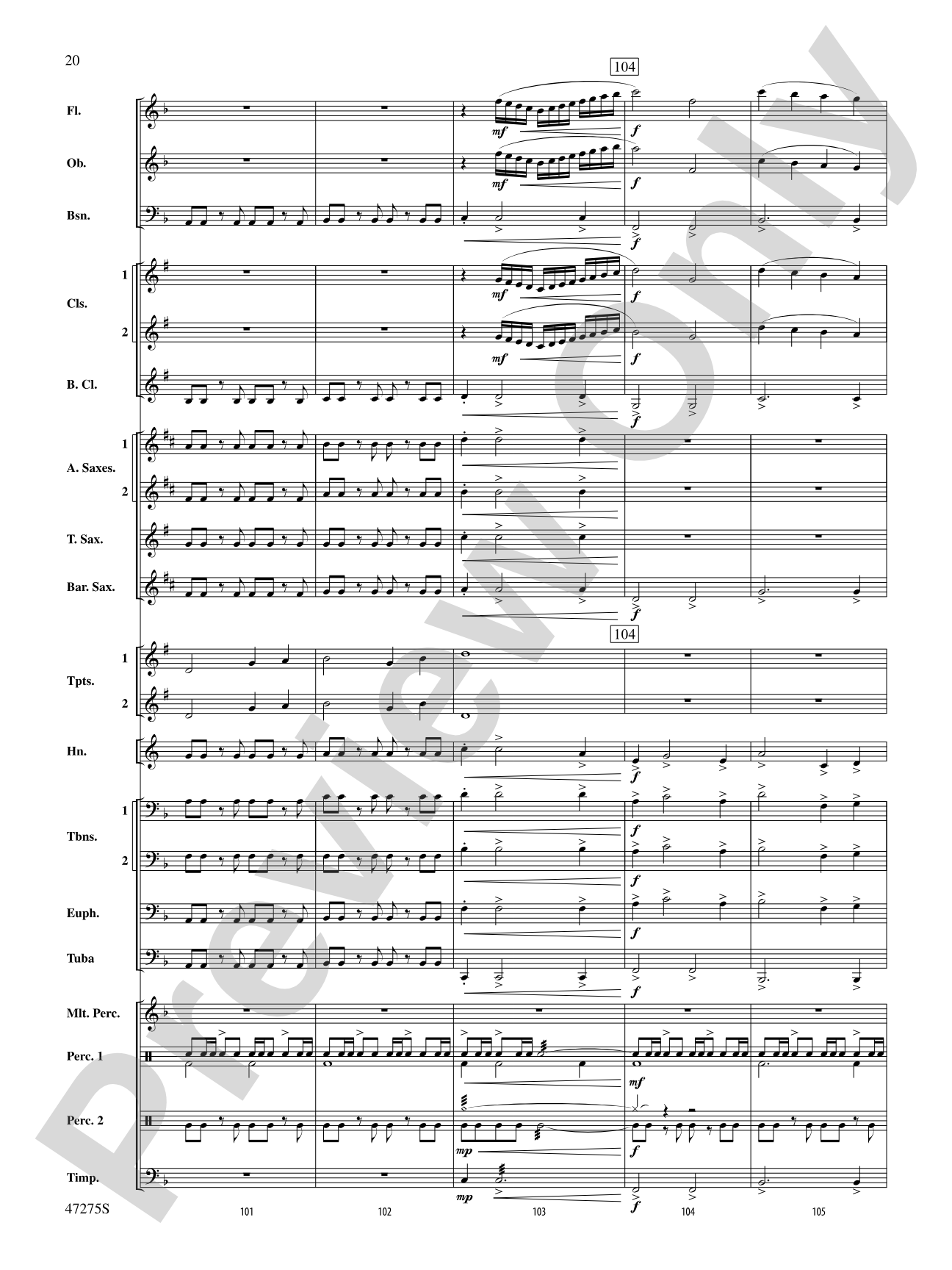
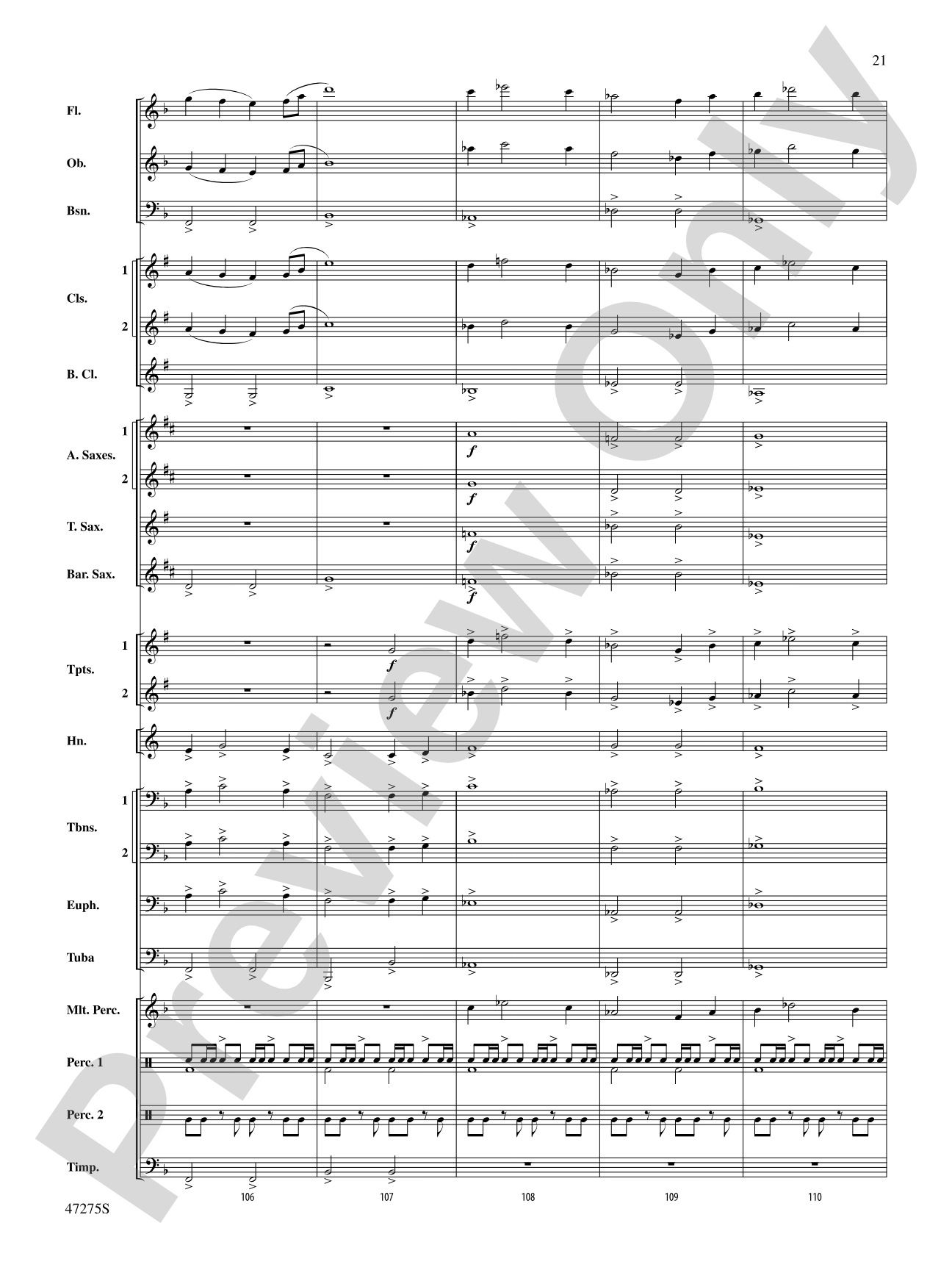
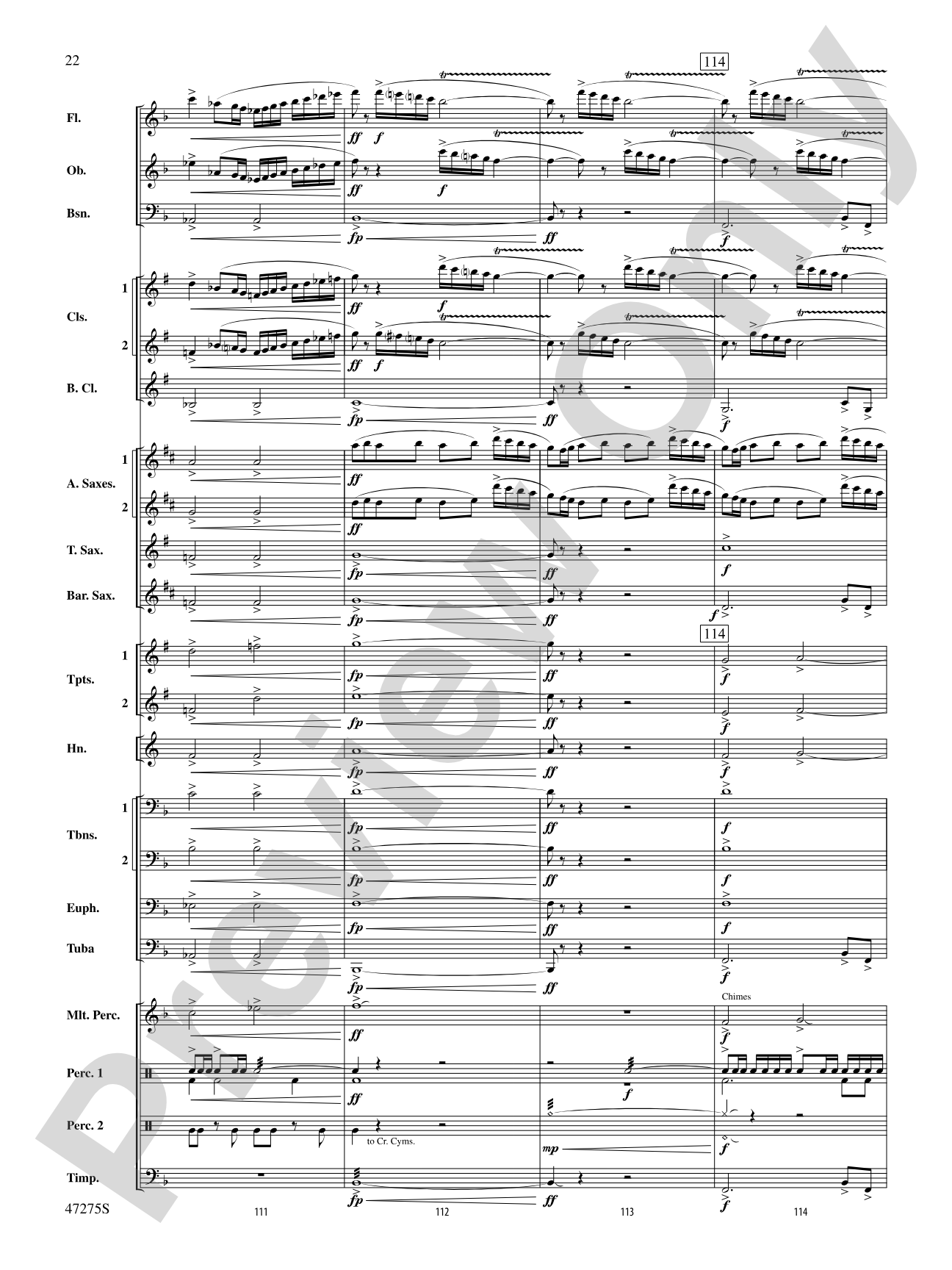
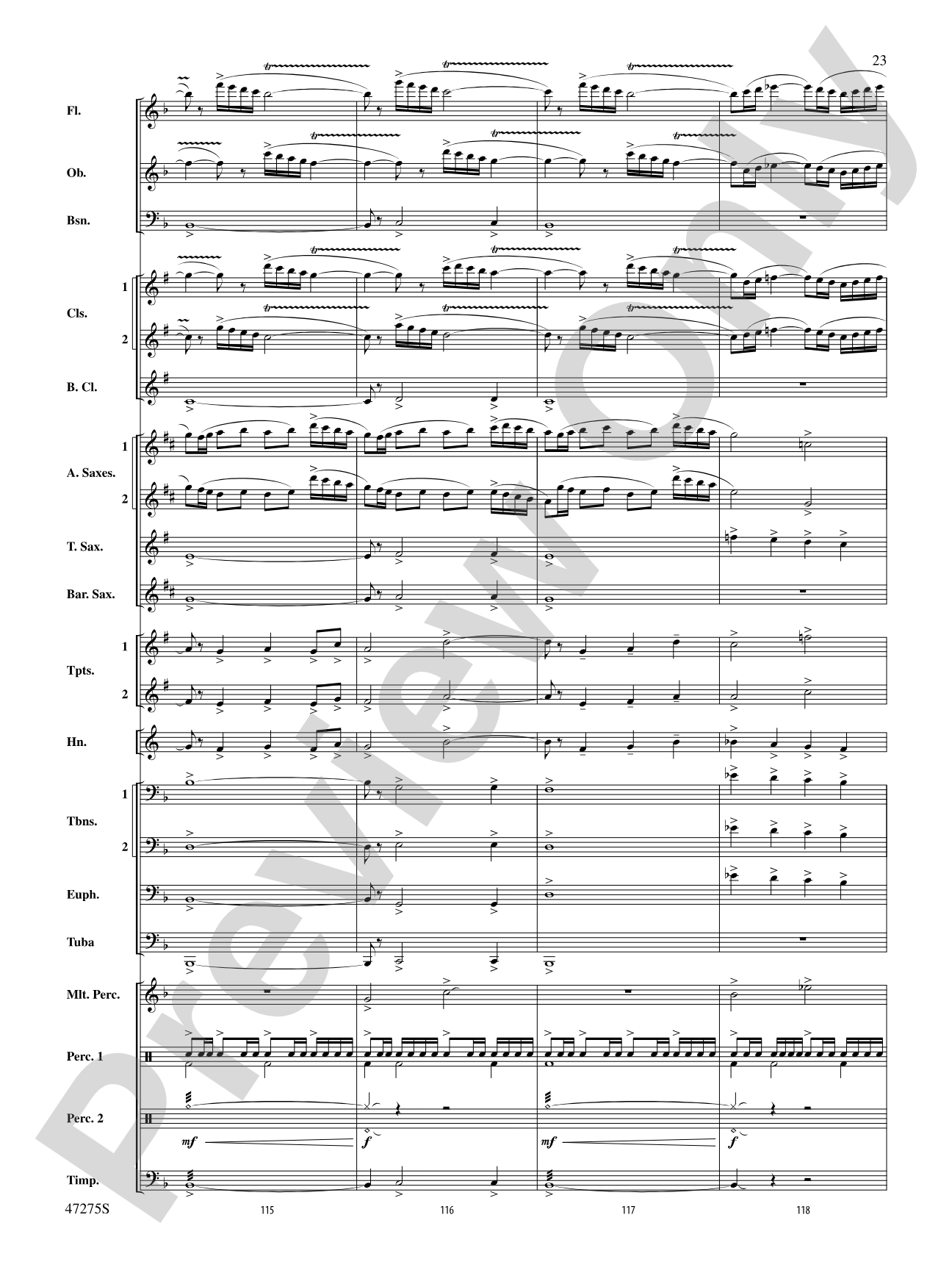
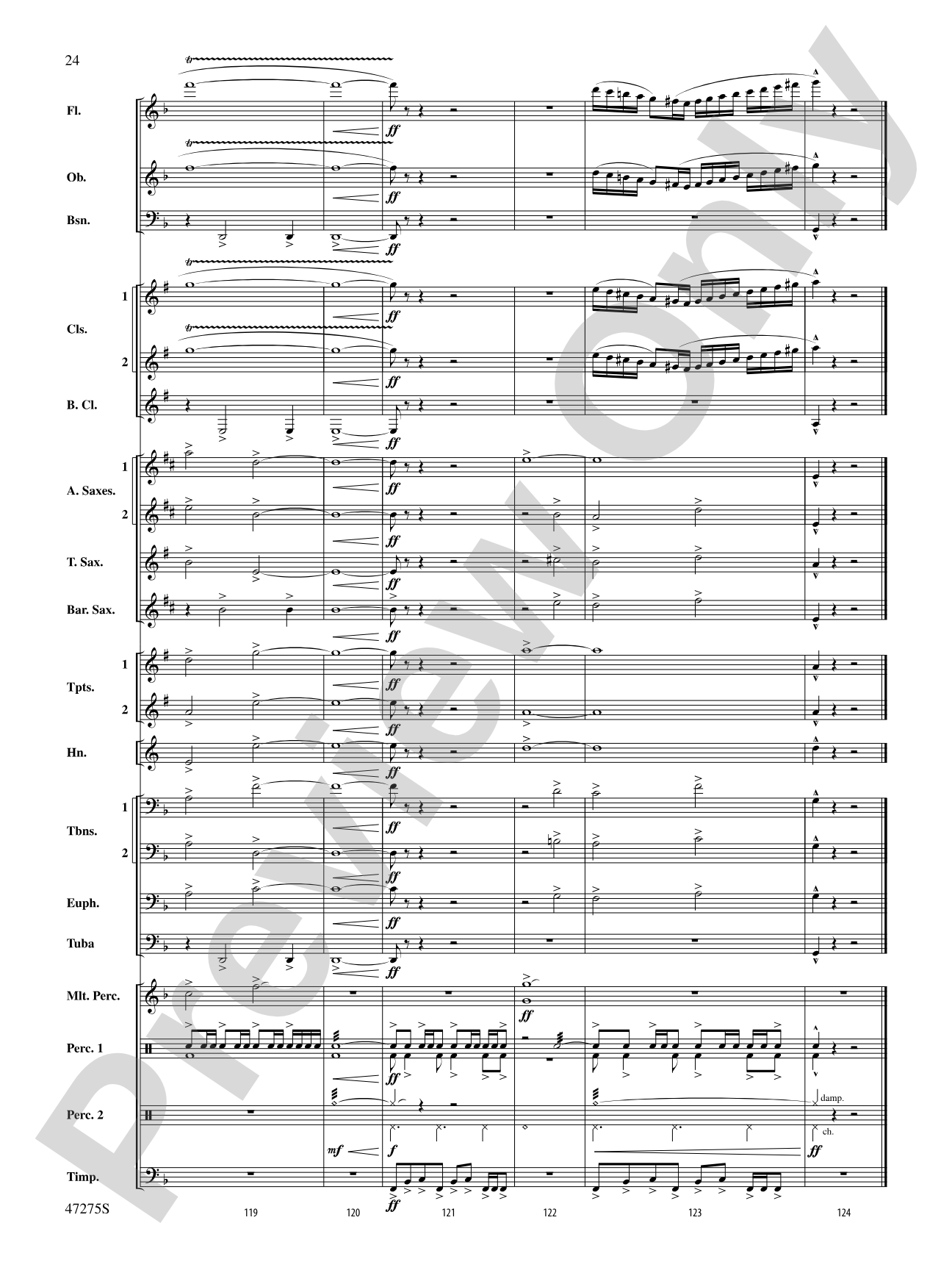

Power the Earth: Score
By Robert Sheldon
Grade: 3
Item: 00-PR-0006093
$9.00
Pickup currently not available
Description
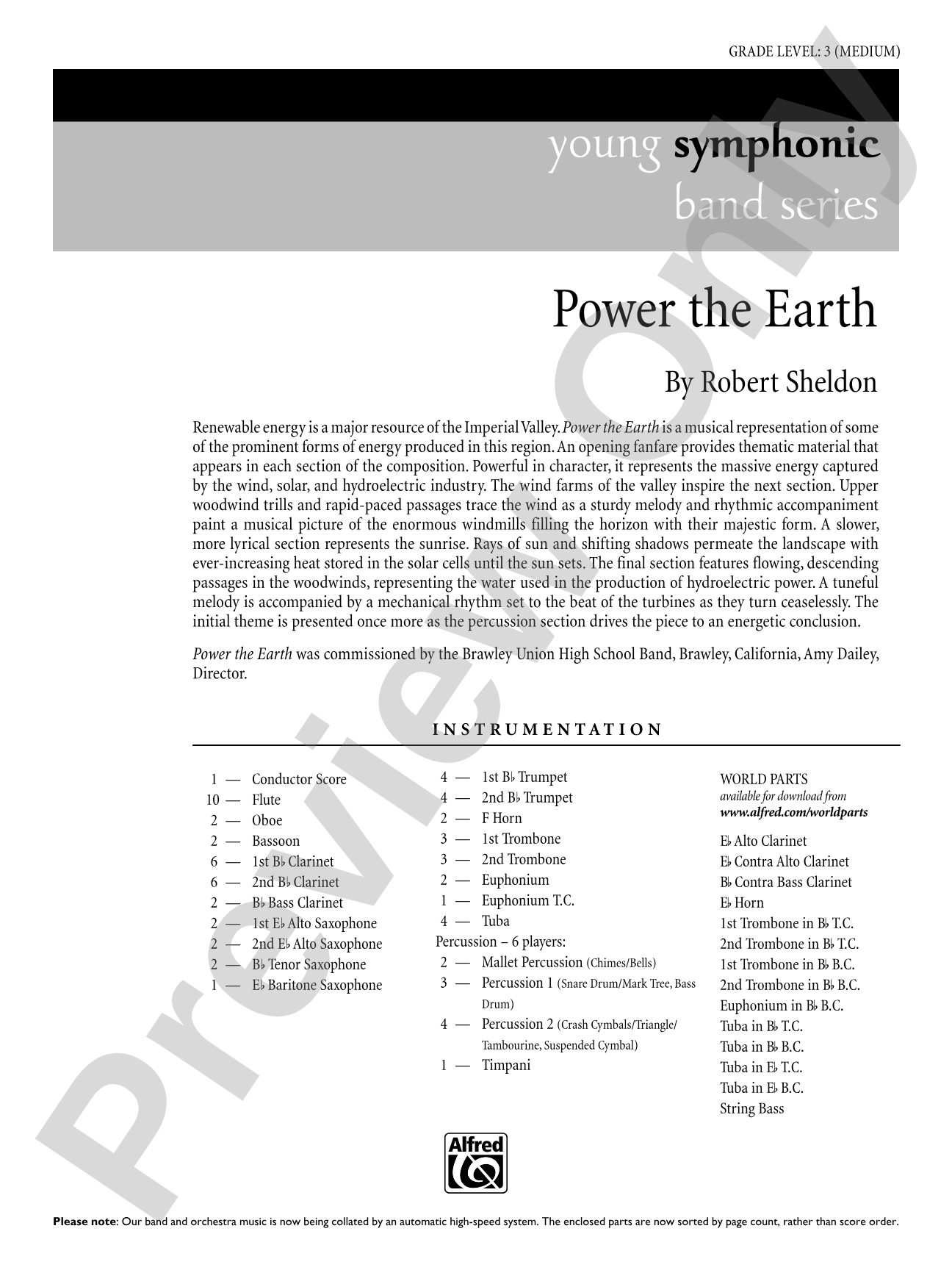
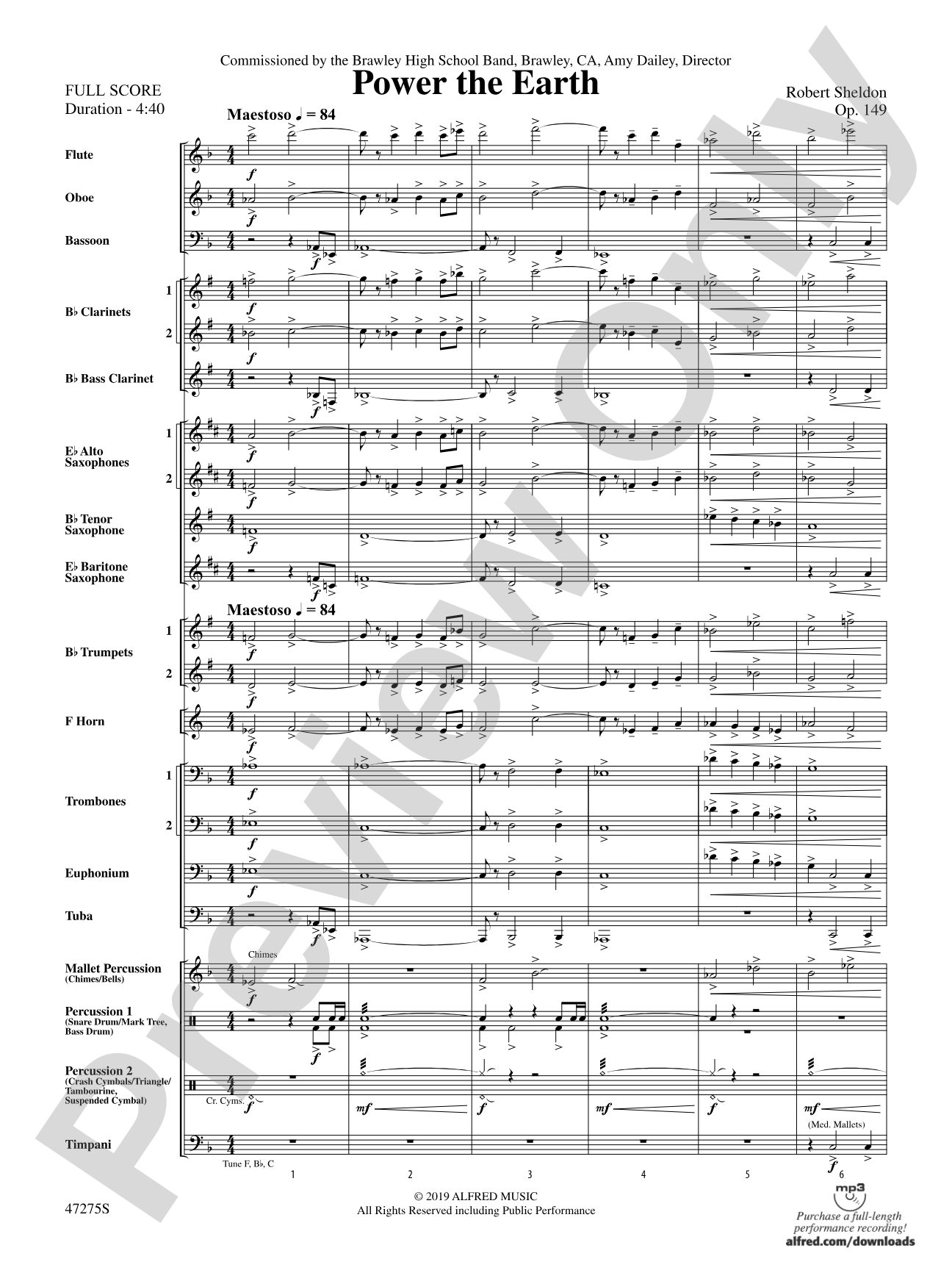
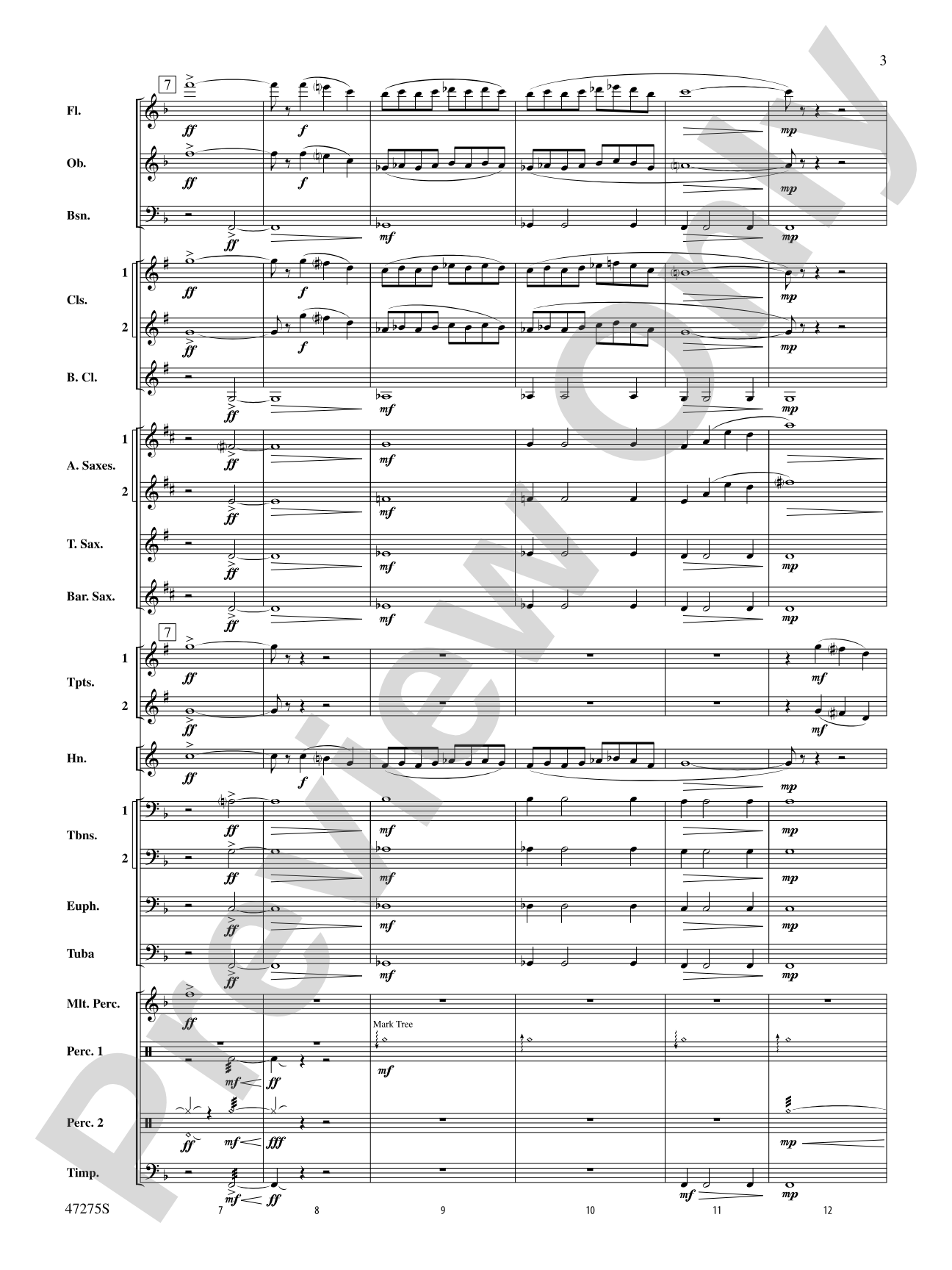
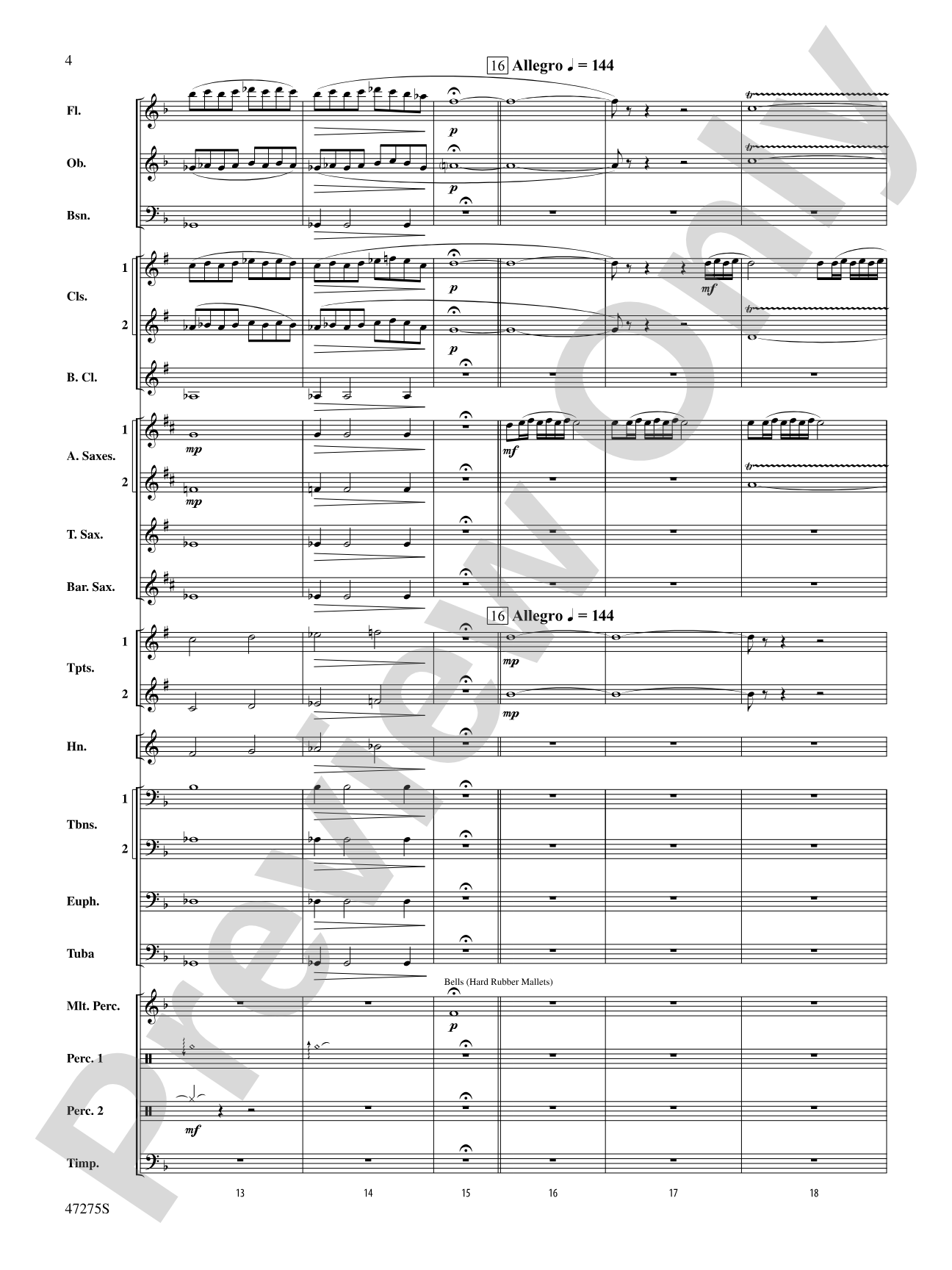
This piece is a musical representation of some of the prominent forms of renewable energy produced in the Imperial Valley. A powerful opening fanfare leads to rapid passages that depict wind; slow harmonic shifts signify sunrays permeating the landscape with ever-increasing heat; and flowing, descending passages represent water used in hydroelectric power.


Don't just read it, hear it, play along with it, and watch your students grow with it. In MakeMusic Cloud, Power the Earth: Score comes alive with professional accompaniment, adjustable tempo, and built-in practice tools that turn solo practice into real progress.
Open in the Player
Jump straight in and assign it today.
Start Your Free Trial
Open this title and explore the full library in minutes.
Sample Audio
1
Audio File
--:--
0:00
0:00
Sample Video
Additional Details
Series:
Young Symphonic
Publisher:
Alfred Music
Page Count:
266
SKU:
00-PR-0006093
More about this title
About the Composer: Robert Sheldon

Robert Sheldon stands among the most frequently performed composers in the wind band repertoire. His awards from the American School Band Director's Association, Phi Beta Mu, and ASCAP reflect a compositional voice that speaks directly to the needs and aspirations of student ensembles. As lead author of Sound Innovations for Concert Band, he has shaped how countless musicians learn their instruments.
Sheldon's international presence spans conducting appearances across the United States, Japan, Canada, Italy, Germany, Australia, and China. He has led performances of his own works in Carnegie Hall, Orchestra Hall, Boston's Symphony Hall, the Sydney Opera House, and the Kennedy Center. His calendar remains filled with commissions, clinician appearances at state and regional conferences, and guest conducting for honor bands. In 2020, VanderCook College of Music awarded him an honorary doctorate in recognition of his sustained contributions to music education.
Why we love this
Sheldon channels environmental themes into music that captures the imagination without sacrificing musical substance. The program connects renewable energy to specific compositional choices (fanfare for wind, harmonic shifts for solar heat, descending lines for water flow), teaching students that orchestration and form serve meaning. At Grade 3, it offers sophisticated musical ideas in an accessible package, making it ideal for bands ready to move beyond exercise books into concert literature with real artistic purpose.
What to expect
The energy of harnessing nature itself flows through this work. You hear wind in motion, sunlight warming the landscape, and water's inevitable descent, all rendered in vivid musical colors. It is exhilarating and purposeful, never cartoon-like, inviting players to discover how sound can paint a specific place and its sustainable power.
Who it's for
Concert bands in grades 3-4 ready to program meaningful music that connects to themes beyond the concert hall. This piece appeals to both traditional band directors seeking musically substantive contest literature and educators who want to integrate environmental awareness or regional pride into their ensemble experience.
How to get the most out of it
- Shape the opening fanfare with clear articulation and dynamic contrast. The rapid passages that follow demand clean tonguing and ensemble precision; mark these sections during sectional rehearsals so winds and percussion lock together.
- Balance the slow harmonic shifts in the solar section carefully. These chords require mature blend and attention to intonation; have players sustain without vibrato initially, then add warmth as the passage builds heat.
- Allow the descending water passages to breathe naturally. These flowing lines work best when the ensemble resists the urge to rush; conduct with gentle flexibility to let the musical current guide the tempo.
How to use it
Program this as a centerpiece for a concert focused on contemporary American composers or environmental themes. It also works well alongside other Sheldon pieces for a thematic set, or as a strong contest selection where judges appreciate both technical writing and artistic intention. The 266-page score provides substantial rehearsal material, making it suitable for a band preparing for spring festivals.
Skills your students will build
- Clean articulation and ensemble precision in rapid passage work
- Sustained tone control and intonation in slow harmonic progressions
- Responding to conductor gesture in sections with flexible tempo and phrasing
- Balance and blend across the full band in complex sonorities
- Understanding how orchestration and form convey programmatic meaning