Pouncing Kittens Sheet Music Preview

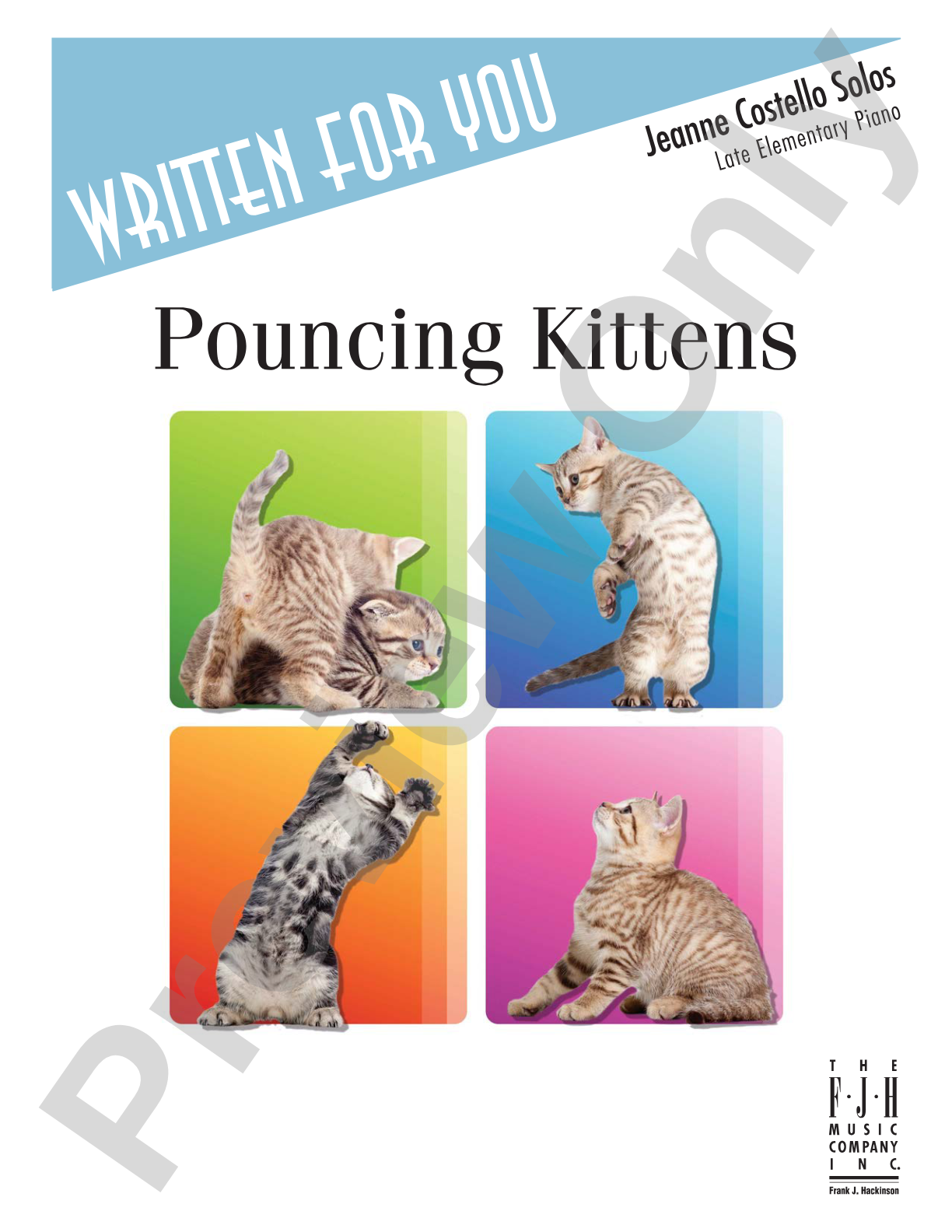
Pouncing Kittens: Piano

By Jeanne Costello

Item: 98-DW9448

Digital Download
$2.95
Description
One-two-three, pounce! is the signature rhythm of this perky, witty piece which features staccatos, accents, and dynamic swells. The easy melodic patterns alternate measures with the C minor arpeggio and stepwise motion of the C minor five-finger pattern. Accidentals
are used instead of a key signature.

Pouncing Kittens: Piano isn't in MakeMusic Cloud just yet...but it could be. Let us know you'd like to see it, and you'll help shape what comes next. In the meantime, start a free trial and dive into thousands of interactive titles your students can play along with today.

Sample Audio
No sample audio found.
Sample Video
Additional Details
Series: Written For You
Publisher: The FJH Music Company, Inc.
SKU: 98-DW9448

More about this title

Why we love this

Costello nails the balance between technical instruction and genuine musical fun. The staccato-and-accent vocabulary gives students a real reason to care about articulation, while the alternating melodic and arpeggio passages keep hands engaged without overwhelming early elementary players.

What to expect

Playful and energetic, like watching a kitten's quick, decisive movements. The rhythm bounces forward with witty accents and staccatos that make the piece feel more like a musical game than an exercise.

Who it's for

Late elementary pianists who are ready for articulation work and minor key comfort. This suits students building confidence with stepwise motion, arpeggio patterns, and basic dynamic control.

How to get the most out of it

  • Shape the dynamic swells clearly; they're the piece's personality. Exaggerate the contrast between soft pounces and the fuller moments so the title comes alive.
  • Keep staccatos crisp and even. Since this is where students learn the technique, make each one a small, bouncy gesture rather than just shortening the note.
  • Lock the tempo to the one-two-three pounce pattern. It's the heartbeat of the whole piece, so maintain it steadily even when moving between melody and arpeggio.
  • Let the C minor five-finger pattern feel comfortable and grounded. It's the home base students return to, so play it with confidence to anchor the piece's harmonic center.

How to use it

Program this as a showstopper for a spring or casual recital. Its short length and charming character make it an ideal opener or closer, and younger students in the audience will immediately connect with its title and energy.

Skills your students will build

  • Staccato articulation and control
  • Accent placement and dynamic shaping
  • C minor five-finger pattern and arpeggio fluency
  • Reading accidentals instead of a key signature
  • Coordinating melody and accompaniment patterns across alternating measures

You May Also Like