
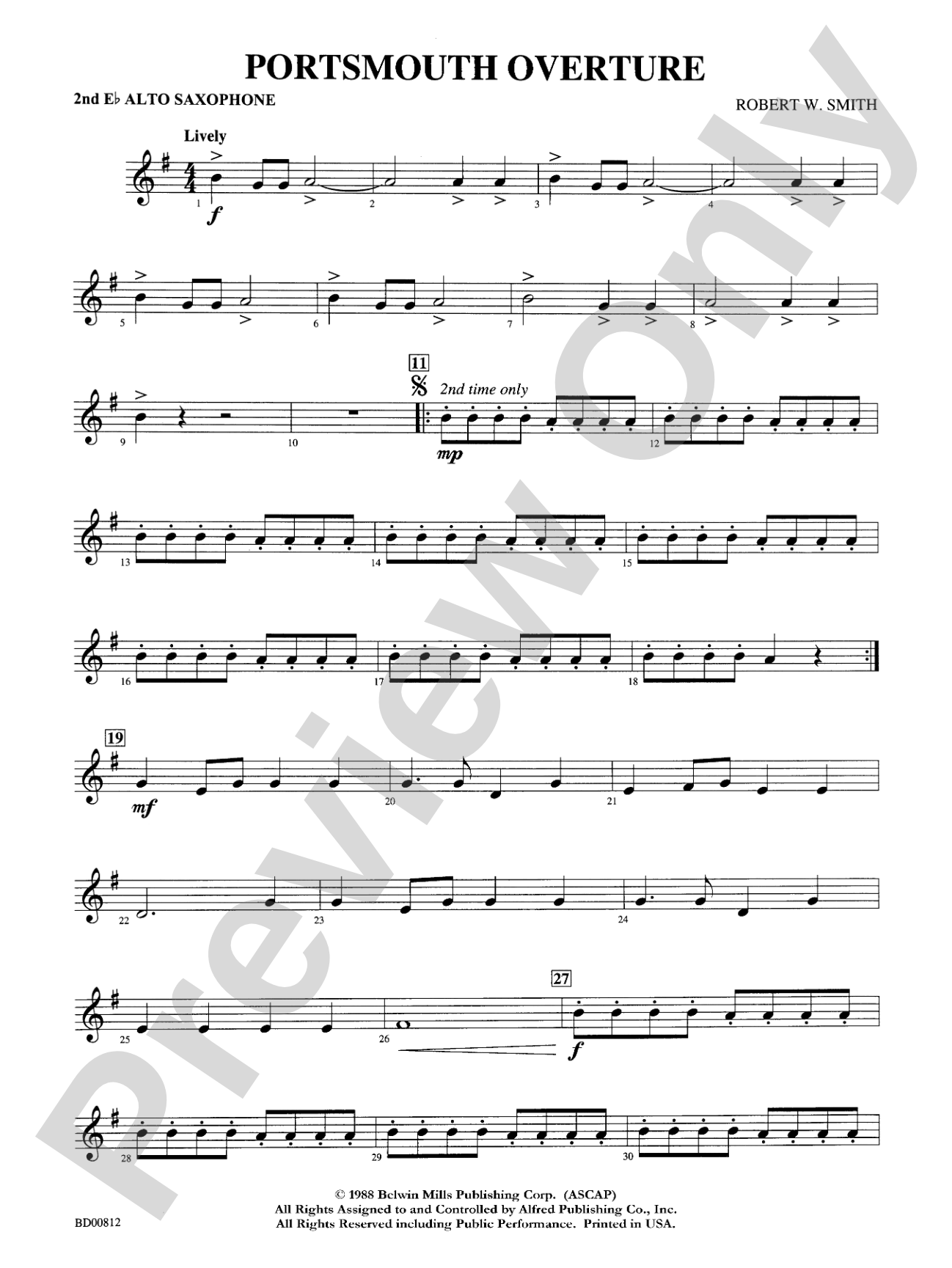

Portsmouth Overture: 2nd E-flat Alto Saxophone
By Robert W. Smith
Grade: 2 (Easy)
Item: 00-PC-0001972_AX2
$3.00
Pickup currently not available
Description
A wonderfully melodic work in the classic overture format. The scoring is full and all of the strengths of this band series (designed for the instrumentation of today's young bands) are in evidence. This is an exceptional work for use in concert, contest or festival.


Don't just read it, hear it, play along with it, and watch your students grow with it. In MakeMusic Cloud, Portsmouth Overture: 2nd E-flat Alto Saxophone comes alive with professional accompaniment, adjustable tempo, and built-in practice tools that turn solo practice into real progress.
Open in the Player
Jump straight in and assign it today.
Start Your Free Trial
Open this title and explore the full library in minutes.
Sample Audio
1
Audio File
--:--
0:00
0:00
Sample Video
Additional Details
Series:
Belwin Young Band
Publisher:
Alfred Music
Page Count:
138
SKU:
00-PC-0001972_AX2
More about this title
About the Composer: Robert W. Smith

Robert W. Smith stands among the most performed composers of concert band and orchestral music in the United States, with more than 400 published works that span educational ensembles through professional orchestras. His training at Troy State University (AL) and the University of Miami (FL) shaped a compositional voice equally comfortable with the technical demands of developing musicians and the expressive range of advanced ensembles. His symphonies, including The Divine Comedy and The Odyssey, have traveled from North America to Europe, Australia, and Asia, while works like The Tempest have become touchstones in the standard band repertoire.
Beyond the concert hall, Smith's music has reached millions through high-profile commissions and broadcasts. His compositions have graced the opening of the Macy's Thanksgiving Day Parade, the Olympic Games, major television productions, and ceremonies of national significance. As a guest conductor and clinician, he has worked extensively across the United States and internationally, bringing his understanding of what young and developing musicians need into every piece he writes.
Why we love this
Smith's overture form is a master class in efficient arranging for young ensembles. He gives every section of the band something genuinely musical to play while maintaining the architectural clarity that makes rehearsal productive and performance rewarding. The melodic material sings naturally at this grade level, which means your students will sound like musicians from the first rehearsal.
What to expect
Portsmouth Overture opens with the classic overture energy: a quick, rhythmic introduction that immediately establishes momentum and character. Lyrical passages emerge naturally from this foundation, allowing the band to shift into singing lines that contrast with the bright opening while maintaining forward motion. The overall arc feels complete and satisfying, the musical equivalent of a well-told story.
Who it's for
Grade 2 concert bands moving beyond simplified arrangements into literature with genuine melodic and harmonic substance. This works equally well for school bands preparing for concert season, contest preparation, or festival programming where you want something that sounds polished without requiring years of ensemble experience.
How to get the most out of it
- Balance the main melodic ideas across your woodwind and brass sections; the overture form depends on clear statement and restatement, so these themes need to carry weight even when they move from family to family.
- Shape the dynamic architecture over longer phrases rather than responding to every marking individually. This approach helps young players hear how individual moments connect into a complete musical arc.
- Use the full scoring effectively in rehearsal. Because the band instrumentation is modern and well-distributed, sectional work is efficient, but full ensemble run-throughs early will help everyone understand where their lines fit in the overall color and texture.
How to use it
This is an ideal opening number for a full concert, particularly a winter or spring pops program where you want an energetic, audience-friendly start. It also serves well as a contest selection at the Grade 2 level or as a festival centerpiece, since the piece demonstrates both technical competence and musical maturity without exhausting young players before more demanding repertoire.
Skills your students will build
- Balance and blend across the four sections of the band at a consistent tempo
- Phrasing over longer melodic lines (beyond single measures)
- Articulation clarity in fast-moving passages with consistent rhythmic precision
- Listening to and supporting secondary melodic material in different instrumental families
- Dynamic control that shapes phrases rather than responding only to marked changes