Portrait of Mercer Ellington: Piano Digital Sheet Music

Portrait of Mercer Ellington: Piano Digital Sheet Music

Marian McPartland

Item: 00-PS-0004768

Digital Download
$3.99
Description

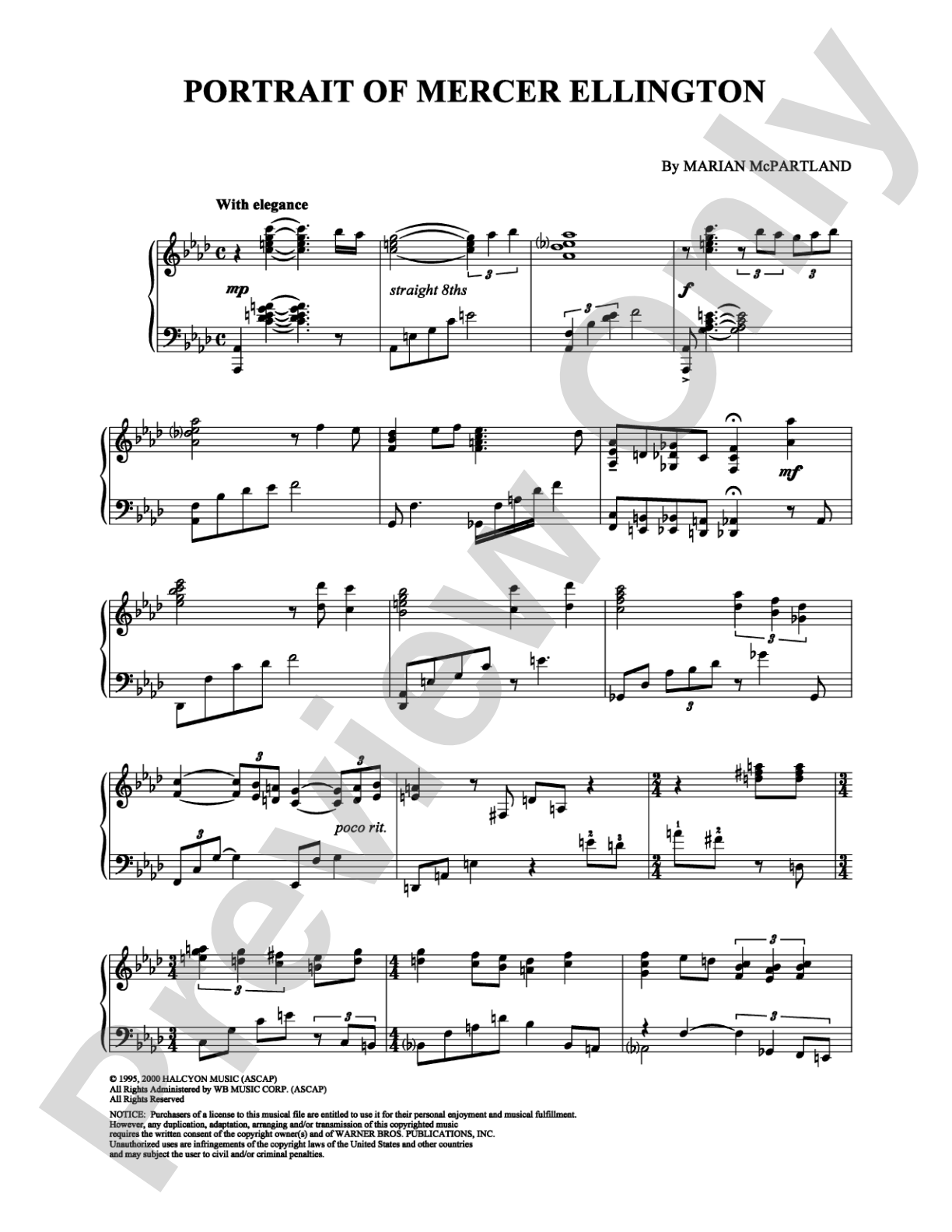
Portrait of Mercer Ellington: Piano Digital Sheet Music isn't in MakeMusic Cloud just yet...but it could be. Let us know you'd like to see it, and you'll help shape what comes next. In the meantime, start a free trial and dive into thousands of interactive titles your students can play along with today.

Sample Audio
No sample audio found.
Sample Video
Additional Details
SKU: 00-PS-0004768

More about this title

About the Artist: Marian McPartland

Marian McPartland was a pioneering jazz pianist and bandleader whose career spanned more than seven decades. Born in England in 1918, she moved to the United States and became a fixture of the American jazz scene, leading her own trios, performing at major festivals, and hosting the long-running radio program "Piano Jazz" on NPR, where she interviewed countless jazz legends. Her playing combined a sophisticated harmonic vocabulary with genuine warmth, and her compositions and arrangements reflected both her classical training and her deep knowledge of jazz tradition.

Why we love this

McPartland's piece offers pianists a chance to explore the sophisticated harmonies and conversational melodic style that defined her approach to jazz composition. The tribute to Mercer Ellington (Duke's son and a gifted composer in his own right) carries historical weight while remaining accessible for serious student pianists ready to move beyond lead sheets into fully notated jazz arrangements.

What to expect

Reflective and graceful, with the quality of a genuine musical portrait. The piece unfolds with the intimacy of a late-night piano conversation, blending elegance with the warmth that defined McPartland's musical personality. There's both respect and affection in the harmonic language.

Who it's for

Intermediate to advanced jazz pianists looking for composed pieces that go beyond standards and lead sheets. This work suits students studying jazz history and aesthetics, as well as pianists preparing for college auditions or recitals focused on modern jazz composers.

How to get the most out of it

  • Pay attention to McPartland's harmonic choices in the voicings; they often shift color without leaving the underlying melody, so let those subtle reharmonizations breathe rather than rushing through chord changes.
  • Approach the piece as a conversation rather than a solo statement. McPartland's phrasing suggests call-and-response between the melody and the accompaniment, so shape your rubato accordingly.
  • Balance rhythmic precision in the comping figures with expressive freedom in the melodic statements. The two elements work together but should never feel locked in place.

How to use it

Include this in a recital that celebrates women composers and bandleaders in jazz, or pair it with other tributes and character pieces that tell stories through music. It works equally well as a concert solo or as the centerpiece of a program exploring jazz composers of the mid-to-late 20th century.

Skills your students will build

  • Interpreting jazz notation and understanding implied voicings beyond the written notes
  • Shaping melodic lines with rubato and expressive timing while maintaining harmonic clarity
  • Voicing jazz chords with sophistication and adjusting comping style to support the melody
  • Understanding the relationship between composed jazz and improvisational jazz traditions

You May Also Like