
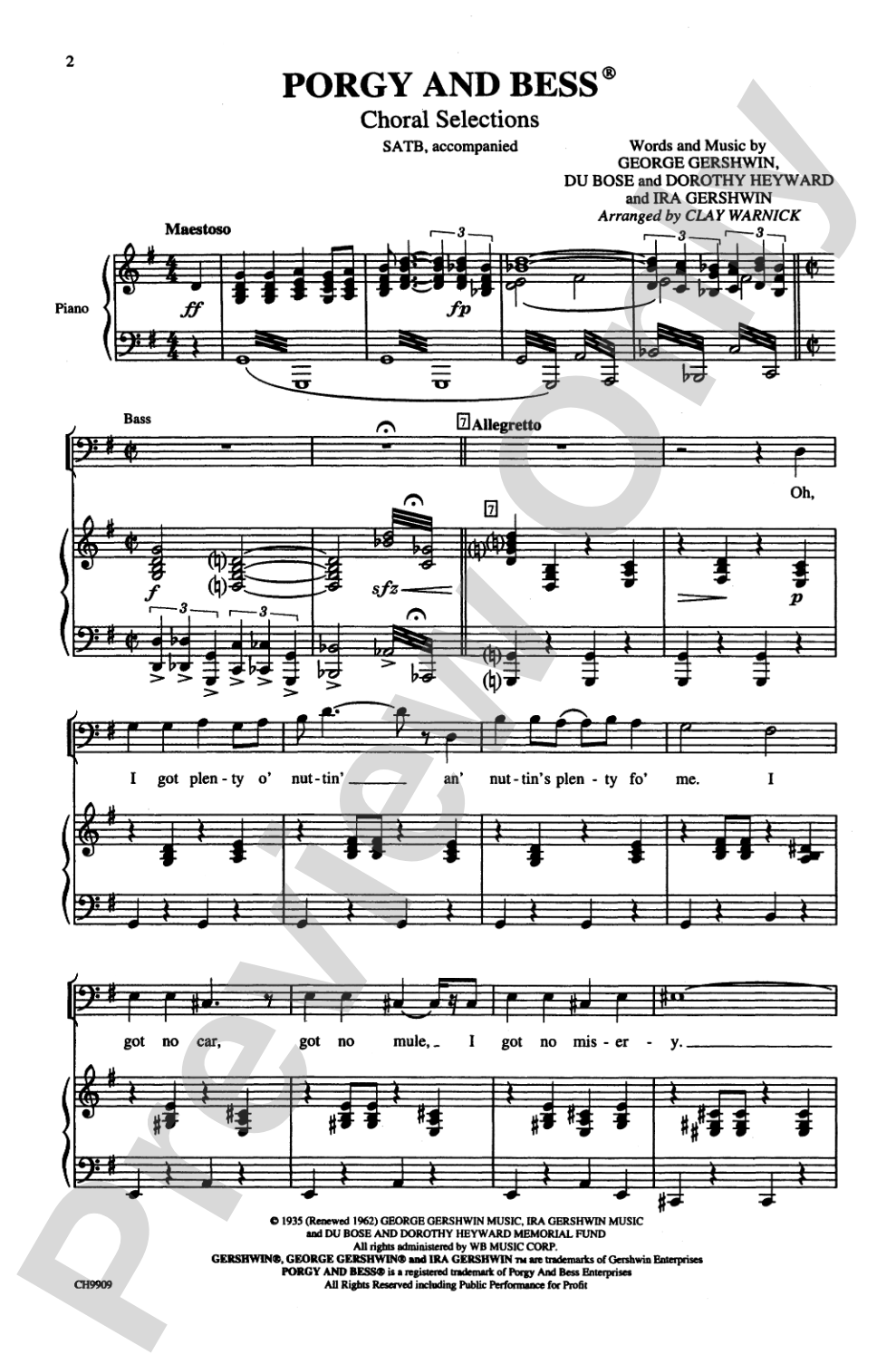
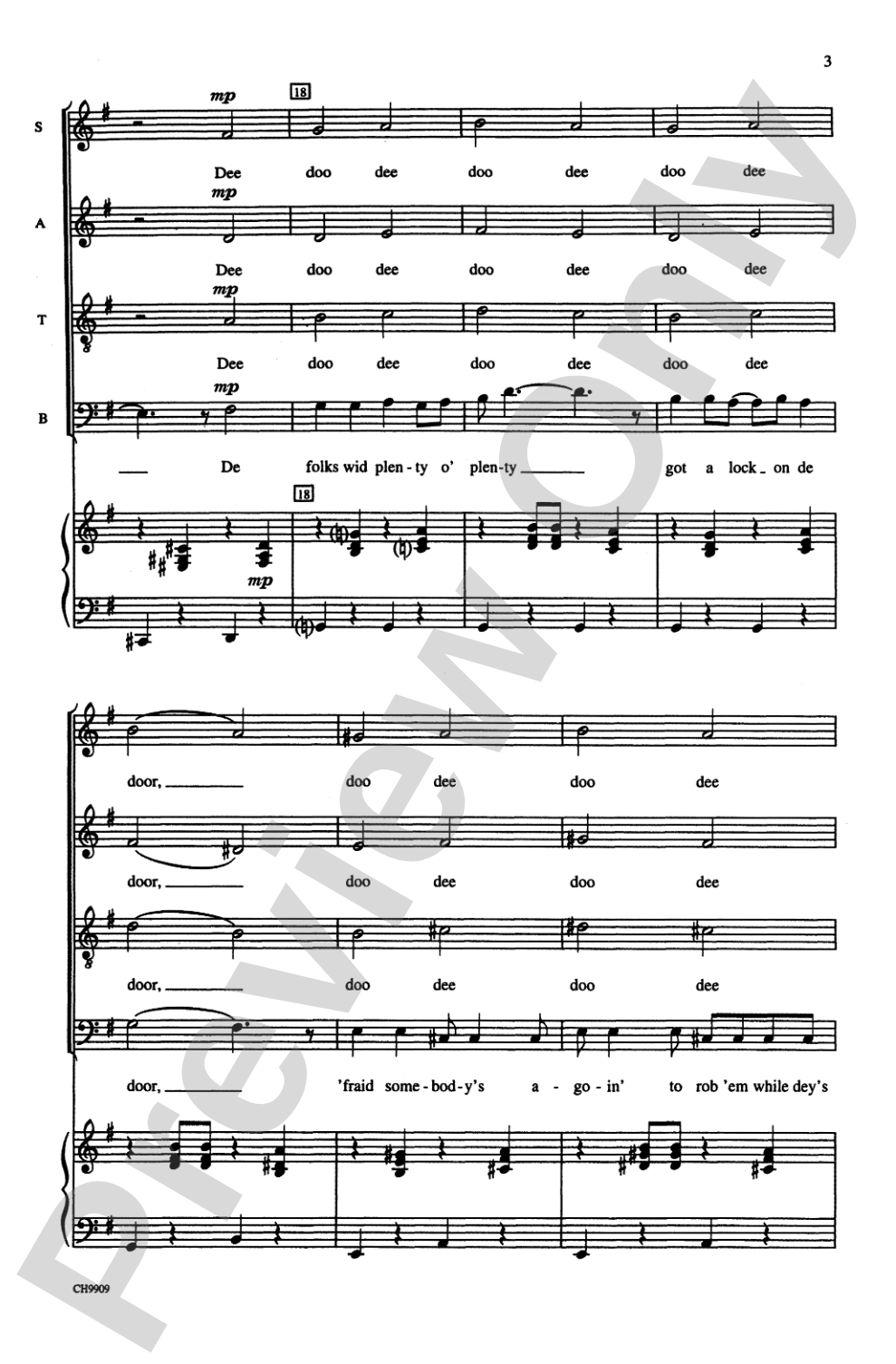
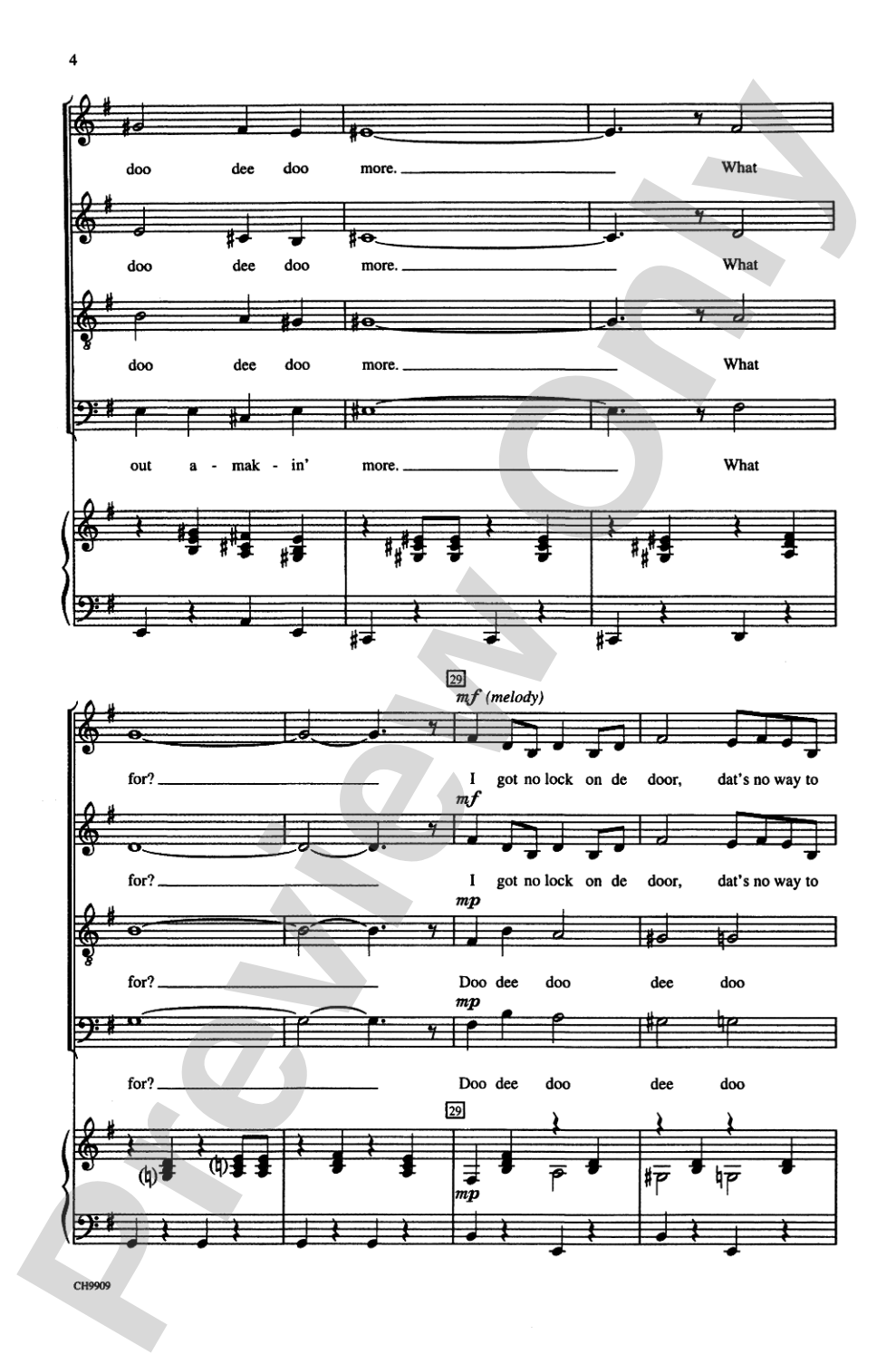
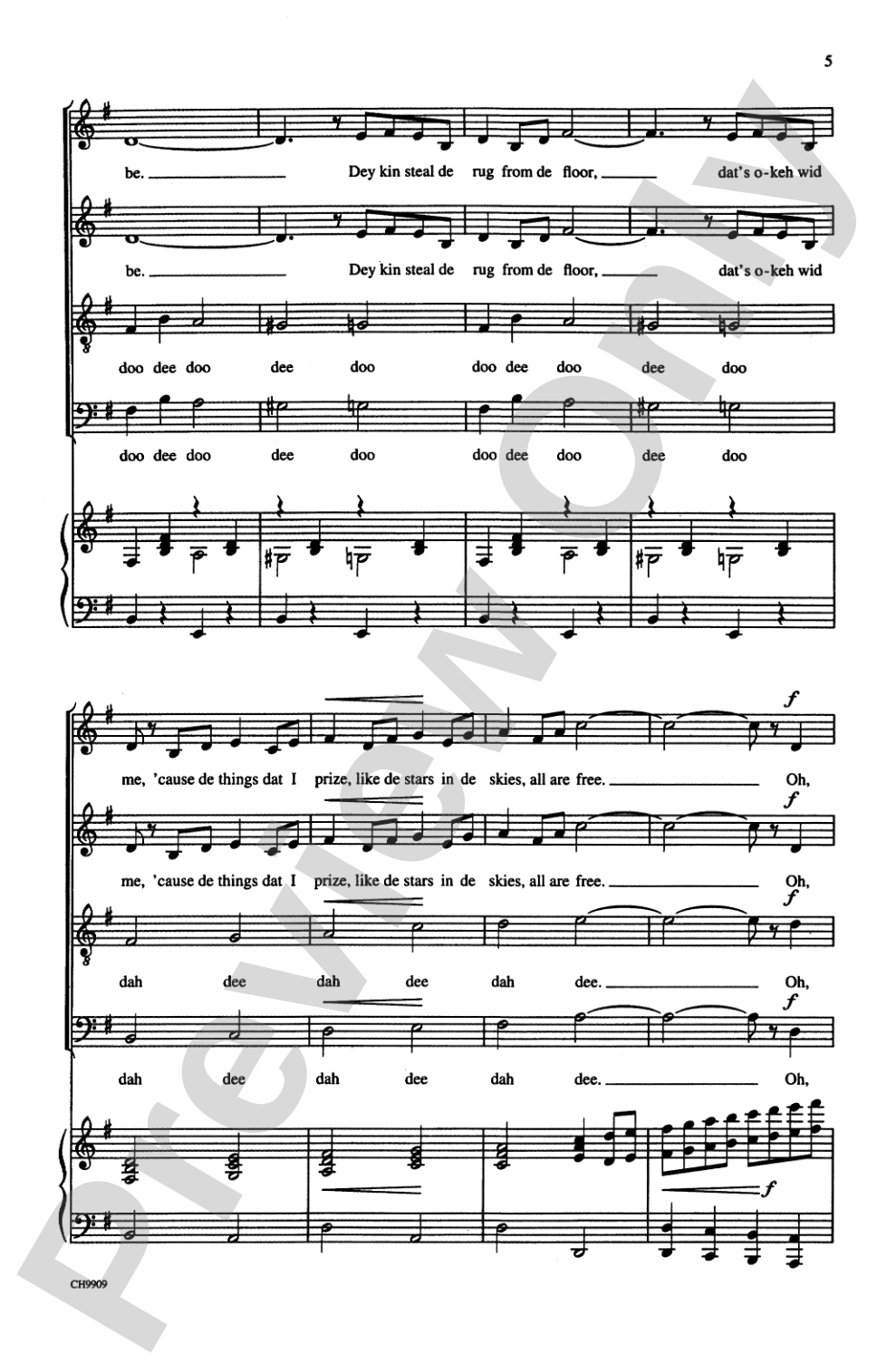
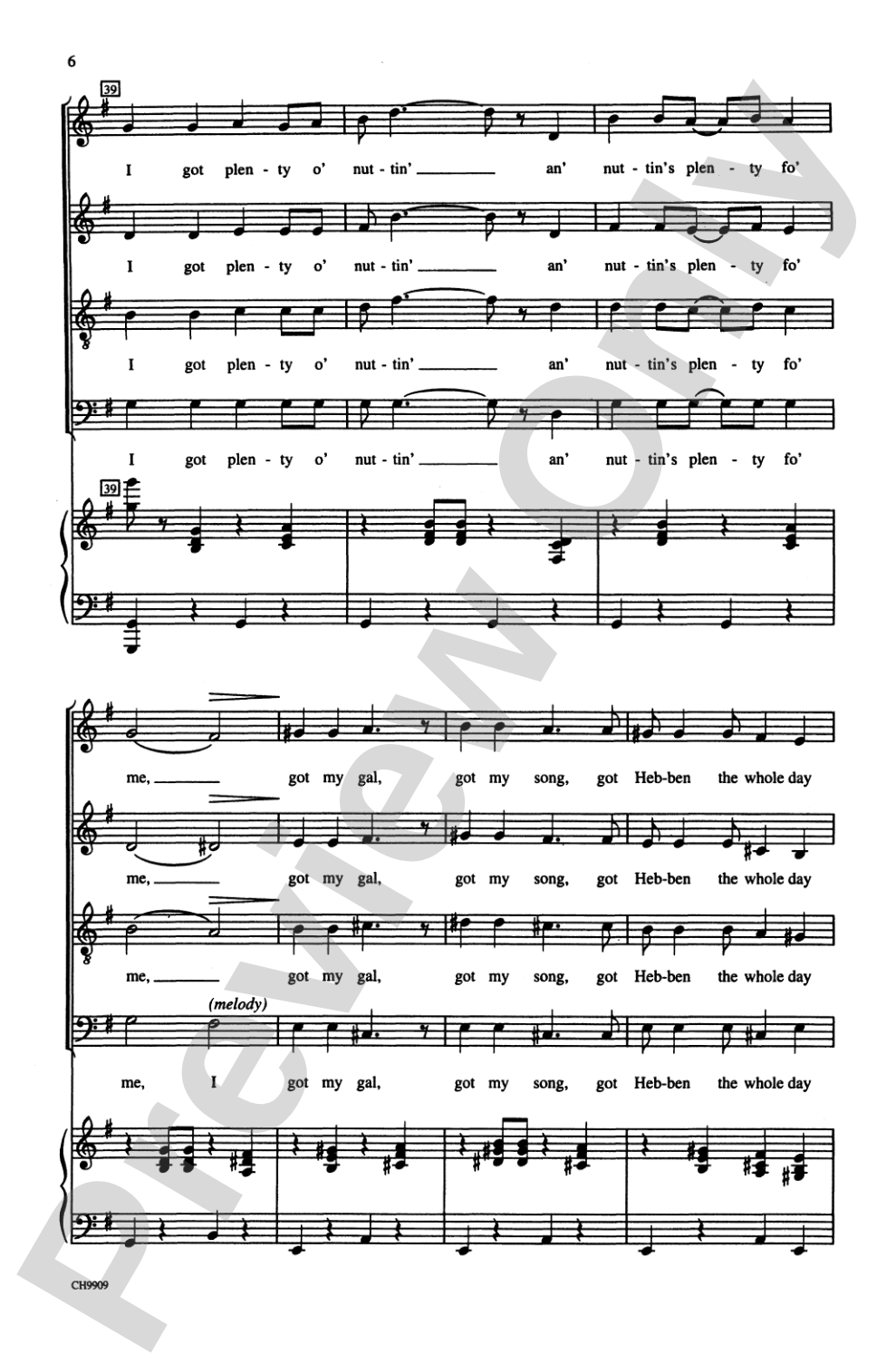
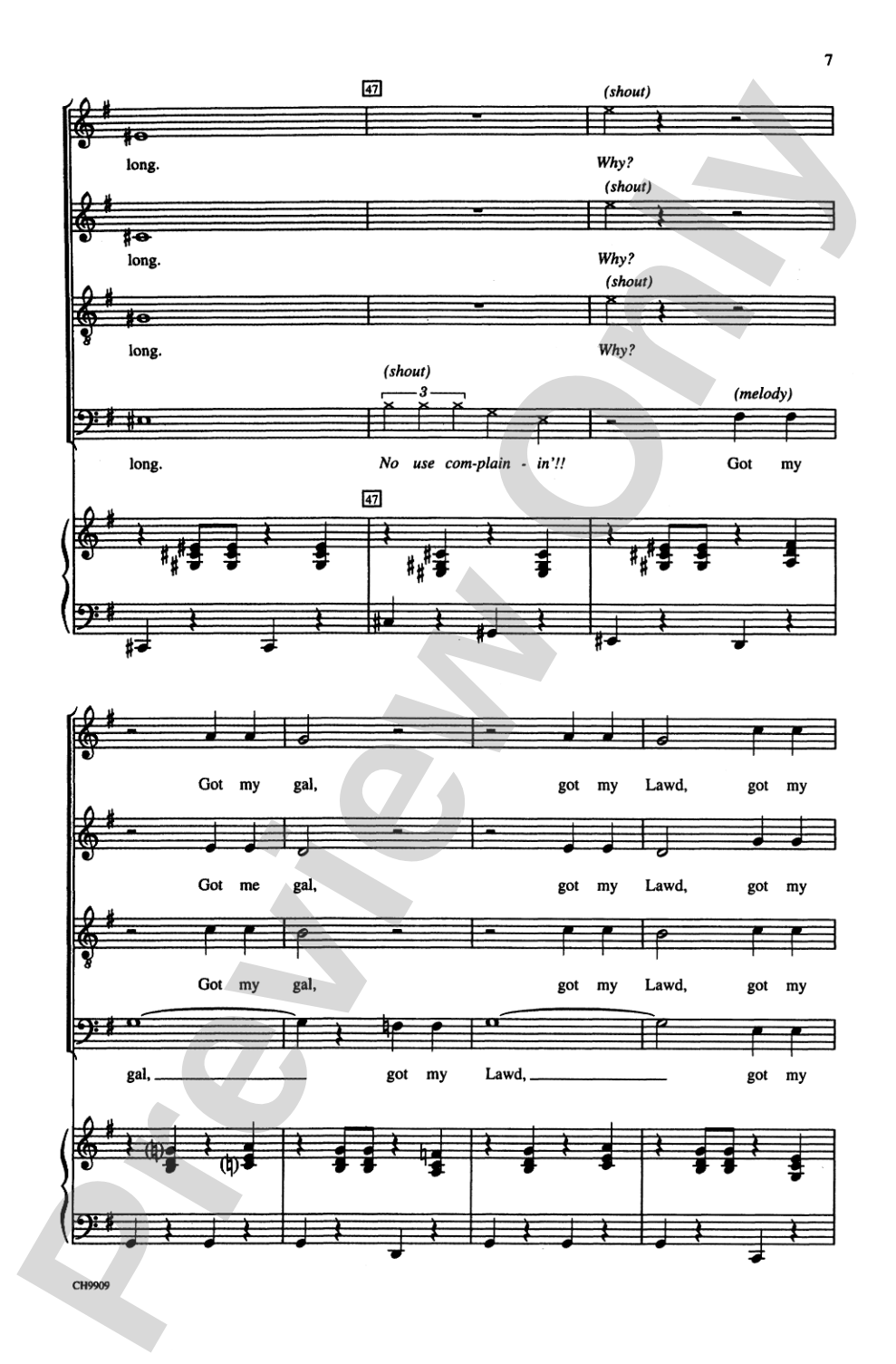
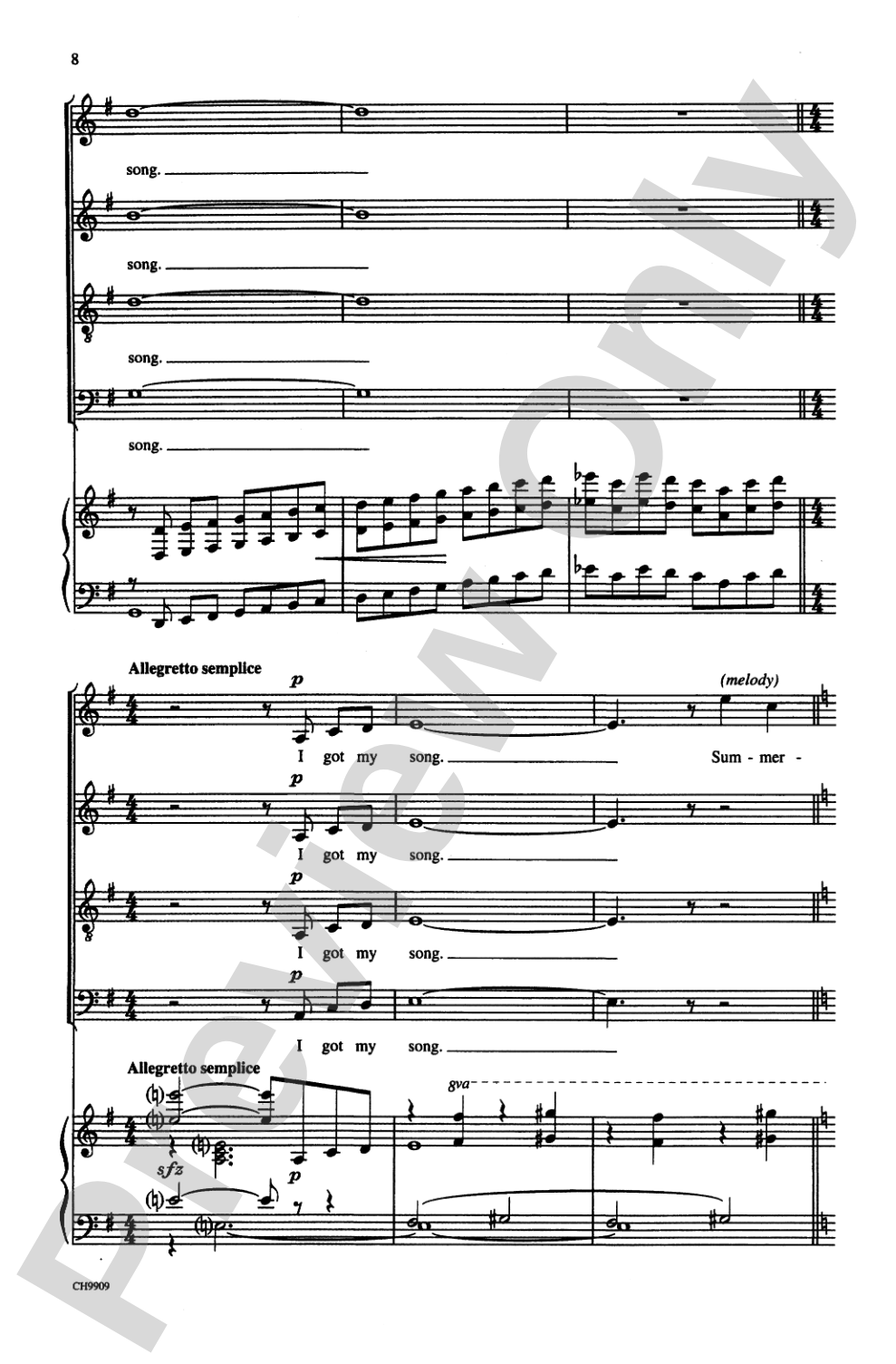

Porgy and Bess (Choral Selection): SATB Choral Octavo
Words and music by George Gershwin, DuBose and Dorothy Heyward and Ira Gershwin / arr. Clay Warnick
Item: 00-PO-0002958
$4.95
Minimum order quantity: 20 copies
One moment…
Description
We re-engraved this classic so your choirs today could sing the consummate choral setting of the wonderful music from Gershwin's Porgy and Bess. Clay Warnick truly one of the masters of arranging.


Porgy and Bess (Choral Selection): SATB Choral Octavo isn't in MakeMusic Cloud just yet...but it could be. Let us know you'd like to see it, and you'll help shape what comes next. In the meantime, start a free trial and dive into thousands of interactive titles your students can play along with today.
Request This Title
Tell us you want it.
Start Your Free Trial
Explore everything that's ready to play right now.
Sample Audio
No sample audio found.
Sample Video
No sample videos found.
Additional Details
Series:
Alfred Archive Edition: Alfred Pop Choral Series
Publisher:
Alfred Music
Page Count:
36
SKU:
00-PO-0002958
More about this title
About the Composer: George Gershwin
George Gershwin (1898-1937) bridged concert music and popular song with uncommon fluency. His ability to weave jazz idioms, blues inflections, and classical forms into works of genuine substance made him one of the most performed American composers of the twentieth century. Porgy and Bess, his 1935 opera written with lyricists DuBose Heyward, Dorothy Heyward, and Ira Gershwin, remains a cornerstone of American musical theater and a rich source for choral arrangement.
Gershwin's gift for melody and harmonic color translates powerfully to choral settings. His music rewards singers who can balance stylistic authenticity—the blues bends, syncopated rhythms, and jazz-influenced harmonies—with the discipline of ensemble singing. Directors appreciate how his themes retain their character across different voicings and tempos, making them accessible to choirs of varying ability while never losing sophistication.
Why we love this
Clay Warnick's arrangement captures the theatrical warmth and harmonic richness of Gershwin's score while fitting the practical needs of SATB choirs. The voicing avoids the hollow sound that sometimes plagues arrangements of this material; instead, each voice part carries melodic weight and color. Programming Porgy and Bess signals artistic ambition to your audience and gives singers a chance to work with one of America's most durable theatrical works.
What to expect
The music pulses with theatrical vitality and emotional generosity. Gershwin's melodies soar above rich, bluesy harmonies that evoke the deep South and the yearning at the heart of the opera. Singing this material, your choir enters a world of genuine feeling—longing, joy, resignation, hope—woven together with craftsmanship and unforgettable tune.
Who it's for
SATB choirs with intermediate to advanced musicianship who are ready for stylistically informed singing and harmonic sophistication. This arrangement works equally well for concert choirs, university ensembles, and community groups with strong intonation and blend. Directors seeking substantial repertoire that connects to American musical theater and popular music will find immediate value.
How to get the most out of it
- Shape the blues-inflected melodies with subtle dynamic shaping rather than straight-line phrasing. Gershwin's gift for vocal writing includes natural rise-and-fall contours that reward singers who listen to the shape of each phrase.
- Balance the rhythmic precision required by Gershwin's syncopations with the warmth the music demands. These are blues-touched measures that need swing, not mechanical accuracy.
- Use the recorded accompaniment as a reference for style and tempo, but don't let it override the choir's interpretive choices. The arrangement supports flexible pacing in emotionally charged moments.
- Attend to the harmonic richness in inner voices. Tenor and alto lines often carry chromatic movement and jazz-influenced voicings that deserve clarity so the choir experiences the full harmonic picture.
How to use it
This selection works as a standalone concert feature or as part of a Broadway/American musical theater program. Consider pairing it with other twentieth-century American choral works to build a cohesive concert around the intersection of popular and concert music. It also serves as an excellent choice for spring or gala concerts where you want to showcase ensemble artistry alongside audience recognition.
Skills your students will build
- Blues and jazz inflections in choral singing
- Harmonic awareness in chromatic inner voice movement
- Stylistically informed phrasing and dynamic shaping
- Syncopated rhythm reading across all voice parts
- Intonation in rich, tertian harmony with chromatic passing tones