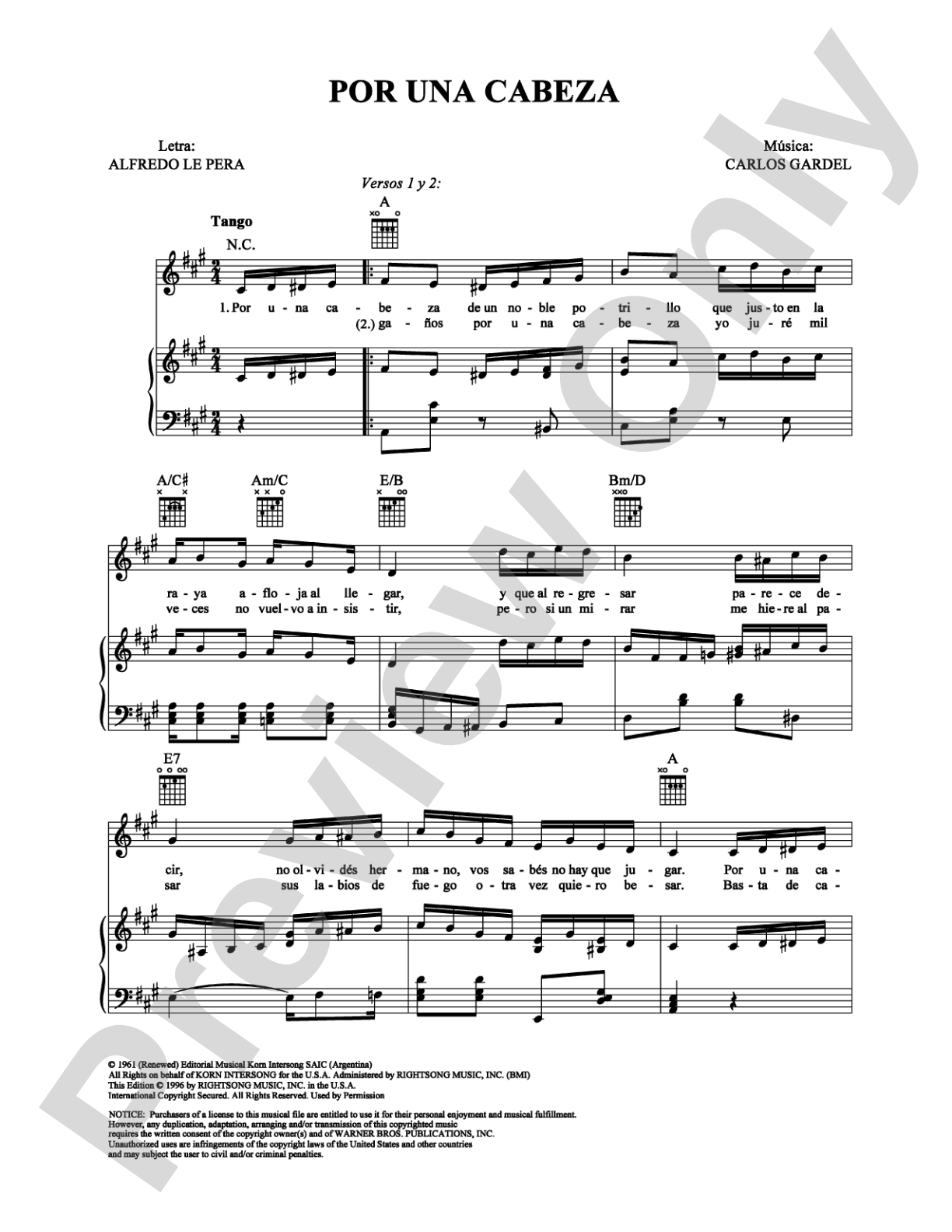
Por Una Cabeza: Piano/Vocal/Chords Digital Sheet Music

Por Una Cabeza: Piano/Vocal/Chords Digital Sheet Music

Carlos Gardel

Item: 00-PS-0001182

Digital Download
$3.99
Description

Por Una Cabeza: Piano/Vocal/Chords Digital Sheet Music isn't in MakeMusic Cloud just yet...but it could be. Let us know you'd like to see it, and you'll help shape what comes next. In the meantime, start a free trial and dive into thousands of interactive titles your students can play along with today.

Sample Audio
No sample audio found.
Sample Video
Additional Details
SKU: 00-PS-0001182

More about this title

About the Creator: Carlos Gardel

Carlos Gardel's "Por Una Cabeza" stands as one of the most iconic tango compositions of the 20th century. Written in 1935, the piece emerged from Gardel's film work during the golden age of Argentine cinema, becoming instantly synonymous with the tango tradition itself.

Gardel's influence on popular music extends far beyond this single composition. His interpretations of tango shaped how generations of musicians understand the genre's emotional language, and his work continues to define tango for singers and pianists worldwide.

Why we love this

This tango standard carries authentic rhythmic sophistication without requiring dancers or a full ensemble. The piano/vocal arrangement gives singers a complete harmonic foundation while preserving the genre's characteristic syncopation and dramatic phrasing.

What to expect

Por Una Cabeza pulses with the yearning and melancholic passion inherent to tango. The interplay between voice and piano creates an intimate conversation, full of unexpected harmonic color and rhythmic subtlety that rewards careful listening.

Who it's for

Vocalists performing in cabaret, jazz standards, or world music contexts will find this arrangement accessible and singable. Pianists accompanying singers benefit from the complete chord chart, which clarifies harmonic movement while allowing flexibility in voicing.

How to get the most out of it

  • Shape the vocal line with the natural stresses of Spanish language phrasing rather than forcing strict metric emphasis; let the text breathe over the accompaniment.
  • Maintain a steady, slightly lilting pulse in the piano part to anchor the singer's interpretive freedom; this partnership is essential to tango style.
  • Balance the piano dynamic so the chord voicings support without overshadowing the vocal melody.
  • Pay attention to the harmonic rhythm and allow small rubato moments to land on the chords themselves, not ahead of or behind them.

How to use it

Program this alongside other Latin standards or Spanish-language art songs to build a thematic set. It also serves as an excellent bridge piece between classical vocal repertoire and contemporary cabaret or musical theater programming.

Skills your students will build

  • Tango rhythm and syncopation
  • Spanish language phrasing and diction
  • Harmonic accompaniment from chord symbols
  • Rubato and interpretive freedom within a steady pulse
  • Pianist-singer collaboration and balance

You May Also Like