Popular Chord Dictionary for Organ Cover Image

Popular Chord Dictionary for Organ: Organ Book

$7.95 USD
Sale price  $7.95 USD Regular price 
Skip to product information
Popular Chord Dictionary for Organ Cover Image

Popular Chord Dictionary for Organ: Organ Book

This Chord Dictionary Shows the Notation, Fingering and Keyboard Diagrams for All of the Important Chords Used in Modern Popular Music

By Willard A. Palmer and Bill Hughes

Item: 00-117

$7.95
Shipped

One moment…

Description
This chord dictionary shows the notation, fingering and keyboard diagrams for all of the important chords used in modern popular music.

Popular Chord Dictionary for Organ: Organ Book isn't in MakeMusic Cloud just yet...but it could be. Let us know you'd like to see it, and you'll help shape what comes next. In the meantime, start a free trial and dive into thousands of interactive titles your students can play along with today.

Sample Pages

Sample Audio
No sample audio found.
Sample Video
Additional Details
Publisher: Alfred Music
Page Count: 36
ISBN10: 0-7390-1591-5
ISBN13: 978-0-7390-1591-9
UPC: 038081010557
SKU: 00-117

More about this title

About the Author: Willard A. Palmer
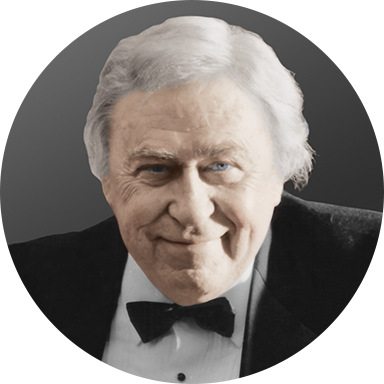
Willard A. Palmer

Willard A. Palmer authored nearly 800 published compositions across multiple genres and instruments, from accordion and piano methods to choral works and solo pieces that circulated internationally in German, Japanese, French, Dutch, and Spanish editions. His formal training began early—he performed on radio at age 13 and studied with Mae Vardeman, a pianist who grounded his gift for improvisation in solid technique. Palmer earned his Bachelor's degree from Millsaps College in Jackson, Mississippi, then pursued advanced study at the Conservatory of Leipzig on a two-year scholarship before completing post-graduate work at the University of Houston.

At the University of Houston, Palmer established and taught the first successful college accordion courses for 18 years, becoming a recognized authority on Baroque music ornamentation and Classical scholarship. His meticulous research informed the Alfred Masterworks series and earned him a Doctor of Humanities degree in 1971 and a Doctor of Music degree in 1983. Beyond academia, he served as choir director at Memorial Lutheran Church in Houston and held memberships in the American Federation of Musicians, the American Accordionists' Association, and ASCAP.

Why we love this

Palmer's practical keyboard experience across accordion, piano, and organ translates into fingerings and chord voicings that actually work under the hands. The dictionary cuts directly to what pop organists need—clear notation, playable fingering patterns, and visual keyboard diagrams—without theoretical tangents or unnecessary complexity.

What to expect

A no-nonsense reference that puts a chord in your hands immediately. The combination of staff notation, practical fingering, and keyboard layouts means you can look something up and play it within seconds, building confidence in your ability to comp and improvise over pop songs.

Who it's for

Organ students learning to play contemporary popular music, church musicians looking to expand their harmonic vocabulary beyond hymnal voicings, and self-taught organists who need a quick reference for chord shapes without reading lengthy theoretical explanations.

How to get the most out of it

  • Study the keyboard diagrams first before reading notation; seeing where your fingers land makes the chord shapes stick faster than reading staff notation alone.
  • Practice the voicings on both manual keyboards to understand how left and right hand patterns differ in popular music contexts.
  • Test each chord progression in the book at slow tempo to lock in finger placement, then gradually increase speed as muscle memory develops.
  • Cross-reference chords with the songs you're actually playing to connect the dictionary entry to real repertoire and improvisation opportunities.

How to use it

Keep this on the music rack during contemporary services, praise band rehearsals, or pop repertoire sessions. It works equally well as a warm-up tool before ensemble rehearsal and as a companion resource while learning new pop arrangements.

Skills your students will build

  • Recognizing chord symbols and their keyboard equivalents
  • Playing major, minor, seventh, and extended chord voicings specific to popular music
  • Translating written chord notation into physical hand position
  • Building muscle memory for common progressions used in contemporary repertoire

You May Also Like