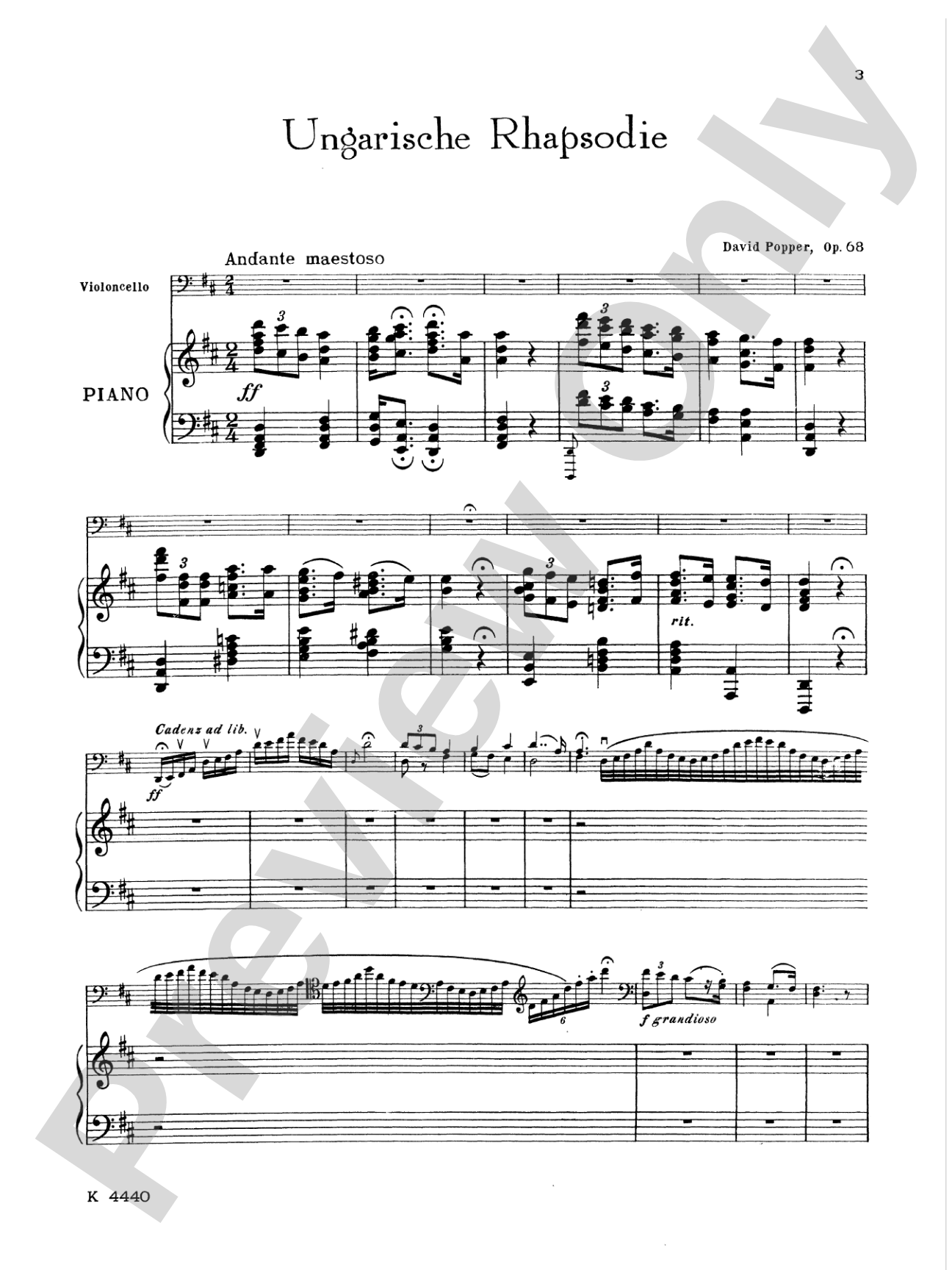
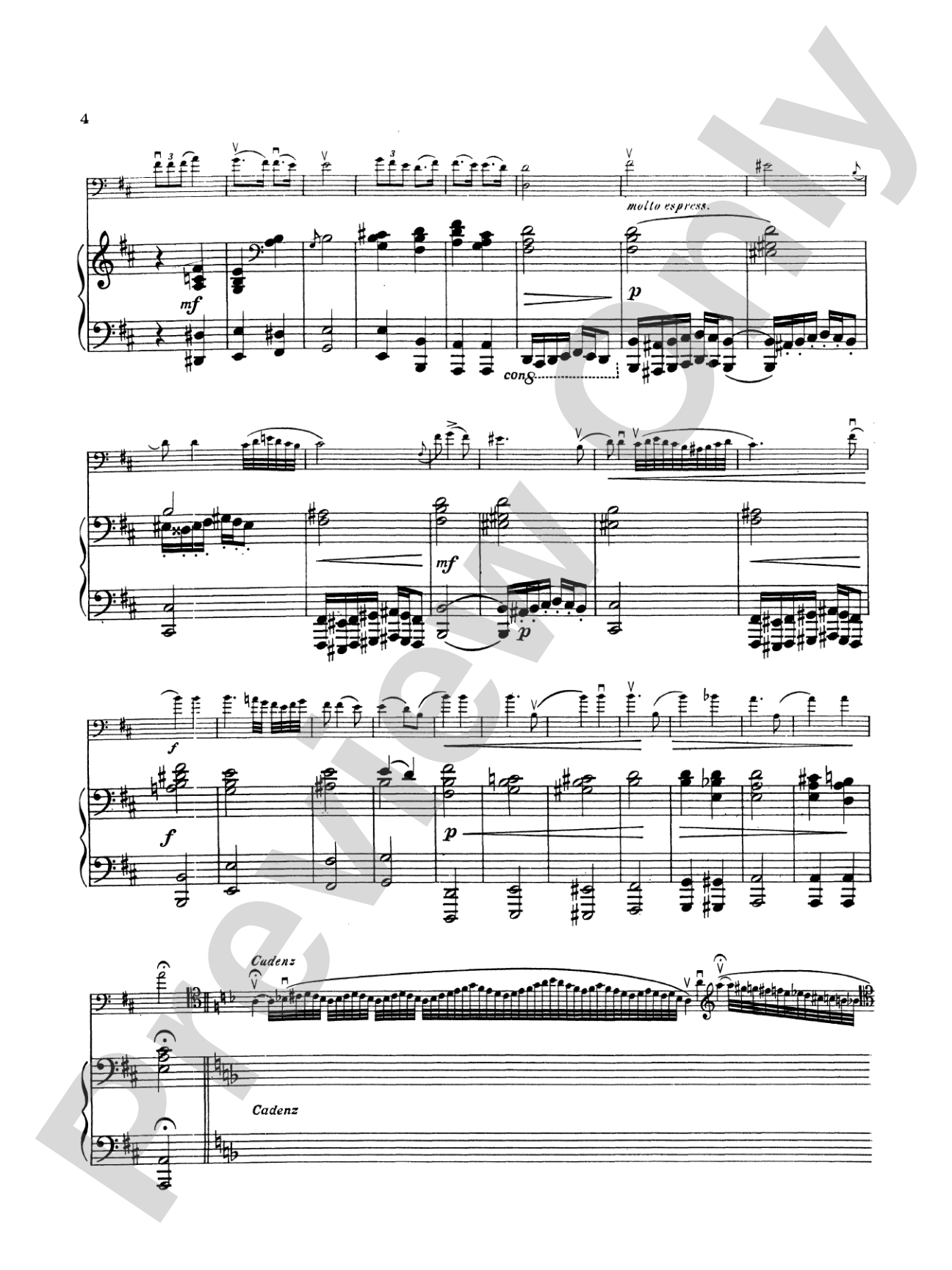
Popper: Hungarian Rhapsody, Op. 68 Sheet Music Preview

Popper: Hungarian Rhapsody, Op. 68

By David Popper

Item: 00-PC-0010470

Digital Download
$3.99
Description
A Cello solo with Piano Accompaniment composed by David Popper.

Don't just read it, hear it, play along with it, and watch your students grow with it. In MakeMusic Cloud, Popper: Hungarian Rhapsody, Op. 68 comes alive with professional accompaniment, adjustable tempo, and built-in practice tools that turn solo practice into real progress.

Sample Audio
No sample audio found.
Sample Video
Additional Details
Series: Kalmus Edition
Publisher: Alfred Music
Page Count: 20
SKU: 00-PC-0010470

More about this title

About the Composer: David Popper

David Popper (1846-1913) was a Bohemian cellist and composer who fundamentally expanded the technical and expressive possibilities of the cello during the Romantic era. His virtuosic works, including the Hungarian Rhapsody, established him as one of the instrument's most important voices and remain central to the cello repertoire today.

Popper served as principal cellist of major European orchestras and taught at the conservatory in Budapest, where he influenced generations of cellists through both his compositions and pedagogy. His writing for cello demonstrates an intimate knowledge of the instrument's capabilities, combining lyrical writing with genuinely challenging passage work that demands both musicianship and technical command.

Why we love this

The Hungarian Rhapsody showcases Popper's gift for writing music that feels spontaneous and improvisatory while maintaining structural integrity. This piece gives cellists a chance to explore genuine virtuosity within a contest-appropriate framework that still rewards musical depth and character work, not just technical flash.

What to expect

The Hungarian Rhapsody captures the spirit of Eastern European folk music and gypsy idioms through Popper's lens, swinging between moments of passionate intensity and lyrical songfulness. It has the character of an improvisation, with sudden shifts in mood and tempo that keep both performer and listener engaged, all while the cello sings with characteristic warmth and expressivity.

Who it's for

Advanced cellists preparing for competitions, festivals, or solo recitals who are ready to tackle a Romantic masterwork that demands both technical facility and musical maturity. This is a standard part of the advanced cello repertoire and essential for students pursuing music at higher levels.

How to get the most out of it

  • Shape the opening cadenza-like passages with dynamic variety rather than treating them as exercises; Popper wrote for expression within the display, so let the phrasing breathe even through fast figuration.
  • Balance technical demands with the underlying Hungarian character: this is a rhapsody, not a technical study, so maintain the storytelling quality throughout rapid sections.
  • Work closely with your pianist on the transitions between sections; the piano part is conversational, not merely accompanimental, and your entrances need to feel dialogue-like rather than mechanical.
  • Mark your bow changes clearly in advance to ensure smooth transitions in sustained passages; Popper often places the most exposed notes on string crossings, requiring careful planning.

How to use it

This work functions beautifully as a recital centerpiece or concerto replacement, offering the virtuosity and impact of a concerto movement in a more manageable package. It also serves as an excellent choice for solo competitions and festival performances where you want to demonstrate both technical command and Romantic-era musicianship.

Skills your students will build

  • Execution of extended passage work across all registers and string combinations
  • Shaping long-lined Romantic melodies with consistent tone and vibrato control
  • Reading and performing rapid rhythmic figures and syncopation
  • Collaboration with piano accompaniment in a genuine duet context
  • Managing dramatic contrasts and mood shifts within a single movement
  • Interpretation of Hungarian/Eastern European musical idioms and character

You May Also Like