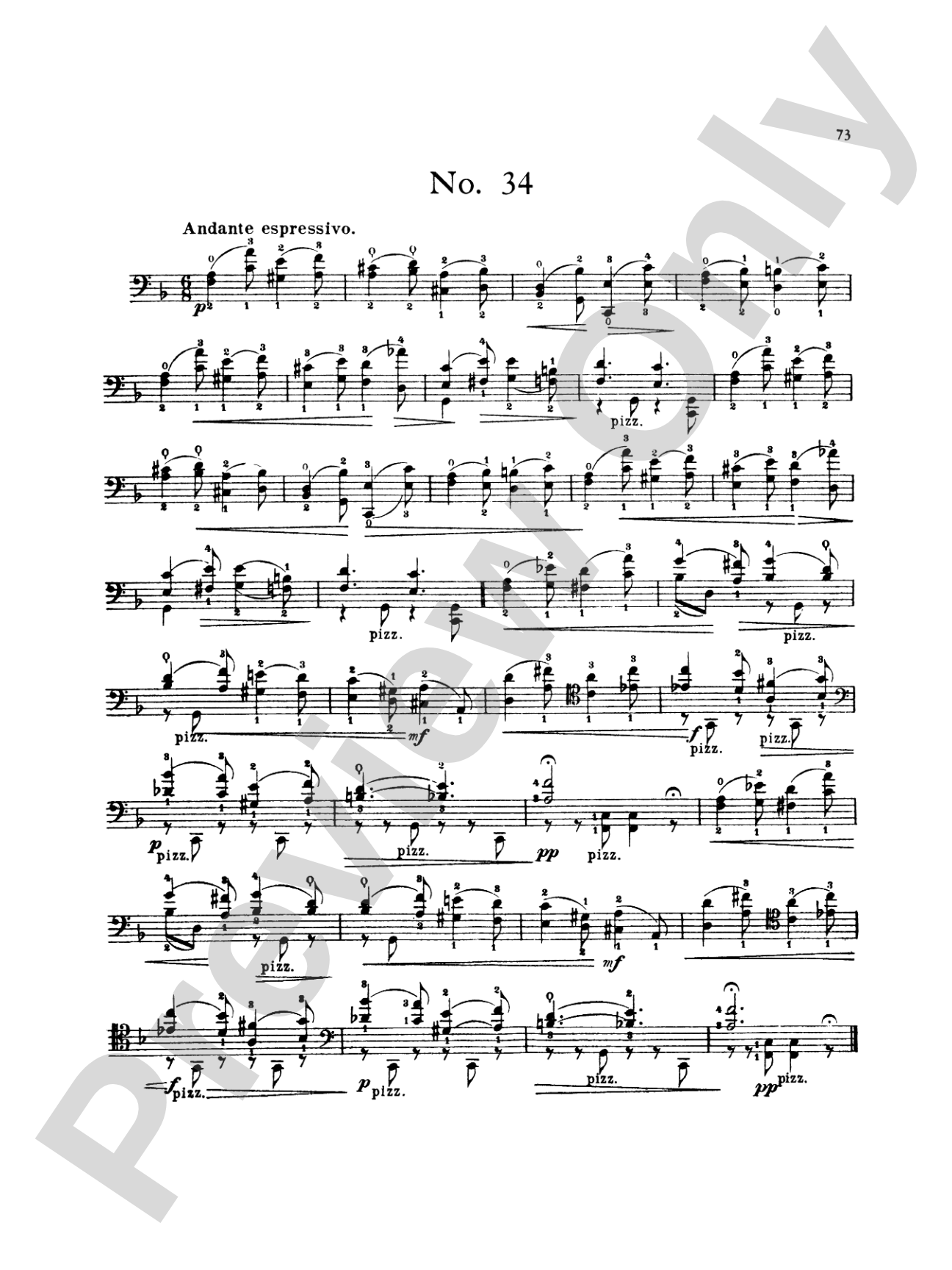
Popper: High School of Cello Playing, Op. 73 (40 Etudes) Sheet Music Preview

Popper: High School of Cello Playing, Op. 73 (40 Etudes)

By David Popper

Item: 00-PC-0010429

Digital Download
$0.99
Description
Op. 73 by David Popper has long been a staple for cellists to master technique and be able to play with fluidity on the instrument. This new edition is made with the Friedrich Hofmeister plates from 1901-1905. This is the original printing as Popper himself would have viewed it.

Don't just read it, hear it, play along with it, and watch your students grow with it. In MakeMusic Cloud, Popper: High School of Cello Playing, Op. 73 (40 Etudes) comes alive with professional accompaniment, adjustable tempo, and built-in practice tools that turn solo practice into real progress.

Sample Audio
No sample audio found.
Sample Video
Additional Details
Series: Kalmus Edition
Publisher: Alfred Music
Page Count: 88
SKU: 00-PC-0010429

More about this title

About the Composer: David Popper

David Popper (1843-1913) was a Bohemian cellist and composer who fundamentally shaped cello pedagogy in the late 19th century. As principal cellist of the Vienna Court Opera and a celebrated soloist across Europe, Popper understood the instrument's technical demands intimately and wrote for it with both rigor and musicality.

His Op. 73 etudes stand as the bridge between foundational technique and advanced artistry. Popper crafted these studies so that mastering them means developing not just facility, but musical intelligence. Teachers continue to assign his work because it refuses to separate technical drill from expressive playing.

Why we love this

This collection remains the gold standard for serious cello study because Popper writes etudes that sound like music, not exercises. The 1901-1905 Friedrich Hofmeister edition preserves his original intent, giving students and teachers access to the source exactly as Popper authorized it. Whether you're preparing advanced students for conservatory auditions or building a solid technical foundation, these 40 studies deliver systematic, musically coherent progression.

What to expect

Popper's etudes balance technical rigor with genuine lyricism. You'll encounter virtuosic passage work and intricate rhythmic patterns, but always in service of musical expression. The Romantic era sensibility breathes through even the most demanding material, creating studies that feel rewarding to play rather than punitive.

Who it's for

Advanced young cellists preparing for conservatory-level study, teachers building a comprehensive technical curriculum, and serious amateurs committed to deepening their command of the instrument. This collection demands mature practice habits and musical sensitivity; it is not introductory material.

How to get the most out of it

  • Work through the etudes in order rather than jumping around. Popper sequenced them deliberately to build specific technical and musical foundations before introducing more complex demands.
  • Establish a sustainable practice tempo for each etude before pushing speed. These pieces reward thoughtful, deliberate work; rushing undermines the pedagogical design.
  • Pay attention to the lyrical intention in each study. Popper rarely writes 'pure' mechanics. Even technically demanding passages have a melodic or harmonic purpose that should shape your interpretation.
  • Use the original text's fingering and bowings as a starting point, not a restriction. Popper's choices reflect 19th-century cello technique, and thoughtful adaptation for modern instruments and hands is often necessary.

How to use it

Use these etudes as the backbone of a serious cello studio's technical development over multiple years rather than as concert repertoire. Select individual studies to demonstrate specific technical mastery at jury examinations or studio recitals, pairing them with contemporary solo works to show breadth of style.

Skills your students will build

  • Double-stop facility across multiple string combinations
  • Sustained legato and bow control across extended passages
  • Rapid passagework and articulation clarity
  • Intonation precision in shifting and position changes
  • Musical phrasing within technically demanding contexts
  • Rhythmic independence and subdivisions
  • Endurance and stamina for extended technical demands

You May Also Like