
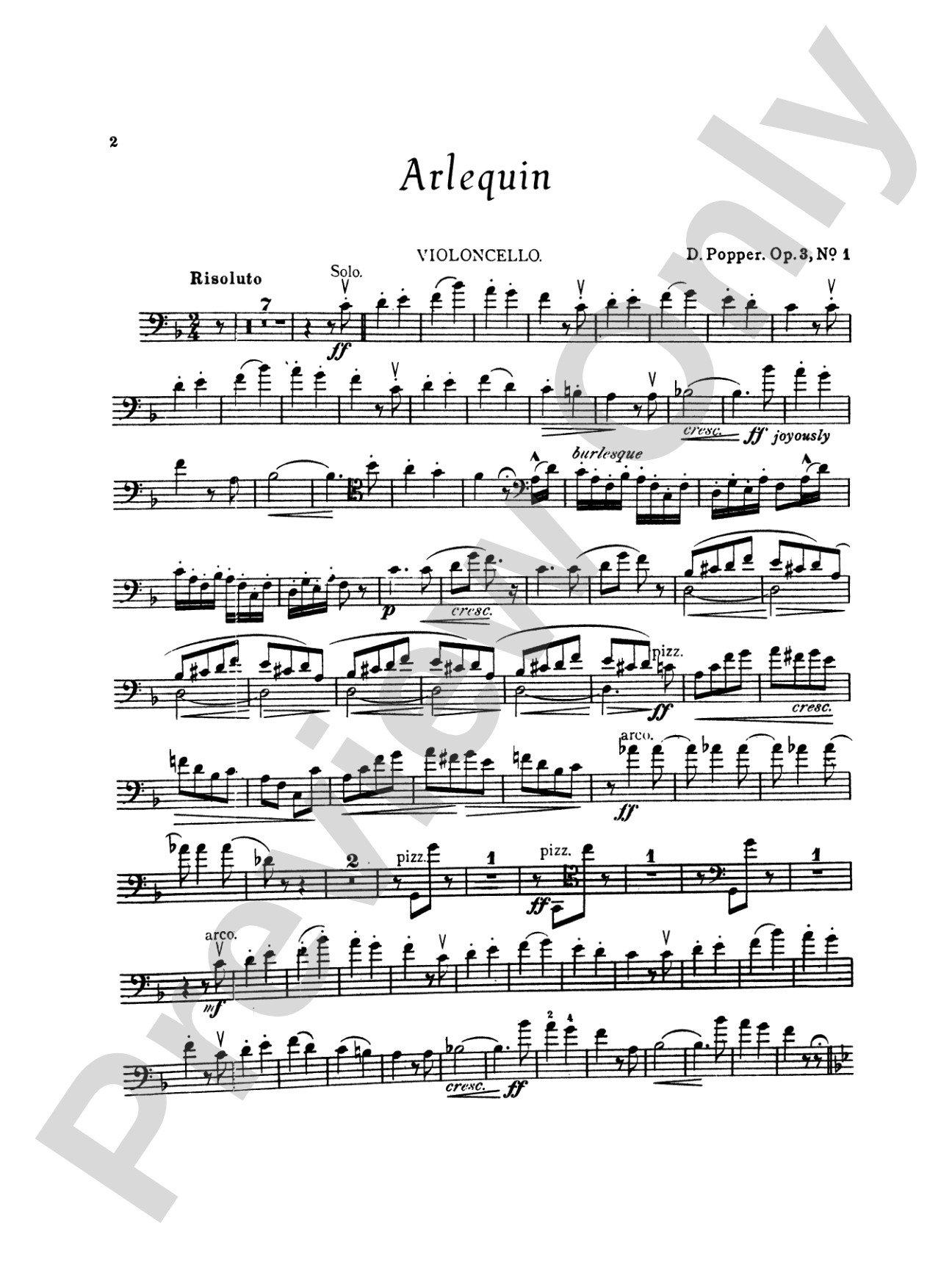
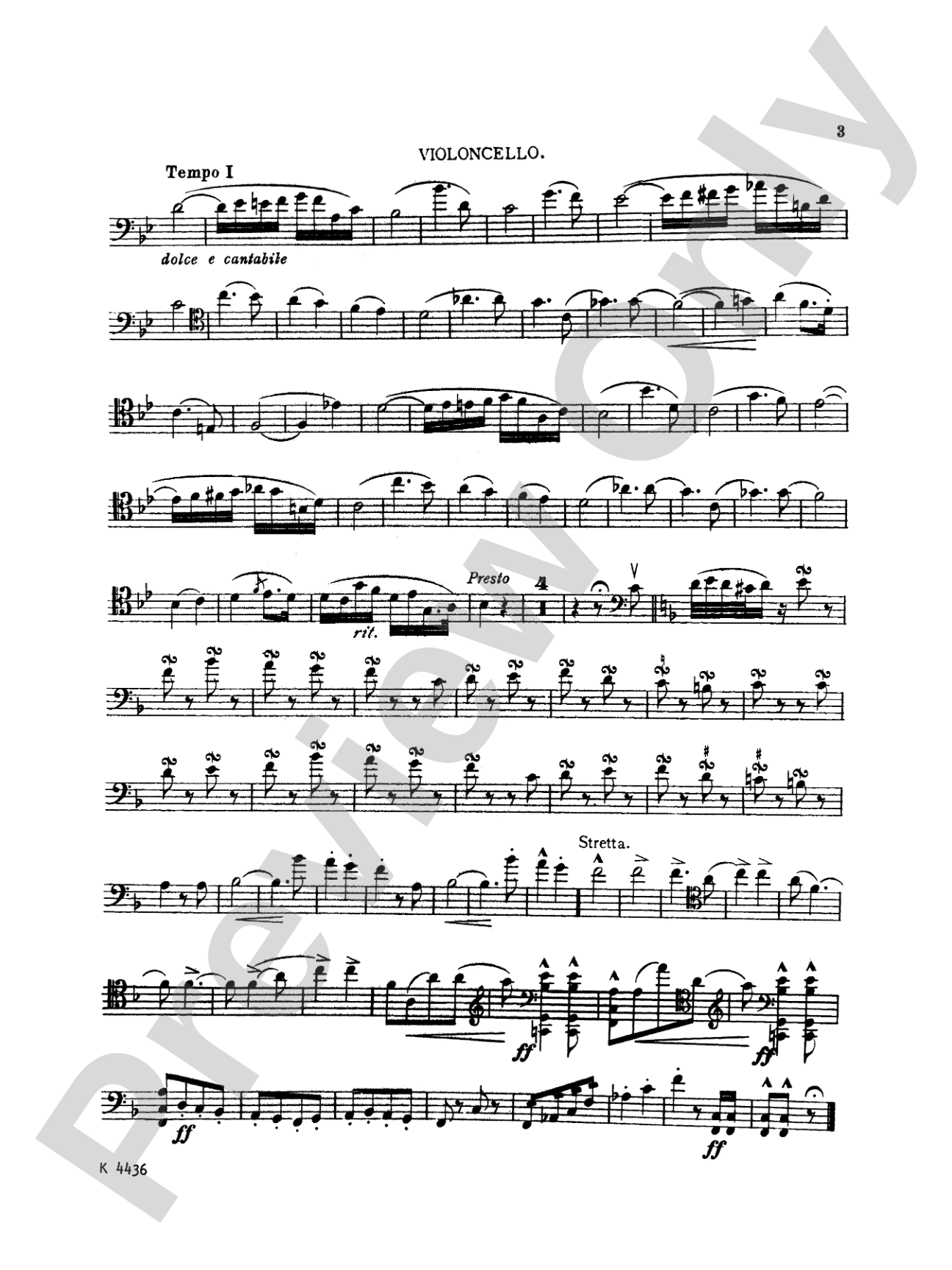

Popper: Arlequin and Papillon: Cello Book
By David Popper
Item: 00-PK-0003511

$7.99
Pickup currently not available
Buy Extra Parts (Digital PDF Download)
| Product | Price | Quantity |
|---|---|---|
| Popper: Arlequin and Papillon | $0.99 | |
| Popper: Arlequin and Papillon | $0.99 | |
| Popper: Arlequin and Papillon | $0.99 | |
| Popper: Arlequin and Papillon | $0.99 |
Parts Added to Cart!
Related Items
Arlequin and Papillon: Cello Book |
$7.95
|
View |
Description
A Cello solo with Piano Accompaniment composed by David Popper.


Don't just read it, hear it, play along with it, and watch your students grow with it. In MakeMusic Cloud, Popper: Arlequin and Papillon: Cello Book comes alive with professional accompaniment, adjustable tempo, and built-in practice tools that turn solo practice into real progress.
Open in the Player
Jump straight in and assign it today.
Start Your Free Trial
Open this title and explore the full library in minutes.
Sample Audio
No sample audio found.
Sample Video
No sample videos found.
Additional Details
Series:
Kalmus Edition
Publisher:
Alfred Music
Page Count:
4
SKU:
00-PK-0003511
More about this title
About the Composer: David Popper
David Popper (1846-1913) was a cellist and composer whose virtuosic works became central to the Romantic cello repertoire. Born in Prague, he spent much of his career as principal cellist of major European orchestras while composing extensively for his instrument. His compositions showcase deep understanding of cello technique and idiomatic writing that remains rewarding for advanced students and professionals alike.
Why we love this
Popper's lightweight character pieces often feel overlooked next to his larger concert works, yet Arlequin and Papillon displays the charm and technical polish that made him beloved across Europe. The piece pairs theatrical character writing with genuine musical substance, giving cellists a chance to explore colorful Romantic storytelling without the weight of a full sonata cycle. It sits at exactly the right level for advanced high school or early college students who are ready for expressive maturity.
What to expect
Arlequin and Papillon evokes the playfulness and elegance of Romantic character music. The piece dances between mischievous humor and lyrical grace, creating a miniature theatrical moment that feels both intimate and theatrically satisfying.
Who it's for
This work suits accomplished cellists preparing for recitals, competitions, or advanced repertoire study. It rewards players who can sustain an expressive tone and navigate upper-position passages with secure intonation and musicality.
How to get the most out of it
- Distinguish the two characters through bow speed and articulation: Arlequin can be more playful and detached, while Papillon benefits from longer, more legato phrasing to suggest the butterfly's graceful flight.
- Balance the cello line against the piano part; because the texture is relatively transparent, intonation in the upper positions will be immediately audible.
- Shape phrase endings with slight dynamic reduction and bow pressure control rather than obvious ritardandi, keeping the piece's light character intact.
- Practice the transition between character sections to ensure the shift feels natural rather than abrupt, maintaining narrative continuity.
How to use it
Include this on a recital as a lighter interlude between weightier works, or pair it with other Popper character pieces to showcase the breadth of his compositional voice. It also works well as a student concerto competition selection where musicianship and characterization matter as much as technical display.
Skills your students will build
- Upper-position intonation and shifting
- Sustained vibrato and expressive tone production
- Character differentiation through articulation and bow control
- Coordination with piano accompaniment
- Romantic-era phrasing and rubato