Pop Sliders Sheet Music Preview

Pop Sliders: Marching Band Conductor Score & Parts

As performed by Camila Cabello / As performed by Lil Nas X / As performed by Lizzo / Arranged by Jay Dawson

Grade: 3

Item: 35-PK00468956

Digital Download
$75.00

One moment…

Description
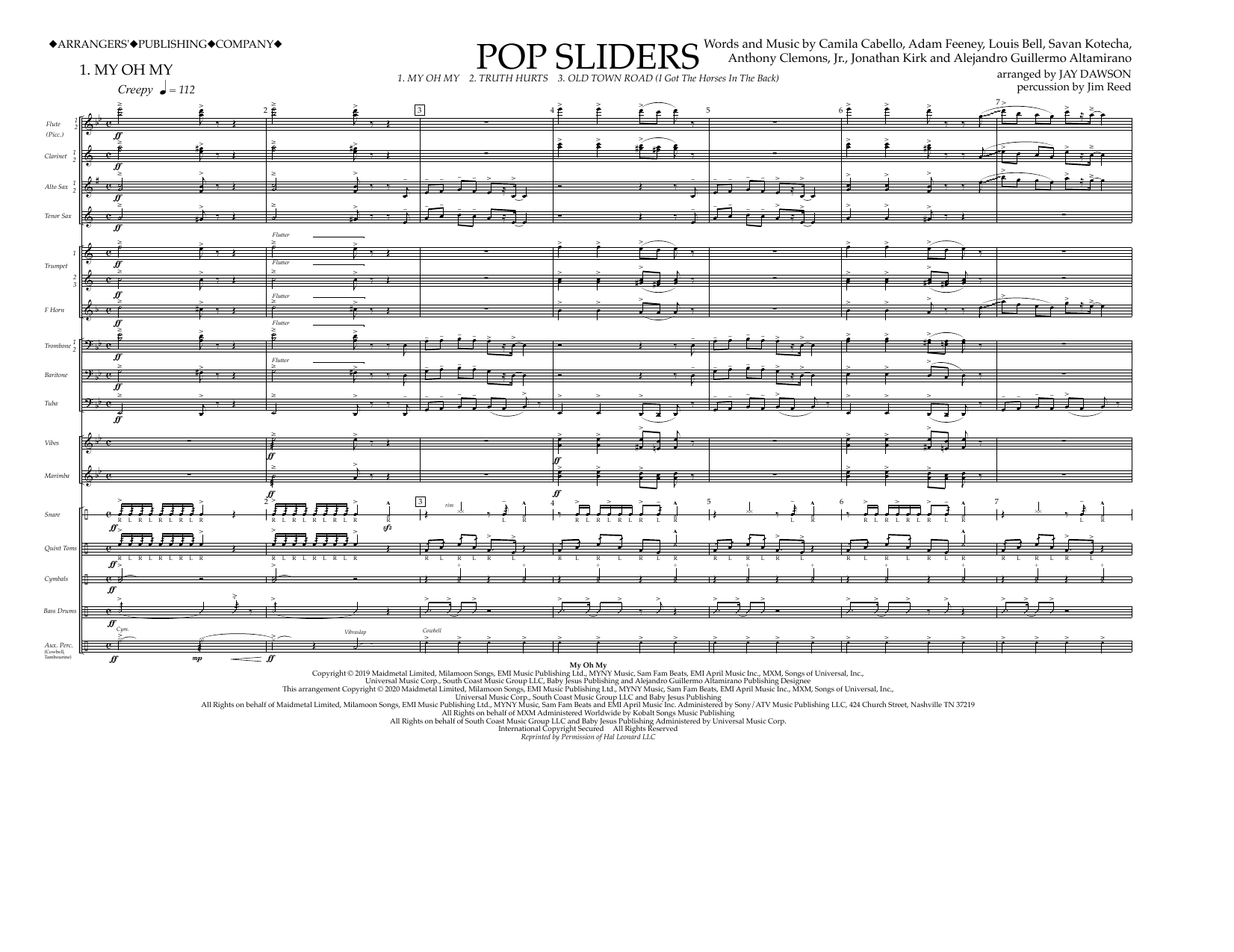
This collection of chart-topping pop hit songs features "My Oh My" by Camila Cabello, "Truth Hurts" by Lizzo and "Old Town Road" by Lil Nas X. Each hit songs gets a 30-second workout -- just the right amount of time, and choice material to entertain during those quick time-outs.

Pop Sliders: Marching Band Conductor Score & Parts isn't in MakeMusic Cloud just yet...but it could be. Let us know you'd like to see it, and you'll help shape what comes next. In the meantime, start a free trial and dive into thousands of interactive titles your students can play along with today.

Sample Audio
No sample audio found.
Sample Video
Additional Details
Publisher: Hal Leonard
SKU: 35-PK00468956

More about this title

About the Artist: Camila Cabello

Camila Cabello rose to prominence as a member of Fifth Harmony before launching a successful solo career. Her pop sensibility centers on catchy melodic hooks and emotionally direct songwriting that resonates with broad audiences. In the context of marching arts, her work represents the contemporary pop sound that students recognize and connect with immediately.

Cabello's influence on modern pop arranging lies in her ability to craft songs with memorable hooks and production that translates well across different instrumental settings. Her material has become a staple in educational pop arrangements because it balances accessibility with enough musical substance to hold an audience's attention.

Why we love this

Pop Sliders captures exactly what makes this repertoire valuable for marching programs: three current hits that your students already know, arranged by Jay Dawson at a Grade 3 level that doesn't require a massive ensemble, and packaged in 30-second doses that fit naturally into any halftime show or pep band rotation. The confidence students gain from performing music they actually listen to translates into more engaged rehearsals and more authentic performance energy.

What to expect

Modern, energetic, and immediately satisfying. These 30-second segments pulse with the infectious grooves students know from streaming playlists, creating a bridge between pop culture and ensemble performance. The arrangements maintain the melodic charm of the originals while keeping orchestration lean and playable.

Who it's for

This works for marching bands that want contemporary material their students recognize but don't have time to learn full-length arrangements. It's ideal for middle school programs building confidence and for high school bands filling out a variety show or pep band gig with crowd-pleasing hits.

How to get the most out of it

  • Balance the melody line so it cuts through the harmonies underneath. These arrangements work best when listeners can follow the tune they recognize immediately.
  • Keep the rhythmic grooves relaxed and intentional. Grade 3 pop writing often sits in straightforward meters, so pocket playing and steady subdivision matter more than technical complexity.
  • Use the brevity strategically. Thirty seconds feels short until you're marching it; commit fully to the opening statement and hold the energy through the final chord.
  • Layer the dynamics to match the original recordings where possible. These songs have personality in their production, and recreating that character makes the arrangement sing.

How to use it

Slot these into your halftime show as a three-song pop medley that breaks up a more traditional march or ballad sequence, or scatter them throughout a pep band rotation where quick turnarounds are essential. They also work as building blocks for younger students learning to balance melody and harmony within a recognizable pop idiom.

Skills your students will build

  • Playing idiomatic pop phrasing and groove
  • Reading and executing tighter, condensed arrangements
  • Balancing melody projection against harmonic accompaniment
  • Sustaining musical focus over shorter time spans
  • Translating recorded arrangements to live ensemble performance

You May Also Like