Pop Goes the Band: 1st B-flat Trumpet Sheet Music Preview

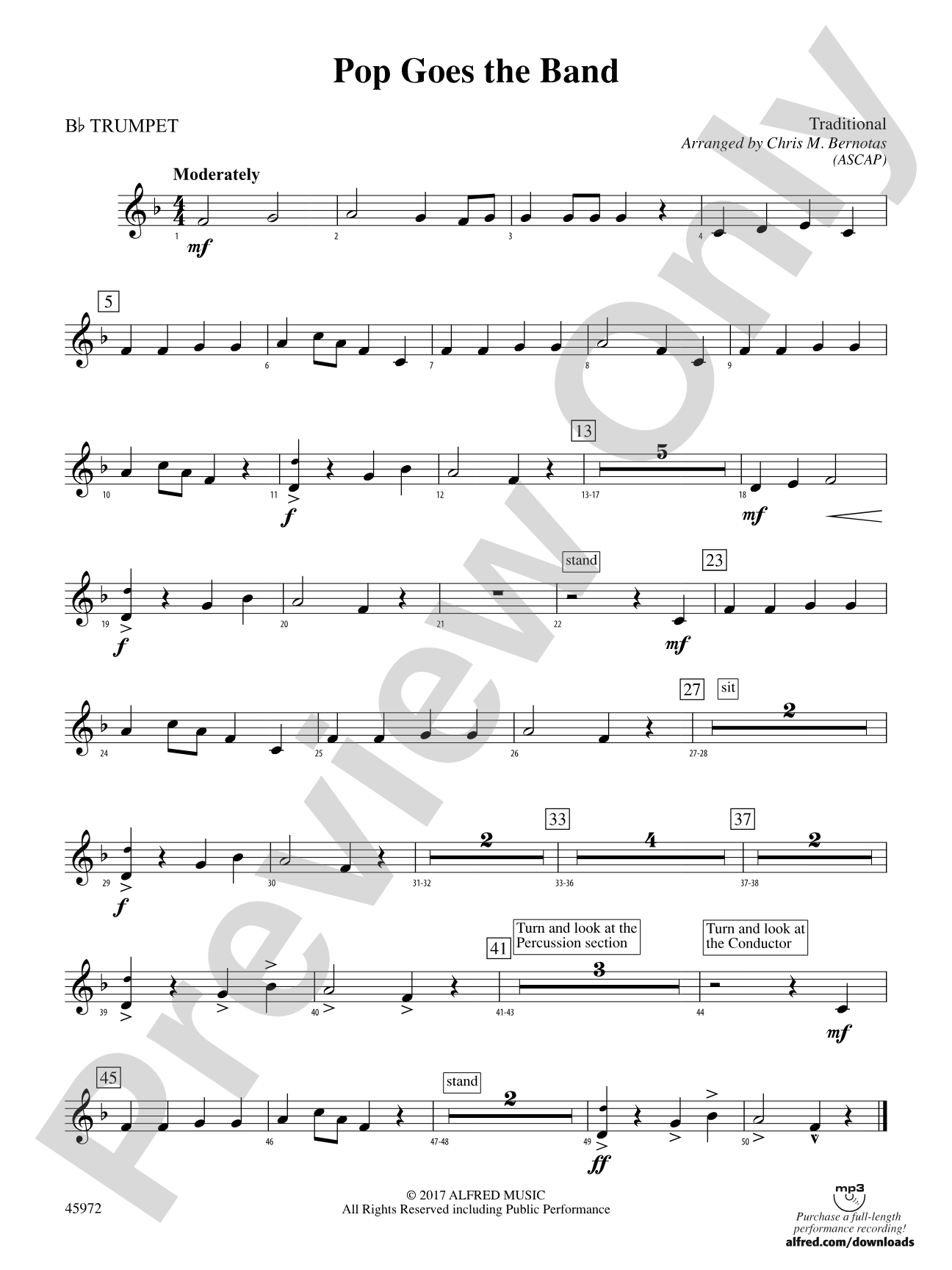
Pop Goes the Band: 1st B-flat Trumpet

Multiple Section Feature

By Chris M. Bernotas

Grade: 0.5 (Very Easy)

Item: 00-PC-0017698_T1

Digital Download
$3.00
Description
Watch your ensemble spring to life in this fun and engaging arrangement of the traditional tune "Pop Goes the Weasel," called "Pop Goes the Band." Each section of the band stands up to perform their part of the melody and gets a moment to shine. Sure to be a hit with your beginning band! Skillfully arranged by Chris M. Bernotas. (1:50) Correlates to Book 1, level 4.

Don't just read it, hear it, play along with it, and watch your students grow with it. In MakeMusic Cloud, Pop Goes the Band: 1st B-flat Trumpet comes alive with professional accompaniment, adjustable tempo, and built-in practice tools that turn solo practice into real progress.

Sample Audio
0:00
0:00
Sample Video
Additional Details
Series: Sound Innovations for Concert Band
Publisher: Alfred Music
Page Count: 132
SKU: 00-PC-0017698_T1

More about this title

About the Composer: Chris M. Bernotas

Chris M. Bernotas

Chris M. Bernotas directs instrumental publications at Alfred Music, where he shapes curriculum and repertoire for band and orchestra programs across North America and beyond. With more than 25 years in music education, he has built a career on understanding what young musicians need to develop musically and what teachers need to keep ensembles engaged.

Bernotas draws on extensive classroom experience to inform his composing and arranging work. He appears regularly as a guest conductor and clinician, leading honor bands and workshops where he shares ideas on conducting, pedagogy, and composition with directors and their students. His published works span method books, ensemble development resources, and performance literature, all reflecting his commitment to making music education accessible and artistically rewarding at every level.

Why we love this

Bernotas understands the psychology of beginning band rehearsal. This arrangement doesn't just present a familiar tune; it builds momentum by rotating the spotlight through each section, giving players concrete moments to take ownership of the melody. It's the kind of piece that transforms a mixed-ability first-year group into an ensemble that sounds like it's genuinely collaborating rather than reading parts.

What to expect

Bright, playful, and surprisingly sophisticated. The traditional melody remains instantly recognizable, but Bernotas's orchestration gives it buoyant energy and genuine charm. There's a sense of discovery as the tune passes from section to section, each group adding character and voice.

Who it's for

Beginning concert bands in their first or second year of study will find real value in this arrangement. Each student gets a named moment to contribute the main idea, building confidence and individual accountability within a supportive ensemble context.

How to get the most out of it

  • Shape each section's featured phrase as a complete musical statement. Encourage the solo section to breathe together and listen for balance against the supporting harmonies.
  • Keep the tempo buoyant and consistent. The novelty appeal rests partly on clarity and confidence; rushing or dragging muddies the charm.
  • Mark the transitions between sections during rehearsal so players know exactly when to enter and when to blend back into ensemble texture.
  • Use this piece as a tool for reviewing articulation and dynamic control across all parts. Consistency here makes the arrangement shine.

How to use it

Schedule this early in the year as a morale booster and team-building tool. It works beautifully on family concerts or spring pops programs where audiences appreciate straightforward musicality and good humor. The short duration makes it ideal for filling a slot while the structural clarity reinforces fundamental ensemble concepts.

Skills your students will build

  • Reading and performing assigned melodic content with confidence
  • Listening to section entrances and responding to visual cues
  • Balancing individual voice within ensemble texture
  • Maintaining steady tempo through rhythmic patterns
  • Responding to dynamic and articulation markings across different parts

You May Also Like