
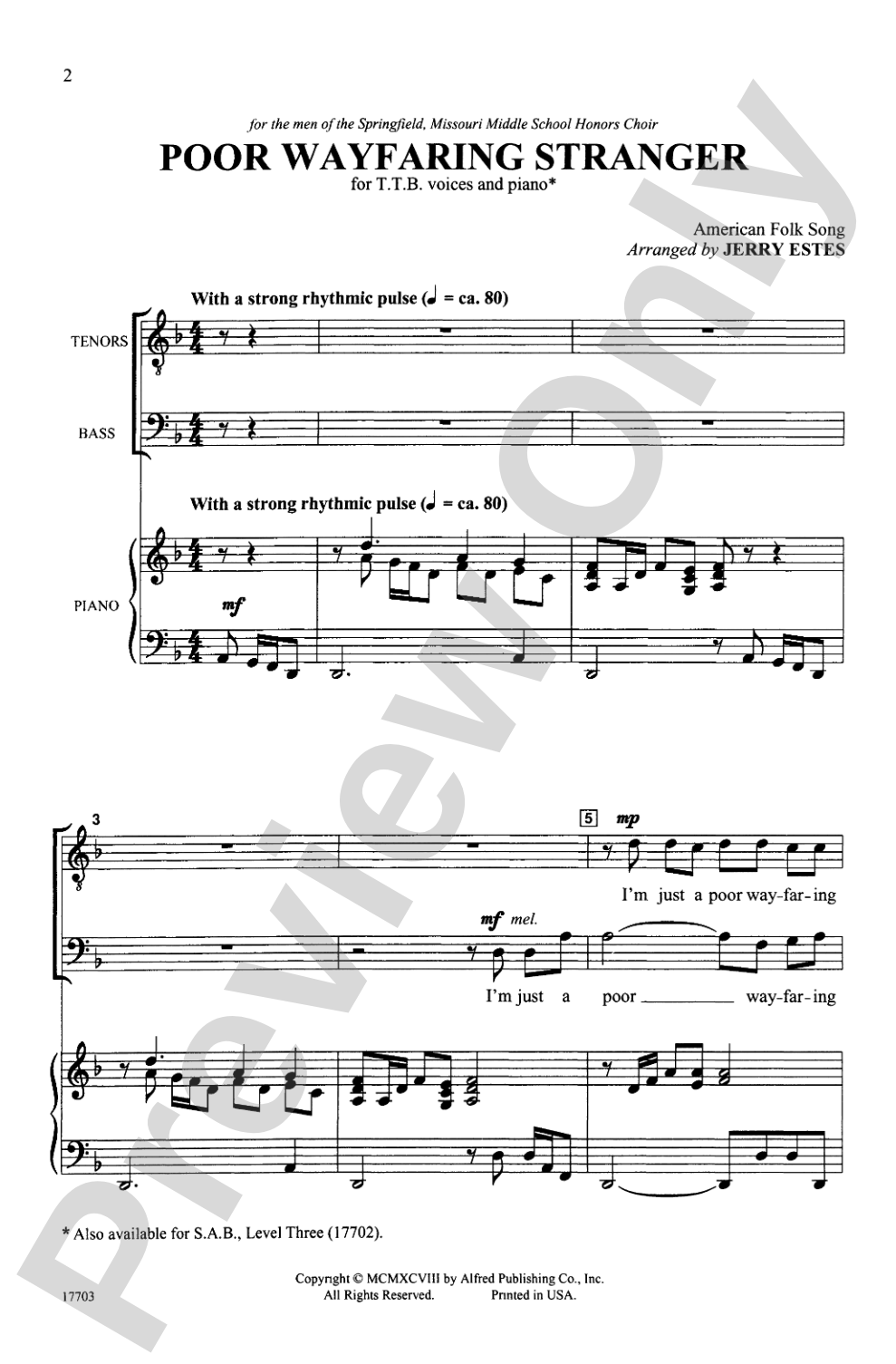

Poor Wayfaring Stranger: TTB Choral Octavo
American Folk Song / arr. Jerry Estes
Item: 00-PO-0002112
$2.25
Minimum order quantity: 20 copies
Pickup currently not available
Description
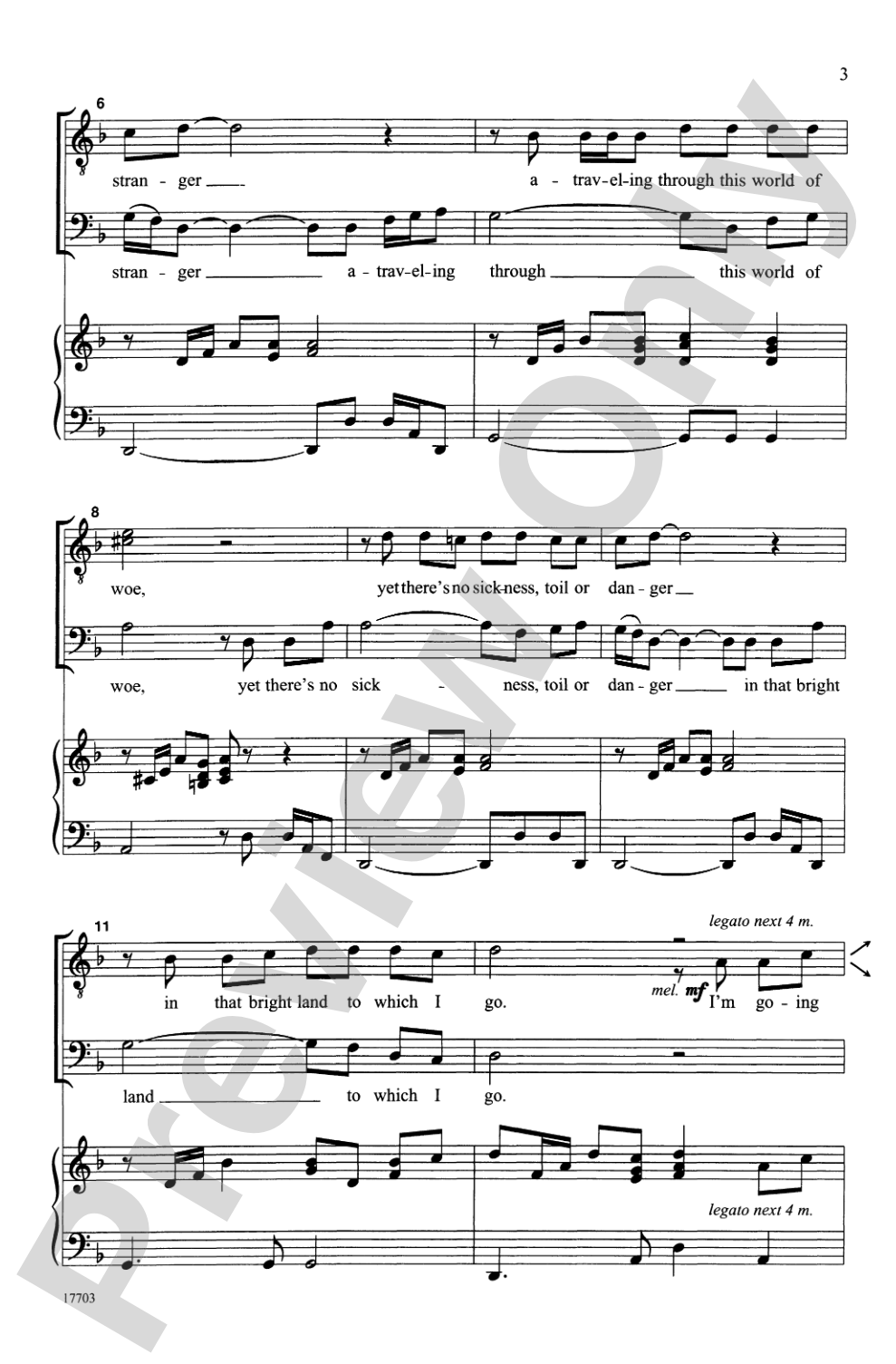
Strong rhythmic pulse of the piano sets the tone for this effective, walking-tempo arrangement. Includes a strong counterline: "Jordan river is chilly and cold..."


Poor Wayfaring Stranger: TTB Choral Octavo isn't in MakeMusic Cloud just yet...but it could be. Let us know you'd like to see it, and you'll help shape what comes next. In the meantime, start a free trial and dive into thousands of interactive titles your students can play along with today.
Request This Title
Tell us you want it.
Start Your Free Trial
Explore everything that's ready to play right now.
Sample Audio
1
Audio File
--:--
0:00
0:00
Sample Video
No sample videos found.
Additional Details
Series:
Alfred Archive Edition: Alfred Choral Designs
Publisher:
Alfred Music
Page Count:
12
SKU:
00-PO-0002112
More about this title
About the Arranger: Jerry Estes

Jerry Estes brings classroom experience and formal training to his work as an arranger. A graduate of Southwest Baptist University (B.M.E., vocal emphasis) and Southern Illinois University (M.M.), Estes teaches vocal music to middle school students at Wydown Middle School, where he works directly with young singers developing their ensemble skills.
Active in the music education community through MENC and ASCAP, Estes combines his pedagogical perspective with an understanding of what middle and high school choirs can achieve. His arrangements reflect both accessibility and musical substance, making them valuable resources for directors seeking material that challenges singers while remaining performable.
Why we love this
Estes captures the spiritual essence of this traditional tune while anchoring it in a contemporary harmonic language. The addition of the counterline creates textural interest without overwhelming younger or less experienced singers, and the walking-tempo groove gives singers something tangible to lock into rhythmically. This is exactly the kind of accessible-yet-sophisticated arrangement that makes a real impression at festivals and competitions.
What to expect
This arrangement channels the meditative, forward-moving quality of a traveler's spiritual journey. The steady piano heartbeat beneath the choir creates a contemplative yet purposeful atmosphere, anchored by the poignant counterline that adds depth and historical resonance to the traditional melody.
Who it's for
TTB choirs at the middle school, high school, and community choir levels will find this arrangement both accessible and rewarding. The arrangement works particularly well for groups seeking sacred or spiritual repertoire that sits comfortably in the lower voices while remaining engaging for all singers.
How to get the most out of it
- Let the piano establish the rhythmic foundation early in rehearsal. Have singers count through several measures while the accompanist plays alone so the ensemble feels the 'walking' pulse before adding voices.
- Balance the counterline carefully during sectionals. The 'Jordan river' phrase should have presence without drowning out the main melodic line, so mark dynamics clearly and have singers listen actively to the other parts.
- Shape the dynamics across entire phrases rather than measure by measure. The arrangement builds momentum through the walking tempo, so think in longer harmonic arcs to avoid a choppy or static sound.
- Experiment with tone quality in relation to the arrangement's rhythmic drive. A lighter, more buoyant approach often works better with the steady piano groove than a heavy, operatic sound.
How to use it
Program this as a centerpiece for a spirituals or sacred music set, where it can stand alongside other folk traditions or work as a bridge between classical hymn arrangements and contemporary spiritual settings. Its contest/festival designation makes it ideal for winter or spring competition schedules, and the 12-page length keeps rehearsal demands reasonable while delivering significant musical substance.
Skills your students will build
- Singing sustained lines while maintaining a clear rhythmic pulse
- Balancing primary and secondary melodic lines in ensemble context
- Responding to piano accompaniment as a rhythmic and harmonic anchor
- Interpreting spiritual and folk traditions with musical authenticity