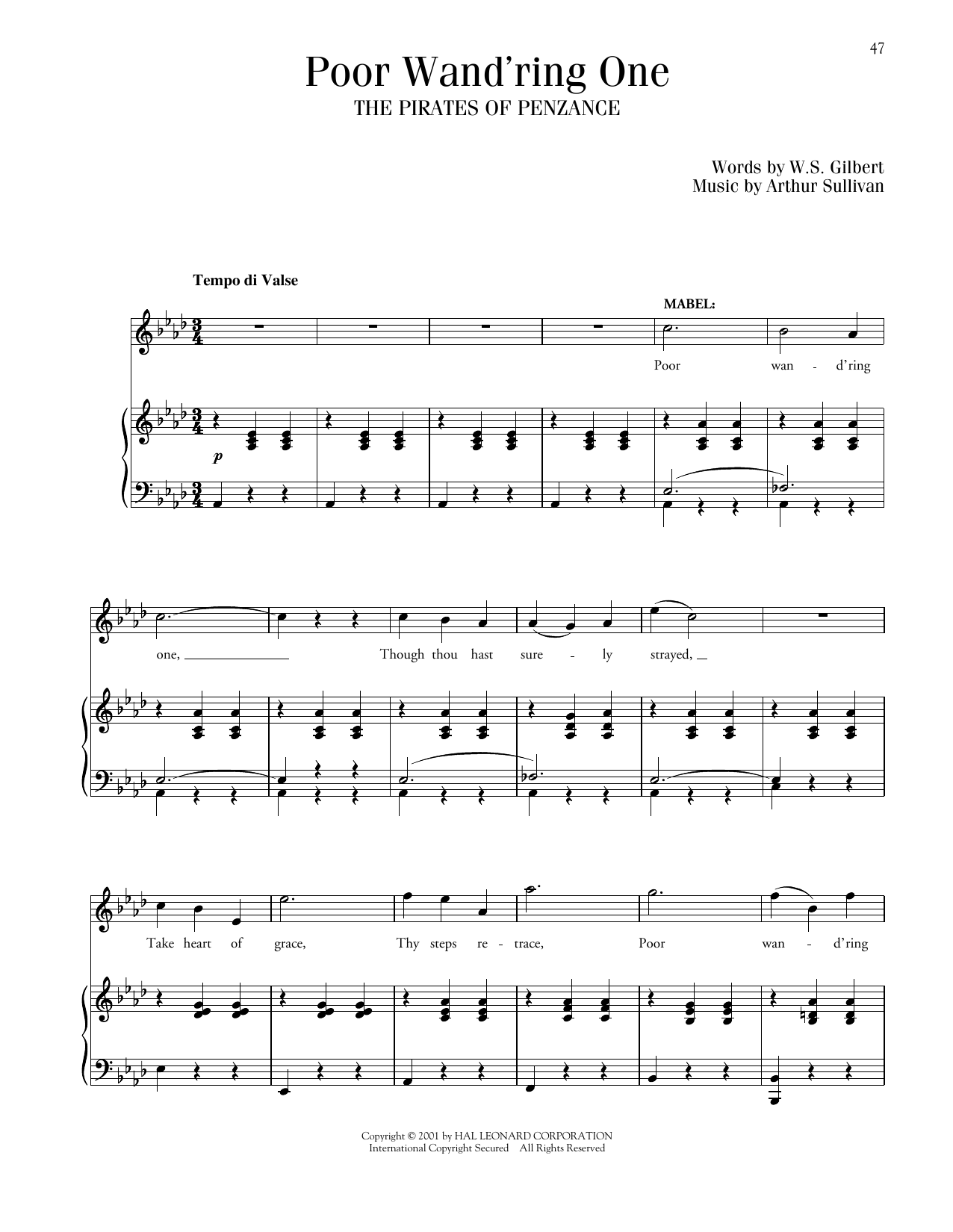
Poor Wand'ring One (from The Pirates Of Penzance) Sheet Music Preview

Poor Wand'ring One (from The Pirates Of Penzance): Piano Vocal

By Gilbert & Sullivan / Arranged by Richard Walters

Item: 35-DS01419554

Digital Download
$5.99
Description

Poor Wand'ring One (from The Pirates Of Penzance): Piano Vocal isn't in MakeMusic Cloud just yet...but it could be. Let us know you'd like to see it, and you'll help shape what comes next. In the meantime, start a free trial and dive into thousands of interactive titles your students can play along with today.

Sample Audio
No sample audio found.
Sample Video
Additional Details
Publisher: Hal Leonard
Page Count: 7
SKU: 35-DS01419554

More about this title

About the Composer: Gilbert & Sullivan

W.S. Gilbert and Arthur Sullivan created the most performed operettas in the English language during the Victorian era. Their partnership produced fourteen major works that balanced Gilbert's witty, satirical librettos with Sullivan's gift for memorable melodies, establishing a template for musical theater that influenced songwriting for generations. Their works remain staples of music education because they teach the fundamentals of character-driven song composition and theatrical storytelling through music.

Why we love this

This soprano showpiece combines accessibility with genuine vocal challenge. Students encounter a complete character arc in one song: from pathos to defiance to resignation. The arrangement by Richard Walters supports vocalists across skill levels while maintaining the emotional journey that made this number a showstopper on the Victorian stage.

What to expect

A character alone on stage, caught between vulnerability and courage. The melody moves with genuine pathos while maintaining the formal elegance of Victorian song craft. Underneath runs the tension between what the character wants to believe and what they know to be true.

Who it's for

Soprano vocalists preparing for musical theater or art song performance, and educators building curriculum around 19th-century operetta. Voice students benefit from the hybrid demands of operatic line and theatrical storytelling.

How to get the most out of it

  • Build the phrases through their full arc rather than stopping at obvious musical punctuation points. Phrasing across the bar line gives the melody continuity and prevents it from feeling episodic.
  • Let the accompanimental figures in the piano part breathe. These ornamental patterns should not overshadow the singer's emotional trajectory.
  • Establish clear character intention before rehearsal begins. Know whether this is a lament, a plea, or a declaration of independence depending on the verse. That choice shapes every dynamic choice.
  • Mark moments where you can ease the tempo fractionally without losing momentum. This song rewards subtle flexibility that responds to lyrical content.

How to use it

Pair this with other character songs from light opera to create a recital set that explores theatrical storytelling. It works equally well as a standalone audition piece for students exploring musical theater or as a study in operatic writing within a vocal literature course. The seven-page score allows students to experience a complete dramatic arc without overextending rehearsal time.

Skills your students will build

  • Sustained legit soprano line with control over phrase direction
  • Character development and theatrical expression within classical form
  • Coordination of piano accompaniment with vocal line in rubato passages
  • Navigation of period vocal technique (operetta writing, articulation, text delivery)
  • Emotional continuity across song structure with multiple verse sections

You May Also Like