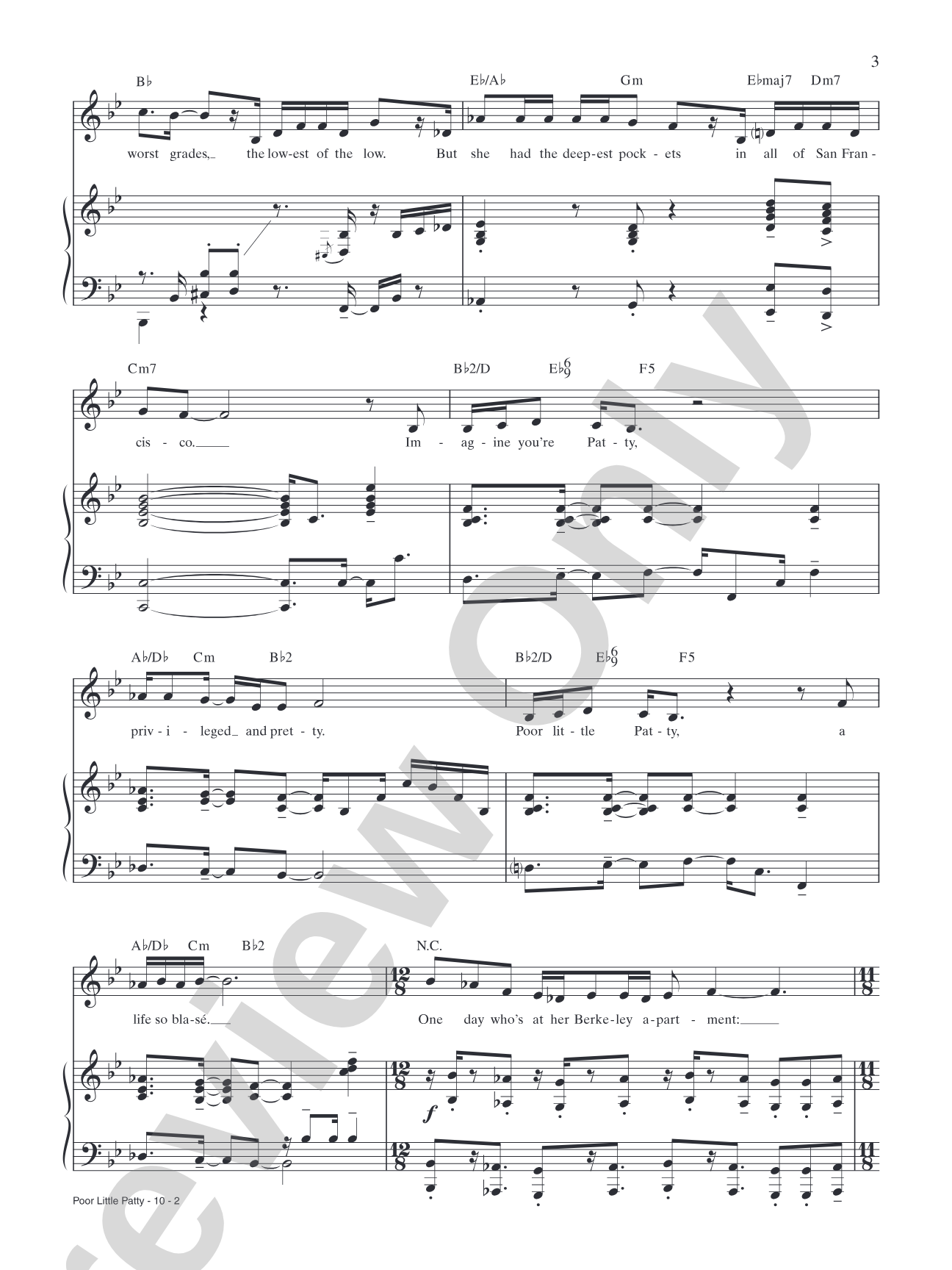
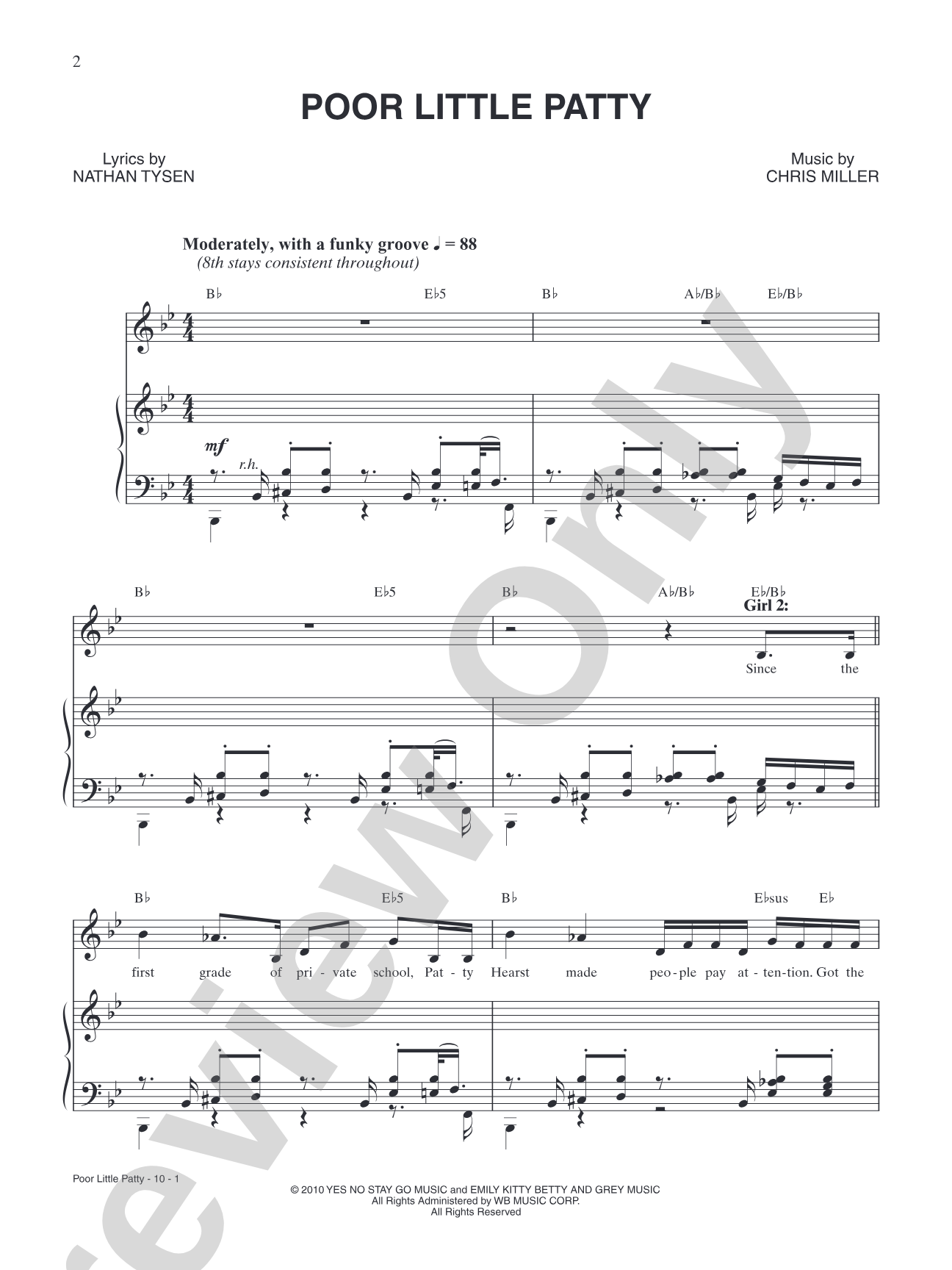
Poor Little Patty Sheet Music Preview

Poor Little Patty: Piano/Vocal/Chords

Music by Chris Miller, lyrics by Nathan Tysen

Item: 00-XS-0000043

Digital Download
$3.99

One moment…

Description

Poor Little Patty: Piano/Vocal/Chords isn't in MakeMusic Cloud just yet...but it could be. Let us know you'd like to see it, and you'll help shape what comes next. In the meantime, start a free trial and dive into thousands of interactive titles your students can play along with today.

Sample Audio
No sample audio found.
Sample Video
Additional Details
Series: Original Sheet Music Edition
Publisher: Alfred Music
SKU: 00-XS-0000043

More about this title

Why we love this

The piano/vocal/chord format gives singers and pianists the flexibility to perform this piece in intimate settings without needing a full band or extensive accompaniment prep. The chord notation supports both classical pianists reading from lead sheets and contemporary musicians who prefer playing by chords, making it accessible across different playing styles.

What to expect

The piece carries a narrative quality characteristic of Broadway material, with the piano part providing harmonic foundation while leaving space for the vocalist to shape the lyrical storytelling. The chord-based notation allows for interpretive flexibility, inviting both pianist and singer to find emotional nuance within the harmonic structure.

Who it's for

Singers performing in jazz, cabaret, or musical theatre settings will find this arrangement practical for rehearsals and performances. Pianists accompanying vocalists in studio sessions or live shows benefit from having both the notated melody and chord symbols in one score.

How to get the most out of it

  • Balance the vocal line so it sits naturally above the piano part; the chord symbols give you room to voice the harmonies to support the singer's range and phrasing.
  • Pay attention to how the melody and chords interact in the verse sections; adjusting your voicing density can shift the emotional weight between verses and chorus.
  • Use the chord symbols to communicate with your vocalist about harmonic intentions, especially if you're interpreting rhythmic placement of chord changes within the measure.

How to use it

This works well in recital settings where you're pairing contemporary musical theatre repertoire with classical or jazz standards. It's also useful for singers building an audition book who need accessible, performance-ready material that doesn't require full orchestration.

Skills your students will build

  • Reading and interpreting chord symbols while maintaining notated melody clarity
  • Coordination between vocalist and pianist in a lead-sheet format
  • Voice leading and chord voicing choices based on harmonic function
  • Lyrical interpretation and phrasing within a Broadway harmonic context

You May Also Like