
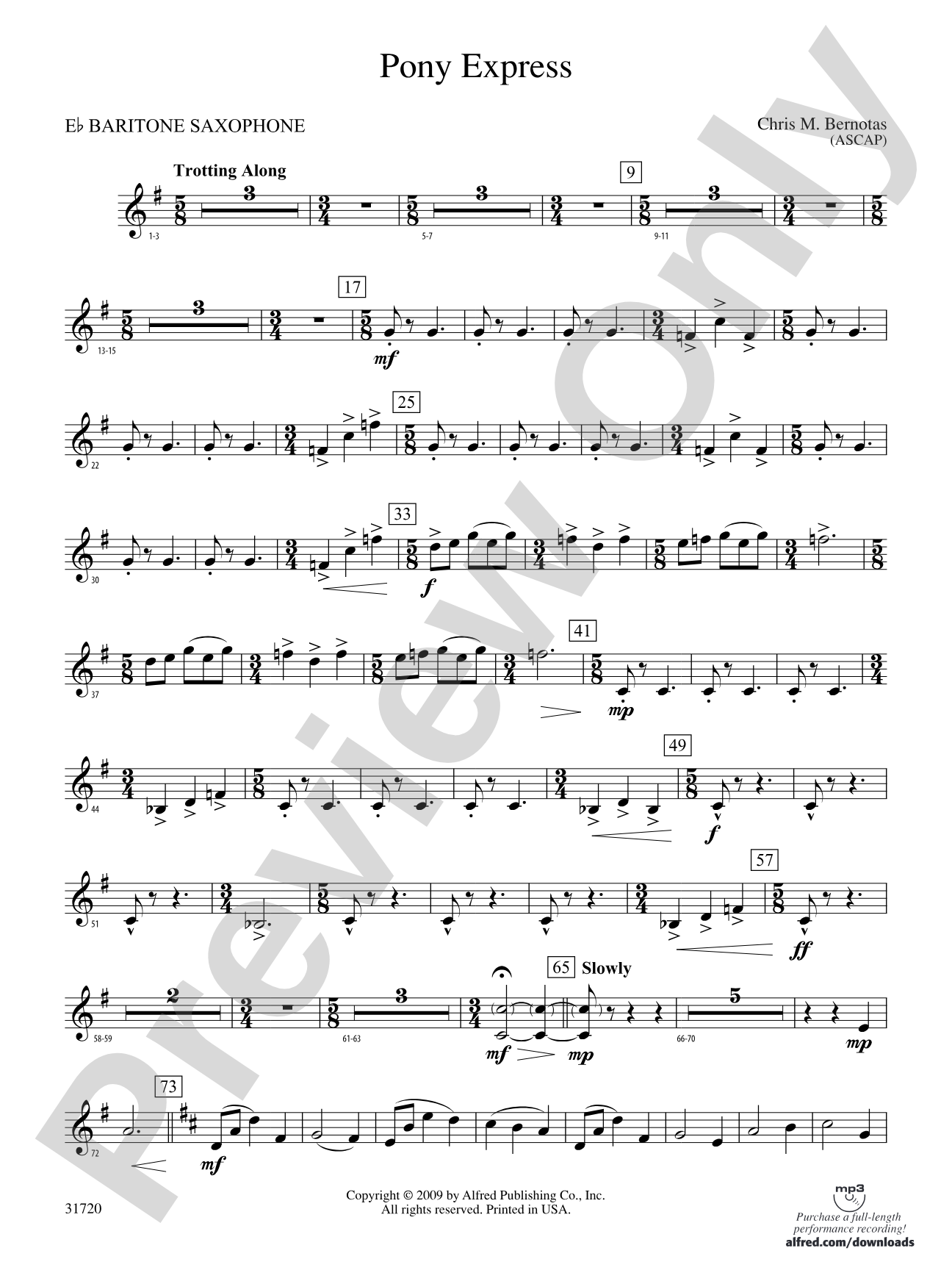

Pony Express: E-flat Baritone Saxophone
By Chris M. Bernotas
Grade: 3 (Medium)
Item: 00-PC-0001811_BTX
$3.00
Pickup currently not available
Description
Pony Express reminds us of a time when the fastest way to deliver a message was on horseback, riding across the plains, mountains and desert. This piece has a slight "off-beat" gallop for the horseback ride and a lyrical section that is reminiscent of looking out over the vast spaciousness of the plains . . . and then we are back on the mission to deliver the mail and on to a most enjoyable finish! This title is available in MakeMusic Cloud.


Don't just read it, hear it, play along with it, and watch your students grow with it. In MakeMusic Cloud, Pony Express: E-flat Baritone Saxophone comes alive with professional accompaniment, adjustable tempo, and built-in practice tools that turn solo practice into real progress.
Open in the Player
Jump straight in and assign it today.
Start Your Free Trial
Open this title and explore the full library in minutes.
Sample Audio
1
Audio File
--:--
0:00
0:00
Sample Video
No sample videos found.
Additional Details
Series:
Young Symphonic
Publisher:
Alfred Music
Page Count:
264
SKU:
00-PC-0001811_BTX
More about this title
About the Composer: Chris M. Bernotas

Chris M. Bernotas brings more than 25 years of experience as a composer, conductor, and music educator. As Director of Instrumental Publications at Alfred Music, he has shaped band and orchestra curricula for programs across the globe, from middle school ensembles to advanced groups. His works balance genuine musicality with the real pedagogical needs of developing musicians, making them equally rewarding to teach and to perform.
Beyond the page, Bernotas is deeply invested in the classroom. His experience working directly with students of all levels informs every composition he writes; he understands the technical hurdles young musicians face and writes music that meets them where they are. He regularly serves as guest conductor and clinician, leading festivals and workshops that challenge both directors and students to expand their musical thinking. Through his work at Alfred and his advocacy for thoughtful music education, Bernotas continues to demonstrate that accessible repertoire and artistic integrity are not at odds.
Why we love this
Bernotas captures the energy and narrative arc of the Pony Express run without overreaching the abilities of a Grade 3 ensemble. The off-beat gallop gives students a rhythmic puzzle that keeps them engaged, while the contrasting lyrical section teaches them to shape longer phrases and balance their sound. It's the kind of piece that feels like a mini-adventure in the rehearsal room and lands beautifully on a concert program.
What to expect
Pony Express gallops forward with infectious rhythm and energy, painting a vivid picture of horses thundering across open landscape. When you reach the lyrical midsection, the music opens up to reveal the vastness of the plains, inviting reflection before the final stretch home. The piece balances propulsive excitement with moments of breathing room, making it feel like a complete musical journey.
Who it's for
This is an ideal choice for middle school concert bands or advanced elementary ensembles seeking a piece with clear character and narrative arc. It works equally well for groups preparing for festival performance or simply looking for a crowd-pleasing concert selection that challenges students without overwhelming them.
How to get the most out of it
- Emphasize the rhythmic character of the gallop by having the rhythm section lock in tightly; slight independence here will blur the 'off-beat' effect Bernotas intends.
- Shape the lyrical section with genuine breath and space. Encourage students to hear it as a moment of reflection before the final push, not a slowdown.
- Bring out the melodic material in the upper woodwinds and brass during the opening and closing sections; these voices carry the narrative.
- Use the tempo marking and recorded accompaniment to establish the gallop's forward momentum before rehearsing the full score. This reference point helps the ensemble lock the feel early.
How to use it
Program this early in a concert to capture audience attention with its narrative and rhythmic drive, or place it midway through a set to shift mood and energy. It pairs well with other Americana-inspired works or can anchor a program built around the theme of historical travel and westward movement. This is also a strong festival or contest selection for groups at this grade level.
Skills your students will build
- Playing with rhythmic precision in syncopated and off-beat figures
- Balancing articulation and legato within contrasting sections
- Shaping longer melodic phrases with proper dynamic contour
- Maintaining ensemble unity across tempo and meter changes
- Responding to programmatic or narrative elements in music