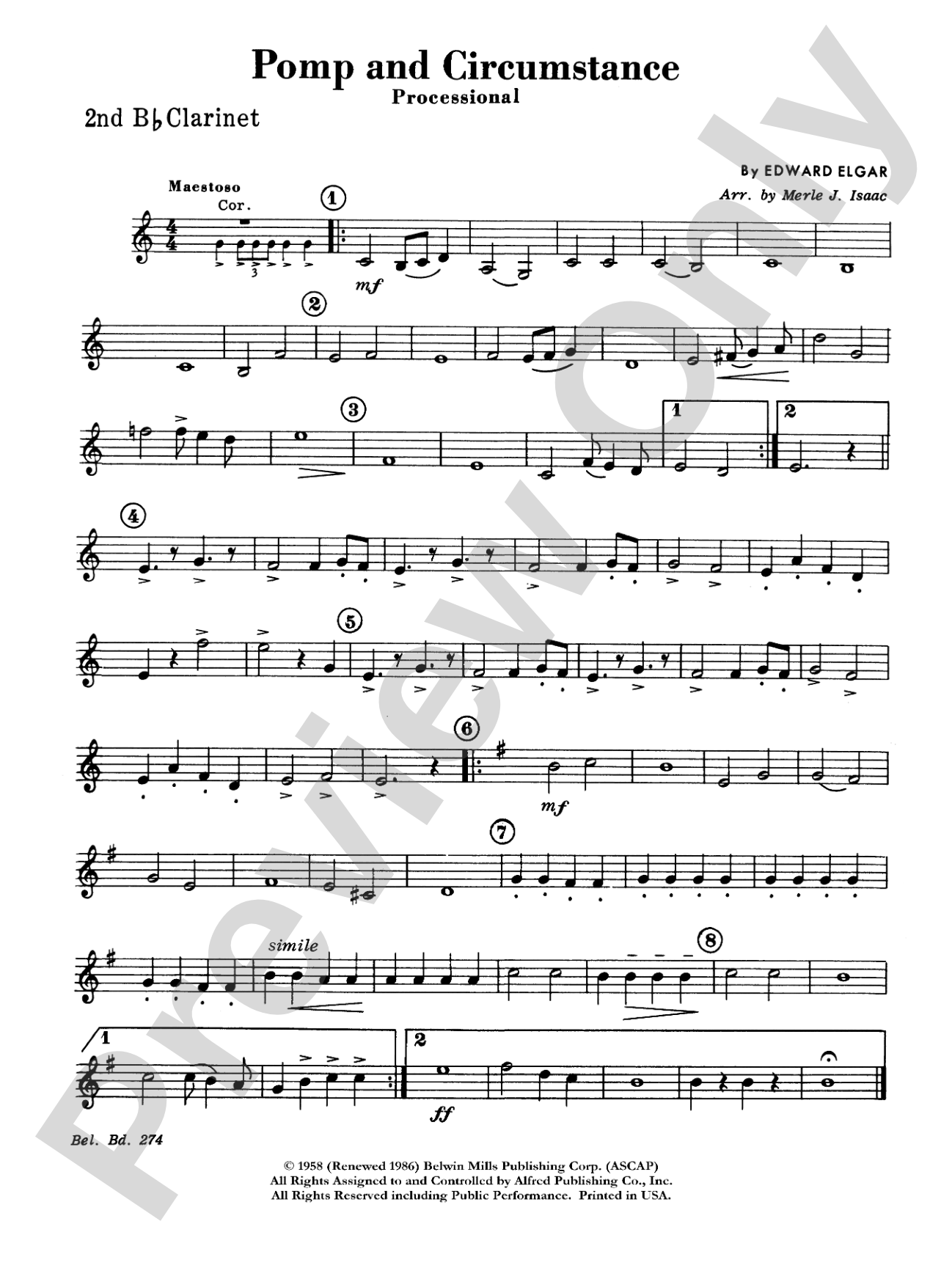
Pomp and Circumstance, Op. 39, No. 1 (Processional): 2nd B-flat Clarinet Sheet Music Preview

Pomp and Circumstance, Op. 39, No. 1 (Processional): 2nd B-flat Clarinet

By Edward Elgar / arr. Merle J. Isaac

Grade: 2 (Easy)

Item: 00-PC-0001963_C2

Digital Download
$3.00
Description
Give a graduation that seal of authenticity with this concert band arrangement of the Edward Elgar's timeless "Pomp and Circumstance." An elegant piece to commemorate a joyous celebration of accomplishment!

Don't just read it, hear it, play along with it, and watch your students grow with it. In MakeMusic Cloud, Pomp and Circumstance, Op. 39, No. 1 (Processional): 2nd B-flat Clarinet comes alive with professional accompaniment, adjustable tempo, and built-in practice tools that turn solo practice into real progress.

Sample Audio
No sample audio found.
Sample Video
Additional Details
Series: Belwin Symphonic Band
Publisher: Alfred Music
Page Count: 65
SKU: 00-PC-0001963_C2

More about this title

About the Composer: Edward Elgar

Edward Elgar (1857–1934) stands as one of the most significant composers of the late Romantic era, and his influence on British musical life was immeasurable. A largely self-taught musician who rose from provincial obscurity to international acclaim, Elgar possessed a gift for sweeping melodic lines and orchestral color that secured his place among the great symphonists. His Pomp and Circumstance marches became synonymous with ceremony and celebration, embedding themselves into the cultural consciousness of the English-speaking world.

Elgar's ability to craft music that feels both grand and accessible made his work particularly valuable to music educators. His compositions demand serious musicianship while remaining approachable to developing ensembles, and his harmonic language, though rooted in the Romantic tradition, offers rich learning opportunities for young musicians encountering large-scale formal structures and expressive conducting challenges.

Why we love this

This arrangement captures the unmistakable gravitas and melodic beauty of Elgar's most iconic march without overwhelming a developing band. The Grade 2 scoring ensures that standard instrumentation can execute the piece with confidence, yet the harmonic underpinnings and phrasing demands retain enough sophistication to keep advanced students engaged. For graduation ceremonies, it delivers the ceremonial weight that occasions demand while being genuinely playable by students who rehearse it.

What to expect

Dignified and processional, this march wraps the listener in a sense of occasion and formality. The broad, soaring melody feels inevitable, as though it has always existed, while the underlying harmonic progression suggests both confidence and celebration. It is music that makes people stand a little straighter.

Who it's for

Concert bands at the high school, community college, or community band level will find this arrangement entirely accessible while still musically rewarding. Conductors seeking a ceremonial work that commands respect without requiring virtuosic technique will appreciate the straightforward Grade 2 difficulty alongside the piece's iconic status.

How to get the most out of it

  • Shape the famous main melody with careful attention to phrase contour rather than rushing the tempo; the piece commands attention through breadth of line, not speed.
  • Balance the inner harmonies in the opening fanfare so that the brass foundation supports rather than overwhelms the melodic voices.
  • Conduct with deliberate, confident gestures that match the processional character; ensemble precision comes from steady time-keeping and clear articulation of the beat.
  • Allow the dynamic swells to build gradually and release them with intention, giving the piece room to breathe across its broader sections.

How to use it

Program this as the recessional at a graduation ceremony, awards assembly, or formal concert opening where you need immediate recognition and ceremonial weight. It also works effectively as a standalone concert selection, particularly on programs celebrating school or community milestones. The piece requires minimal rehearsal time for payoff, making it practical for spring concerts when schedule pressure peaks.

Skills your students will build

  • Conducting and maintaining processional tempos with steady pulse
  • Balancing melody and harmonic support across the full ensemble
  • Phrasing long, sustained melodic lines with direction and shape
  • Executing clean articulation in fanfare figures
  • Reading and performing parts within a standard concert band instrumentation

You May Also Like