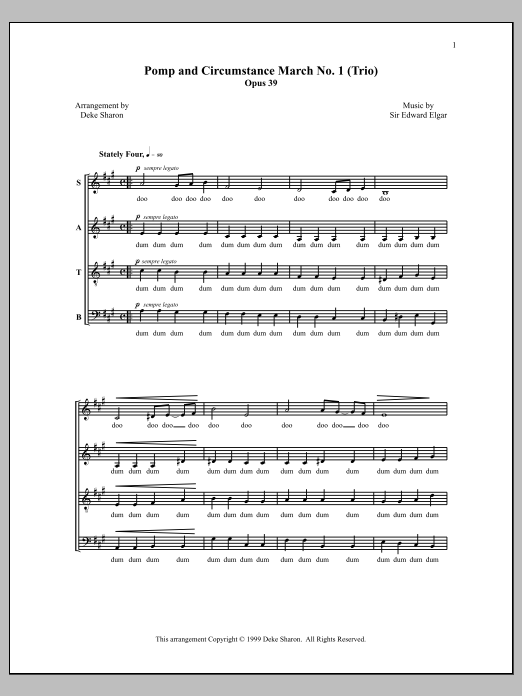
Edward Elgar stands as one of the most significant British composers of the late nineteenth and early twentieth centuries. His gift for orchestration and his ability to craft melodies that feel both grand and intimate shaped the sound of classical music in his era, and his works remain central to ceremonial and concert life worldwide.
Elgar's "Pomp and Circumstance" marches, written between 1901 and 1930, have become synonymous with celebration, graduation, and national identity. The first march's trio section captures something uniquely dignified and accessible, which is precisely why it translates so beautifully to the choral medium and continues to resonate across generations of singers.