Pomp and Circumstance: E-flat Alto Saxophone Sheet Music Preview

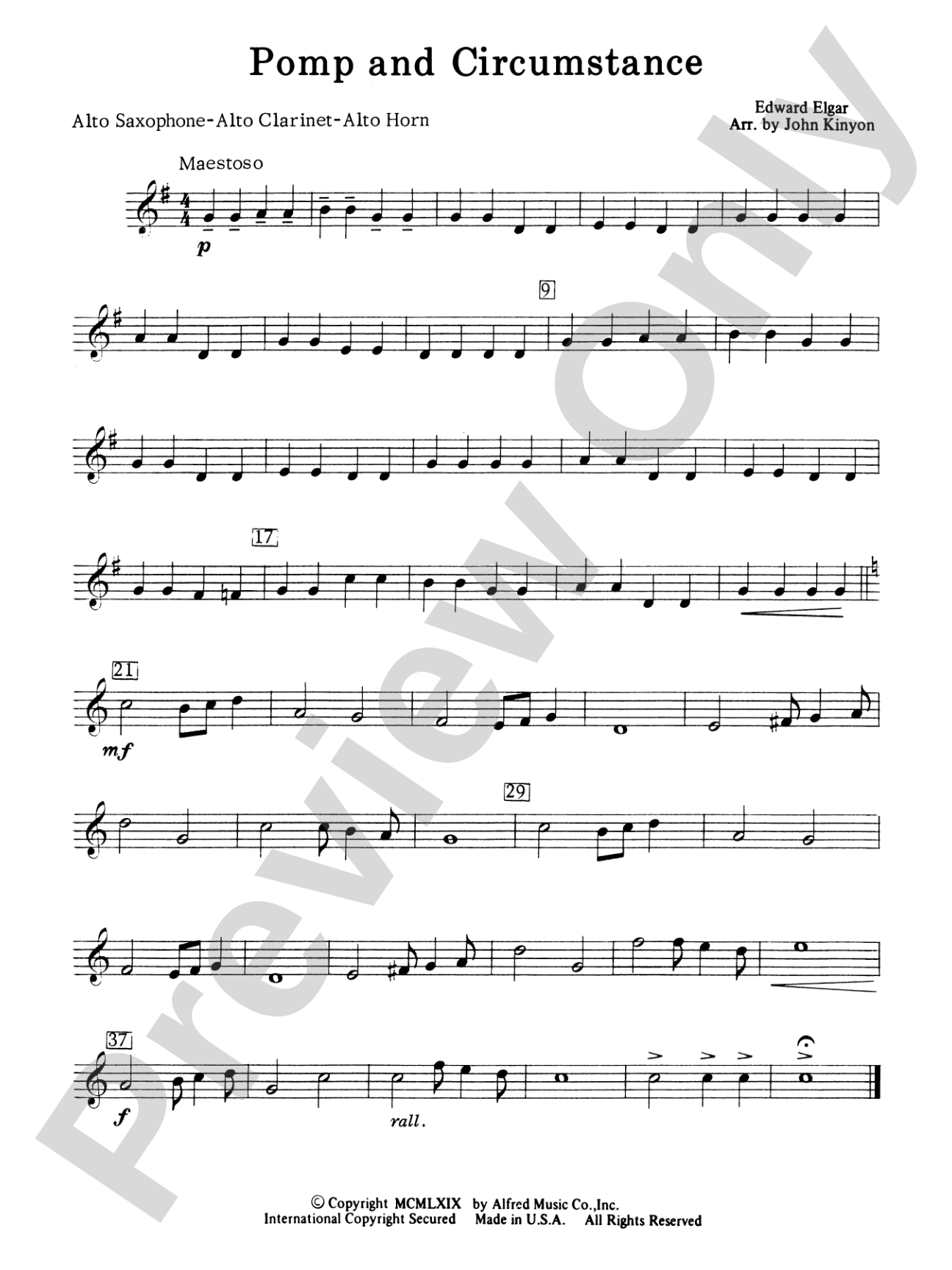
Pomp and Circumstance: E-flat Alto Saxophone

By Edward Elgar / arr. John Kinyon

Grade: 1 (Very Easy)

Item: 00-PC-0001960_AX1

Digital Download
$3.00
Description

Don't just read it, hear it, play along with it, and watch your students grow with it. In MakeMusic Cloud, Pomp and Circumstance: E-flat Alto Saxophone comes alive with professional accompaniment, adjustable tempo, and built-in practice tools that turn solo practice into real progress.

Sample Audio
No sample audio found.
Sample Video
Additional Details
Series: Mini Score Series
Publisher: Alfred Music
Page Count: 98
SKU: 00-PC-0001960_AX1

More about this title

About the Composer: Edward Elgar

Edward Elgar (1857-1934) stands as one of England's greatest composers, crafting music that defined the sound of the British Empire at its height. His mastery of orchestration and gift for soaring melody established him as a towering figure in late Romantic music, and his works remain cornerstones of both concert halls and educational ensembles.

Why we love this

Grade 1 arrangements of major works are rare, and Kinyon's version preserves the ceremonial grandeur and unmistakable melody that make Pomp and Circumstance instantly recognizable while keeping the technical demands within reach for developing bands. Your students play a genuine masterwork, not a simplified approximation, and they'll feel the pride of standing beside professional musicians who play this same piece at state occasions.

What to expect

Ceremonial and uplifting. The melody radiates confidence and nobility, supported by steady harmonic underpinnings that anchor the sound. This is music designed to mark moments that matter, and even at Grade 1, it carries genuine dignity and warmth.

Who it's for

Beginning and developing concert bands looking for repertoire with real musical substance. This arrangement serves programs where students benefit from playing alongside established masterworks without wrestling with complex harmonies or exposed parts.

How to get the most out of it

  • Shape the main melody with clear but unhurried phrasing; this march lives in broad, confident gestures, not quick changes of color.
  • Balance the harmony parts so the tune cuts through without drowning out the supporting voices; ensemble blend matters more than dynamic extremes.
  • Treat the tempo as stately and measured rather than rushed; Elgar's original tempo marking reflects ceremonial purpose, and that pace gives the melody room to sing.
  • Draw out the final cadence with slight ritardando to let the conclusion land with appropriate weight and finality.

How to use it

Program this at graduations, awards ceremonies, or concert closings where the occasion calls for something both recognizable and substantial. It also works as a season opener or finale, signaling to audiences that your band commands genuine repertoire. The 98-page score accommodates full instrumentation, making it suitable for honor bands or massed ensemble performances.

Skills your students will build

  • Playing exposed melodic lines with control and phrasing
  • Balancing full harmony parts without covering the main theme
  • Responding to subtle tempo and dynamic shadings in a march form
  • Understanding how masterworks are adapted for developing ensembles

You May Also Like