
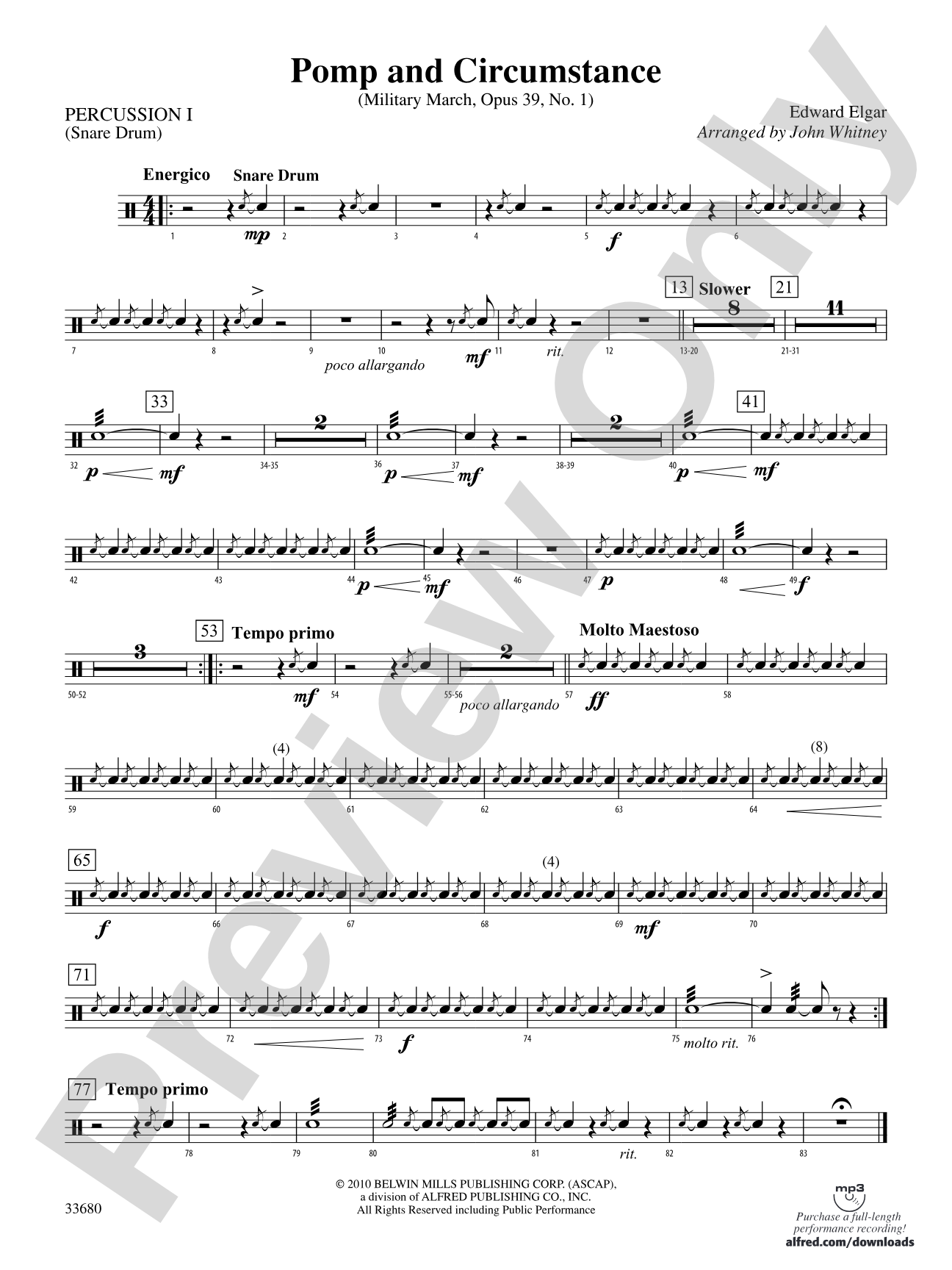

Pomp and Circumstance: 1st Percussion
Military March, Opus 39, No. 1
By Edward Elgar / arr. John Whitney
Grade: 3.5
Item: 00-PC-0014471_PC1
$3.00
Pickup currently not available
Description
A fabulous reduction of this famous piece that is so versatile! All strings can remain in first position, double stops may be divided, repeats can be optional, and this piece works well with only strings and piano as well. What more could you want?


Don't just read it, hear it, play along with it, and watch your students grow with it. In MakeMusic Cloud, Pomp and Circumstance: 1st Percussion comes alive with professional accompaniment, adjustable tempo, and built-in practice tools that turn solo practice into real progress.
Open in the Player
Jump straight in and assign it today.
Start Your Free Trial
Open this title and explore the full library in minutes.
Sample Audio
1
Audio File
--:--
0:00
0:00
Sample Video
Additional Details
Series:
Belwin Intermediate String/Full Orchestra
Publisher:
Alfred Music
Page Count:
206
SKU:
00-PC-0014471_PC1
More about this title
About the Composer: Edward Elgar
Edward Elgar (1857-1934) stands as one of Britain's most significant composers, bridging the Romantic and early modern eras with orchestral works of remarkable depth and emotional resonance. His facility with instrumental color and his ability to craft sweeping, memorable melodies made him a central figure in late 19th and early 20th century music.
Elgar's music remains central to British cultural life and concert programming worldwide. His mastery of orchestration and harmonic innovation influenced generations of composers, and his works continue to be performed at state occasions, graduations, and major celebrations globally. For music educators, Elgar's writing demonstrates sophisticated harmonic language and orchestral balance within reach of developing musicians.
Why we love this
This arrangement captures everything that makes the original monumental while making it genuinely achievable for intermediate orchestras. John Whitney has understood the piece's architecture so thoroughly that students play the actual music, not a simplified echo of it. The flexibility built into this score means you can shape it to your ensemble's strengths rather than restructuring your group to fit the arrangement.
What to expect
Stately and processional, filled with the ceremonial dignity that has made this Elgar march iconic at formal occasions for over a century. Yet it's warm and accessible rather than austere, with a melody that blooms naturally under the players' hands and creates genuine pride both in performing and listening.
Who it's for
Conductors leading full orchestras or flexible string ensembles at the Grade 3.5 level who need a genuine masterwork that doesn't require advanced techniques or extensive doubling. This is ideal for groups where intonation is solid but hand position flexibility is still developing, and for any conductor seeking reliable repertoire for graduation ceremonies, formal concerts, or festivals.
How to get the most out of it
- Treat the melodic line with the weight it deserves; this famous tune can sound thin if players approach it lightly. Ask first-chair strings to anchor the melody with confidence, and ensure accompaniment voices listen and support rather than compete.
- Take advantage of the optional repeats strategically. Removing them tightens the piece for a more compact program slot; including them builds the ceremonial grandeur that makes this work at graduations and formal events.
- Coordinate with your piano accompanist well before rehearsal if you're using strings and piano only. The reduction works seamlessly in this configuration, but the pianist becomes a full musical partner rather than a filler voice.
- Let the first-position string writing breathe. Because players aren't managing hand position shifts, they can focus on tone production, vibrato control, and phrase shape. Encourage them to use that freedom.
How to use it
This is the natural choice for graduation ceremonies, award presentations, and formal concert openings where you need music that resonates with tradition and occasion. It also works effectively as a festival contest piece where judges appreciate seeing a major work tackled with appropriate musicality at the intermediate level. Consider pairing it with contrasting contemporary or lighter repertoire to showcase your orchestra's range in a single program.
Skills your students will build
- Maintaining ensemble balance between melodic and accompaniment voices
- Playing with vibrato and tone control across longer sustained lines
- Responding to a conductor's phrasing and architectural shaping of large-scale form
- Managing optional repeats and ensemble coordination across different performance versions
- Intonation precision in first-position playing across full orchestral voicing