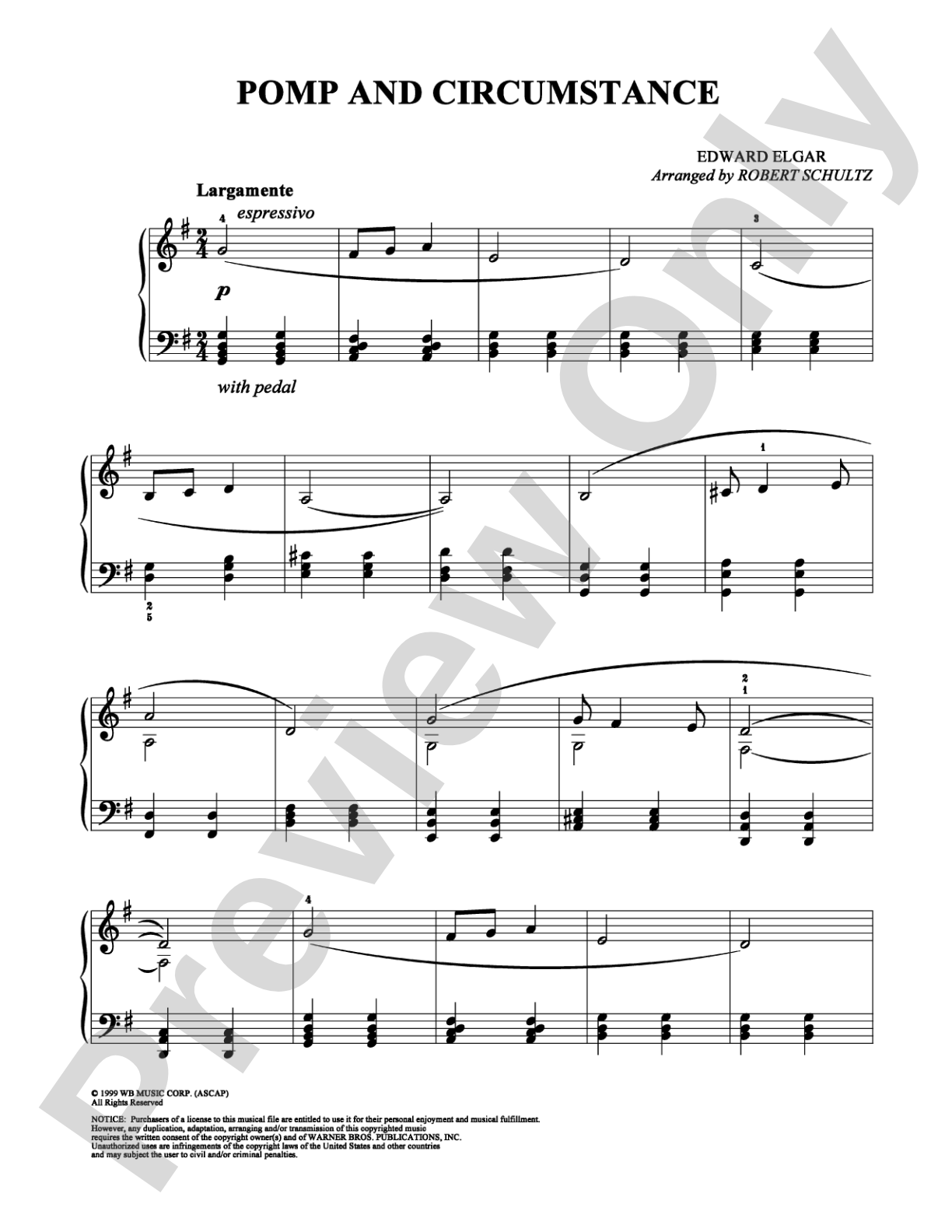
Pomp and Circumstance: Easy Piano Digital Sheet Music

Pomp and Circumstance: Easy Piano Digital Sheet Music

Edward William Elgar

Item: 00-PS-0007717

Digital Download
$3.99
Description

Pomp and Circumstance: Easy Piano Digital Sheet Music isn't in MakeMusic Cloud just yet...but it could be. Let us know you'd like to see it, and you'll help shape what comes next. In the meantime, start a free trial and dive into thousands of interactive titles your students can play along with today.

Sample Audio
No sample audio found.
Sample Video
Additional Details
SKU: 00-PS-0007717

More about this title

About the Creator: Edward Elgar

Edward Elgar composed Pomp and Circumstance in 1901 as a series of five marches, establishing himself as a master of ceremonial music. The first march became his most enduring work, adopted worldwide as a processional anthem for graduations, state occasions, and formal celebrations. Elgar's gift for sweeping melody and structural clarity made this piece instantly memorable and accessible across skill levels.

Why we love this

This arrangement captures the ceremonial grandeur of Elgar's masterpiece in a form that intermediate pianists can actually perform. The Easy Piano version preserves the iconic melody and harmonic framework while removing the orchestral complexity, making it accessible without sacrificing the piece's dignity.

What to expect

Stately and celebratory. The melody unfolds with natural elegance, evoking processions, graduations, and moments of formal transition. There's warmth in the harmonic support and a sense of timeless dignity that feels both earnest and approachable.

Who it's for

Intermediate piano students (roughly grades 4-5) looking for a recognizable, impressive-sounding piece that doesn't require advanced technical skills. This works well for students building confidence with longer-form pieces and those preparing recital programs that need ceremonial or formal-occasion repertoire.

How to get the most out of it

  • Maintain a steady, processional tempo throughout; this is ceremonial music that should never rush despite its stately character.
  • Shape the main melody with gentle dynamic swells rather than abrupt changes; think of it as a flowing procession rather than a march.
  • Allow the left hand to support the melody clearly without overwhelming it; the accompaniment is there to ground the harmony, not compete for attention.
  • Pay special attention to any key changes or modulations in this arrangement; they often signal important textural or emotional shifts.

How to use it

Pair this with lighter or more modern pieces to create a recital that moves between styles. It's equally suited to formal end-of-year performances, school assemblies, or as an encore piece when you want something that resonates with audiences of all ages.

Skills your students will build

  • Phrasing and shaping long melodic lines over sustained accompaniment
  • Playing with consistent tempo and character over multiple pages
  • Balance between melody and accompaniment
  • Interpretation of ceremonial, stately musical character
  • Reading and executing dynamic markings for expressive effect

You May Also Like