
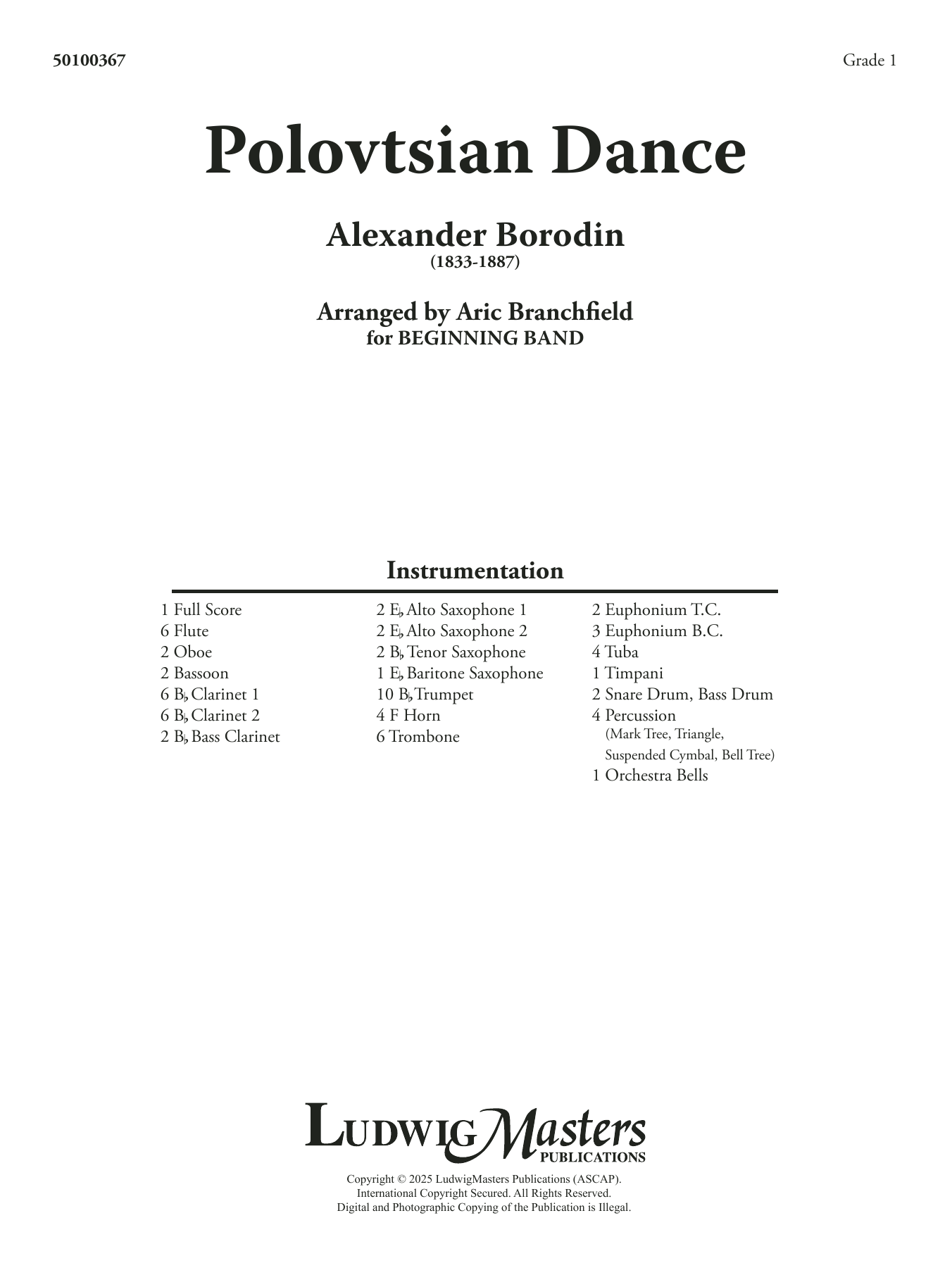

Polovtsian Dance (arr. Aric Branchfield): Concert Band Conductor Score & Parts
By Alexander Borodin / Arranged by Aric Branchfield
Grade: 1
Item: 35-PK01710476
$55.00
Pickup currently not available
Buy Extra Parts (Digital PDF Download)
Parts Added to Cart!
Description
Borodin's most famous melody is here made accessible to younger players. It retains the stunning beauty of the original without overt technical demands.


Polovtsian Dance (arr. Aric Branchfield): Concert Band Conductor Score & Parts isn't in MakeMusic Cloud just yet...but it could be. Let us know you'd like to see it, and you'll help shape what comes next. In the meantime, start a free trial and dive into thousands of interactive titles your students can play along with today.
Request This Title
Tell us you want it.
Start Your Free Trial
Explore everything that's ready to play right now.
Sample Audio
No sample audio found.
Sample Video
No sample videos found.
Additional Details
Publisher:
Hal Leonard
SKU:
35-PK01710476
More about this title
About the Composer: Alexander Borodin
Alexander Borodin (1833–1887) was a Russian composer who balanced a career as a chemist with his passion for music, a duality that shaped his relatively small but significant output. His gift for melody and orchestral color left an indelible mark on the Romantic repertoire, most notably through Prince Igor, the opera from which the Polovtsian Dances emerge as concert staples.
Why we love this
Branchfield's arrangement proves that accessible doesn't mean thin. This Grade 1 setting gives young ensembles a genuinely memorable melody without the independence requirements that would otherwise keep it out of reach. Students hear themselves playing something concerts recognize instantly, which builds confidence and investment in the music itself.
What to expect
Lyrical and almost hymn-like in its directness, the Polovtsian Dance unfolds with the kind of unhurried elegance that feels timeless. The melody carries the weight of the piece, supported by warm, uncomplicated harmonies that let younger players focus on expression and phrasing rather than technical survival.
Who it's for
Beginning and early intermediate concert bands seeking a piece that fills the gap between folk tunes and full-scale classical works. This arrangement works equally well for middle school ensembles building repertoire or high school bands looking for a concert opener that engages audiences without sacrificing musical substance.
How to get the most out of it
- Balance the melodic line so it sings above the accompaniment; this melody deserves to be heard clearly even with modest technical resources in the ensemble.
- Shape the phrase contours with gentle dynamic swells rather than sudden changes; Borodin's gift is for flowing, lyrical lines.
- Let the supporting voices breathe without rushing; younger ensembles sometimes compress the rhythm when focusing on staying together, but the beauty lives in the space.
How to use it
Open a concert with this to establish a lyrical, sophisticated tone before moving into heavier or more rhythmically complex works. It also pairs naturally with other accessible arrangements of classical masterworks, allowing you to program an entire segment around orchestral literature without overextending your ensemble's capabilities.
Skills your students will build
- Sustaining long melodic phrases with consistent air support
- Balancing blend between melody and accompaniment sections
- Responding to subtle dynamic shaping in a lyrical context
- Reading simple harmonic textures without relying on heavy rhythmic activity