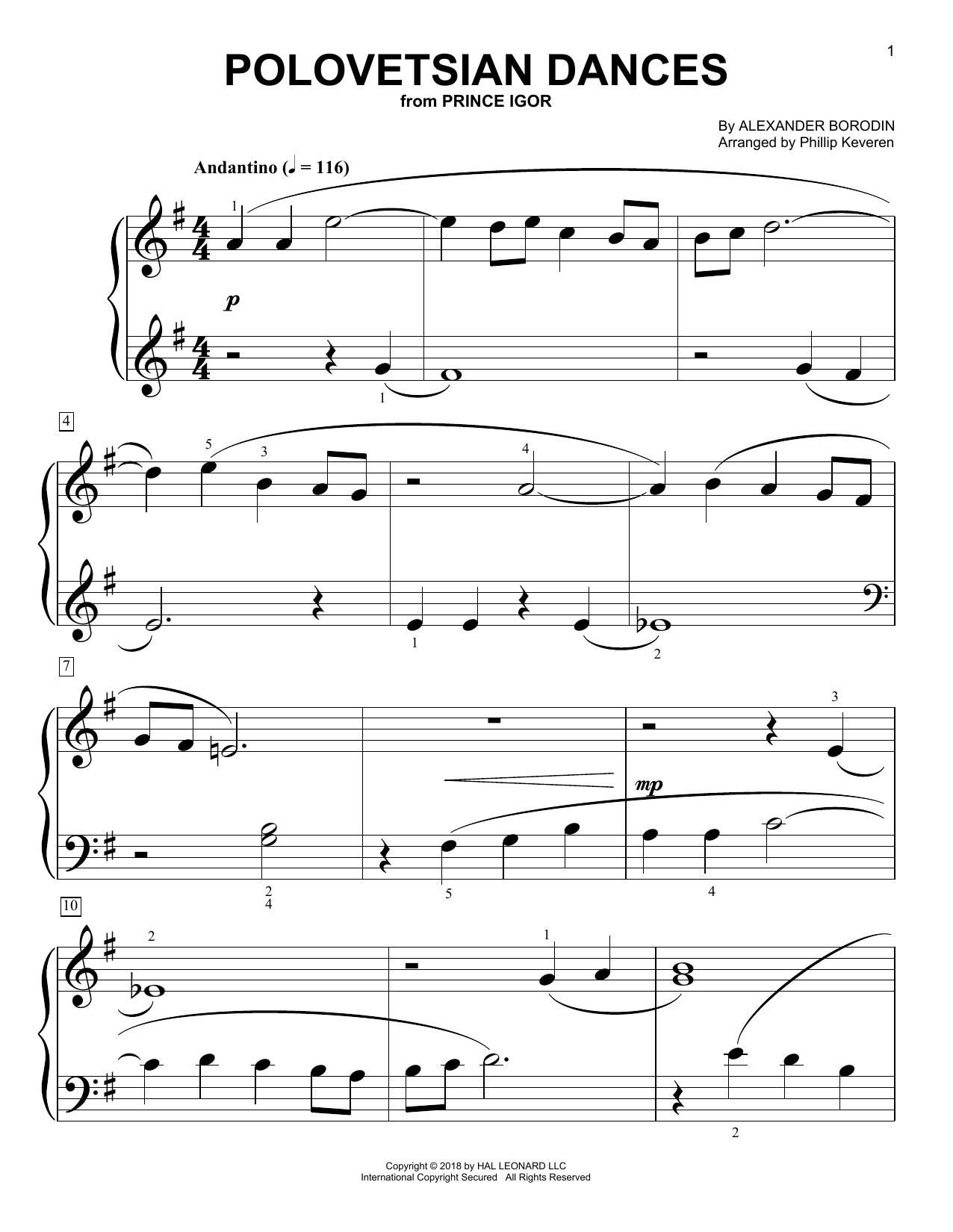
Alexander Borodin (1833–1887) was a Russian composer who balanced his identity between music and chemistry, serving as a distinguished chemist while composing some of the 19th century's most colorful orchestral works. His gift for melodic invention and sophisticated harmonies made him a central figure in the Russian nationalist movement, though his scientific career often took priority over finishing his compositions. The Polovetsian Dances remain his most frequently performed work, showcasing the exotic orchestration and rhythmic vitality that defined his style.
Why we love this
Phillip Keveren's big note arrangement opens this orchestral showpiece to early intermediate pianists, capturing the sweeping melodies and propulsive rhythms without overwhelming the hands. Students encounter genuine musical substance here rather than a diluted adaptation, and the two-page format makes it accessible enough for a single practice session yet substantial enough to feel rewarding.
What to expect
Exotic and energetic, with sweeping melodies that evoke a distant celebration or festival. The rhythmic pulse carries you forward while the generous note spacing creates a sense of openness and ease, making even younger hands feel capable of something genuinely dramatic.
Who it's for
Early intermediate pianists ready to explore beyond standard method book material, and students who thrive with recognizable, culturally significant repertoire. Teachers seeking to build repertoire depth without introducing hand-position complexity will find this arrangement particularly useful.
How to get the most out of it
Shape the opening theme with a singing tone; think of it as vocally driven rather than technically driven, which helps students avoid rushing through the big note spacing
Pay attention to the rhythmic drive in the accompaniment figures, as the dancing quality depends on crisp articulation in the supporting material
Balance the melody line so it sits naturally above the accompaniment without requiring excessive hand height or tension
How to use it
Pair this with other world music or Russian nationalist works in a concert themed around cultural traditions, or program it as a solo in a recital alongside Romantic era character pieces. Its brevity and immediate appeal also make it an excellent showcase piece for students transitioning into early intermediate repertoire.
Skills your students will build
Legato playing across hand position changes
Rhythmic accuracy in syncopated accompaniment figures
Voice leading and tonal balance between melody and accompaniment
Stylistic understanding of Russian nationalist music
You May Also Like
Scan to Complete Your Purchase
Use your phone's camera to scan the code below
You'll log in on your phone and the order will be added to your account