Polovetsian Dances Sheet Music Preview

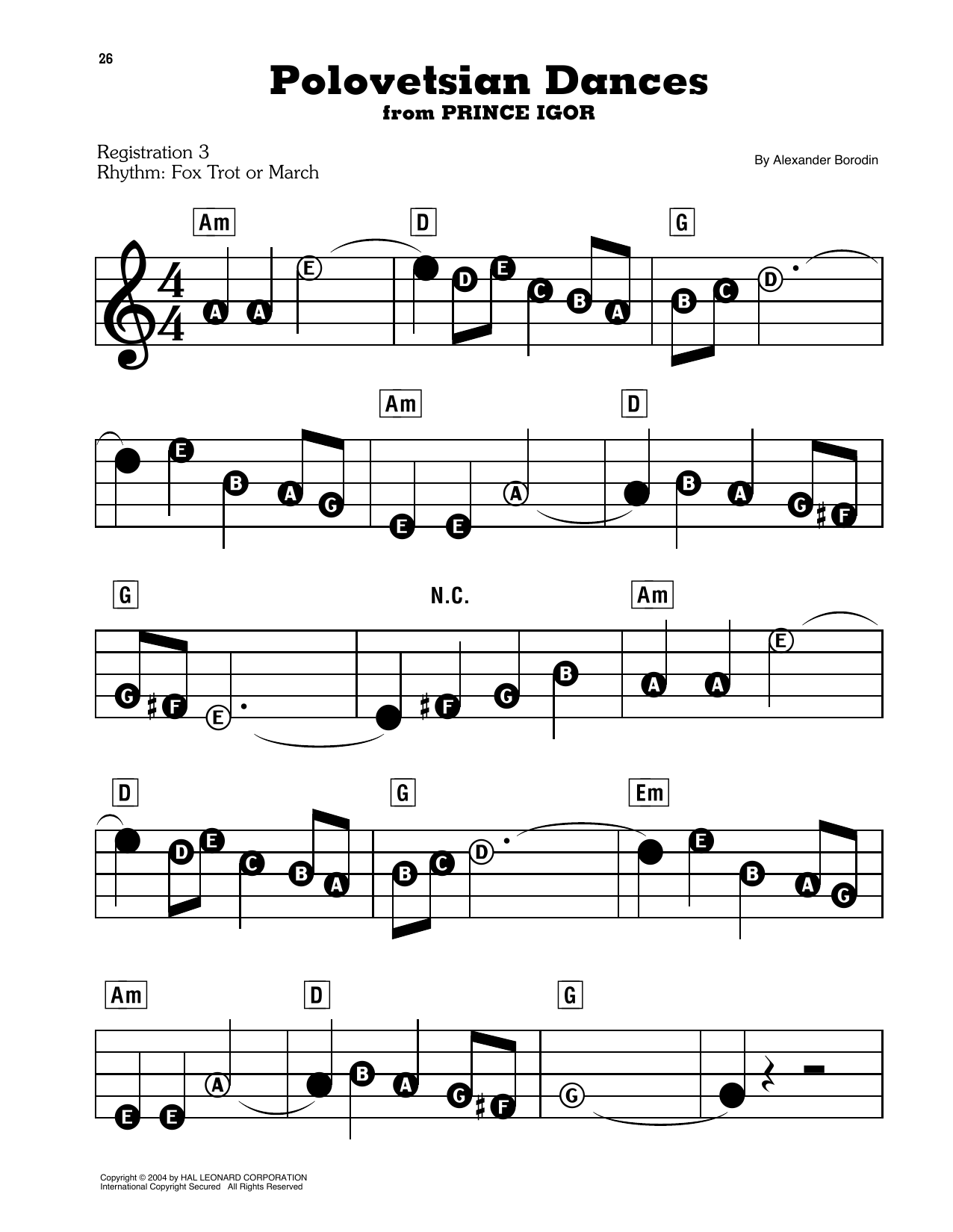
Polovetsian Dances: E-Z Play Today

Item: 35-DS00453406

Digital Download
$4.99
Description

Polovetsian Dances: E-Z Play Today isn't in MakeMusic Cloud just yet...but it could be. Let us know you'd like to see it, and you'll help shape what comes next. In the meantime, start a free trial and dive into thousands of interactive titles your students can play along with today.

Sample Audio
No sample audio found.
Sample Video
Additional Details
Publisher: Hal Leonard
Page Count: 2
SKU: 35-DS00453406

More about this title

About the Creator: Alexander Borodin

Alexander Borodin (1833–1887) was a Russian composer who balanced two careers simultaneously: he held a doctorate in chemistry and maintained an active research laboratory while composing some of the most recognizable music of the 19th century. His opera Prince Igor stands as his masterwork, and the Polovetsian Dances from that opera have become concert staples, beloved for their exotic harmonic language and sweeping melodic lines that evoke the steppes of Central Asia.

Borodin's approach to orchestration and harmony influenced a generation of Russian composers. His gift for writing memorable, singable themes combined with sophisticated harmonic progressions makes his work enduringly appealing to performers and audiences alike.

Why we love this

The E-Z Play arrangement preserves the exotic character and melodic richness of Borodin's original while keeping the technical demands reasonable for developing pianists. Students get genuine exposure to Russian Romantic style without the hand-crossing and wide stretches that make the concert grand version intimidating.

What to expect

The music conjures a vivid scene: veiled dancers moving across an expansive landscape under bright sunlight, with sudden shifts between languorous passages and moments of energetic celebration. The chromatic inflections and modal coloring create a sense of mystery and otherness, worlds away from familiar Western classical styles.

Who it's for

This arrangement fits pianists who have moved beyond beginner method books but aren't yet ready for the full orchestral transcription. It works equally well for students in elementary and middle school piano lessons and for adult learners seeking accessible entry points into art song and ballet literature.

How to get the most out of it

  • Shape the main theme with subtle rubato rather than mechanical rhythmic precision; Borodin's melodies sing best when they breathe naturally
  • Balance the bass line so it supports without overwhelming the melody, especially in passages where left-hand figures accompany a sustained right-hand line
  • Bring out the chromatic harmonic movement that gives these dances their distinctive color; let the ear follow how chords shift and slide rather than treating them as static harmony

How to use it

Consider pairing this with other Russian Romantic works in a thematic concert exploring 19th-century national schools, or use it as a solo piano piece in a recital between heavier contemporary works where its color and accessibility provide welcome contrast. It also serves as a natural springboard for conversations about orchestration and arrangement in music history units.

Skills your students will build

  • Rubato and expressive phrasing within a Romantic idiom
  • Voicing and balance between melody and accompaniment patterns
  • Recognition of chromatic harmony and modal inflection
  • Interpretation of non-Western musical references through a 19th-century European lens

You May Also Like