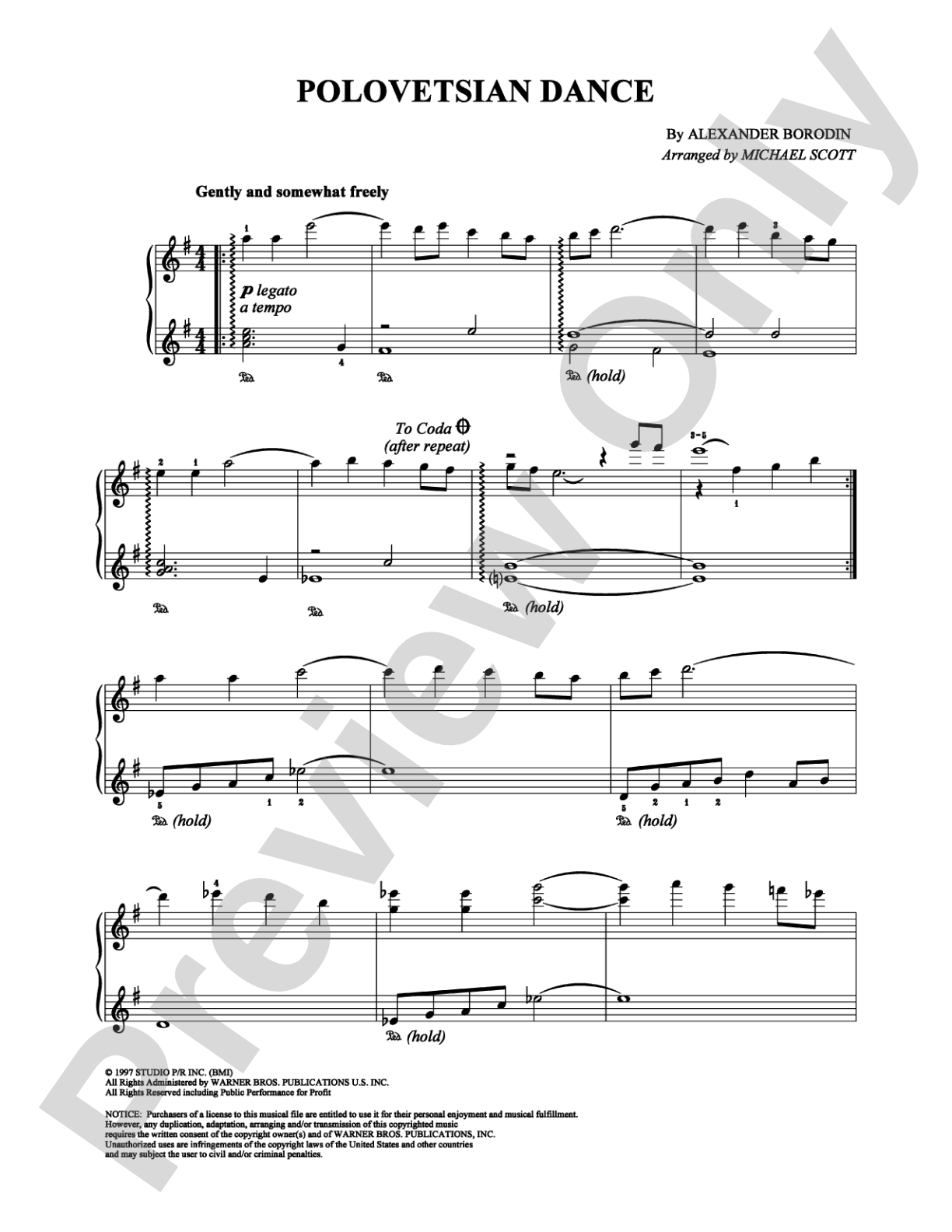
Polovetsian Dance: Piano Digital Sheet Music

Polovetsian Dance: Piano Digital Sheet Music

Alexander Borodin

Item: 00-PS-0007599

Digital Download
$3.99
Description

Polovetsian Dance: Piano Digital Sheet Music isn't in MakeMusic Cloud just yet...but it could be. Let us know you'd like to see it, and you'll help shape what comes next. In the meantime, start a free trial and dive into thousands of interactive titles your students can play along with today.

Sample Audio
No sample audio found.
Sample Video
Additional Details
SKU: 00-PS-0007599

More about this title

About the Creator: Alexander Borodin

Alexander Borodin (1833, 1887) was a Russian composer and chemist whose dual careers shaped a unique artistic voice. He composed sparingly but with distinctive harmonic color and melodic richness, often drawing on Russian and Central Asian folk traditions. The Polovetsian Dances, from his opera Prince Igor, stand as his most performed orchestral work and showcase his gift for dramatic storytelling through instrumental music.

Borodin's scientific precision informed his compositional craft; every harmonic choice and orchestral color served dramatic purpose. He spent years developing Prince Igor, and these dances represent some of the opera's most vibrant moments, capturing the vitality and exoticism of the Caucasus region that fascinated 19th-century Russian audiences.

Why we love this

Polovetsian Dance delivers the visceral energy and exotic color that made Borodin's Prince Igor unforgettable, now accessible as a solo piano work. The piece sits perfectly at the intermediate-advanced level where pianists can feel genuinely accomplished without needing superhuman technique. Programming this gives your recitals an unmistakable dramatic flair that audiences recognize immediately.

What to expect

Sensual and intoxicating, with swaying minor-key rhythms that evoke the scene of captive Polovetsian maidens dancing for the prince. The piece balances tender, almost hypnotic passages with moments of wild, uninhibited energy, creating a musical world that feels distant and deeply human at once.

Who it's for

Pianists who have moved beyond early intermediate repertoire and are ready for pieces with real dramatic substance and harmonic color. This appeals equally to recital performers seeking showpiece material and students exploring Romantic-era orchestral transcriptions.

How to get the most out of it

  • Anchor the opening ostinato with rhythmic clarity and consistent tone; it's the engine that drives the entire piece, so lock it in early.
  • Shape the melody line with singing tone even when both hands are busy; the right hand carries the narrative across the exotic harmonies.
  • Lean into the dynamic contrasts between the quieter, serpentine passages and the full orchestral climaxes to maximize dramatic effect.
  • Respect the tempo markings around the dance sections; resist the urge to rush the rhythmic momentum, which should feel propulsive but never hectic.

How to use it

Feature this as a centerpiece in a Romantic-era recital or place it among works exploring non-Western musical color and influence. It works beautifully as a bridge between classical and more contemporary approaches to orchestral transcription.

Skills your students will build

  • Executing sustained ostinato patterns with rhythmic precision and even tone
  • Managing parallel octaves and full chords across the keyboard with control
  • Phrasing long melodic lines over accompaniment figures
  • Navigating modal and chromatic harmony with secure voicing
  • Building dynamic intensity and releasing tension across extended sections

You May Also Like