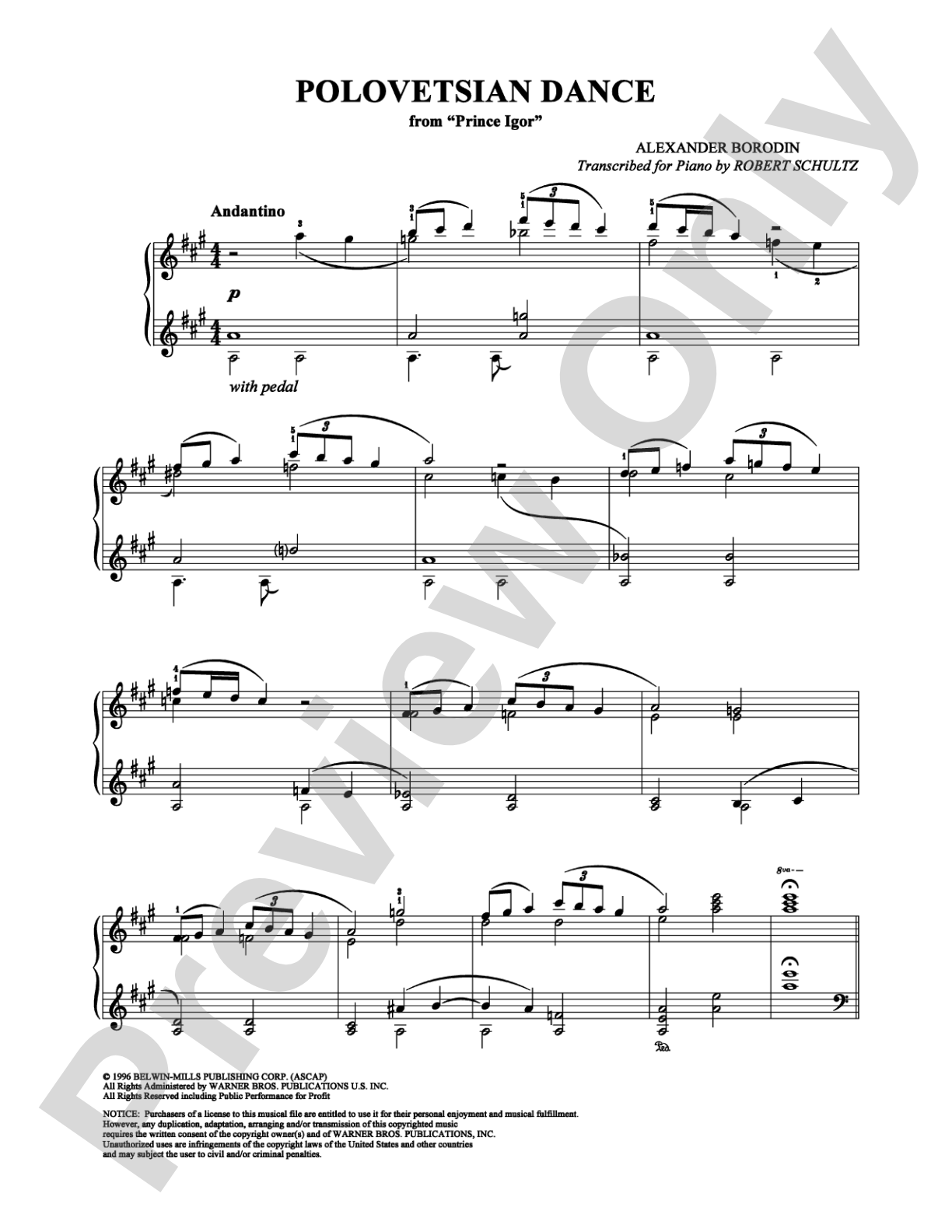
Polovetsian Dance: Piano Digital Sheet Music

Polovetsian Dance: Piano Digital Sheet Music

Alexander Borodin

Item: 00-PS-0000900

Digital Download
$3.99
Description

Polovetsian Dance: Piano Digital Sheet Music isn't in MakeMusic Cloud just yet...but it could be. Let us know you'd like to see it, and you'll help shape what comes next. In the meantime, start a free trial and dive into thousands of interactive titles your students can play along with today.

Sample Audio
No sample audio found.
Sample Video
Additional Details
SKU: 00-PS-0000900

More about this title

About the Creator: Alexander Borodin

Alexander Borodin (1833, 1887) was a Russian composer and chemist whose dual passions shaped his artistic vision. He composed relatively few works, but each one carries the stamp of a distinctly Russian voice infused with harmonic innovation and orchestral color. The Polovetsian Dance, drawn from his opera Prince Igor, showcases his gift for creating music that feels both exotic and deeply human.

Borodin's training in chemistry informed his compositional approach; he treated harmony and orchestration with the precision of a scientist, yet the result sings with Romantic warmth and dramatic flair. This dance has endured for over a century because it captures something essential: the collision of cultures, the thrill of unfamiliar rhythms, and the universal power of melody.

Why we love this

This arrangement captures the visceral energy and exotic character of Borodin's orchestral showpiece in a format that demands serious technical command. A pianist tackling this will develop stamina, rhythmic precision, and the ability to balance folkloric melody with driving accompaniment patterns.

What to expect

Exotic and hypnotic, built on relentless forward motion and earthy, swaying melodic lines. The piece pulses with the energy of folk celebration, balancing moments of lyrical breadth with driving rhythmic propulsion that commands attention from start to finish.

Who it's for

Intermediate to advanced pianists who thrive on repertoire with strong narrative drive and rhythmic character. This digital download works well for students preparing for recitals or competitions who want a dramatic, recognizable piece that showcases both technical facility and musical maturity.

How to get the most out of it

  • Establish a steady, propulsive tempo from the opening and lock into the rhythmic drive. The accompaniment figures must feel relentless, never tentative.
  • Shape the main melody with breadth and confidence without letting it overshadow the rhythmic momentum underneath.
  • Practice the hand independence required when melody and accompaniment sit in different registers. Clarity here prevents the piece from becoming muddy.
  • Pay attention to dynamic architecture across longer phrases rather than hitting every marking in isolation. Build climaxes gradually.

How to use it

Program this alongside other Romantic-era orchestral transcriptions to create a recital section anchored in 19th-century virtuosity and orchestral color. It pairs naturally with other dramatic character pieces and works well as a late-program showstopper that leaves the audience with energy.

Skills your students will build

  • Control of octave-based and repeated-note accompaniment patterns across extended passages
  • Independence between hands when melody and rhythm occupy different registers
  • Sustaining lyrical phrasing while maintaining unwavering rhythmic pulse
  • Dynamic shaping across longer melodic arcs and climactic buildups
  • Projection of folkloric character and stylistic color within the Romantic idiom

You May Also Like