
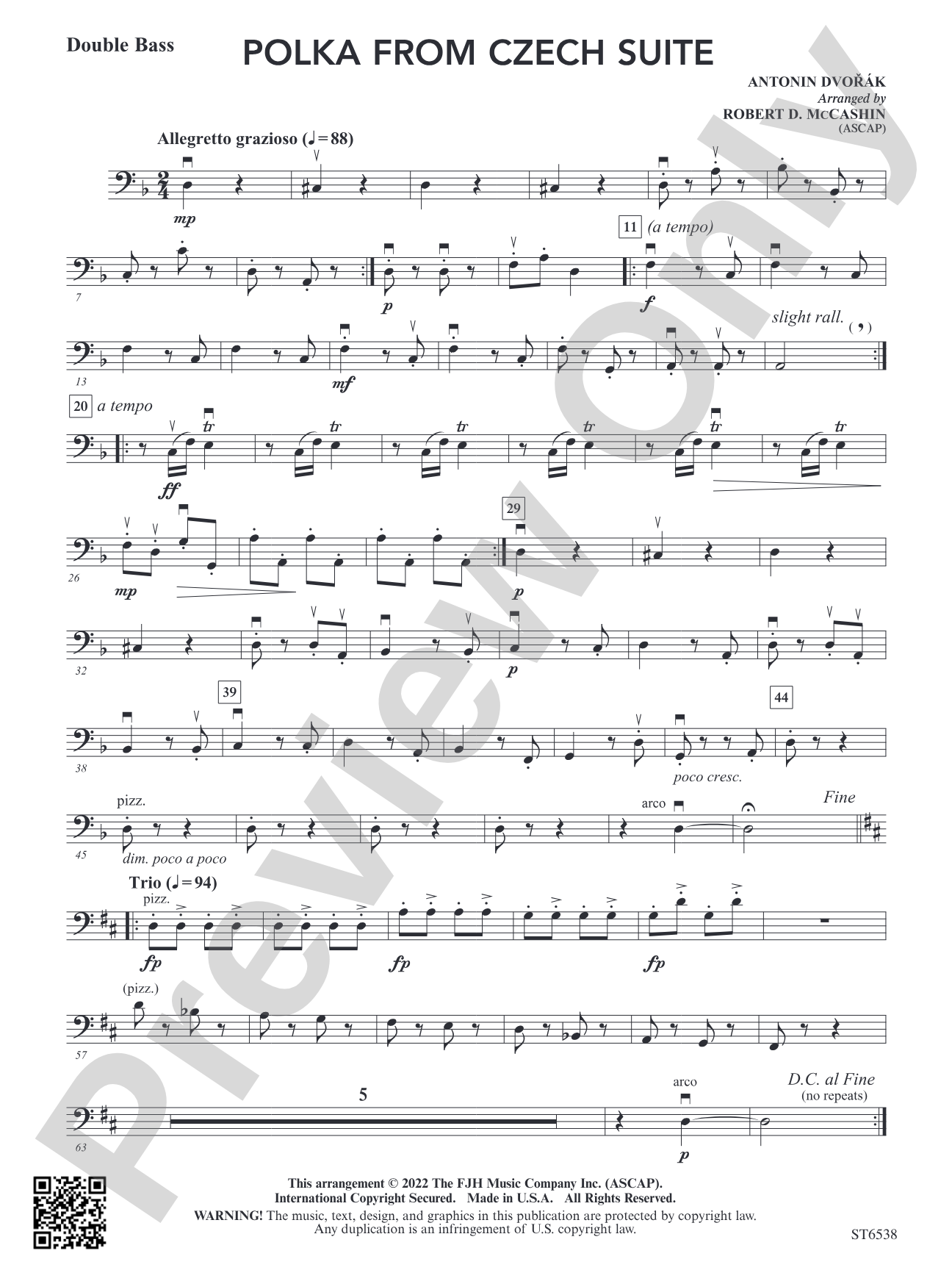

Polka from Czech Suite: Double Bass
By Antonín Dvorák / arr. Robert D. McCashin
Grade: 3
Item: 98-PC-DST6538_SB
$7.00
Pickup currently not available
Description
Drawn from Dvorák's famous Czech Suite, Op. 39, this delightful arrangement perfectly captures the personality of the original while making the piece accessible to medium-level orchestras. Predominantly in a minor key with a festive, short, and lively Trio in the major mode, this work is sure to be enjoyed by all!


Don't just read it, hear it, play along with it, and watch your students grow with it. In MakeMusic Cloud, Polka from Czech Suite: Double Bass comes alive with professional accompaniment, adjustable tempo, and built-in practice tools that turn solo practice into real progress.
Open in the Player
Jump straight in and assign it today.
Start Your Free Trial
Open this title and explore the full library in minutes.
Sample Audio
1
Audio File
--:--
0:00
0:00
Sample Video
Additional Details
Series:
FJH String Orchestra
Publisher:
The FJH Music Company, Inc.
SKU:
98-PC-DST6538_SB
More about this title
About the Composer: Antonín Dvorák
Antonín Dvorák (1841-1904) stands as one of the most performed composers of the Romantic era, known for his gift for memorable melody and his ability to weave folk idioms into concert music. His Czech Suite, Op. 39, exemplifies this mastery—a work that balances the sophisticated forms of European classical tradition with the rhythmic vitality and harmonic color of Czech folk traditions.
Dvorak's influence on music education extends far beyond his symphonies and concertos. His chamber works and orchestral pieces remain central to the repertoire precisely because they offer both accessibility and substance. Teachers and conductors return to works like the Czech Suite again and again because students engage with genuine artistry while developing their musical skills.
Why we love this
McCashin's arrangement respects Dvorák's voice while reshaping the score for the ensemble you actually have in the room. The piece moves quickly enough to hold attention but sits comfortably for Grade 3 players, making it an ideal contest selection when you want to program something substantial without compromising your musicians' ability to execute it well.
What to expect
Festive and spirited, with the character of a village celebration. The minor-key opening carries a gentle drama that shifts suddenly into the radiant optimism of the Trio, creating a satisfying emotional arc in a compact timeframe. The whole work radiates good humor and warmth without sacrificing musical integrity.
Who it's for
String orchestras at the Grade 3 level looking for a piece that plays well in contests while also serving as a polished concert opener or closer. This arrangement works equally well for programs seeking to introduce students to Dvorák's orchestral personality or for conductors building a repertoire of accessible masterworks.
How to get the most out of it
- Honor the distinction between the minor-key sections and the bright major-mode Trio by adjusting dynamics and articulation. The Trio should feel almost like stepping into sunlight after the darker opening material.
- Keep the polka rhythm crisp but not mechanical. Dvorák's rhythmic figures should dance, not march; let your strings feel the pulse naturally rather than forcing it.
- Balance the melodic voice across your violin sections carefully. In passages where the first violins carry the primary line, ensure the seconds provide warm harmonic support without overwhelming the melody.
- Shape the phrase endings with slight breathing room; resist the urge to push through to the next section. Small releases in the strings give the audience time to appreciate Dvorák's turn toward major tonality in the Trio.
How to use it
Program this as a concert opener to set an energetic, approachable tone, or pair it strategically with a slower work to create contrast. For festival and contest settings, it demonstrates your orchestra's ability to handle a recognized masterwork with musical sophistication while remaining within a realistic technical range.
Skills your students will build
- Playing rhythmic coordination in polka meter with accurate articulation
- Balancing melody and accompaniment across violin sections
- Shaping dynamic contrasts between minor and major key areas
- Maintaining rhythmic independence while supporting ensemble pulse
- Executing smooth transitions between contrasting musical sections