
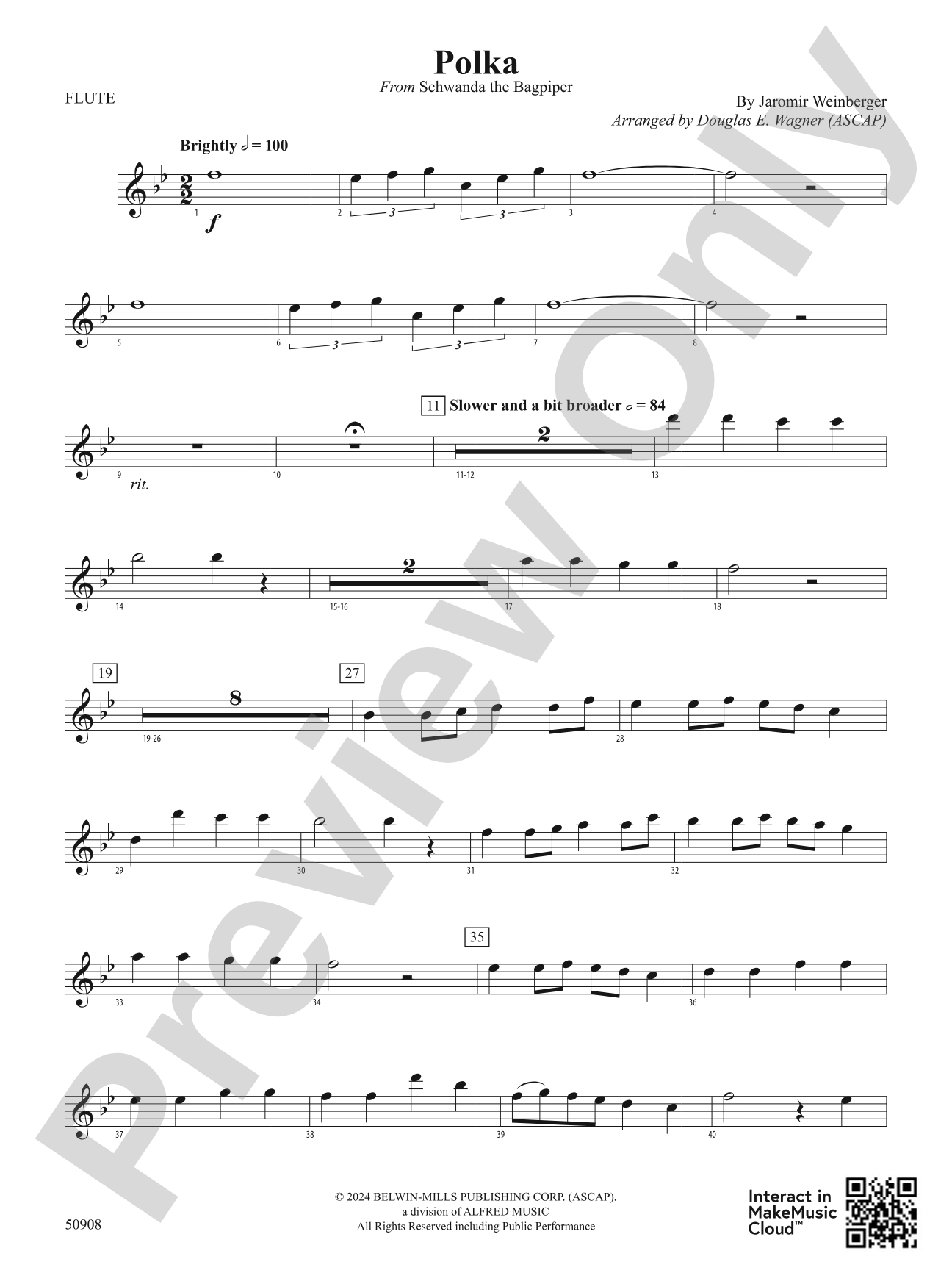

Polka: Flute
From Schwanda the Bagpiper
By Jaromír Weinberger / arr. Douglas E. Wagner
Grade: 2
Item: 00-PC-0019208_F1
$3.00
Pickup currently not available
Description
A true classic of the concert band repertoire, the upper-end transcription of this excerpt from Czech composer Jaromír Weinberger's folk opera Schwanda the Bagpiper has appeared on countless concert programs and contest lists for the past nine decades. At long last, this cheerful work is available in a solid scoring for younger players, expanding its appeal to many more ensembles and audiences. Arranged from the original orchestral score, all parameters of this level have been observed for ease of preparation. (2:00)


Don't just read it, hear it, play along with it, and watch your students grow with it. In MakeMusic Cloud, Polka: Flute comes alive with professional accompaniment, adjustable tempo, and built-in practice tools that turn solo practice into real progress.
Open in the Player
Jump straight in and assign it today.
Start Your Free Trial
Open this title and explore the full library in minutes.
Sample Audio
1
Audio File
--:--
0:00
0:00
Sample Video
Additional Details
Series:
Belwin Young Band
Publisher:
Alfred Music
SKU:
00-PC-0019208_F1
More about this title
About the Composer: Jaromir Weinberger
Jaromír Weinberger (1896-1967) was a Czech composer whose work bridged European folk traditions and concert music. Though he composed operas, ballets, and orchestral works throughout his career, he remains best known in American schools for the Polka from his 1927 folk opera Schwanda the Bagpiper, a piece that has defined generations of young musicians' first encounter with Czech musical idiom.
Weinberger's gift for melody and orchestration made his music immediately accessible without sacrificing musical substance. The Polka's enduring presence in contest and concert programs reflects both its technical craft and its capacity to engage both players and audiences with genuine warmth and character.
Why we love this
This arrangement preserves everything that makes the original Polka irresistible while landing squarely in the hands of Grade 2 ensembles with realistic demands. Wagner's scoring maintains the tune's infectious energy and folk-music charm without requiring technical virtuosity, so your musicians can focus on style, balance, and shaping rather than fighting the notes. At two minutes, it's the ideal closer for any concert or festival performance, leaving audiences smiling.
What to expect
The Polka bubbles with infectious energy and good humor. Its folk-rooted melody dances with a lightness that feels almost effortless, yet the harmonic support gives it genuine substance and warmth. You'll find yourself grinning as it unfolds, and your audience will too.
Who it's for
This arrangement is ideal for Grade 2 concert bands looking for a crowd-pleasing masterwork that doesn't demand superhuman technical chops. It works equally well for ensembles preparing contest repertoire, younger musicians encountering Weinberger for the first time, or any program that needs a joyful, thoroughly musical closer.
How to get the most out of it
- Anchor the rhythmic drive with steady articulation in the lower woodwinds and brass foundation; the Polka's character depends on forward momentum without rushing.
- Shape the melody with gentle dynamic peaks and valleys rather than playing it flat; even at this level, the tune rewards musical phrasing and attention to phrase contour.
- Let the folk-music roots breathe through your interpretation. Listen to recordings of the original orchestration to hear how the theme naturally bounces and lightly breathes between phrases.
- Balance the parts carefully so the main melody cuts through; with full band at this level, it's easy for the supporting voices to overwhelm the tune.
How to use it
This is the perfect concert finale for a festival or spring concert; nothing settles an audience's mood like a cheerful, well-played Polka. It also pairs beautifully on contest programs with more serious Grade 2 works, offering a musical variety that demonstrates your ensemble's range. At two minutes, it fits neatly into any concert timeline without crowding your program.
Skills your students will build
- Stylistic understanding of folk music idioms and light articulation
- Balancing melody against supporting harmonic parts
- Maintaining steady rhythmic pulse in a moderately paced duple meter
- Shaping lyrical lines and understanding phrase structure
- Blending and intonation in an ensemble setting