
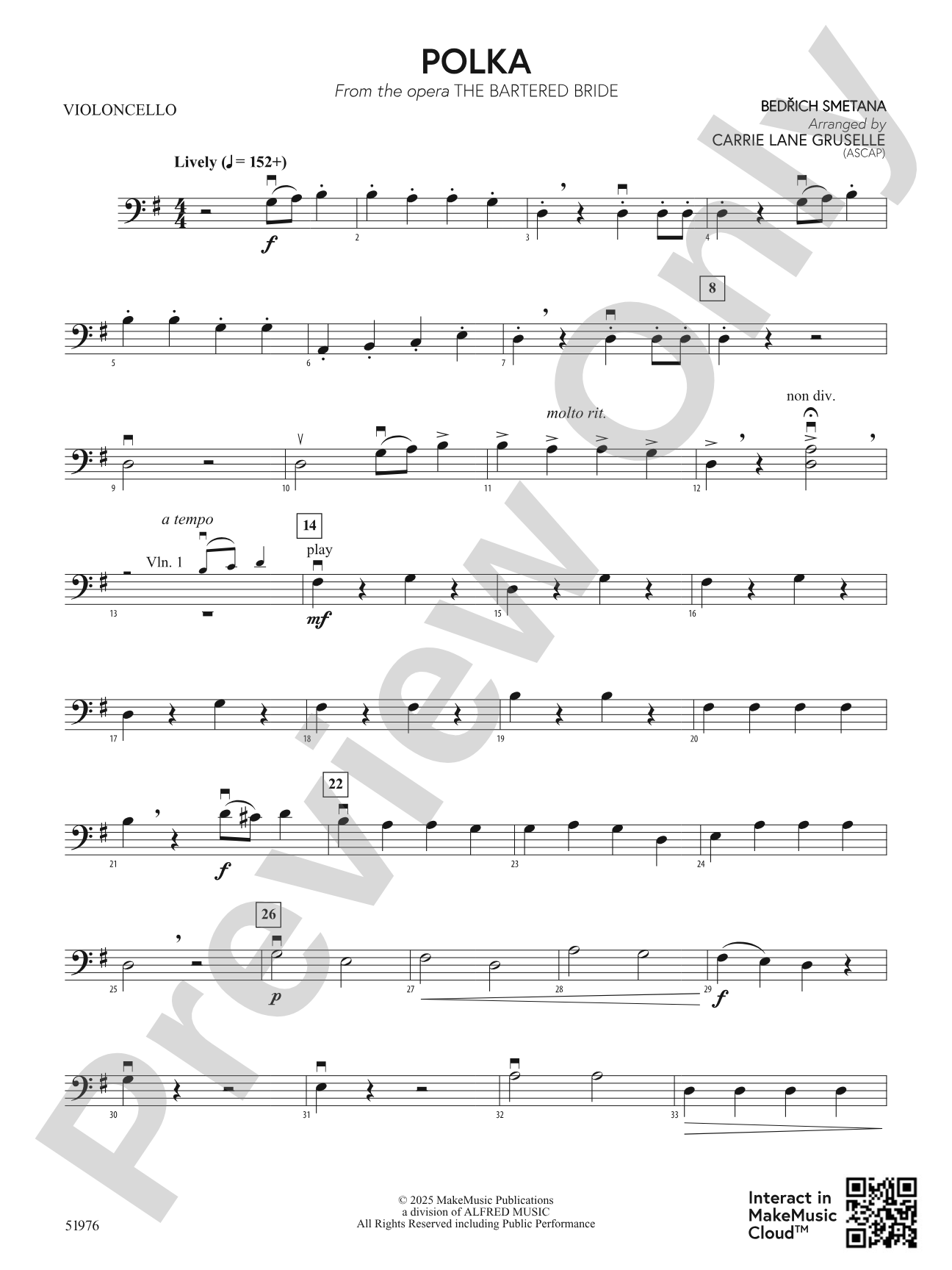

Polka: Cello
From the Opera The Bartered Bride
By Bedrich Smetana / arr. Carrie Lane Gruselle
Grade: 2
Item: 00-PC-0019455_VC1
$3.00
Pickup currently not available
Description
Lighthearted yet chock-full of substance, this fabulous arrangement of the Polka from the opera "The Bartered Bride" brings the comedic dancing and singing in Smetana's masterpiece right into your concert hall. Carrie Lane Gruselle sets this arrangement comfortably in the key of G so students can focus on expanding their scope of expression through various bowing styles while having a joyful experience. (1:40)


Don't just read it, hear it, play along with it, and watch your students grow with it. In MakeMusic Cloud, Polka: Cello comes alive with professional accompaniment, adjustable tempo, and built-in practice tools that turn solo practice into real progress.
Open in the Player
Jump straight in and assign it today.
Start Your Free Trial
Open this title and explore the full library in minutes.
Sample Audio
1
Audio File
--:--
0:00
0:00
Sample Video
Additional Details
Series:
MakeMusic Intermediate Strings
Publisher:
MakeMusic Publications
SKU:
00-PC-0019455_VC1
More about this title
About the Composer: Bedrich Smetana
Bedrich Smetana (1824-1884) stands as the founder of Czech national music. His operas and symphonic poems drew directly from Czech folk traditions, language, and landscape, establishing a musical voice distinct from the German and Italian traditions that dominated European concert halls. The Bartered Bride, his most celebrated opera, remains a cornerstone of opera repertoire worldwide, celebrated for its infectious melodies and vivid orchestration.
Smetana's influence on music education extends far beyond his lifetime. Teachers have long recognized that his works offer students immediate access to genuine dramatic storytelling through music, memorable melodic lines that sing naturally on any instrument, and the opportunity to engage with nationalist classical music on accessible terms. His ability to blend folk idiom with sophisticated harmony makes his music an ideal entry point for young musicians developing both technical skill and musical maturity.
Why we love this
Carrie Lane Gruselle's arrangement captures all the theatrical energy and tunefulness of Smetana's original while building genuine musicianship. The key of G eliminates transposition obstacles, letting students concentrate entirely on the expressive demands of the piece: varying bow speed, exploring dynamics, and shaping phrasing rather than wrestling with fingering logistics. This is a piece that sounds sophisticated and feels celebratory to play.
What to expect
A cheerful village celebration bursts onto the stage. The orchestra dances through sprightly rhythms and soaring melodies with the infectious energy of Smetana's comic opera, inviting audiences to smile while the musicians themselves experience the joy of bringing a beloved masterwork to life.
Who it's for
String orchestras at Grade 2 level who are ready to move beyond fundamental technique into genuine interpretive work. This arrangement works well for ensembles developing bow control and sectional independence while playing repertoire that feels musically substantial rather than purely pedagogical.
How to get the most out of it
- Establish clear bow direction across the section before rehearsal begins. Mark bow changes in the parts so violins, violas, and cellos move as a unified ensemble and the articulation speaks with precision.
- Shape the melodic line with dynamic contrast. Bring the main theme forward in the first violins while adjusting the accompaniment underneath; the polka's charm depends on hearing the tune clearly.
- Balance tempo against the rhythmic character. The piece should dance without rushing; work for a steady, springy pulse that lets the syncopation land cleanly rather than scrambling.
- Use the full range of bow to bring character to the lighter sections. Bouncing bow strokes and staccato passages benefit from crisp articulation that reflects the comedic spirit of the original opera.
How to use it
Program this after a season's worth of technique building to showcase what students have gained in expressive control and ensemble coordination. The comedic character and strong melodic hooks make it an excellent choice for family or community concerts where you want to bridge the gap between entertainment and artistry. At 1:40, it fits naturally between longer works or serves as a confident opener.
Skills your students will build
- Varied bowing styles (sustained, bounced, staccato) in a single piece
- Dynamic shaping and phrasing within a clear musical narrative
- Sectional balance and blend while maintaining individual line independence
- Rhythmic precision in syncopated and syncopated patterns
- Interpretation of style and character from an operatic source