
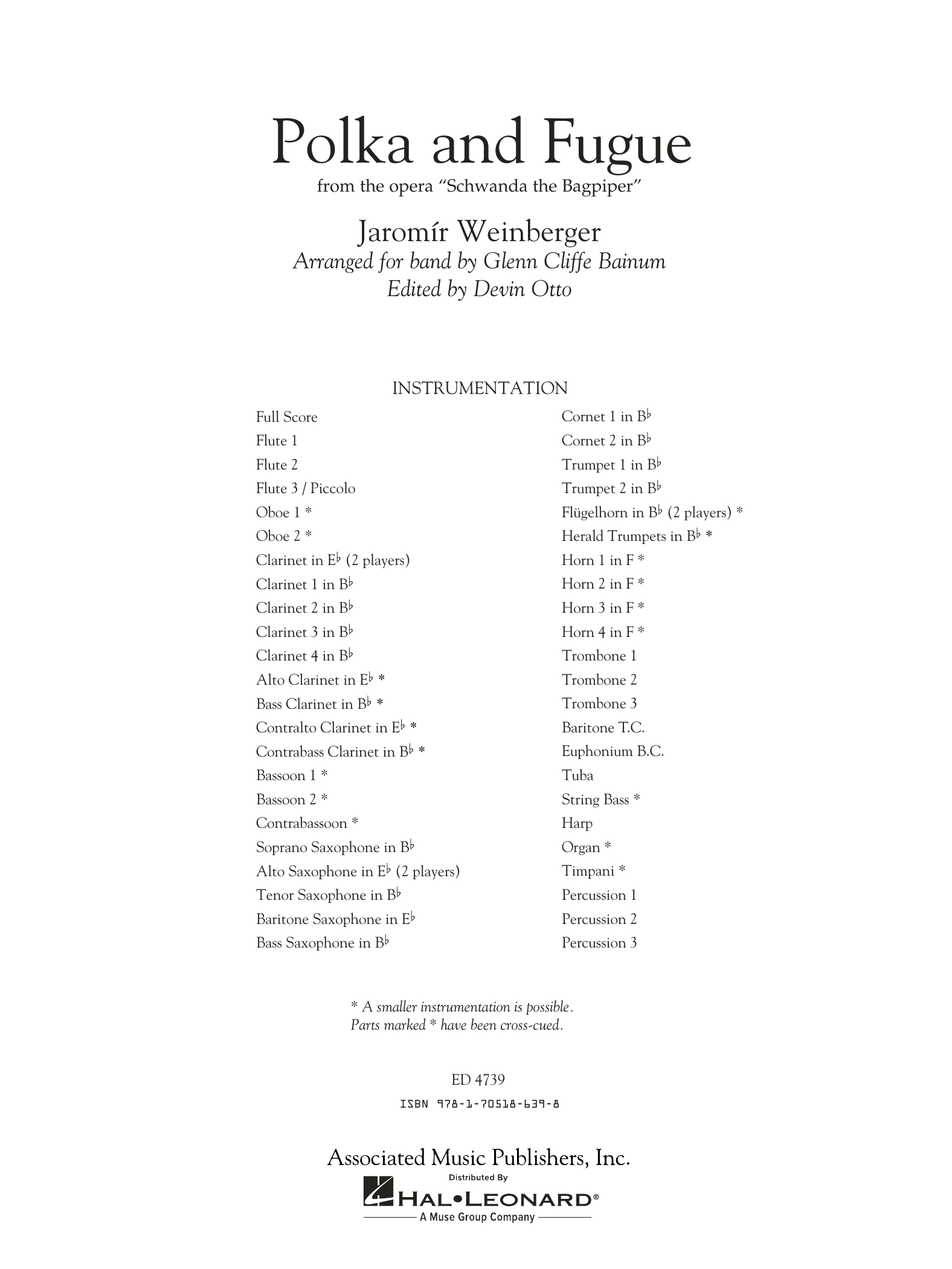

Polka And Fugue (from Schwanda, the Bagpiper) (arr. Bainum): Concert Band Conductor Score & Parts
By Jaromir Weinberger / Arranged by Glenn Cliffe Bainum / Edited by Devin Otto
Grade: 5
Item: 35-PK01728989
$115.00
Pickup currently not available
Buy Extra Parts (Digital PDF Download)
Parts Added to Cart!
Description
Although Weinberger's full opera "Schwanda, the Bagpiper" is rarely staged, the "Polka Fugue" continues to be played on the concert stage. In particular, the wind band transcription by Glenn Cliffe Bainum remains an important staple in the repertoire. This critical edition has been carefully researched and includes a meticulously created new full score along with background notes and historical information.


Polka And Fugue (from Schwanda, the Bagpiper) (arr. Bainum): Concert Band Conductor Score & Parts isn't in MakeMusic Cloud just yet...but it could be. Let us know you'd like to see it, and you'll help shape what comes next. In the meantime, start a free trial and dive into thousands of interactive titles your students can play along with today.
Request This Title
Tell us you want it.
Start Your Free Trial
Explore everything that's ready to play right now.
Sample Audio
No sample audio found.
Sample Video
No sample videos found.
Additional Details
Publisher:
Hal Leonard
SKU:
35-PK01728989
More about this title
About the Composer: Jaromir Weinberger
Jaromir Weinberger (1896-1967) was a Czech composer whose operatic output earned him international recognition during the early twentieth century. His opera "Schwanda, the Bagpiper" premiered in 1927 and became one of the most frequently performed operas of that era, introducing audiences across Europe and America to his gift for memorable melody and orchestral color.
Though Weinberger's larger works have faded from regular performance, the "Polka Fugue" from Schwanda endures as a concert favorite. The piece exemplifies his ability to blend folk idioms with sophisticated compositional technique, creating music that engages performers and audiences alike. Glenn Cliffe Bainum's transcription for wind band preserves the work's essential character while tailoring it to the strengths of the concert band medium.
Why we love this
This work delivers the rare combination of melodic memorability and genuine compositional substance that makes audiences eager for an encore. Directors choose this piece because it builds instrumental technique without sounding like a study, and the familiar tune guarantees audience engagement while the fugal writing keeps players engaged through multiple rehearsals.
What to expect
The polka section sparkles with infectious good humor and folk character, full of rhythmic lift and lighthearted energy. When the fugue arrives, the texture deepens immediately; Weinberger's contrapuntal writing feels organic rather than imposed, and the inevitable return to the polka offers both musical and emotional resolution.
Who it's for
Band directors seeking repertoire that satisfies both concert programming needs and genuine pedagogical value will find this piece indispensable. Upper-level high school and college bands benefit from the counterpoint study and rhythmic sophistication, while the accessible melodic content means younger ensembles can perform it successfully with focused preparation.
How to get the most out of it
- Lock the polka section's rhythmic pocket early. The charm relies on a relaxed, buoyant pulse rather than metronomic precision; find that groove in section rehearsals before bringing the full band together.
- Balance the fugal entrances with care for both clarity and blend. Weinberger's counterpoint doesn't demand cutting soloistic statement but rather asks each voice to maintain its line while listening to surrounding parts.
- Shape the transition between polka and fugue as a genuine shift in character, not merely a tempo change. This moment rewards deliberate conducting and player awareness of the compositional architecture.
- Let the closing reprise of the polka breathe slightly. Resistance to rushing here gives the familiar melody fresh impact after the intellectual rigor of the fugue.
How to use it
Program this as a concert opener or midpoint piece to shift the energy and mood of your performance. The work also serves admirably in educational contexts where you want to demonstrate contrasting compositional forms within a single, engaging work that doesn't feel like a textbook exercise.
Skills your students will build
- Maintaining rhythmic independence in syncopated polka figures
- Following contrapuntal lines while maintaining ensemble blend
- Balancing character and style between two distinct musical sections
- Executing clean articulation in fast-moving melodic passages
- Listening and responding to textural changes signaled by the conductor