
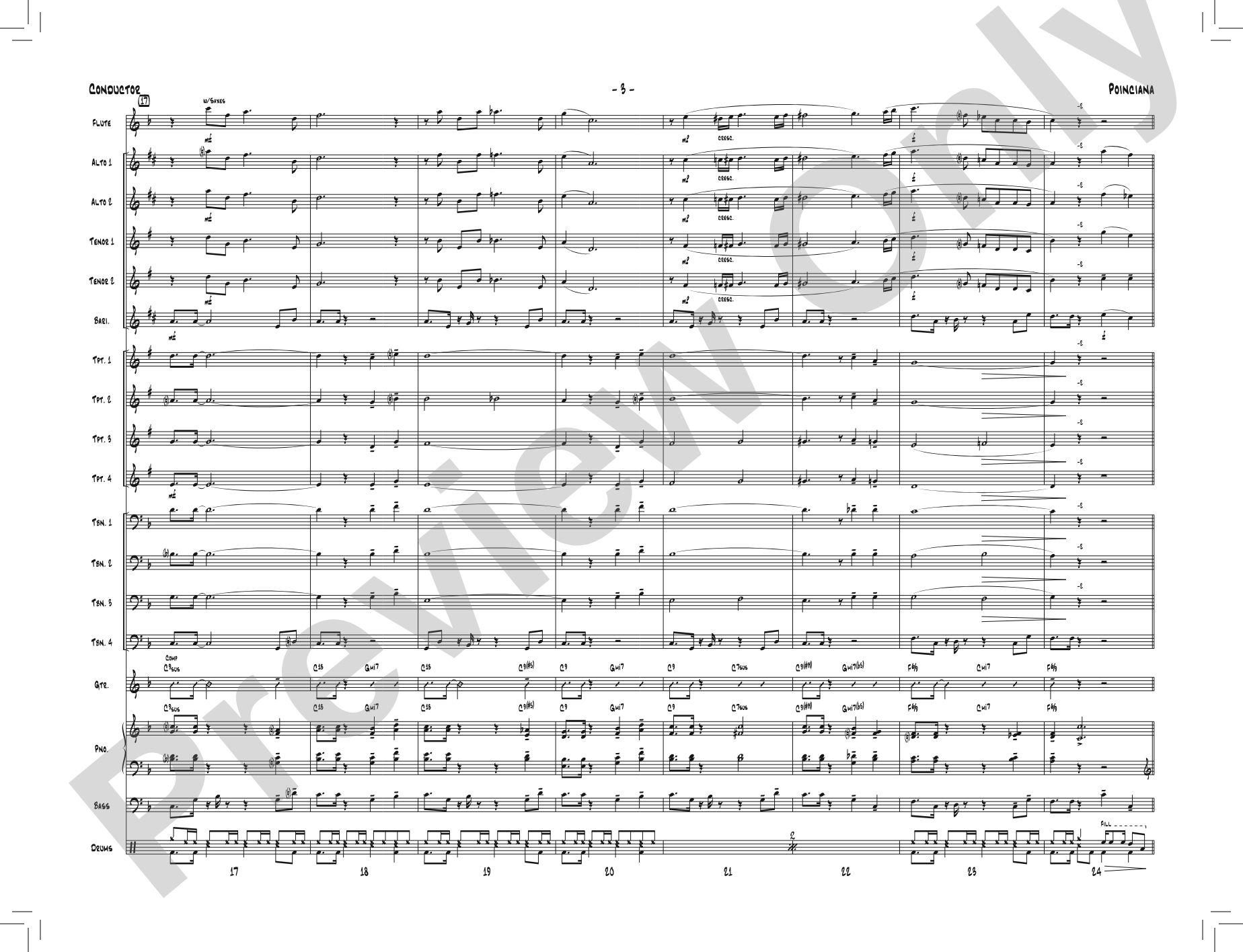
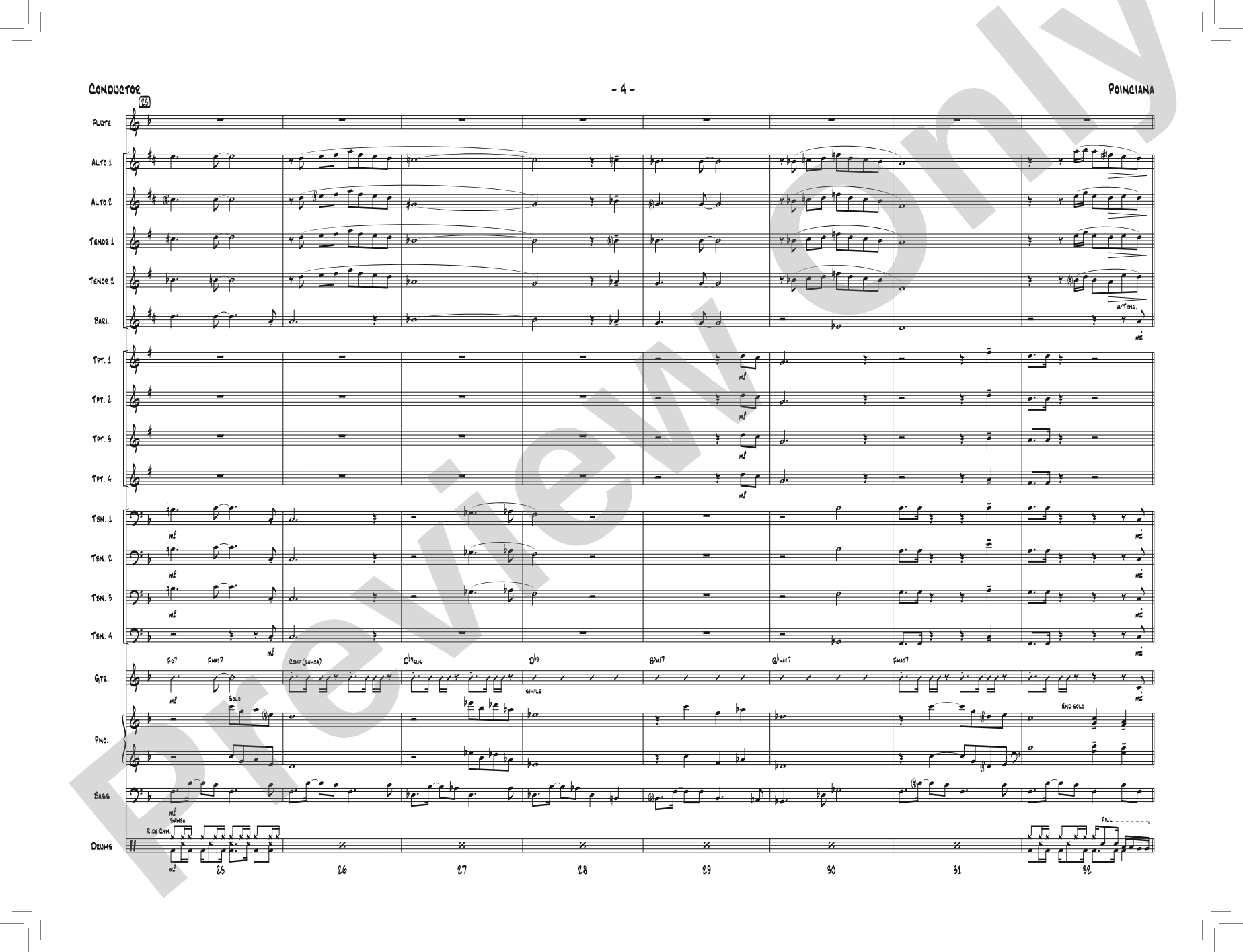
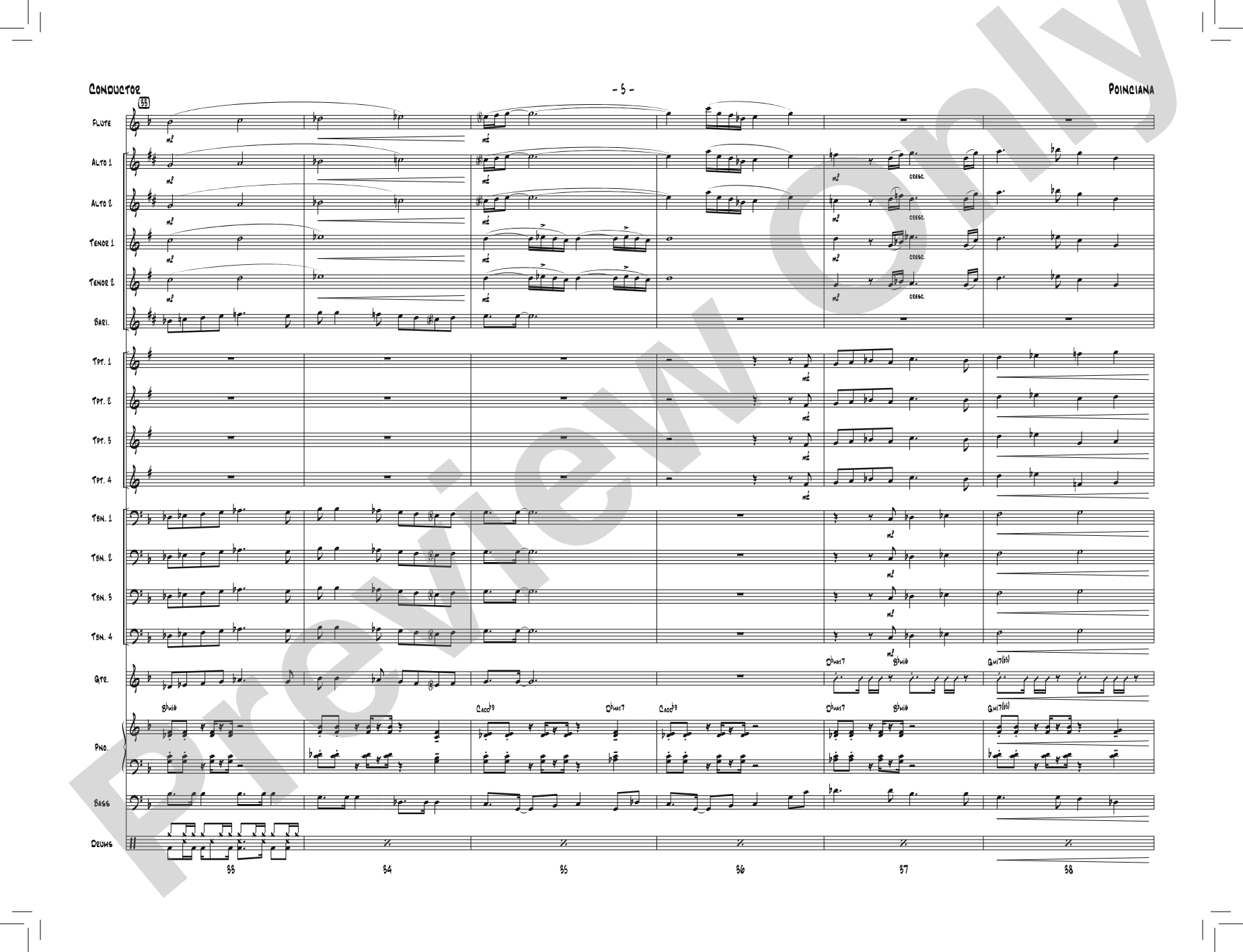
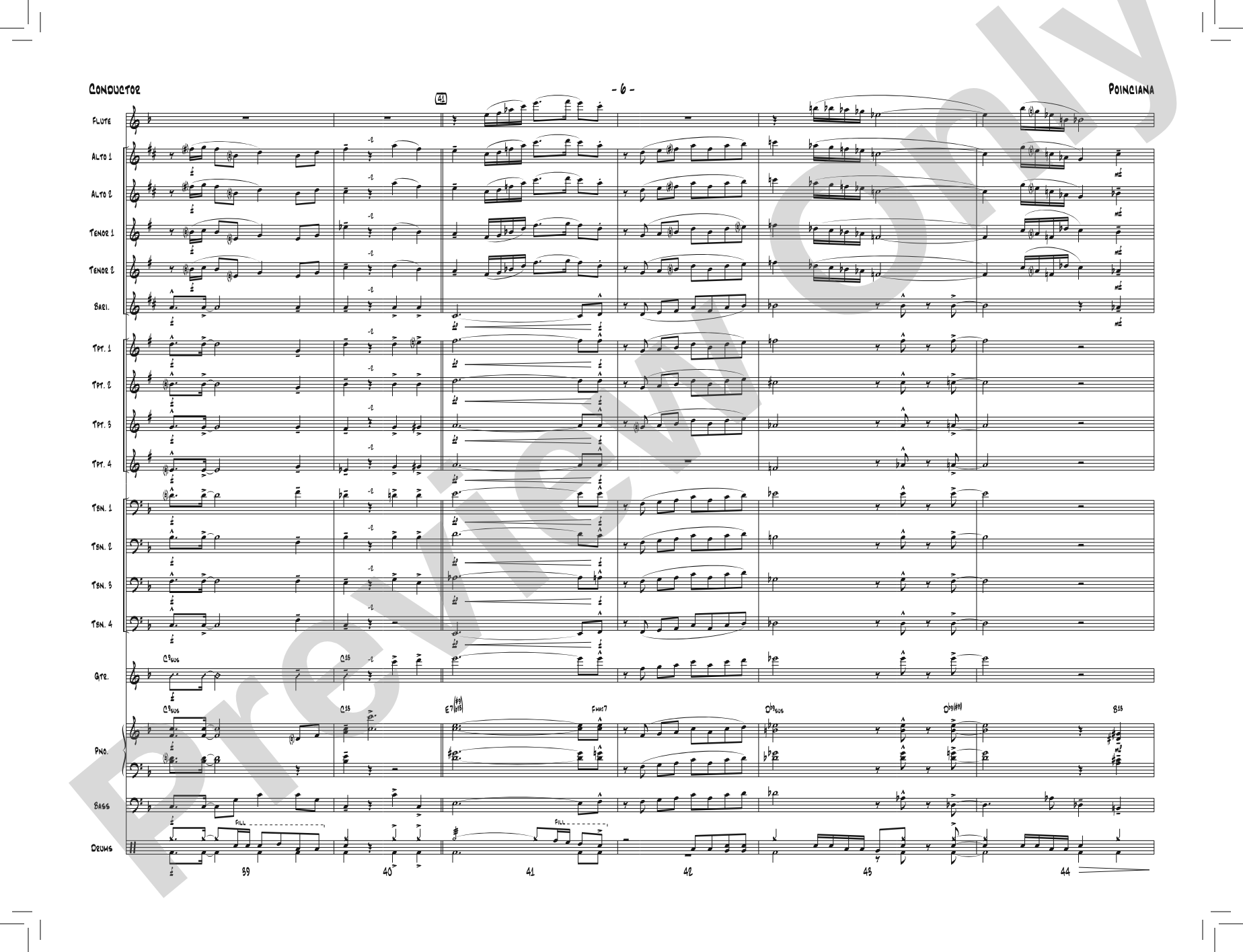
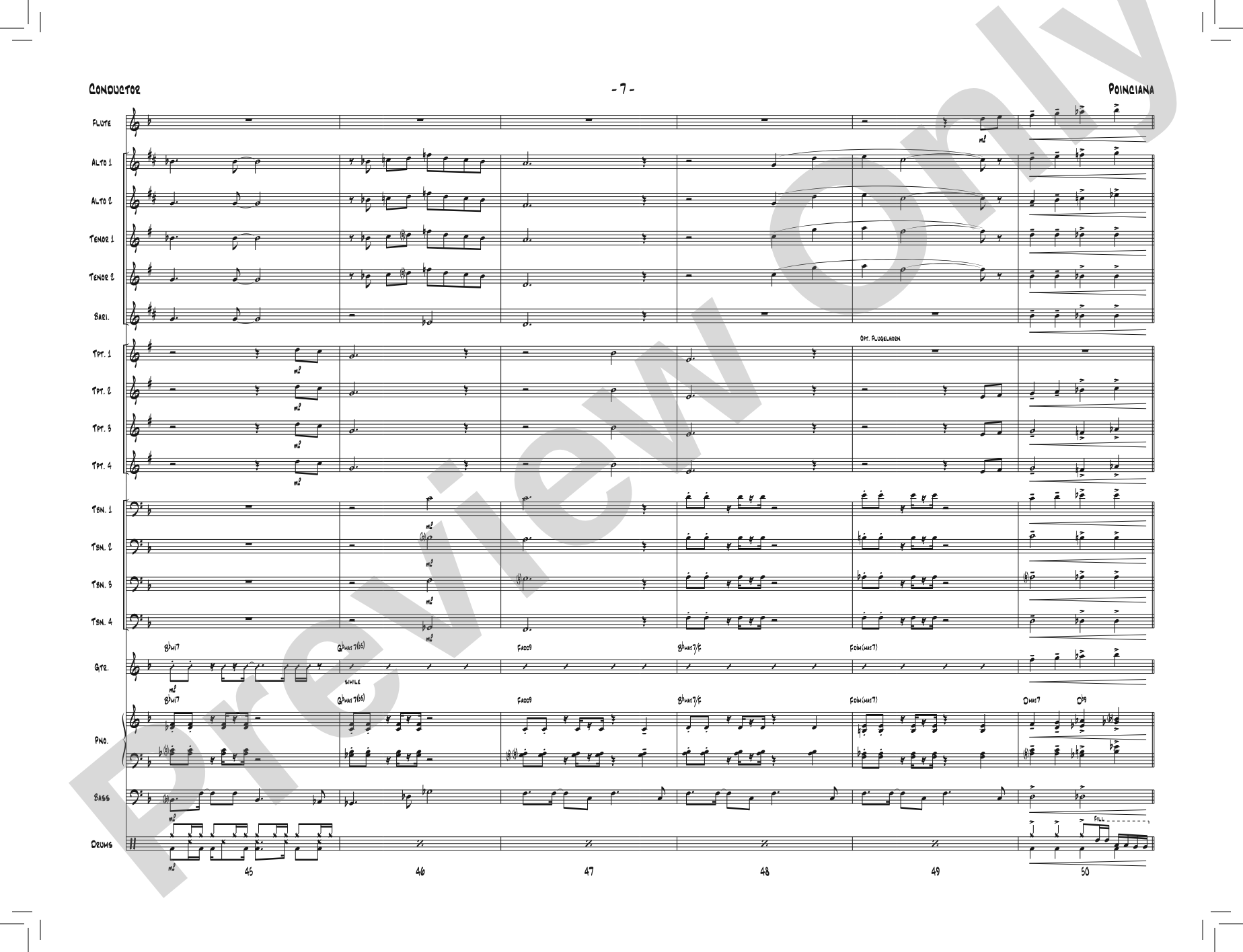
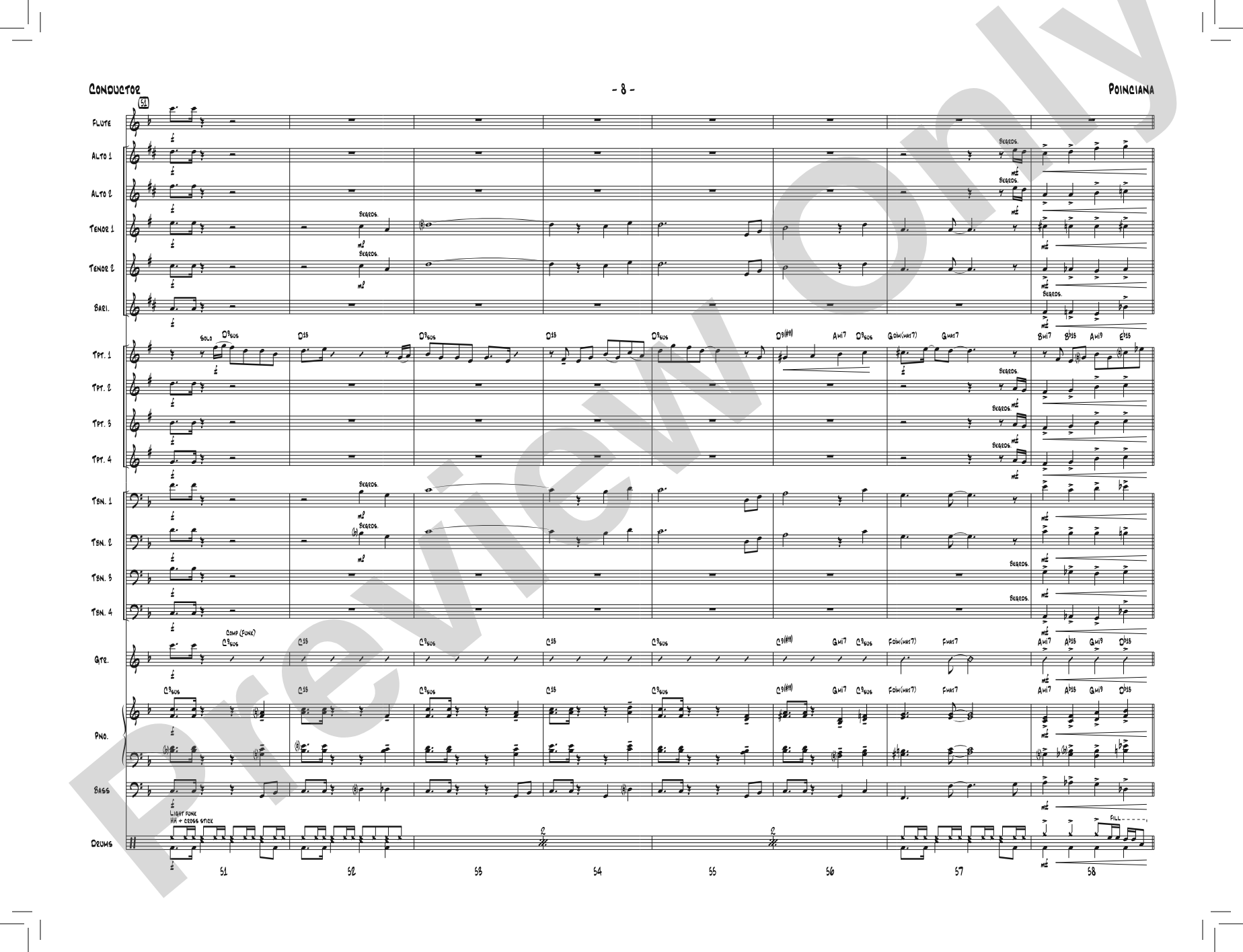
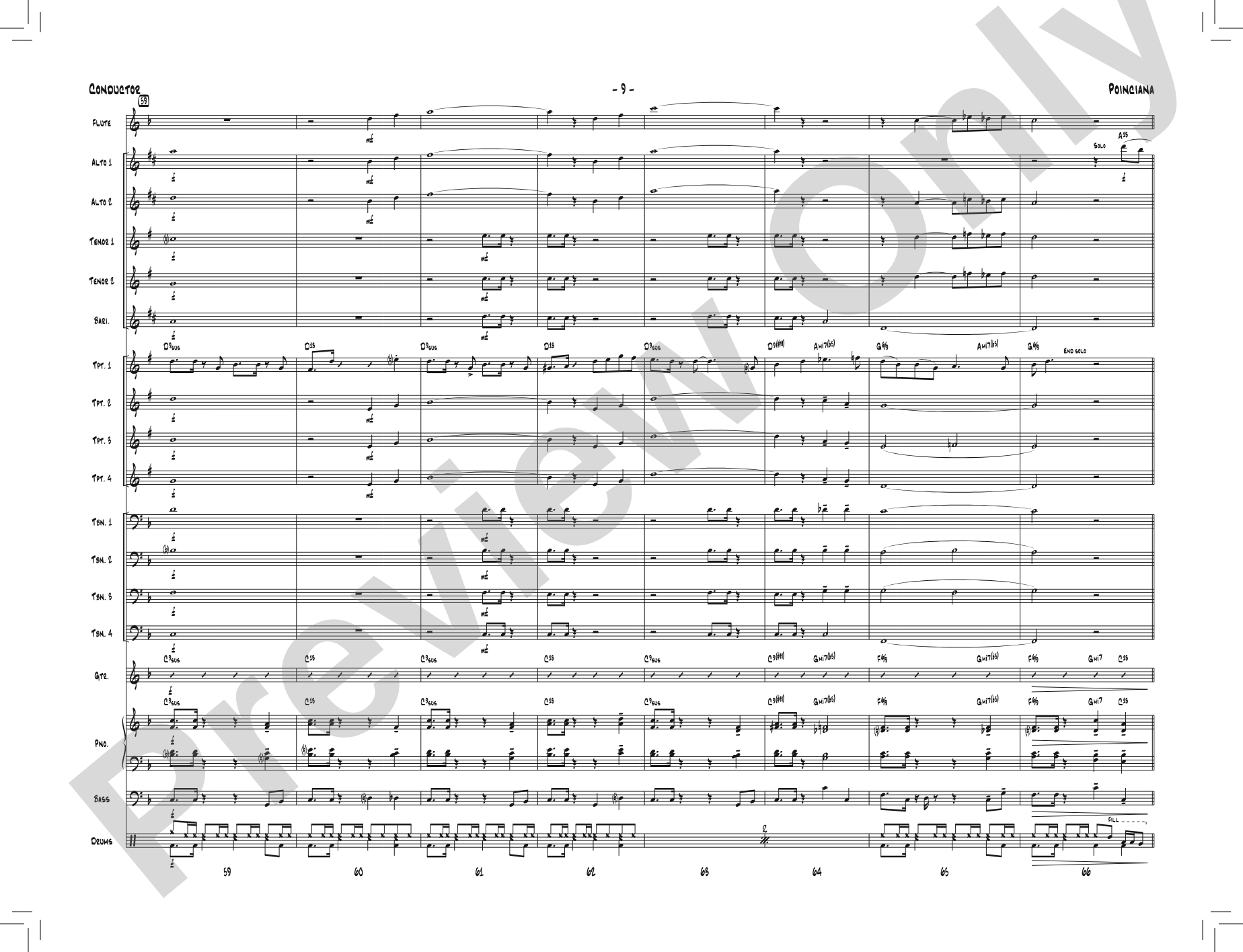
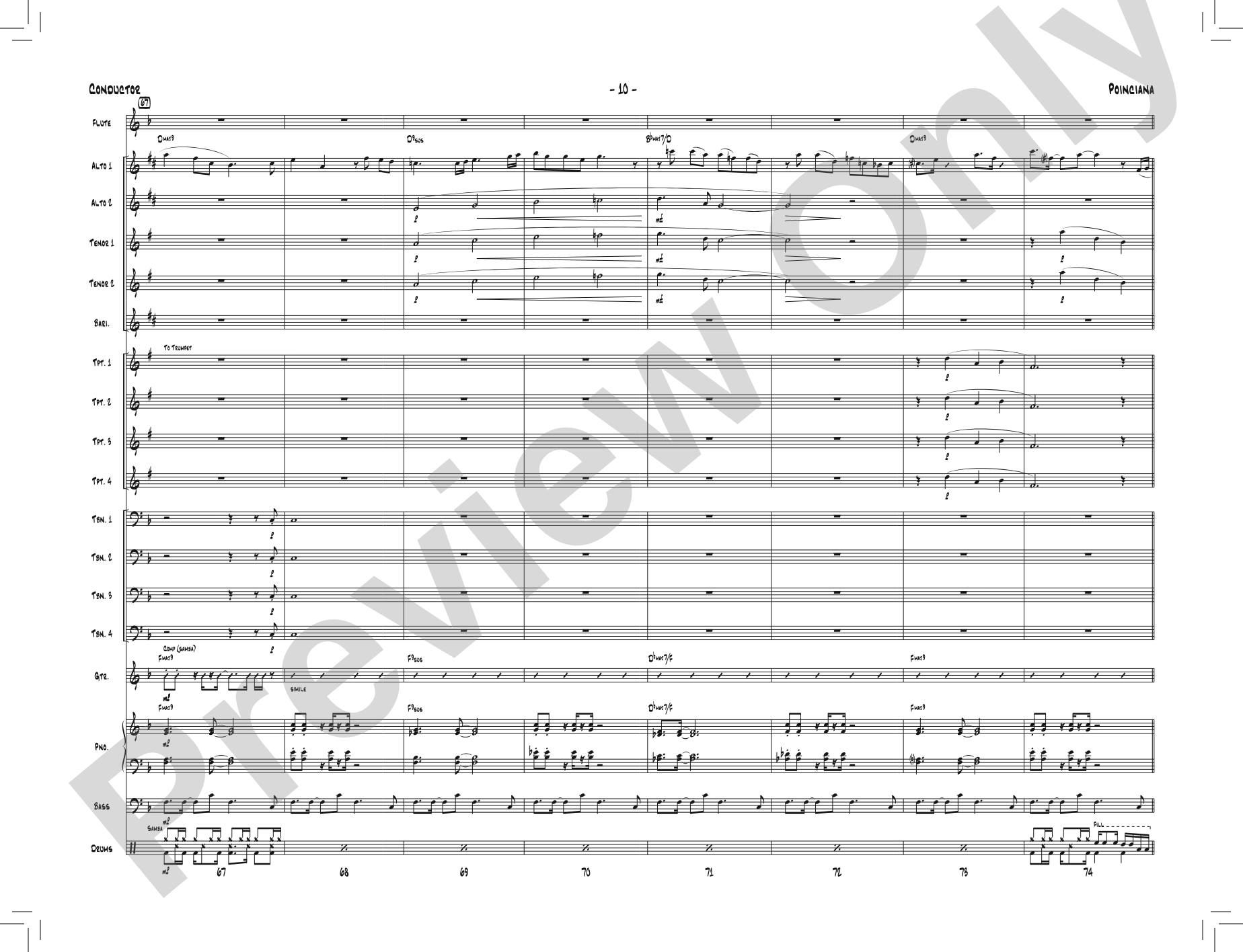
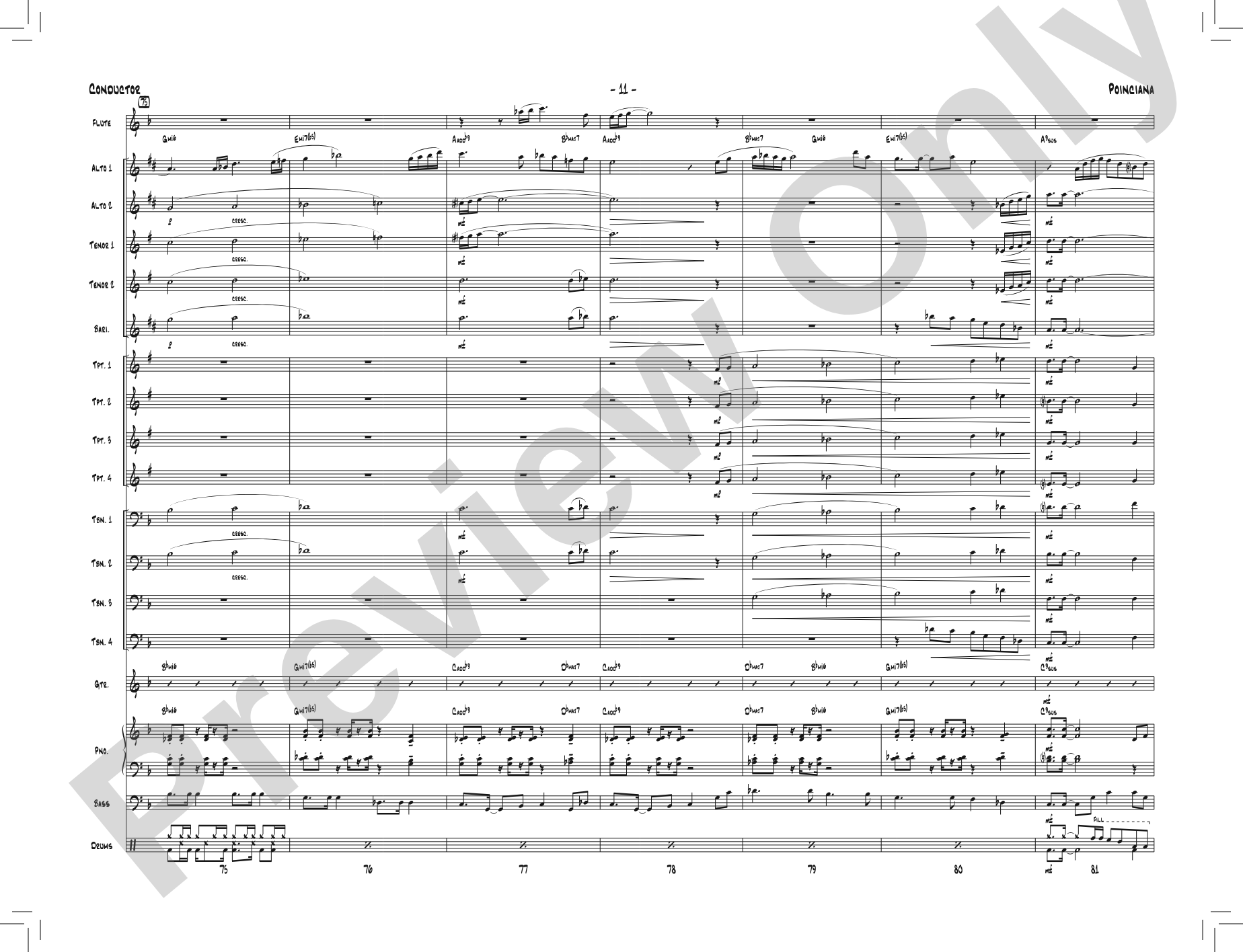
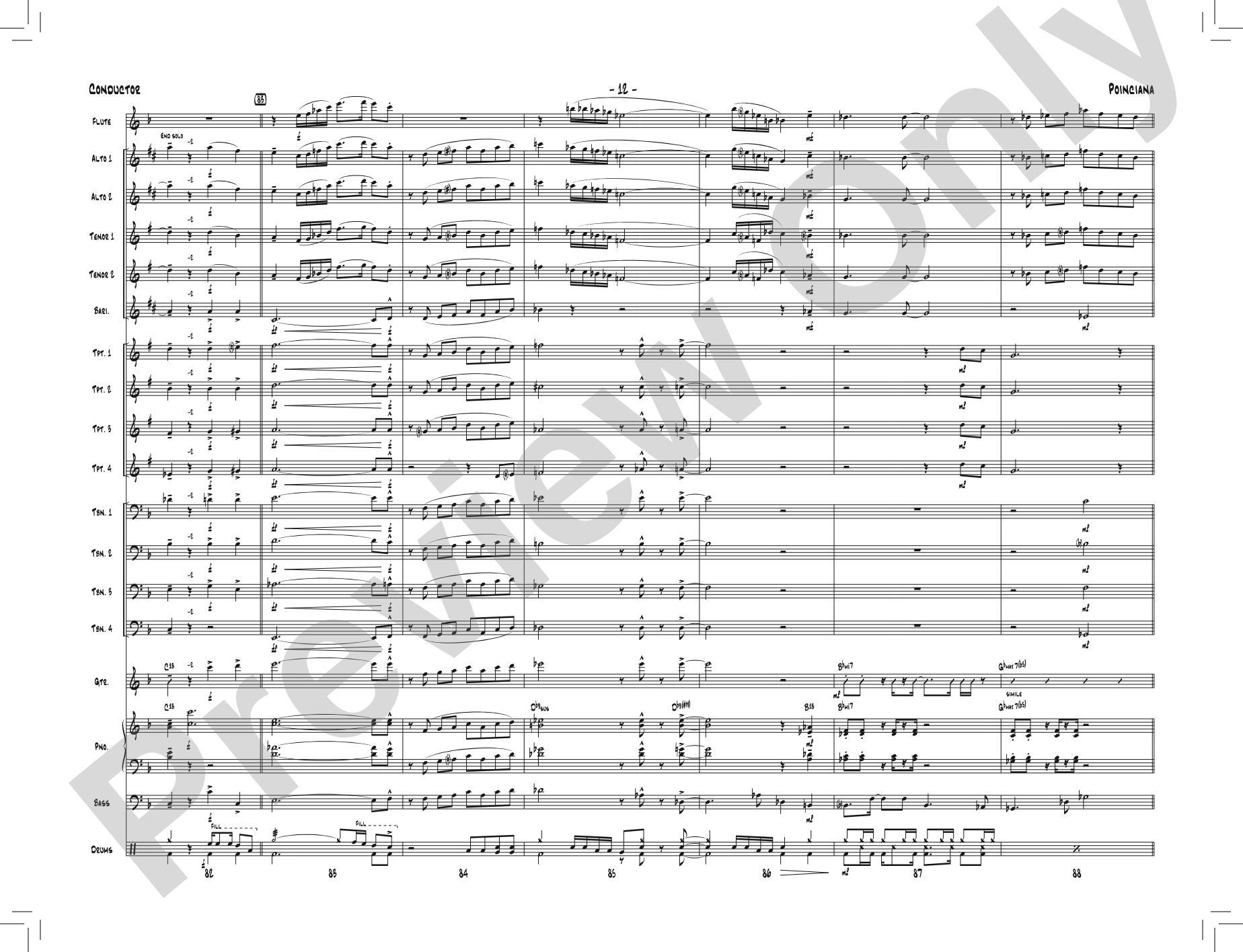
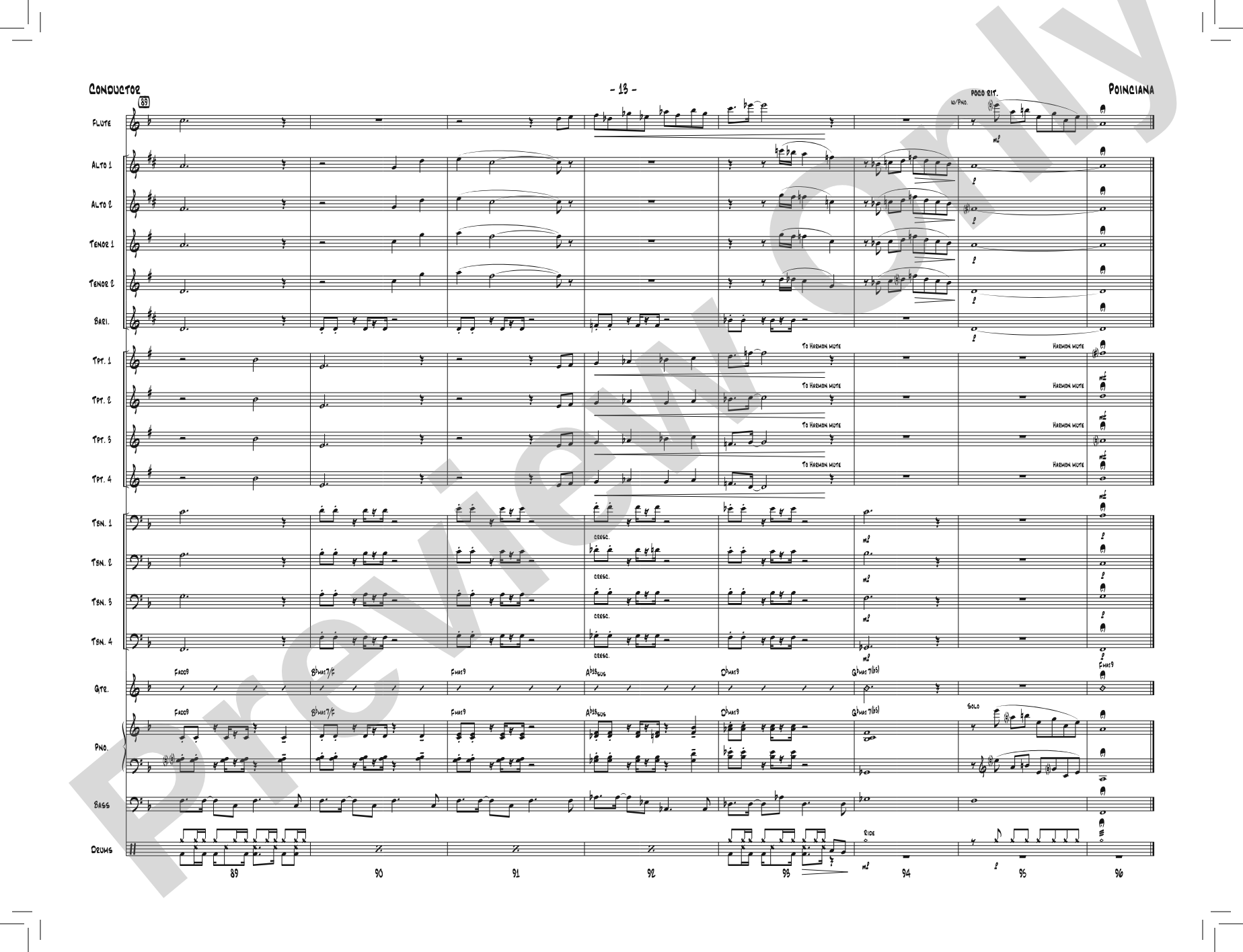

Poinciana: Jazz Ensemble Conductor Score & Parts
Words by Buddy Bernier, music by Nat Simon / arr. Mike Dana
Grade: 2.5
Item: 00-PK-0008552

$48.00
One moment…
Description
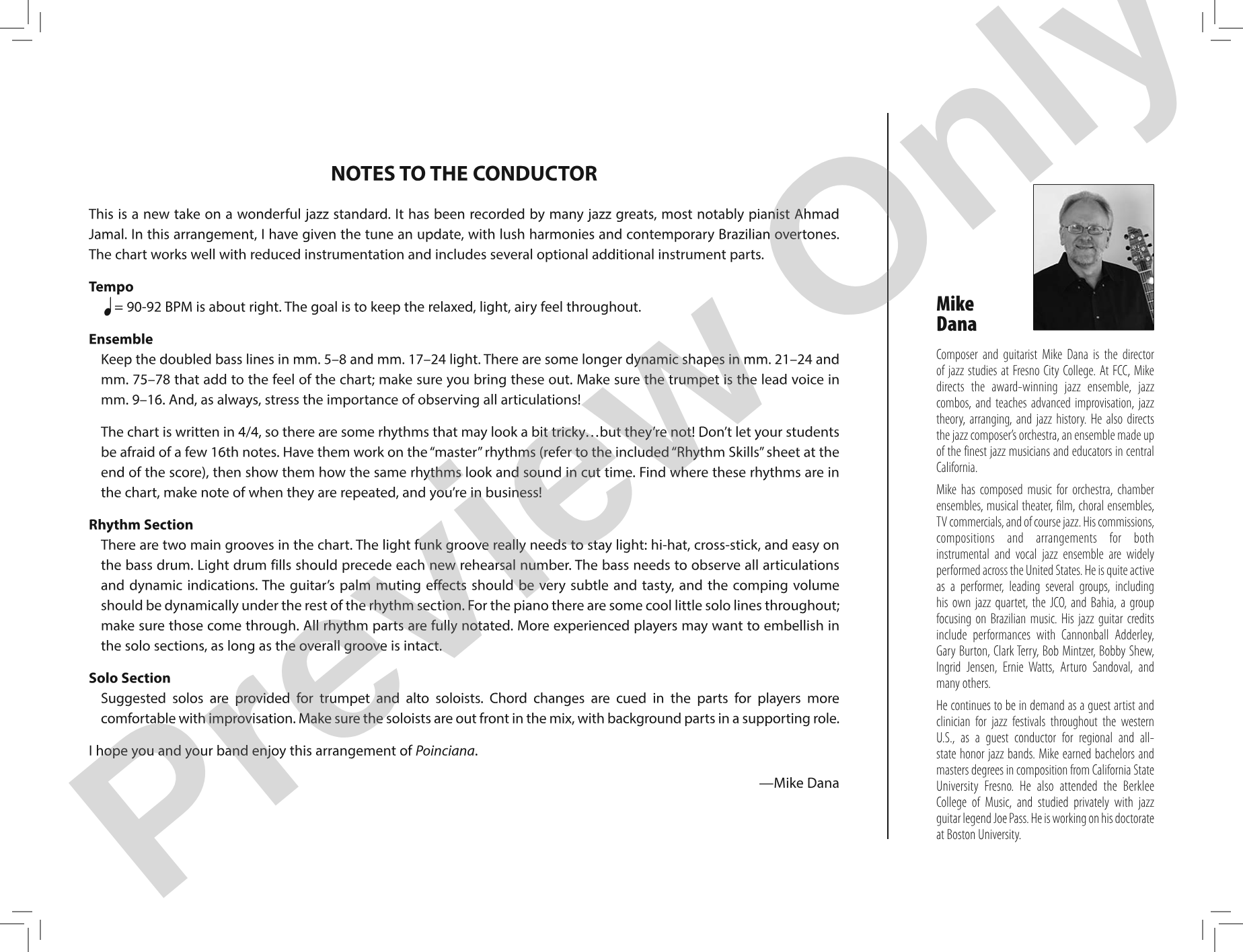
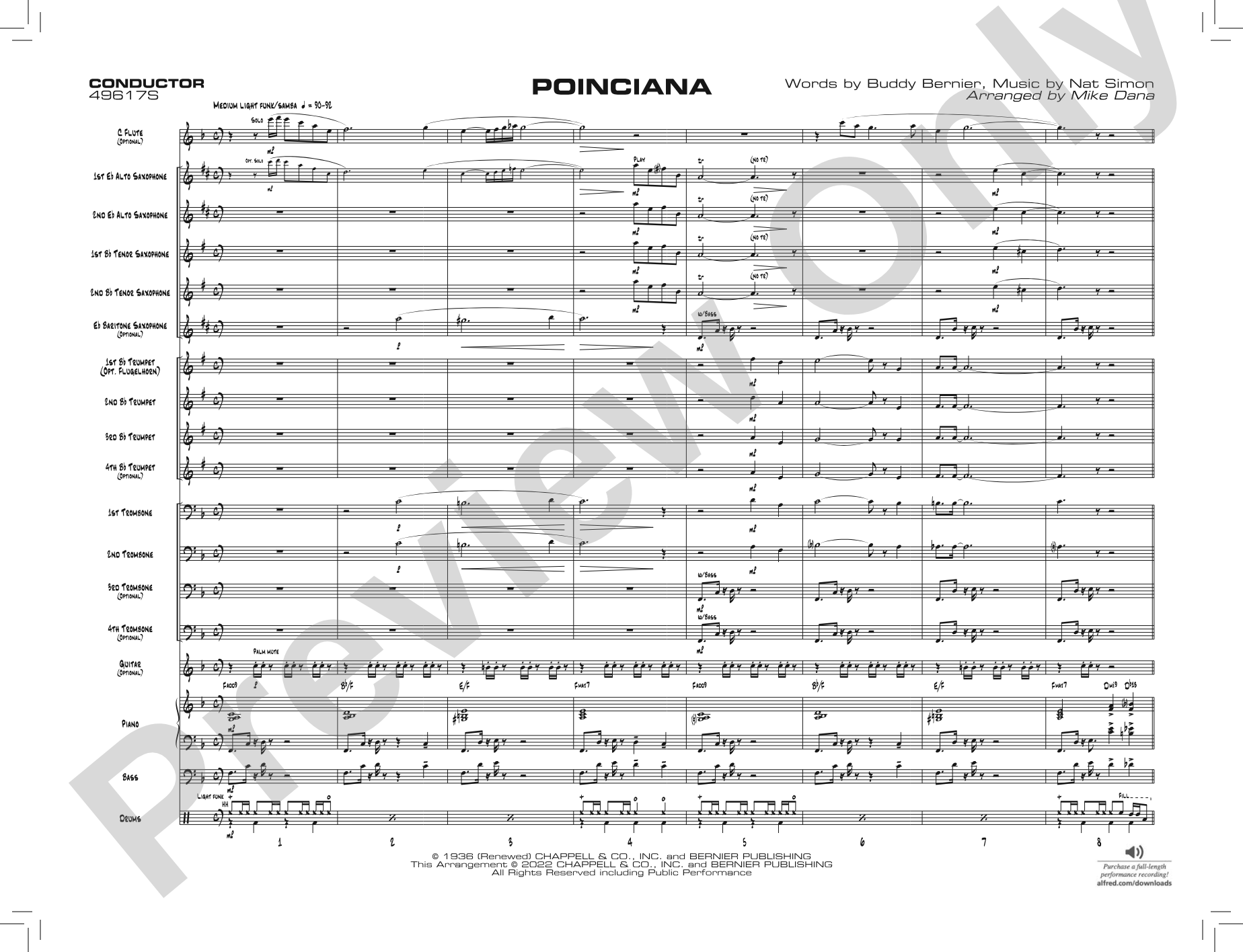
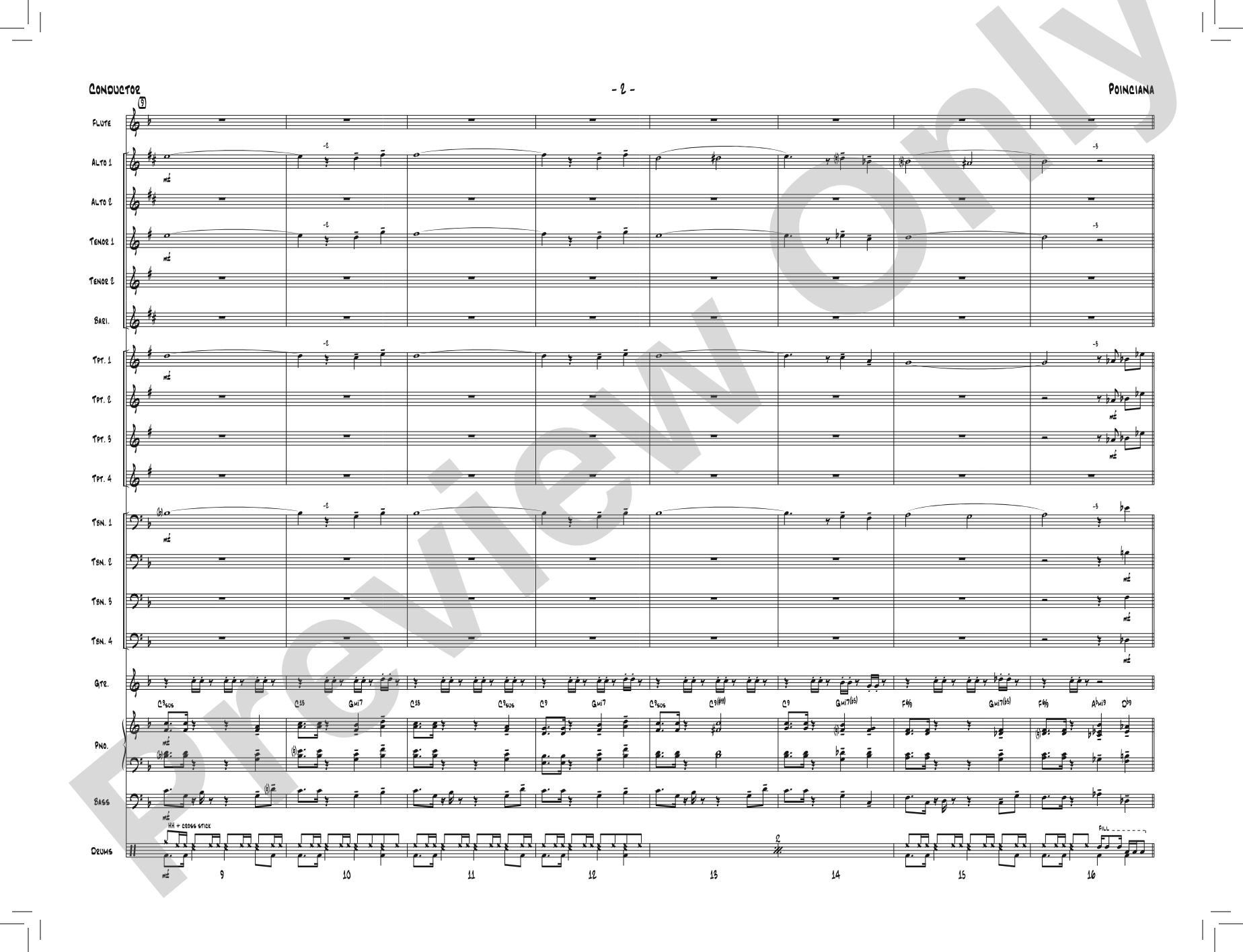
This jazz standard is treated with a light and sorta funky groove played around 92 BPM. Written-out solos provided for trumpet 1 (optional flugelhorn) and alto 1 with some very nice ensemble sections. Trumpet 1 range is to written G on top of the staff and includes optional vibes. Poinciana arranged by Mike Dana is a tasty chart! (4:22)


Don't just read it, hear it, play along with it, and watch your students grow with it. In MakeMusic Cloud, Poinciana: Jazz Ensemble Conductor Score & Parts comes alive with professional accompaniment, adjustable tempo, and built-in practice tools that turn solo practice into real progress.
Open in the Player
Jump straight in and assign it today.
Start Your Free Trial
Open this title and explore the full library in minutes.
Sample Audio
1
Audio File
--:--
0:00
0:00
Sample Video
Additional Details
Series:
Young Jazz Ensemble
Publisher:
Alfred Music
SKU:
00-PK-0008552
More about this title
About the Composer: Nat Simon
Nat Simon composed Poinciana in 1936, creating one of jazz's most enduring and adaptable standards. The melody's elegant simplicity and harmonic richness have made it a favorite across decades of jazz musicians, from big band recordings to small combo interpretations.
Why we love this
Mike Dana's arrangement captures the essence of Poinciana while keeping the ensemble engaged throughout. The written-out solos for trumpet 1 and alto 1 remove the pressure of improvisation at this level, letting students focus on tone, phrasing, and groove, while the optional vibes add textural sophistication without requiring extended instrumentation.
What to expect
Poinciana swings with understated cool. The light, funky groove invites relaxation rather than tension, letting the melody shine through while the ensemble finds its collective voice in the supporting figures.
Who it's for
Jazz ensemble directors working with Grade 2.5 players who want a recognizable standard that doesn't demand improvisation skills. This chart works equally well for festival preparation or concert programming when you need something swinging and accessible.
How to get the most out of it
- Lock the groove with your rhythm section first. The 92 BPM funky feel depends on the drummer and bass player finding that pocket together before the full ensemble enters.
- Balance the trumpet 1 solo carefully so it sits comfortably over the ensemble sections without overwhelming them. This is about conversational trading, not domination.
- Shape the alto 1 solo with clear dynamics and phrasing rather than playing it straight through. Treat written passages like you would an improvised line: with intention and breathing.
- If you include vibes, let them breathe in the ensemble sections. They work best as a color underneath rather than fighting for attention with the horns.
How to use it
This fits naturally into a jazz-focused concert or festival set where you want something sophisticated but unpretentious. At 4:22, it pairs well with a quicker bebop-style arrangement or a slower blues, anchoring your program with a tune that audiences recognize and players enjoy learning.
Skills your students will build
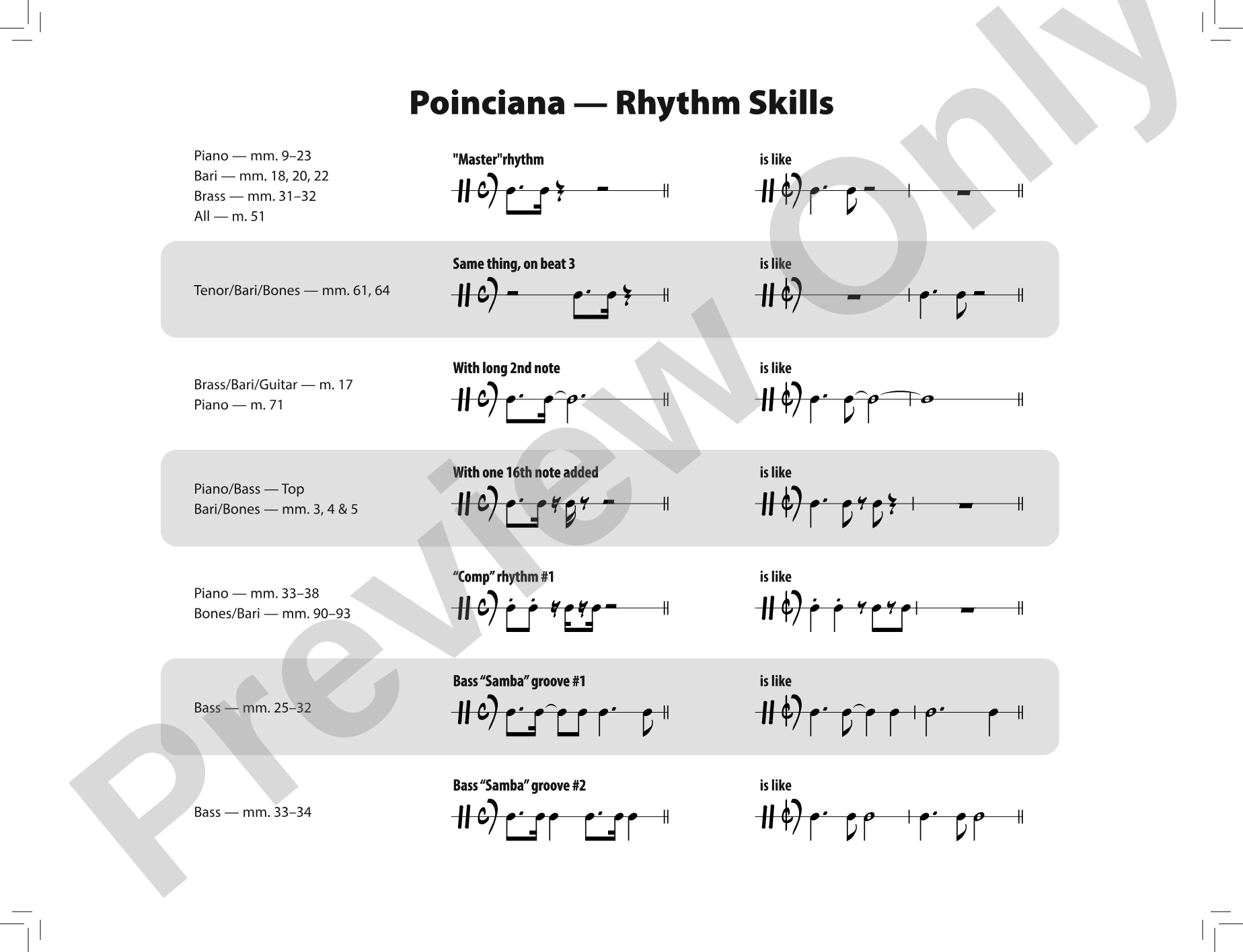
- Interpreting written jazz solos with swing feel and expressive phrasing
- Locking in a consistent groove with the rhythm section
- Balancing solo and ensemble voices within a jazz texture
- Reading jazz notation and chord symbols
- Understanding the relationship between melody and harmonic accompaniment in standards