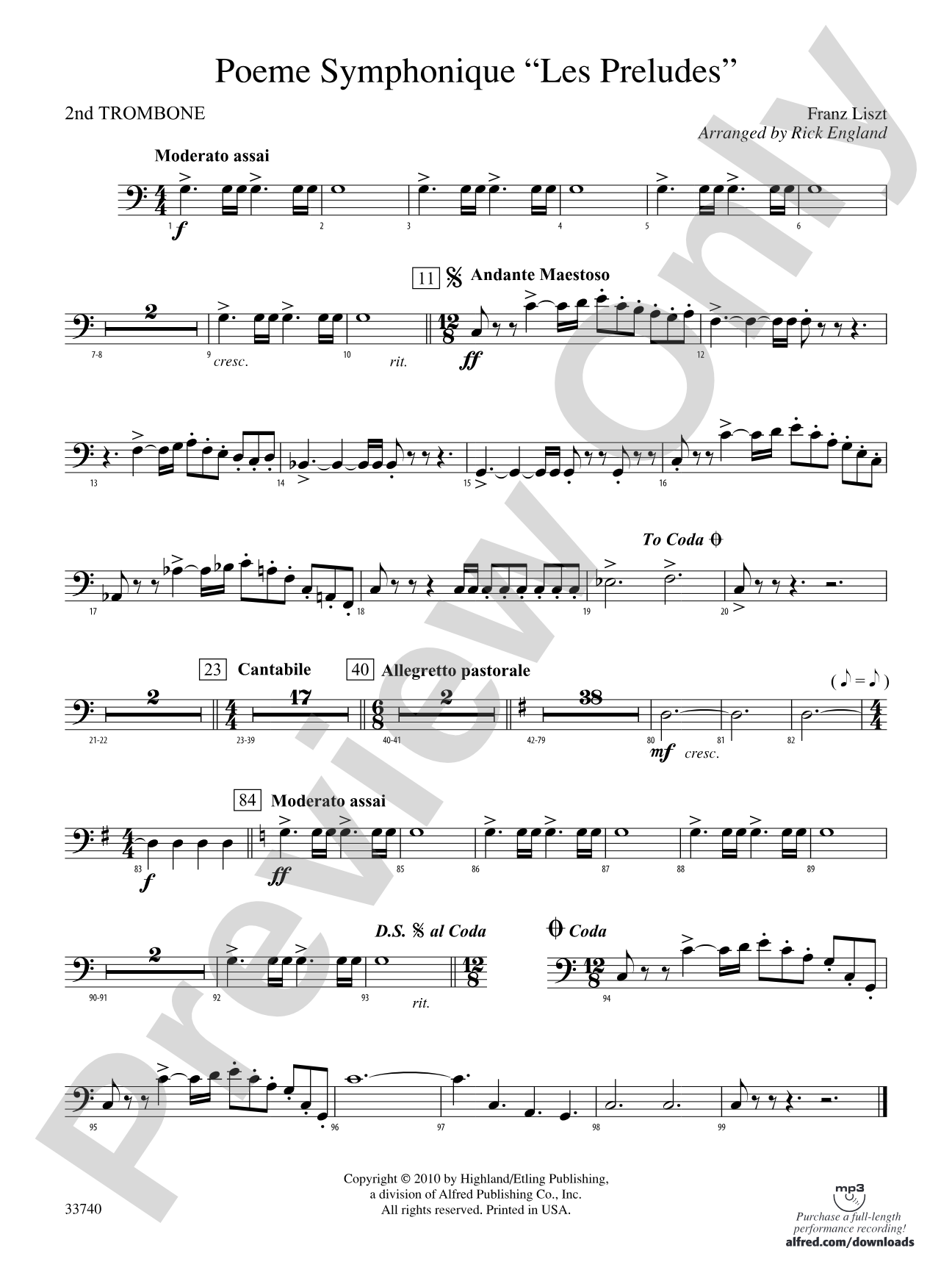
Poeme Symphonique "Les Preludes": 2nd Trombone Sheet Music Preview

Poeme Symphonique "Les Preludes": 2nd Trombone

By Franz Liszt / arr. Rick England

Grade: 3

Item: 00-PC-0014524_TN2

Digital Download
$3.00
Description
The most accessible of the themes from this popular symphonic poem are perfectly set to allow many of the sections of the orchestra to play the theme and to provide a rousing concluding coda for all to enjoy.

Don't just read it, hear it, play along with it, and watch your students grow with it. In MakeMusic Cloud, Poeme Symphonique "Les Preludes": 2nd Trombone comes alive with professional accompaniment, adjustable tempo, and built-in practice tools that turn solo practice into real progress.

Sample Audio
0:00
0:00
Sample Video
Additional Details
Series: Highland/Etling Full Orchestra
Publisher: Alfred Music
Page Count: 176
SKU: 00-PC-0014524_TN2

More about this title

About the Composer: Franz Liszt

Franz Liszt (1811-1886) was a Hungarian virtuoso pianist and composer whose technical innovations and ambitious orchestral works reshaped 19th-century music. He pioneered the symphonic poem as a genre, using thematic transformation and vivid orchestration to tell musical stories. His influence on orchestration and harmonic language extended far beyond his lifetime, making him essential to understanding Romantic-era composition.

Listzt's works remain central to orchestra curricula because they demand musical maturity from ensemble members while rewarding careful ensemble balance and expressive playing. His original Les Préludes stands as one of the most performed symphonic poems in concert halls worldwide.

Why we love this

Rick England's arrangement captures the sweep and drama of Liszt's original while giving your entire orchestra genuine musical voices. The orchestration rotates the memorable themes across sections, so players throughout the ensemble experience moments of melodic prominence rather than sitting on accompaniment figures. The Grade 3 setting keeps technical demands manageable while maintaining the symphonic grandeur that makes this work so satisfying to perform.

What to expect

Expansive and romantic, unfolding with the confidence of a work that knows its own grandeur. The orchestration creates shifting landscapes of color as themes migrate across the ensemble, building toward a triumphant final statement that sends players off stage energized.

Who it's for

Conductors seeking a full orchestra piece that honors a masterwork while engaging every instrumental section musically. This arrangement suits schools building toward more challenging repertoire and orchestras looking for concert or contest material with proven audience appeal.

How to get the most out of it

  • Balance the theme distribution carefully as it passes between sections. Each choir should project the melody with equal confidence, treating their entrance as a moment of importance rather than a mere relay.
  • Shape the closing coda with building intensity. The tutti passages need coordinated dynamic control and precise attacks to land the final statements with appropriate weight.
  • Use the conductor score to mark the exact moment each section enters its thematic statement. Highlight these in part rehearsals so players understand how their passage connects to the overall narrative arc.
  • Support your brass and woodwinds with clear stick work during the accompanimental passages. Clear subdivision keeps the harmonic foundation steady while featured sections bloom above it.

How to use it

Program this as a concert closer or as a centerpiece festival selection where its familiar themes and orchestral brilliance will engage audiences. It works well alongside lighter contemporary pieces, providing the dramatic weight and classical anchor that rounds out a varied program.

Skills your students will build

  • Thematic recognition and memory across instrument transfers
  • Dynamic balance in full orchestra textures with competing lines
  • Sustained ensemble awareness during passagework and transitional harmony
  • Precision ensemble attacks and cut-offs in sustained chords and tutti moments
  • Phrasing and shaping of lyrical lines within larger orchestral architecture

You May Also Like