
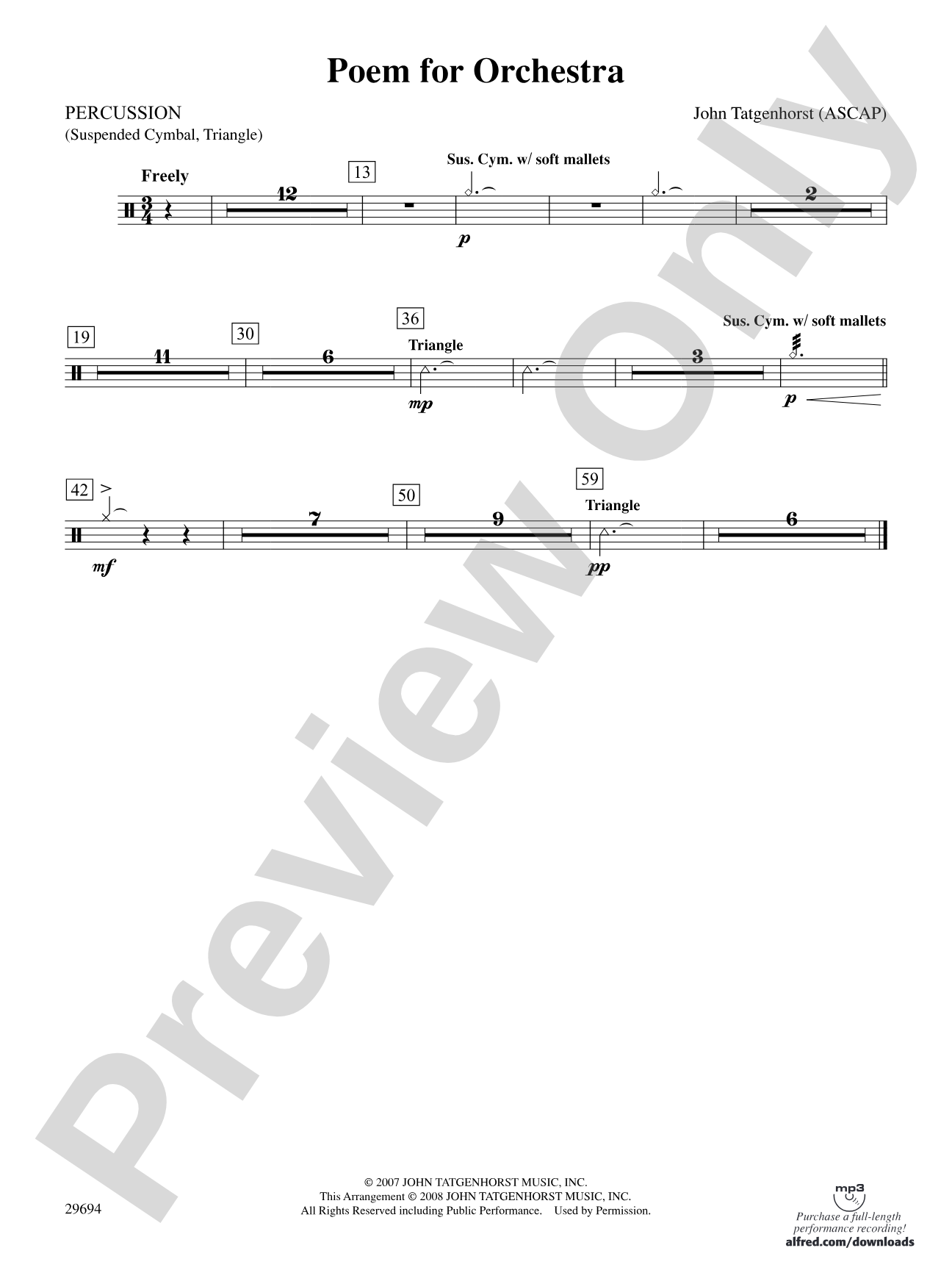

Poem for Orchestra: 1st Percussion
By John Tatgenhorst
Grade: 3.5
Item: 00-PC-0001561_PC1
$3.00
Pickup currently not available
Description
Originally written for and recorded by the London Symphony Orchestra, this tender, expressive piece will provide an opportunity for development of lush, sensitive playing. Sure to touch the hearts of players and audience alike! (2:40)


Don't just read it, hear it, play along with it, and watch your students grow with it. In MakeMusic Cloud, Poem for Orchestra: 1st Percussion comes alive with professional accompaniment, adjustable tempo, and built-in practice tools that turn solo practice into real progress.
Open in the Player
Jump straight in and assign it today.
Start Your Free Trial
Open this title and explore the full library in minutes.
Sample Audio
1
Audio File
--:--
0:00
0:00
Sample Video
No sample videos found.
Additional Details
Series:
Pop Concert Full Orchestra
Publisher:
Alfred Music
Page Count:
108
SKU:
00-PC-0001561_PC1
More about this title
About the Composer: John Tatgenhorst
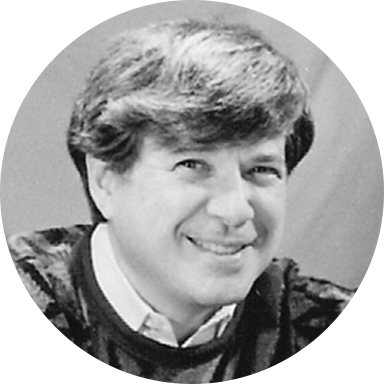
John Tatgenhorst's career spans three decades across composition, arrangement, and conducting for television, film, and recording. His foundation in music began with piano at age five, followed by formal training at Ohio State University and graduate studies in conducting and composition at Northwestern and UCLA. He apprenticed under accomplished film composers in Hollywood before establishing John Tatgenhorst Music, Inc. in 1981, a prolific publishing and production house that has created over 600 works for major networks including ABC, CBS, Fox, and Disney.
Tatgenhorst's arrangements span beloved concert works and film scores, from Star Wars to Superman to Close Encounters of the Third Kind. His compositions and arrangements have graced stages at the Philadelphia Pops, Boston Pops, Ravinia, Tanglewood, and the Hollywood Bowl. He has conducted recording sessions with the London Symphony Orchestra at Abbey Road Studios and the Royal Philharmonic Orchestra, bringing orchestral depth and cinematic sensibility to every score he creates.
Why we love this
Tatgenhorst brings his film and television scoring expertise directly to the concert hall. This piece demonstrates how an arranger trained in the world's greatest recording studios writes for orchestra with genuine orchestral sophistication, not synthetic production shortcuts. The emotional clarity and accessible Grade 3.5 difficulty mean your ensemble can achieve a genuinely polished, concert-quality performance without excessive technical burden.
What to expect
Poem for Orchestra unfolds with quiet dignity, built from carefully orchestrated colors rather than aggressive crescendos. The piece invites players to listen to one another, create transparent texture, and discover how restraint and sensitivity can move an audience as powerfully as virtuosity.
Who it's for
Full orchestras at the Grade 3.5 level seeking music that sounds mature and emotionally sophisticated without demanding advanced technique. This piece suits ensembles ready to perform for competitions, festivals, or community concerts and wanting repertoire that will resonate with audiences beyond a school gymnasium.
How to get the most out of it
- Lean into the lush orchestration by bringing individual choirs into relief. Rather than blending everything equally, spotlight the woodwind color in section A and let the strings breathe in their passages.
- Shape the phrasing through dynamic layering. Tatgenhorst's scoring suggests where to swell and recede; follow those contours rather than playing at a steady volume.
- Work your principal players first. Lock the melodic line across sections (first violin, first woodwind, first brass) so secondary voices know exactly where the top is leading.
- Record rehearsals starting two weeks before performance. Hearing yourselves back will reveal balance issues and allow you to calibrate the "tender" character without sounding tentative.
How to use it
Program this as a concert or festival centerpiece. Its 2:40 duration and Grade 3.5 accessibility make it ideal for leading a concert's second half or standing alone as a showcase for your orchestra's musicianship. It pairs well with faster, more spirited contemporary works and provides the reflective moment that balanced programming requires.
Skills your students will build
- Sustained, controlled dynamics across long phrases
- Ensemble balance and blend in multi-sectional textures
- Phrasing and rubato in lyrical, non-metric passages
- Listening for and responding to principal melodic lines
- Orchestral color awareness across woodwind, brass, and string families