Poco Loco: 2nd B-flat Trumpet Sheet Music Preview

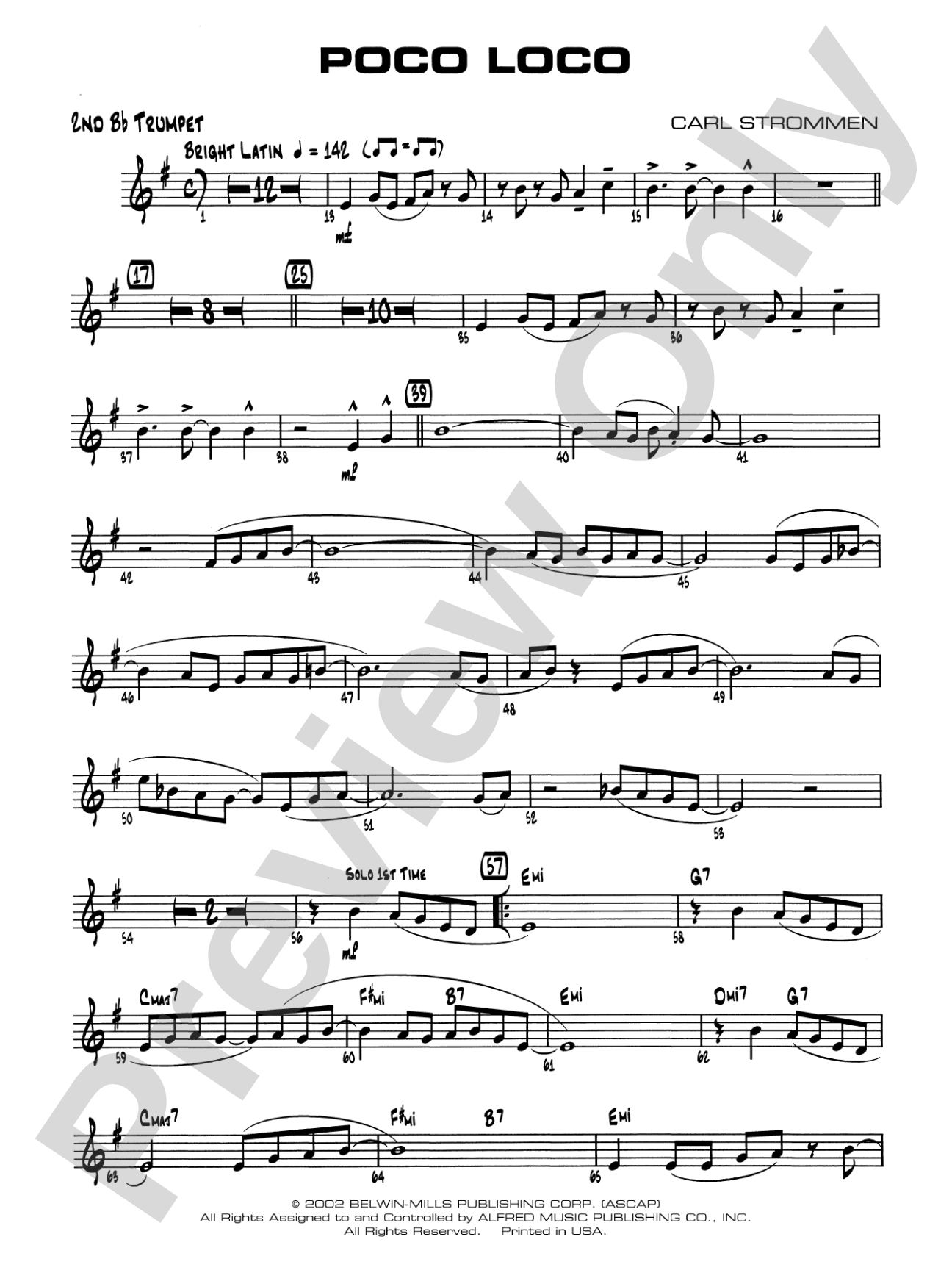
Poco Loco: 2nd B-flat Trumpet

By Carl Strommen

Grade: 1 (Easy)

Item: 00-PC-0015242_T2

Digital Download
$3.00
Description
Composer/arranger Carl Strommen has proven he has the right stuff to write for younger bands. This light and easy Latin original starts simply and builds. As it builds, you may recognize the chord progression to the classic pop tune, "Sunny." The cowbell helps maintain the energy and drive for this chart, the solos for alto sax and trumpet are written or ad-lib, and the brass ranges are modest. Additional percussion parts can be added if desired. The lower instruments have an easy yet meaty part in this chart. The bottom line is a quality chart that's fun to play, educational and well received by the audience. This title is available in MakeMusic Cloud. (3:50)

Don't just read it, hear it, play along with it, and watch your students grow with it. In MakeMusic Cloud, Poco Loco: 2nd B-flat Trumpet comes alive with professional accompaniment, adjustable tempo, and built-in practice tools that turn solo practice into real progress.

Sample Audio
0:00
0:00
Sample Video
Additional Details
Series: First Year Charts for Jazz Ensemble
Publisher: Alfred Music
Page Count: 78
SKU: 00-PC-0015242_T2

More about this title

About the Composer: Carl Strommen

Carl Strommen

Carl Strommen's career spans multiple genres and ensembles, from concert bands and orchestras to jazz ensembles and vocal music. His work appears regularly in performance venues, broadcast media, and film, and he maintains a consistent presence on the ASCAP Standard Writers Award rolls. His reputation as both composer and arranger has made him a sought-after clinician and commission writer across North America and beyond.

Strommen holds a degree from City College of New York and has shaped the next generation of composers and orchestrators as an adjunct faculty member at C.W. Post Campus of Long Island University. He divides his time between Long Island, New York, and extended stays in Colorado with his family.

Why we love this

Strommen understands what makes a first-year jazz chart succeed: accessible ranges, manageable solos, and built-in momentum that keeps young players engaged without overwhelming them. The harmonic anchor to "Sunny" gives students something to recognize and latch onto, while the Latin groove and cowbell create genuine energy on the bandstand. This is the rare Grade 1 chart that doesn't talk down to its audience.

What to expect

Breezy and infectious, with a Latin swagger that builds from a simple foundation into something that feels much bigger than its Grade 1 label. The groove propels you forward while staying light enough that students feel successful from measure one.

Who it's for

First-year jazz ensemble directors seeking material that excites students without excessive technical demand. Conductors working with mixed-ability groups benefit from the modest brass ranges and the balance between written and ad-lib solo options.

How to get the most out of it

  • Lock in the cowbell pulse early in rehearsals; it's the rhythmic glue that holds the Latin feel together and gives younger players something concrete to follow.
  • Balance the alto sax and trumpet solos carefully during ensemble sections. Even if they're ad-lib, their entrance needs clarity so the chart doesn't lose shape.
  • Let the lower instruments shine during their meaty passages. They anchor the harmonic movement and deserve space in the mix.
  • Keep the tempo steady and slightly brisk; this chart breathes on forward motion and will drag if the conductor pulls back.

How to use it

Pair this with a ballad and an uptempo swing number to create a well-rounded first festival set. It also works perfectly as an audience favorite on a concert where you want to demonstrate that young jazz students can deliver joy, not just competence.

Skills your students will build

  • Latin rhythmic phrasing and the relationship between cowbell patterns and bass line
  • Balancing scripted melody with ensemble harmony
  • Creating or executing ad-lib solos within a defined harmonic structure
  • Listening to and responding to dynamic levels across a full jazz ensemble
  • Recognition and improvisation over diatonic chord progressions

You May Also Like