Plymouth Polka Sheet Music Preview

Plymouth Polka: Piano

By David Karp

Item: 98-DE1033

Digital Download
$8.95
Description
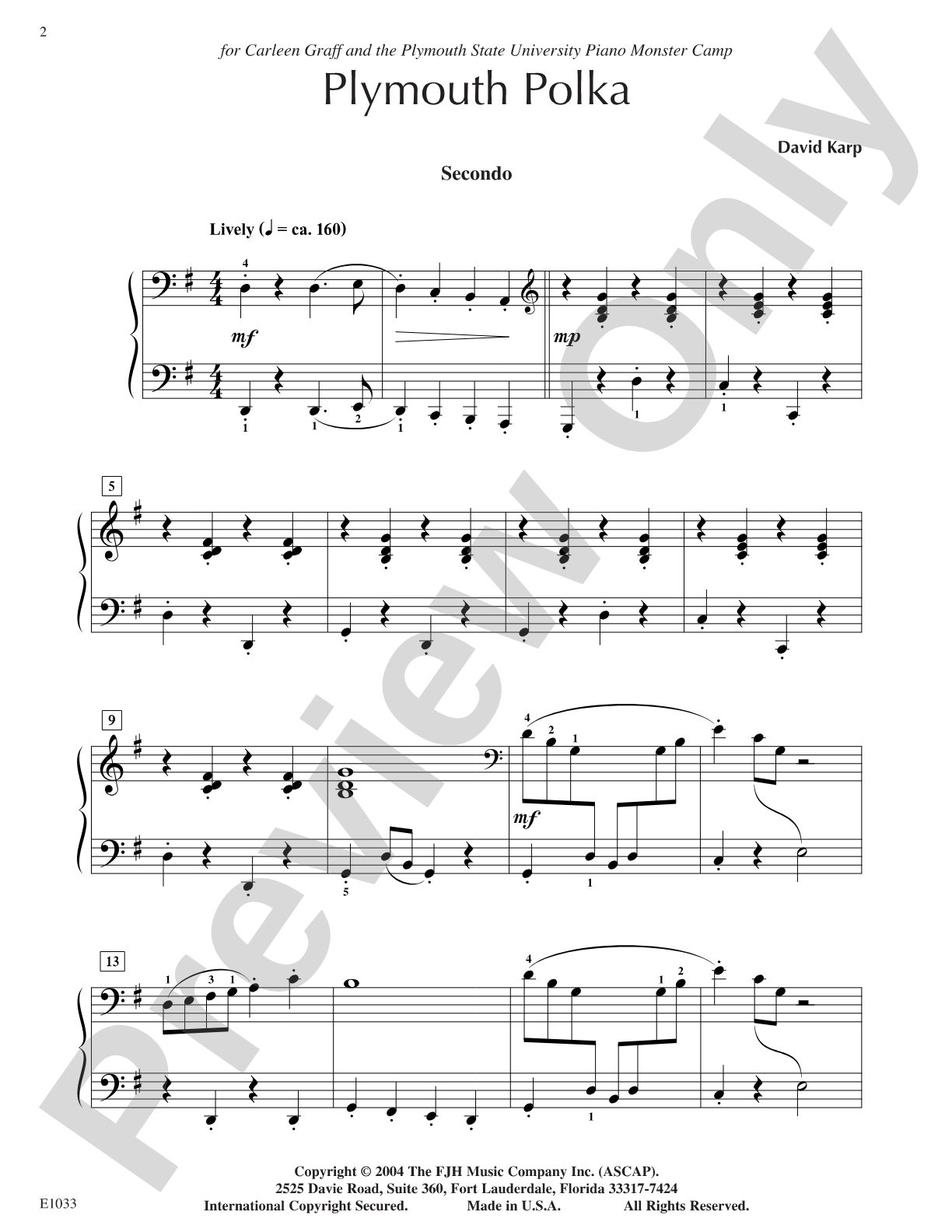
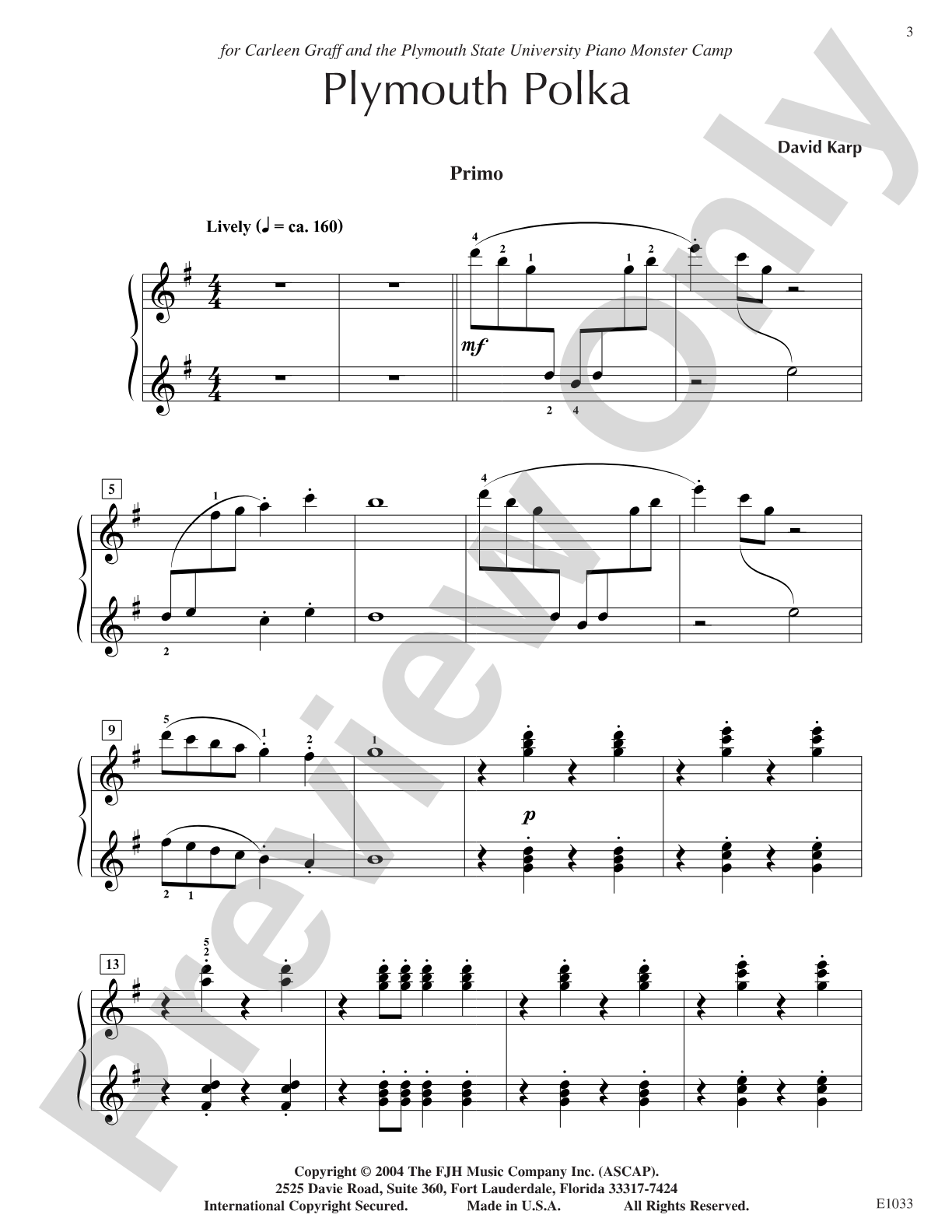
From the familiar two-bar introduction, through its rhythmic accompaniment patterns, this piece is all polka! It was created for the Plymouth State University Piano Monster Camp, making it a perfect one-piano four-hand festival selection. Both performers will enjoy the melodic interplay between the two parts.

Plymouth Polka: Piano isn't in MakeMusic Cloud just yet...but it could be. Let us know you'd like to see it, and you'll help shape what comes next. In the meantime, start a free trial and dive into thousands of interactive titles your students can play along with today.

Sample Audio
No sample audio found.
Sample Video
Additional Details
Series: The FJH Piano Ensemble Series
Publisher: The FJH Music Company, Inc.
SKU: 98-DE1033

More about this title

Why we love this

Karp nails the polka idiom without relying on tired clichés. The two-part writing gives both pianists genuine musical material to develop, and the rhythmic accompaniment patterns are inventive enough to keep players engaged across the whole piece rather than settling one performer into pure support duty.

What to expect

Bright and propulsive, with that distinctive polka lilt beneath your fingers. The two-part writing creates a sense of conversation, where ideas bounce between the primo and secondo parts, keeping the energy alive and the texture light.

Who it's for

Piano duos at the late intermediate level who want a piece that treats both players equally. This works especially well for festival or recital contexts where you need something that's fun to play but still musically substantial.

How to get the most out of it

  • Establish the polka's character right from that two-bar introduction. The tempo and articulation you set there will anchor both parts, so rehearse it as your shared downbeat.
  • Balance the melodic interplay by listening across the bench constantly. Neither part should dominate; you're trading conversational weight, not fighting for space.
  • Lean into the rhythmic accompaniment patterns as rhythmic content, not filler. They're where the polka's character lives, so give them the same attention you'd give any melody.
  • Match articulation between parts scrupulously. A polka's energy comes partly from how crisply or lightly you articulate together, so use rehearsal time to sync your touch.

How to use it

Program this alongside other folk-inspired or dance-form pieces to showcase your duos' versatility. It's an excellent choice for a festival performance or a student recital where you want to feature ensemble work without requiring a full ensemble.

Skills your students will build

  • Polka rhythms and character (including the distinctive two-bar phrase patterns)
  • Two-hand independence in ensemble (balancing melodic and accompaniment roles)
  • Rhythmic precision across two players
  • Listening and responding to a partner in real time
  • Musical interplay and phrase-shaping in a duet context

You May Also Like