

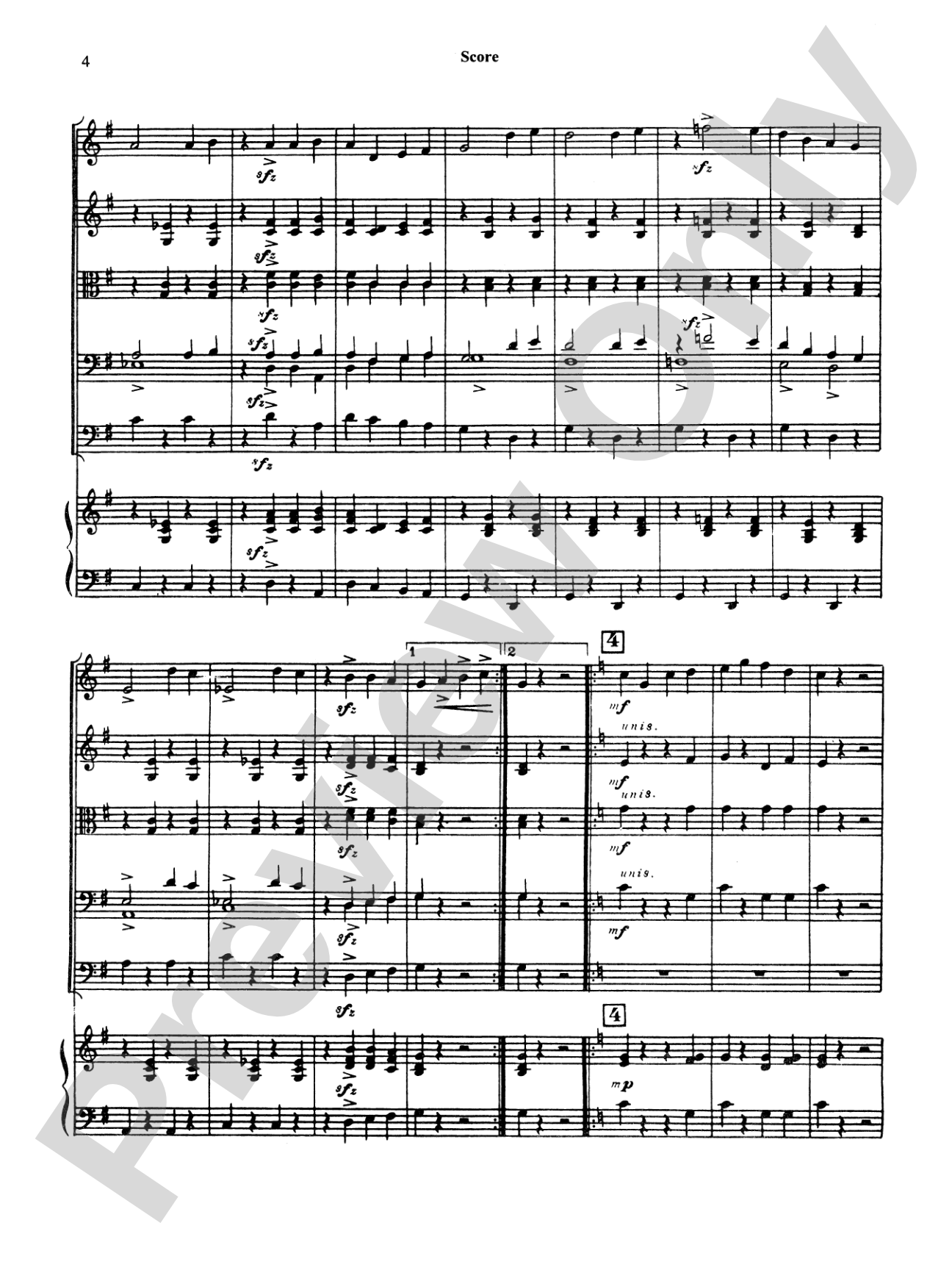
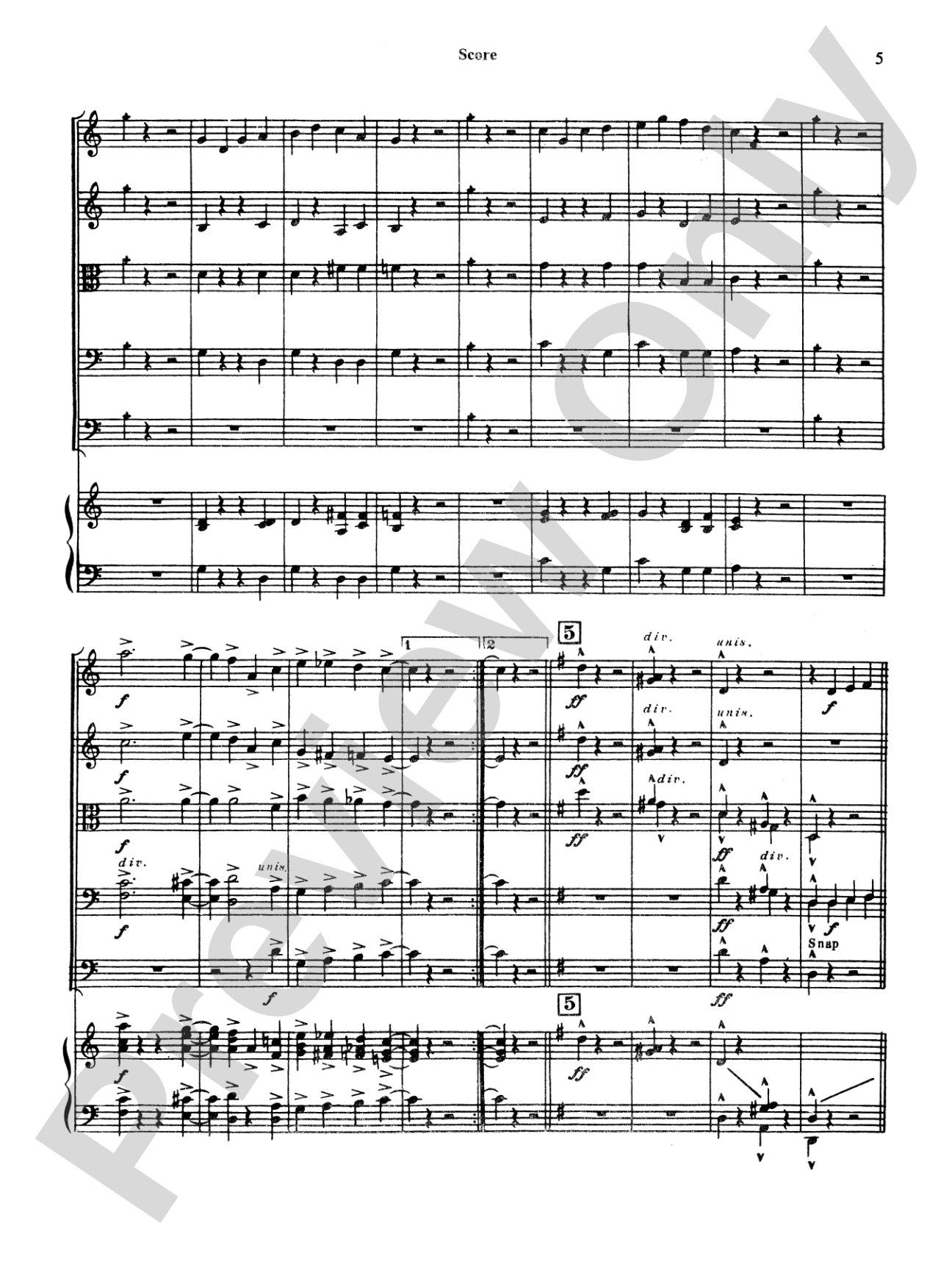
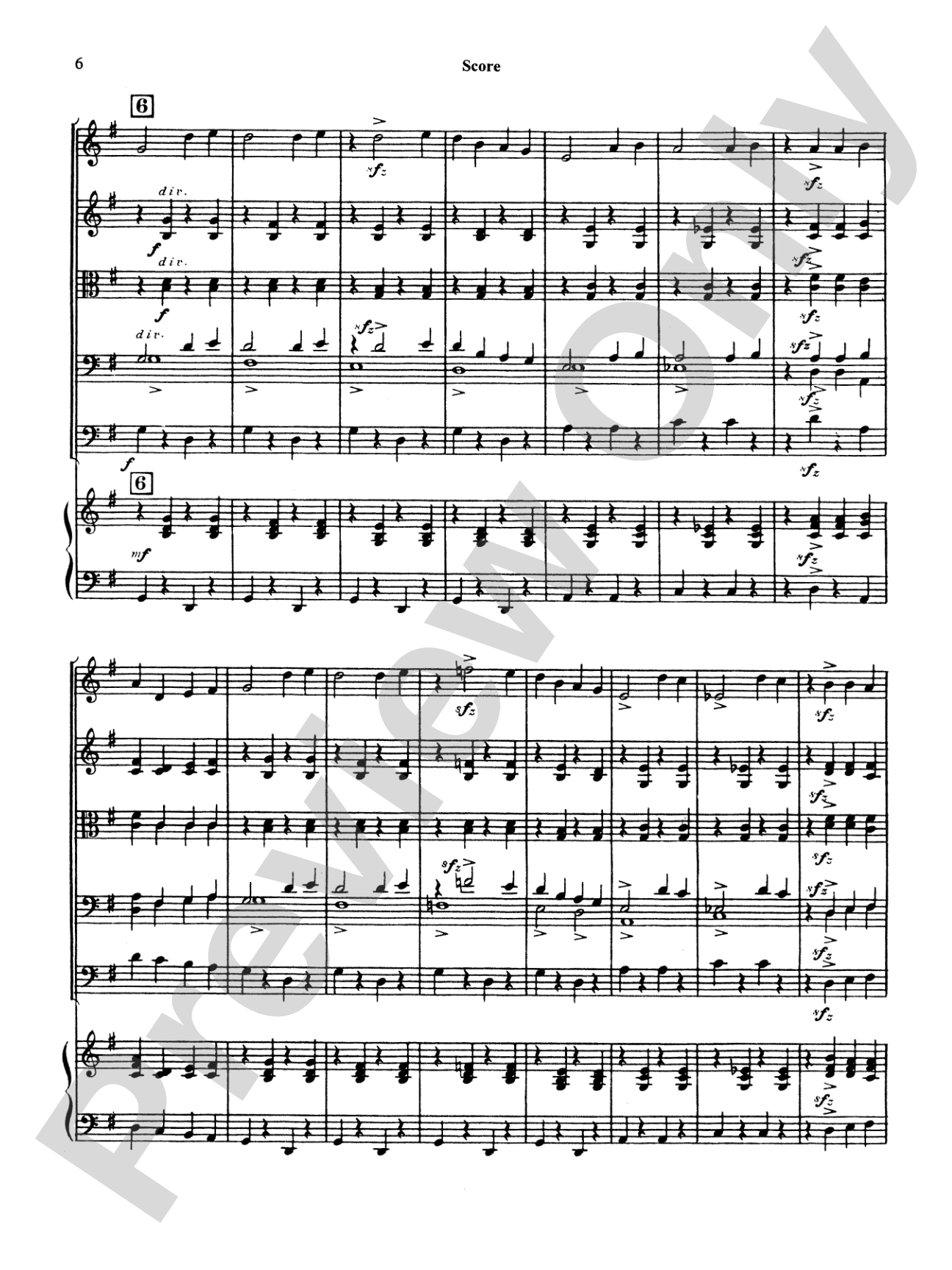
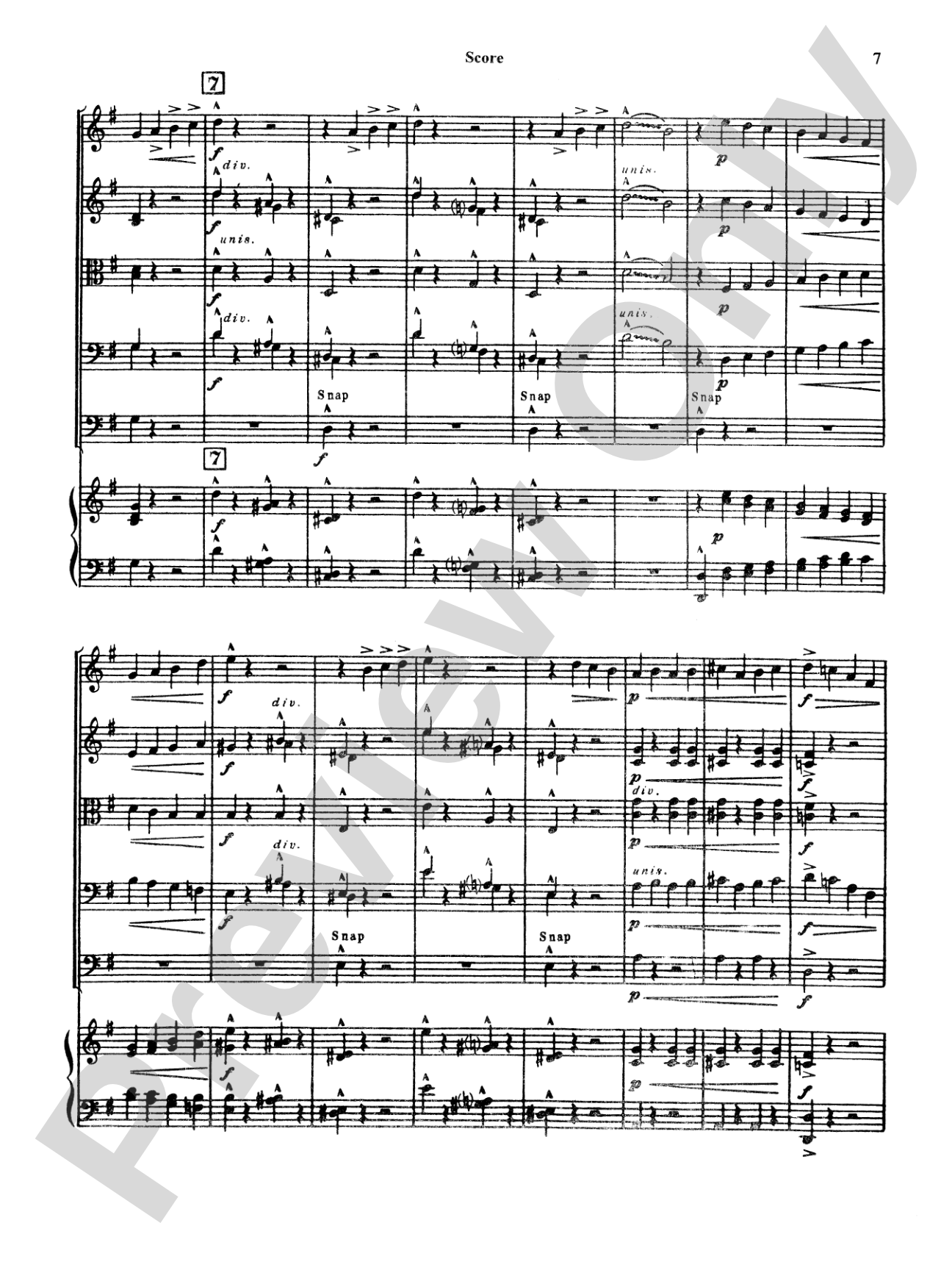
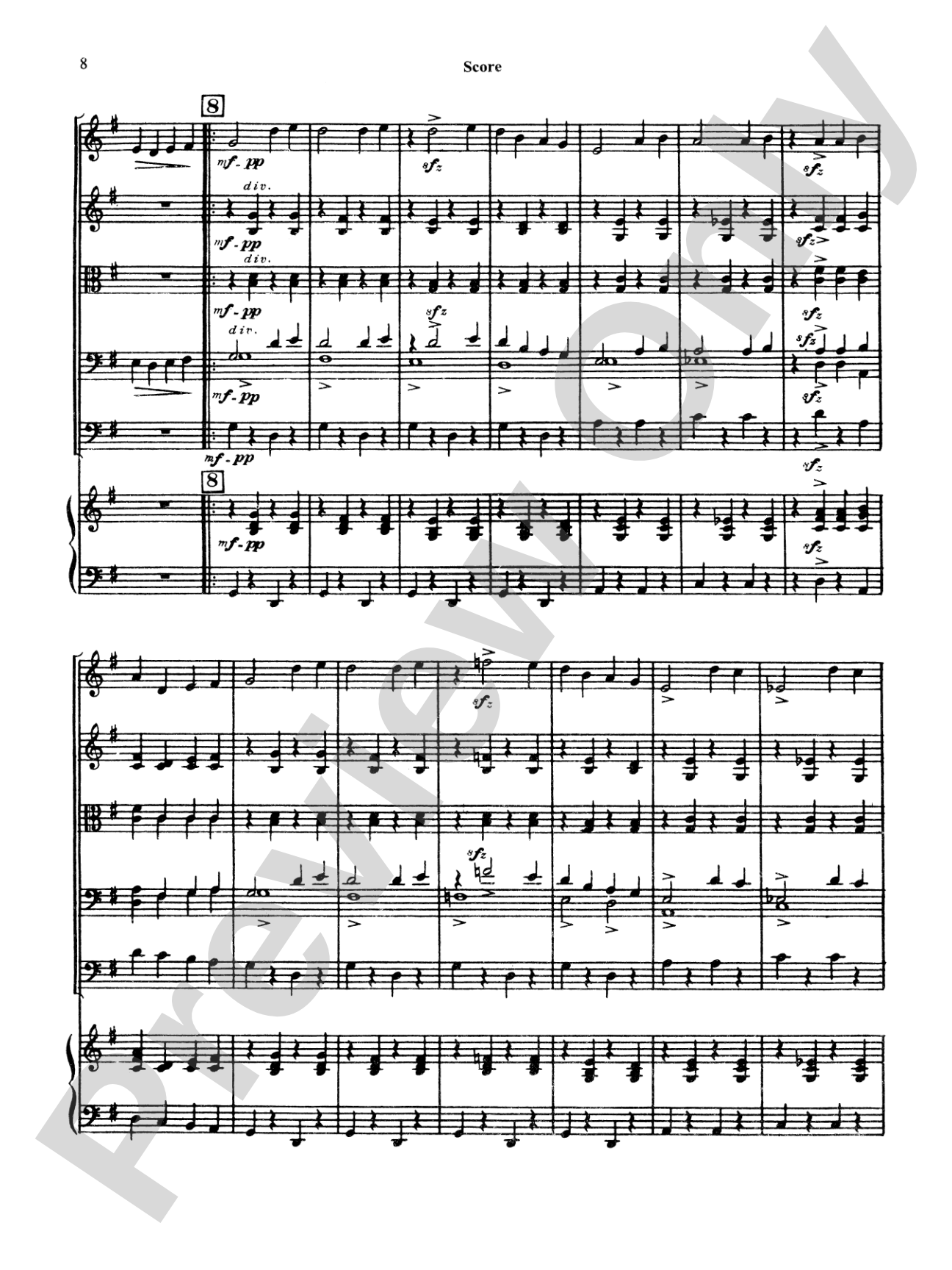
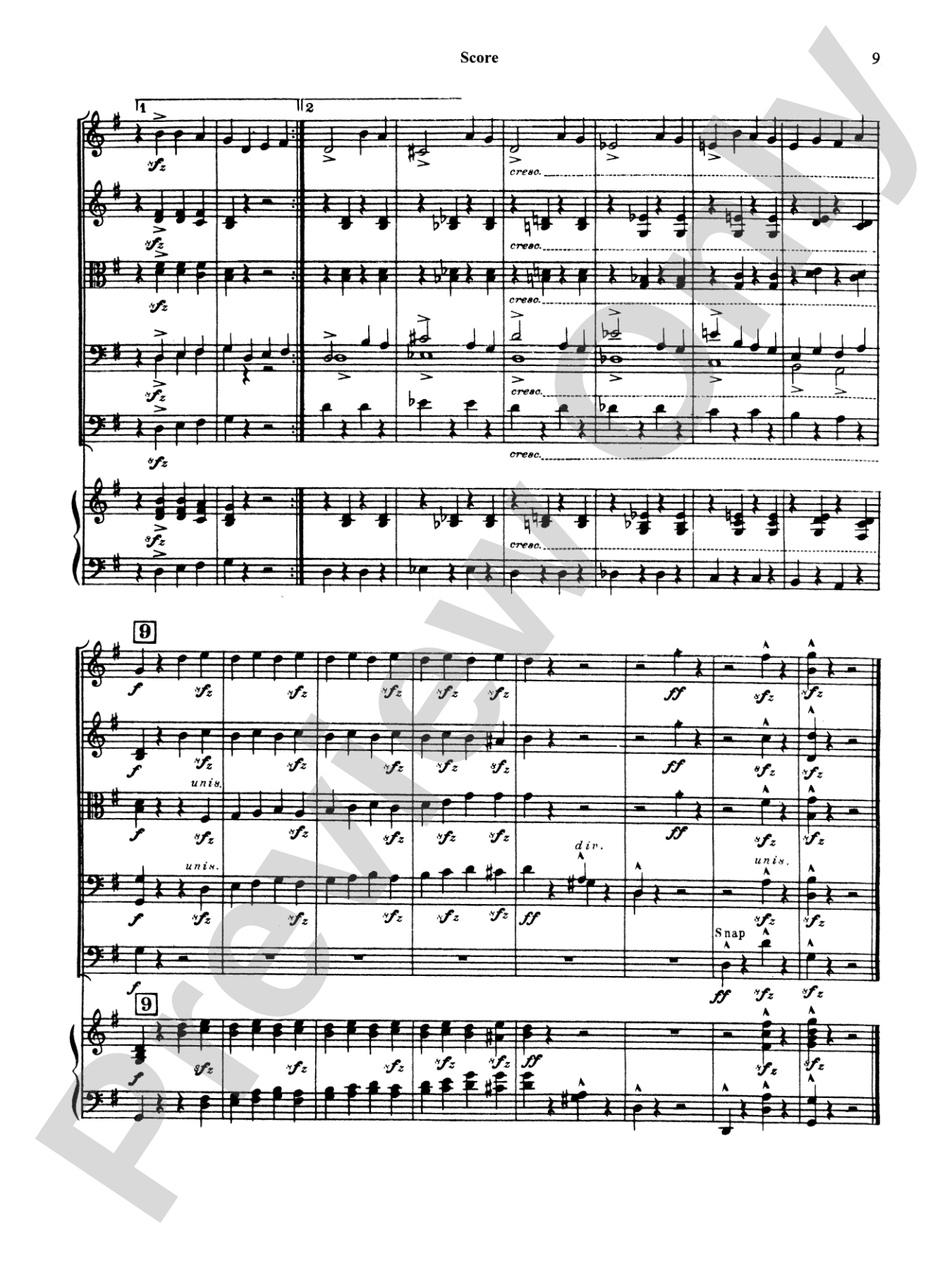


Plink, Plank, Plunk!: String Orchestra Conductor Score & Parts
By Leroy Anderson
Grade: 3.5
Item: 00-PK-0001963

$65.00
Pickup currently not available
Buy Extra Parts (Digital PDF Download)
| Product | Price | Quantity |
|---|---|---|
| Plink, Plank, Plunk!: Score | $9.00 | |
| Plink, Plank, Plunk!: 1st Violin | $5.99 | |
| Plink, Plank, Plunk!: 2nd Violin | $5.99 | |
| Plink, Plank, Plunk!: Viola | $5.99 | |
| Plink, Plank, Plunk!: Cello | $5.99 | |
| Plink, Plank, Plunk!: String Bass | $5.99 | |
| Plink, Plank, Plunk!: Piano Accompaniment | $5.99 |
Parts Added to Cart!
Description
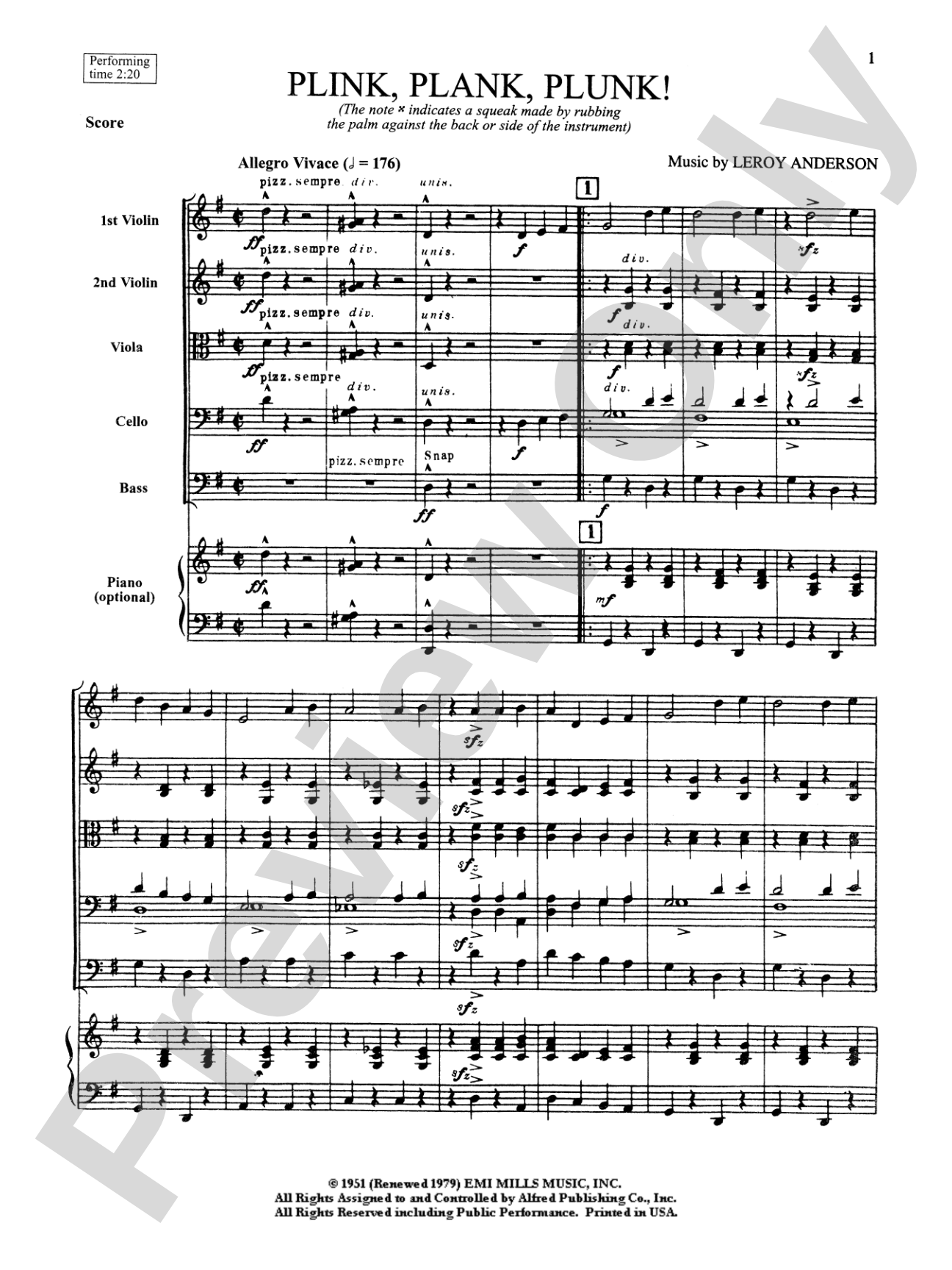
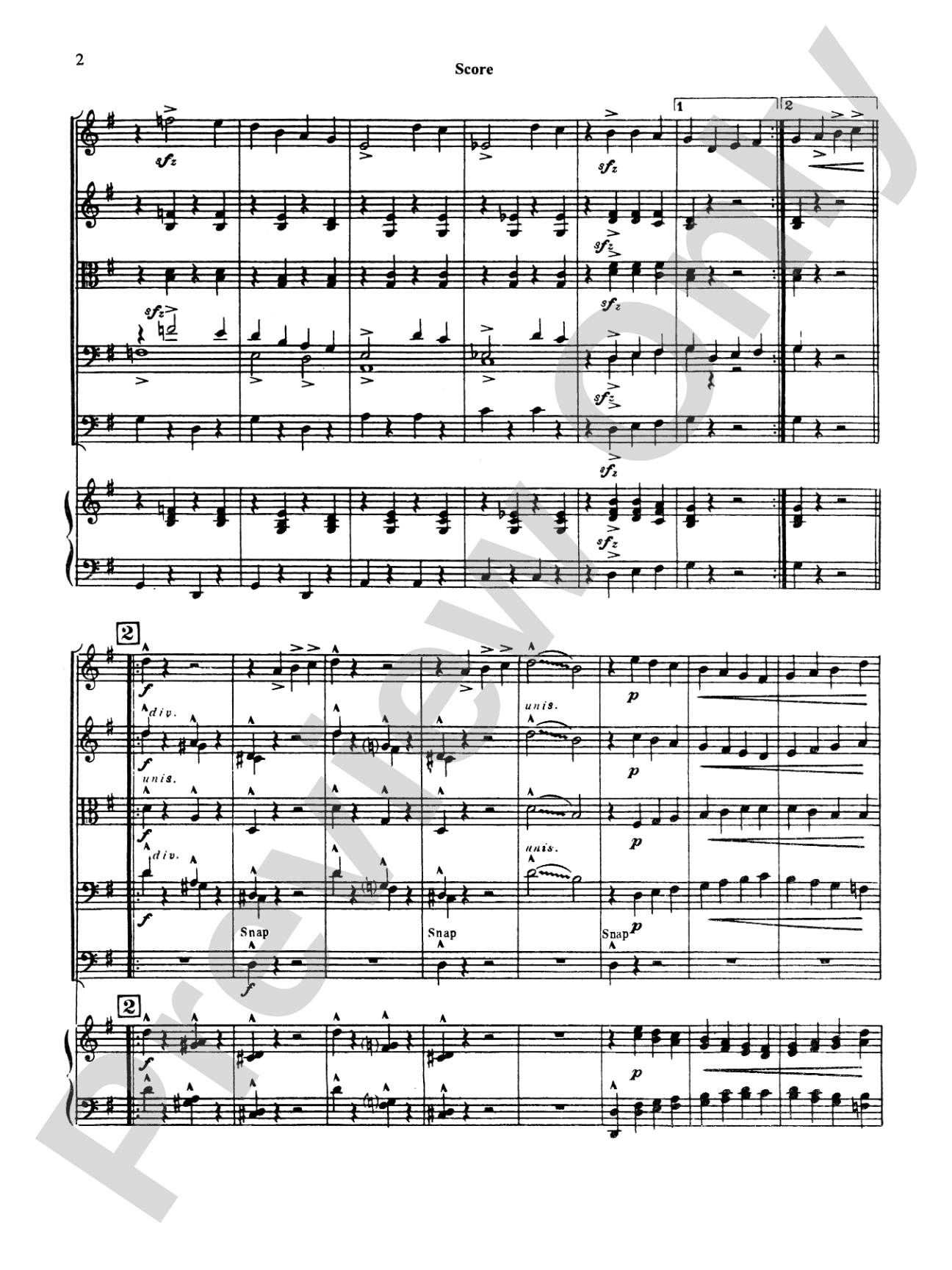
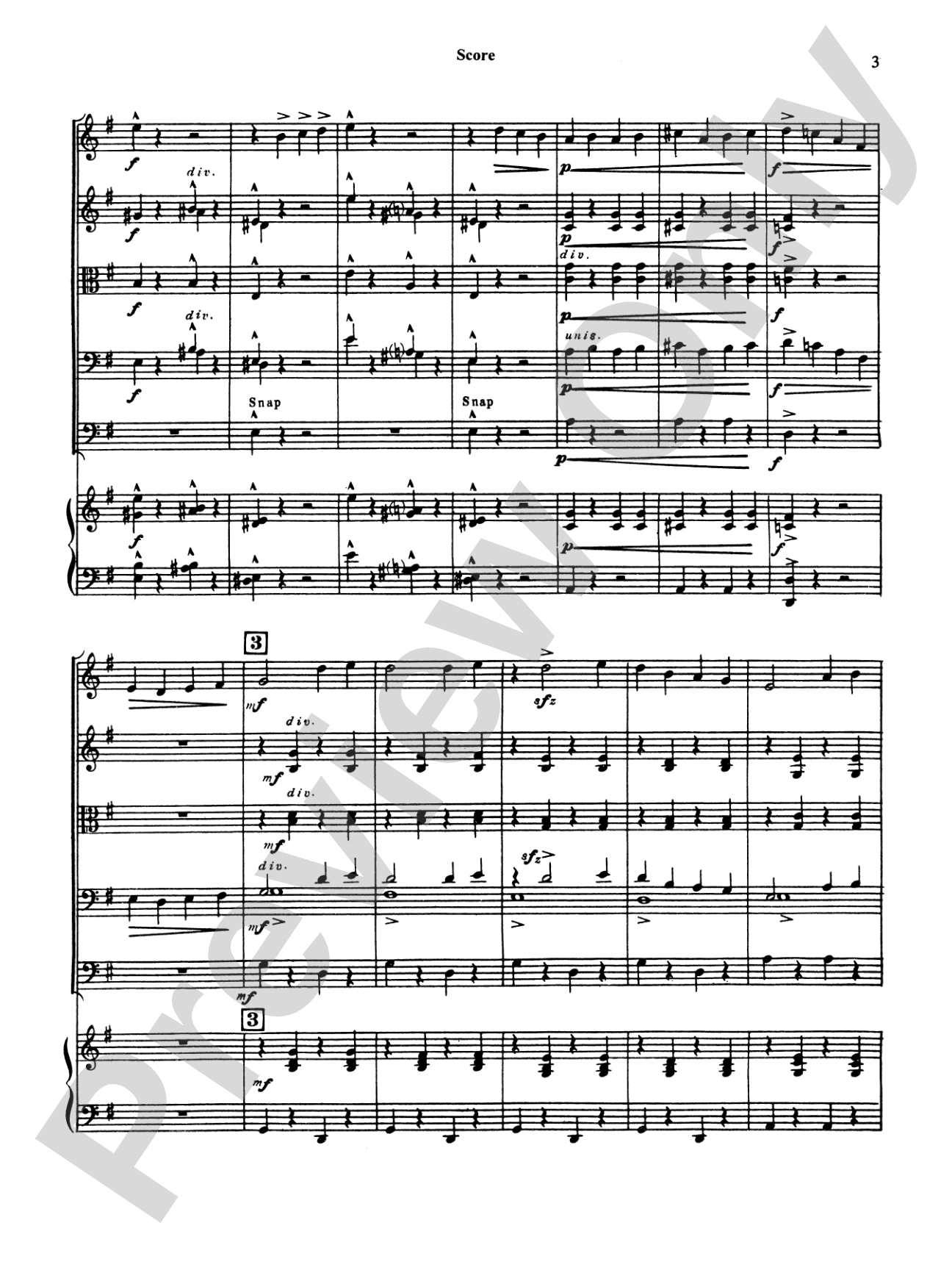
One of the most entertaining and useful sounds that string performers can bring to a concert stage is the pizzicato effect of the "plucked" string. What better way to describe (and to hear) this resonant phenomenon than in Leroy Anderson's classic Plink, Plank, Plunk. The title says it all! (2:38) This title is available in MakeMusic Cloud.


Don't just read it, hear it, play along with it, and watch your students grow with it. In MakeMusic Cloud, Plink, Plank, Plunk!: String Orchestra Conductor Score & Parts comes alive with professional accompaniment, adjustable tempo, and built-in practice tools that turn solo practice into real progress.
Open in the Player
Jump straight in and assign it today.
Start Your Free Trial
Open this title and explore the full library in minutes.
Sample Audio
1
Audio File
--:--
0:00
0:00
Sample Video
Additional Details
Series:
Belwin Concert String Orchestra
Publisher:
Alfred Music
Page Count:
140
SKU:
00-PK-0001963
More about this title
About the Composer: Leroy Anderson
Leroy Anderson (1908-1975) was an American composer and conductor whose gift for orchestration and sense of humor made him one of the most performed twentieth-century composers in concert halls worldwide. Anderson studied at Harvard University and later became known for his "light concert" works that combined sophisticated musical craft with immediate accessibility, earning him a unique place between classical and popular music traditions.
His catalog of pops and light concert works became staples of American orchestral programming because they solved a real musical problem: they delivered genuine entertainment and technical interest without requiring virtuosity beyond the reach of community and school ensembles. Works like Plink, Plank, Plunk showcase his trademark ability to describe everyday sounds and situations through orchestration in ways that delight both audiences and performers.
Why we love this
This piece cuts through the typical string orchestra repertoire with genuine personality. Anderson's orchestration uses pizzicato as a compositional voice rather than mere color effect, giving every section something engaging to do while the title concept keeps audiences smiling from the downbeat. For conductors programming concert or festival events, it fills the programming sweet spot: musically substantial enough to challenge middle-level ensembles, short enough (2:38) to pair well with longer works, and sure to generate applause.
What to expect
Playful and bright, with a almost cartoonish charm that comes from Anderson's clever orchestration of the pizzicato sound. The music captures the physical comedy of plucked strings while maintaining genuine orchestral sophistication, creating a piece that audiences find delightful while musicians enjoy the technical and musical satisfaction of executing the writing cleanly.
Who it's for
String orchestra directors at the middle-school through early high school level will find this piece immediately useful for concert and festival programming. It works equally well for ensembles with developing intonation and rhythmic precision because the energy and humor of the piece help mask minor imperfections while still demanding musical focus.
How to get the most out of it
- Establish consistent articulation language for pizzicato in rehearsal. Decide early whether your players will use a light finger pluck or a slightly sharper attack, then maintain that texture across all sections so the 'plinking' sounds unified rather than scattered.
- Balance the pizzicato melody through different sections carefully. Younger players often pluck too quietly; remind them that pizzicato in Anderson's writing is meant to ring clearly, not disappear into the texture.
- Shape the phrasing between pizzicato passages and any arco sections with intentional contrast. The shifts in color should feel deliberate and musical, not accidental.
- Use the recorded accompaniment available through MakeMusic Cloud to hear how Anderson's orchestration sits in context, especially if you are conducting a school ensemble unfamiliar with the piece.
How to use it
Position this as a concert opener to establish an upbeat mood, or use it to follow a heavier work and offer relief and humor to the audience. Its 2:38 length makes it a perfect pairing with a longer multi-movement work or a full suite, allowing you to build a concert half with varied character without excess program time.
Skills your students will build
- Pizzicato articulation and tone control
- Rhythmic precision in light, staccato figures
- Blend and balance between plucked and arco sections
- Reading and executing Anderson's distinctive orchestration style